
In the fall of 2013, smartphone users faced a pivotal decision: stay with Apple’s polished but increasingly restrictive iOS, or leap into the expansive, customizable world of Android. The iPhone 5s and Samsung Galaxy Note 3 represented two distinct philosophies in mobile design—one minimalist and tightly controlled, the other powerful and open-ended. For many long-time iPhone users, making the switch wasn’t just about hardware; it was a shift in digital lifestyle. So, was trading the 5s for the Note 3 truly worth it?
Design and Build: Form Meets Function
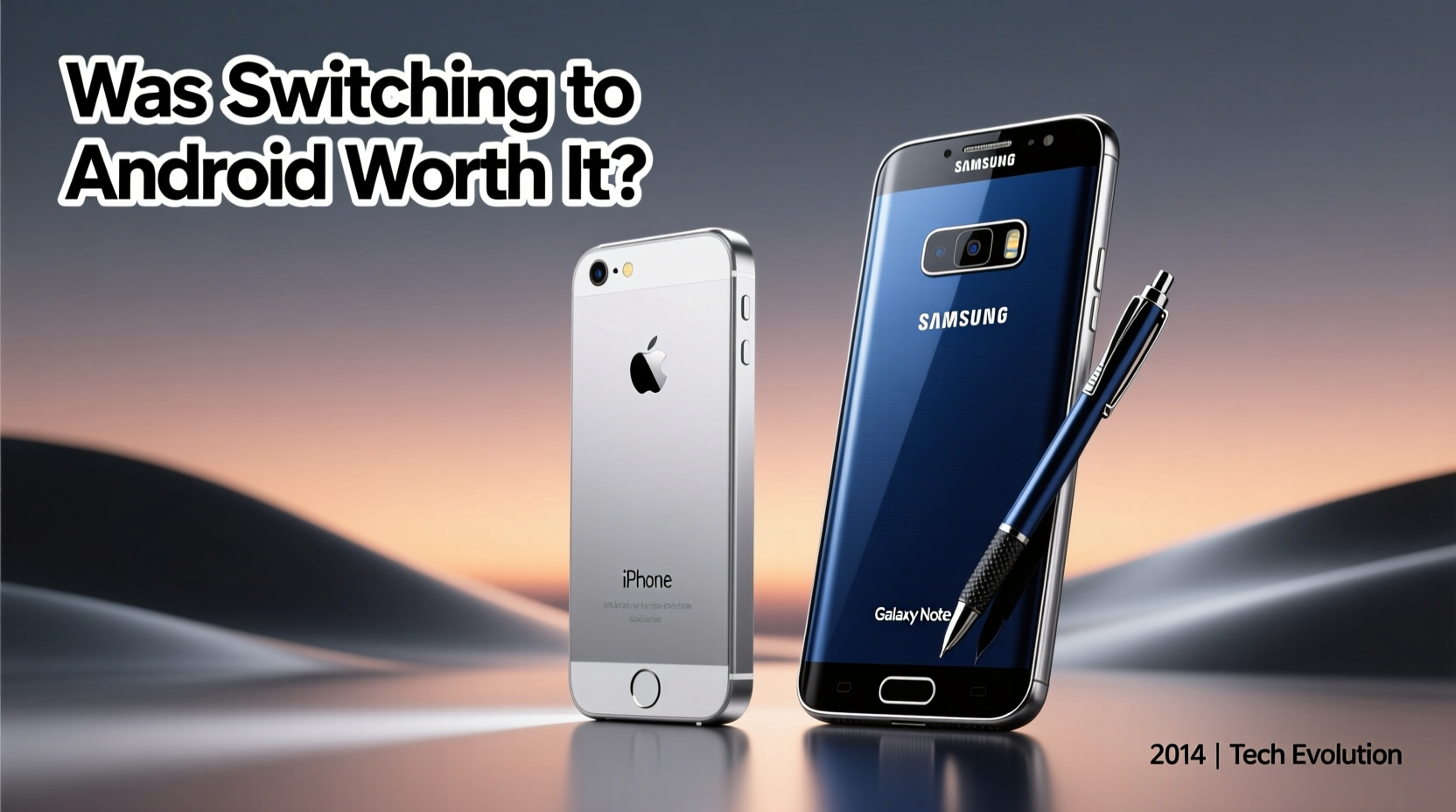
The iPhone 5s stood out with its sleek aluminum unibody, compact size, and premium feel. At 4 inches, its display was considered small even in 2013, but Apple prioritized one-handed usability and build quality over screen real estate. In contrast, the Galaxy Note 3 embraced a bolder design—larger at 5.7 inches, with a faux-leather textured back and plastic construction that felt less premium but more functional.
Samsung included the S Pen stylus, a defining feature that opened new ways to interact with the device: jotting quick notes, cropping images, or launching apps without fully unlocking the phone. While the iPhone 5s felt like a refined jewel, the Note 3 positioned itself as a productivity tool—more “mini tablet” than phone.
Performance and Hardware Comparison
Under the hood, both devices were flagships of their ecosystems. The iPhone 5s introduced Apple’s A7 chip—the first 64-bit processor in a smartphone—giving it a significant edge in raw efficiency and app optimization. Despite having less RAM (1GB vs. Note 3’s 3GB), iOS’s tight integration meant smooth performance and faster app launches.
The Note 3, powered by a Snapdragon 800 (or Exynos 5 in some regions), delivered excellent speed for its time. With triple the RAM, it handled multitasking far better—running multiple apps side-by-side using Samsung’s Multi Window feature. However, Android 4.3’s fragmentation and inconsistent app optimization sometimes led to hiccups that iOS avoided.
“Apple’s hardware-software synergy gave the 5s an uncanny fluidity, even with lower specs.” — David Lin, Mobile Tech Analyst, 2014
Software Experience: Control vs. Customization
iOS on the iPhone 5s offered simplicity and consistency. Apps looked and behaved uniformly, updates arrived quickly, and the App Store had higher-quality apps overall. But customization was nearly nonexistent—no widgets, no file system access, and limited third-party integrations.
Android on the Note 3 was the opposite. Users could install launchers, change default apps, use folders freely, and access system files via a built-in file manager. Samsung’s TouchWiz added features like Air View (hover gestures) and split-screen mode, enhancing utility. Yet, this freedom came with trade-offs: heavier UI, occasional lag, and delayed OS updates.
For users who valued personalization and control, Android was liberating. But for those who preferred a seamless, predictable experience, iOS remained superior.
Camera and Multimedia Capabilities
The iPhone 5s featured an 8MP rear camera with improved low-light performance, True Tone flash, and 1080p video recording. Its image processing produced natural colors and reliable results in most conditions. While not the highest resolution, its consistency made it a favorite among casual photographers.
The Note 3 upgraded to a 13MP sensor with richer detail and HDR capabilities. It also supported 4K video recording—a rarity at the time—though most users didn’t have displays capable of playing it back. Front-facing video calls benefited from the larger screen, and stereo speakers enhanced media playback.
| Feature | iPhone 5s | Note 3 |
|---|---|---|
| Rear Camera | 8MP, f/2.4, True Tone Flash | 13MP, f/2.2, LED Flash |
| Front Camera | 1.2MP, 720p video | 2MP, 1080p video |
| Video Recording | 1080p at 30fps | 1080p at 60fps / 4K at 30fps |
| Audio Output | Mono speaker | Stereo speakers (front-facing) |
The Note 3 clearly won on specs, but the iPhone 5s often delivered more balanced, usable photos in everyday scenarios.
User Case: From iPhone Loyalist to Android Convert
Mark, a graphic designer and longtime iPhone user, switched to the Note 3 in late 2013 after growing frustrated with iOS limitations. He wanted to edit documents on the go, use stylus input for sketches, and run multiple reference apps simultaneously.
“The moment I used the S Pen to annotate a PDF while keeping my email open in another window, I knew I wouldn’t go back,” he said. “Yes, the phone was huge, and iOS still felt smoother. But Android gave me tools I couldn’t live without professionally.”
However, Mark missed the reliability of iMessage, iCloud syncing, and timely software updates. He eventually adopted workarounds—using WhatsApp, Google Drive, and third-party launchers—but acknowledged it took three months to fully adapt.
Is Switching to Android Worth It? A Practical Checklist
Deciding whether to switch depends on your priorities. Use this checklist to evaluate your needs:
- ✅ You want full customization – Change launchers, icons, defaults, and themes.
- ✅ You need multitasking – Run two apps side-by-side or use floating windows.
- ✅ You rely on a stylus – The S Pen adds precision for notes, edits, and navigation.
- ✅ You prefer expandable storage – Note 3 supports microSD; iPhone does not.
- ❌ You depend on Apple ecosystem – iMessage, FaceTime, AirDrop, and Mac integration vanish.
- ❌ You expect fast OS updates – Android updates were slow and inconsistent in 2013.
- ❌ You prioritize app quality – iOS still led in optimized, secure apps at the time.
Long-Term Value and Ecosystem Lock-In
One year after switching, many Note 3 users praised its versatility but admitted missing iOS’s polish. The real cost of switching wasn’t just monetary—it was the loss of ecosystem cohesion. Transferring contacts, messages, and app data was cumbersome. iMessage users found themselves in “green bubble” limbo, excluded from group threads.
Meanwhile, Apple continued refining iOS, adding features like Control Center and improved multitasking in iOS 8. By 2014, the iPhone 6’s larger screen addressed the main complaint driving users to Android, reducing the incentive to leave.
Still, for power users, Android offered something Apple didn’t: freedom. Freedom to modify, to automate, to choose. That autonomy had real value—for some, more than seamless integration.
Frequently Asked Questions
Could the Note 3 replace an iPad for productivity?
For light tasks—email, document editing, web browsing, and sketching—the Note 3 was surprisingly capable, especially with the S Pen. However, its smaller screen and lack of tablet-optimized apps limited true iPad-level productivity.
Did the iPhone 5s feel outdated after using the Note 3?
Some users reported feeling constrained by the 4-inch screen and lack of multitasking once they returned to the 5s. Others appreciated its simplicity and compactness, proving preference is highly subjective.
Was battery life better on the Note 3?
Yes. The Note 3’s 3,200mAh battery significantly outperformed the iPhone 5s’s 1,560mAh cell. Heavy users could stretch a day and a half, while iPhone users typically needed daily charging.
Final Verdict: It Depends on What You Value
Switching from the iPhone 5s to the Galaxy Note 3 wasn’t objectively better—it was different. The Note 3 offered superior hardware specs, multitasking, and creative tools. But it sacrificed the iPhone’s elegance, ecosystem reliability, and consistent software experience.
For creatives, professionals, and tech enthusiasts who craved control, the move was absolutely worth it. The S Pen, expandable storage, and multi-window functionality provided tangible benefits. But for casual users who valued simplicity, messaging continuity, and app quality, staying with iOS made more sense.
In the end, the choice wasn’t about which phone was “better”—it was about which philosophy aligned with your lifestyle. Android opened doors. iOS kept them closed but polished. Understanding that distinction is what made the decision meaningful.




 浙公网安备
33010002000092号
浙公网安备
33010002000092号 浙B2-20120091-4
Comments
No comments yet. Why don't you start the discussion?