
For millions of users still holding onto their iPhone 6 Plus, the question isn’t just about nostalgia—it’s practical. Can this once-revolutionary device keep up in 2024? Meanwhile, the iPhone 8 Plus, released just two years later, brought significant upgrades. But does that difference still matter today? With app demands rising, iOS updates evolving, and mobile photography becoming more sophisticated, deciding whether to upgrade from an iPhone 6 Plus to an 8 Plus requires a clear-eyed look at real-world benefits versus cost.
The answer isn’t a simple yes or no. It depends on how you use your phone, what apps you rely on, and how long you plan to keep it. Let’s break down the key differences and determine if making the switch in 2024 is truly worthwhile.
Performance and Hardware: A Generational Leap
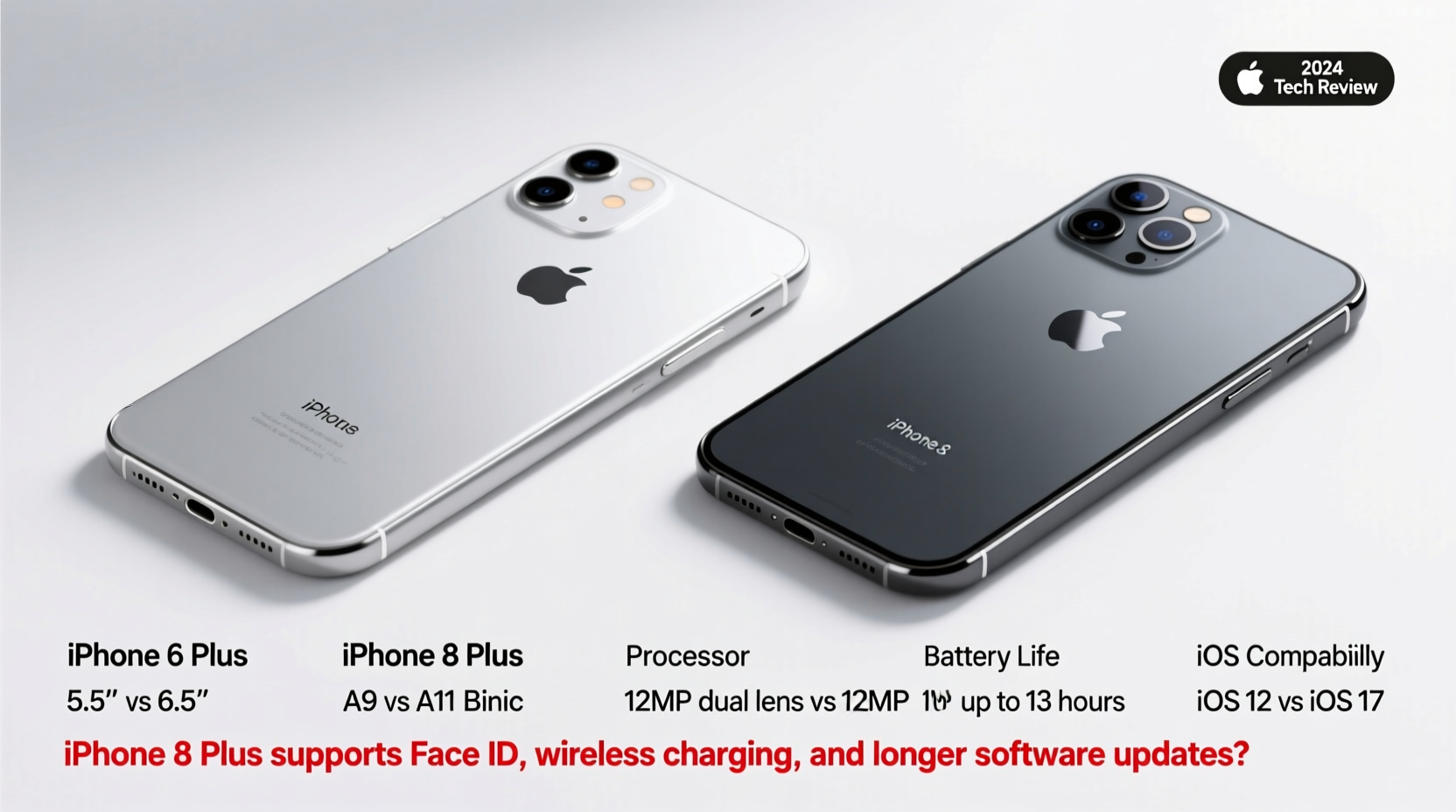
The gap between the iPhone 6 Plus (2014) and the iPhone 8 Plus (2017) may seem small in years, but it represents a major shift in Apple’s hardware trajectory. The 6 Plus runs on the A8 chip with 1GB of RAM, while the 8 Plus features the A11 Bionic chip and 3GB of RAM. This isn’t just a minor speed bump—it’s a transformation in processing power and efficiency.
In 2024, modern apps like Instagram, TikTok, and even Safari demand far more from processors than they did a decade ago. On an iPhone 6 Plus, multitasking can feel sluggish. Apps reload frequently, background processes are limited, and newer versions of iOS aren’t even supported—iOS 12 was the last compatible version. In contrast, the iPhone 8 Plus supports iOS 16 (and unofficially runs iOS 17 with limitations), giving users access to recent security patches, improved privacy tools, and updated app ecosystems.
Camera Comparison: More Than Just Megapixels
One area where the iPhone 8 Plus shines is its dual-camera system. While both phones feature 8MP front cameras, the rear setups differ drastically. The iPhone 6 Plus has a single 8MP sensor, while the 8 Plus boasts a dual 12MP system—one wide-angle and one telephoto—enabling 2x optical zoom and Portrait Mode, a feature absent on the older model.
In practical terms, this means significantly better low-light performance, sharper zoomed photos, and depth-controlled portrait shots. For social media users, bloggers, or anyone who shares images regularly, the improvement is immediately noticeable. Video recording also jumps from 1080p at 60fps on the 6 Plus to 4K at 60fps on the 8 Plus—a massive leap for content creators.
“Even in 2024, the iPhone 8 Plus captures richer detail and dynamic range than most budget Android phones. Its camera remains surprisingly relevant.” — David Lin, Mobile Photographer & Tech Reviewer
Battery Life and Charging: Real-World Endurance
Battery degradation affects all aging smartphones, but the difference in charging technology is another key factor. The iPhone 6 Plus only supports standard 5W charging and lacks any form of wireless charging. After years of use, its battery health often drops below 70%, leading to inconsistent performance and frequent recharging.
The iPhone 8 Plus, however, supports faster charging (up to 50% in 30 minutes with an 18W adapter, sold separately) and introduces Qi wireless charging—a convenience that remains useful in 2024, especially with charging pads now common in cars, cafes, and homes.
| Feature | iPhone 6 Plus | iPhone 8 Plus |
|---|---|---|
| Processor | A8 | A11 Bionic |
| RAM | 1GB | 3GB |
| Rear Camera | 8MP (Single) | 12MP + 12MP (Dual) |
| Video Recording | 1080p @ 60fps | 4K @ 60fps |
| Charging | 5W Wired Only | Faster & Wireless (Qi) |
| Last Supported iOS | iOS 12 | iOS 16 (can run 17) |
| Water Resistance | No | IP67 Rated |
Real-World Example: Sarah’s Upgrade Journey
Sarah, a freelance writer based in Portland, used her iPhone 6 Plus for nearly nine years. She resisted upgrading, believing “if it works, don’t fix it.” But by early 2023, she noticed problems: her banking app wouldn’t update, WhatsApp stopped supporting her OS version, and her phone would overheat during Zoom calls.
She purchased a refurbished iPhone 8 Plus for $149. The change was immediate. Her email loaded without lag, she could finally use FaceTime in HD, and her photos from client meetings looked professional. Most importantly, she regained access to app updates and two-factor authentication tools that had become essential for her work.
“It wasn’t about having the latest gadget,” she said. “It was about being able to do my job reliably. The 8 Plus gave me three more years of stress-free usage.”
Is Upgrading Worth It in 2024? A Step-by-Step Decision Guide
If you're still on the fence, follow this timeline-based evaluation to make a confident decision:
- Assess Current Performance (Week 1): Track how often your iPhone 6 Plus freezes, crashes, or fails to load apps. Note which services (banks, messaging, maps) no longer support your iOS version.
- Test App Compatibility (Week 2): Try downloading essential apps like Google Maps, Uber, or your bank’s app. If they won’t install or run poorly, your device is functionally obsolete.
- Check Battery Health (Week 3): Go to Settings > Battery > Battery Health. If maximum capacity is below 80%, expect poor daily endurance—even after a full charge.
- Research Refurbished Options (Week 4): Look for certified pre-owned iPhone 8 Plus models from reputable sellers (Apple, Best Buy, Amazon Renewed). Prices typically range from $120–$180.
- Make the Switch (Optional Week 5): Back up your 6 Plus via iCloud or iTunes, then restore to the 8 Plus. Expect smoother transitions if staying within the Apple ecosystem.
FAQ: Common Questions About the Upgrade
Can the iPhone 6 Plus still be used in 2024?
Yes, but with serious limitations. It can handle basic calls, texts, and offline tasks. However, lack of app support, security updates, and slow performance make it risky for banking, shopping, or communication apps.
Is the iPhone 8 Plus still supported by Apple?
Officially, the last full iOS version is iOS 16. While iOS 17 doesn’t list the 8 Plus as supported, many users have installed it via workarounds. Apple no longer provides security updates specifically for it, but it remains functional and secure for everyday use in 2024.
What should I do with my old iPhone 6 Plus?
You can repurpose it as a dedicated music player, baby monitor, or smart home controller. Alternatively, recycle it through Apple’s Trade-In program or donate it to organizations that refurbish devices for schools and nonprofits.
Final Verdict: Who Should Upgrade?
For casual users who only make calls and send messages, the iPhone 6 Plus might still suffice—provided they accept its limitations. But for anyone relying on modern apps, digital payments, video conferencing, or mobile photography, upgrading to the iPhone 8 Plus delivers tangible, lasting benefits.
The 8 Plus offers better performance, improved camera quality, modern charging options, and extended software support—all at a low entry price. In 2024, it stands as one of the most cost-effective ways to extend smartphone usability without jumping into the premium market.
- Upgrade if: You use apps daily, need reliable internet access, take photos, or depend on your phone for work.
- Hold off if: Your usage is minimal, you’re planning to buy a newer iPhone soon, or you rely on accessories incompatible with Lightning-to-wireless transitions.
Conclusion: Make the Move When It Serves You
Technology should empower, not frustrate. If your iPhone 6 Plus is slowing you down, causing missed connections, or limiting your digital life, upgrading to the 8 Plus isn’t just logical—it’s liberating. The investment is modest, the performance gain is substantial, and the peace of mind is priceless.




 浙公网安备
33010002000092号
浙公网安备
33010002000092号 浙B2-20120091-4
Comments
No comments yet. Why don't you start the discussion?