
Switching between smartphone ecosystems—especially from Apple to Android—is never a simple plug-and-play decision. For users who spent years in the iOS world, moving to an Android device like the Asus Zenfone 3 Deluxe after owning an iPhone 6 Plus involves more than just comparing specs. It’s about ecosystem integration, user experience, longevity, and personal workflow alignment. This article dives deep into whether making that switch was truly worth it by analyzing real-world usage across key categories: performance, camera quality, software updates, battery life, and overall value.
Performance and Hardware Comparison
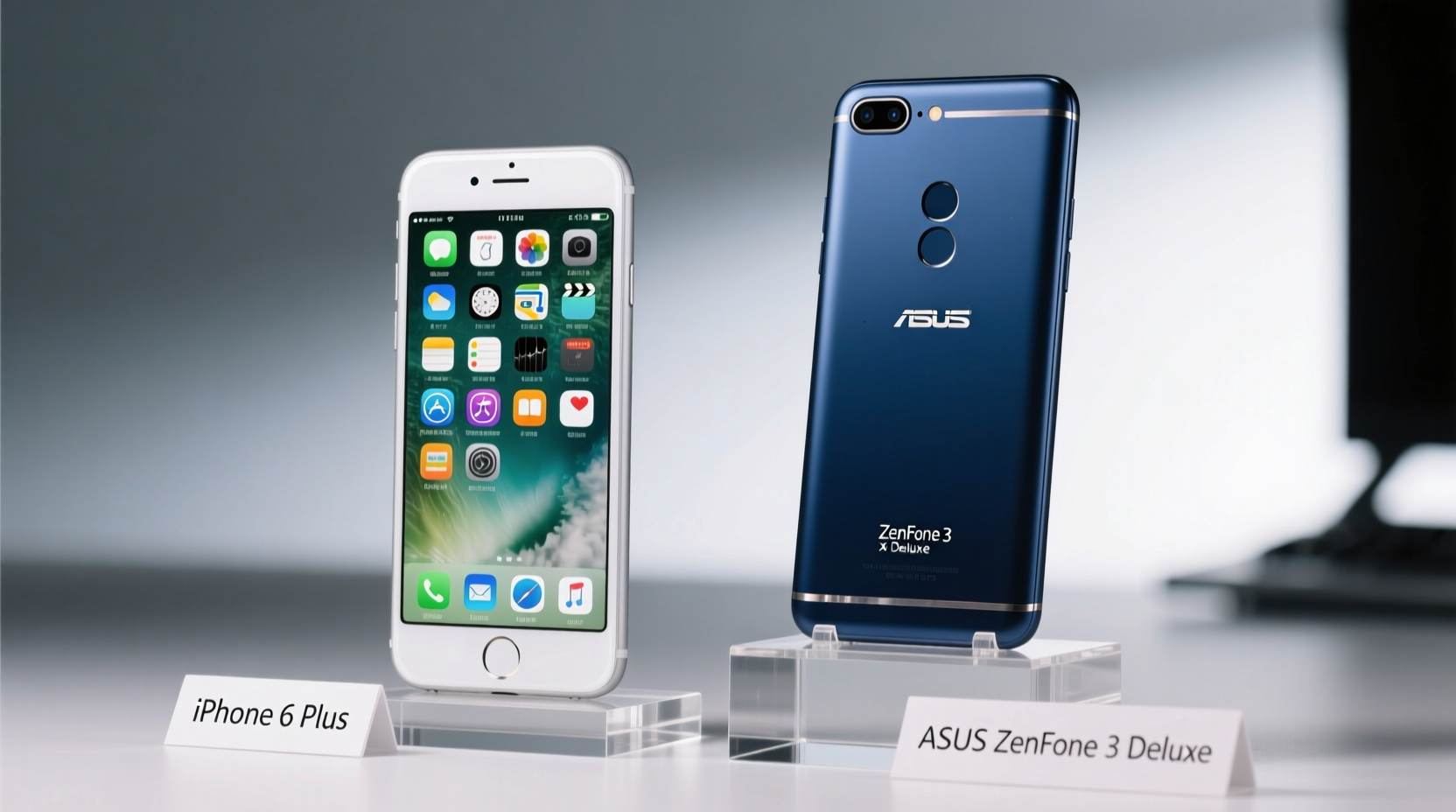
The iPhone 6 Plus, released in 2014, was powered by Apple’s A8 chip with 1GB of RAM. At the time, it offered smooth multitasking and excellent app optimization thanks to iOS’s tight hardware-software integration. However, by 2016—when the Asus Zenfone 3 Deluxe launched—it was beginning to show its age, particularly when handling newer apps and games.
In contrast, the Zenfone 3 Deluxe arrived with flagship-tier hardware: Qualcomm Snapdragon 821 processor, up to 6GB of RAM, and UFS 2.0 storage. On paper, this was a massive leap over the iPhone 6 Plus. In daily use, the difference was immediately noticeable—faster app launches, seamless multitasking, and better gaming performance.
| Feature | iPhone 6 Plus | Asus Zenfone 3 Deluxe |
|---|---|---|
| Processor | Apple A8 (2014) | Snapdragon 821 (2016) |
| RAM | 1GB | 6GB (top variant) |
| Storage Options | 16/64/128GB (non-expandable) | 64/128/256GB (microSD expandable) |
| Battery Capacity | 2915 mAh | 3000 mAh |
| Display | 5.5\" IPS LCD (1080p) | 5.7\" AMOLED (1080p) |
Despite similar battery capacities, the Zenfone 3 Deluxe delivered noticeably longer screen-on time due to more efficient power management and the energy-saving properties of AMOLED technology. The inclusion of USB-C and faster charging was also a significant upgrade over the aging Lightning port and slow 5W charging on the iPhone 6 Plus.
Camera Quality and Real-World Use
The iPhone 6 Plus featured an 8MP rear camera with optical image stabilization—a solid performer in daylight but limited in low-light conditions. Its video recording capabilities were strong for the time, especially with stereo audio capture and 1080p at 60fps.
The Zenfone 3 Deluxe upgraded to a 23MP Sony IMX318 sensor with laser autofocus and dual-tone LED flash. While higher megapixels don’t always mean better photos, in controlled lighting, the Zenfone produced sharper, more detailed images. Low-light performance was also superior thanks to larger pixel size and improved noise processing.
However, consistency was an issue. The Zenfone’s camera software occasionally struggled with white balance and HDR processing, whereas the iPhone 6 Plus delivered predictable, natural-looking photos every time—even years later.
“Apple’s strength has always been consistency. Even older iPhones produce reliable photo quality because of deep software-hardware tuning.” — Mark Lin, Mobile Imaging Analyst at TechPulse Asia
For casual photographers, the Zenfone offered more flexibility and resolution. But for users who valued reliability and color accuracy, the iPhone still held an edge despite its lower specs.
Software Experience and Ecosystem Shift
Moving from iOS to Android isn't just about features—it's a shift in philosophy. iOS is curated, secure, and tightly integrated with other Apple devices. Android offers customization, openness, and broader hardware compatibility.
For someone used to iMessage, FaceTime, AirDrop, and iCloud syncing, switching to the Zenfone meant losing seamless continuity. Replacing iMessage with WhatsApp or Telegram worked functionally, but lacked the same level of integration. Similarly, transferring notes, reminders, and health data required manual migration or third-party tools.
On the flip side, Android Nougat on the Zenfone 3 Deluxe brought split-screen multitasking, customizable themes, and system-wide dark mode—features iOS didn’t offer until much later. Users gained control over default apps, notification management, and file systems, which appealed to tech-savvy individuals frustrated by iOS limitations.
Mini Case Study: Sarah’s Switch
Sarah, a freelance graphic designer, had used her iPhone 6 Plus since 2015. By 2017, she found herself constantly closing apps due to memory limits and struggling with sluggish performance during design reviews. She switched to the Zenfone 3 Deluxe primarily for the 6GB RAM and microSD support.
Initially, she missed iMessage and had trouble syncing her MacBook. But within two months, she adapted using Google Drive, Slack, and Adobe Creative Cloud—all of which worked better on Android for her workflow. She appreciated the ability to connect her phone directly to external monitors via HDMI adapters and manage files freely. For her, the switch was worth it—not because the phone was objectively better, but because it served her professional needs more effectively.
Longevity and Update Support
One of the most underrated advantages of iPhones is long-term software support. The iPhone 6 Plus received updates from iOS 8 all the way to iOS 12—five years of security patches and feature upgrades. Even today, many apps continue to support legacy iOS versions compatible with the device.
The Zenfone 3 Deluxe launched with Android 6.0 Marshmallow and officially received updates up to Android 8.0 Oreo. That’s only two major OS upgrades, falling short of Google’s promise for flagship devices at the time. After 2018, security patches became infrequent, leaving users exposed to vulnerabilities.
This shorter support window significantly impacted long-term usability. By 2020, many modern apps either ran poorly or stopped supporting the Zenfone entirely. Meanwhile, the iPhone 6 Plus could still run basic tasks, browse the web, and handle messaging apps—albeit slowly.
- iOS devices typically receive 5–6 years of updates
- Most Android phones get 2–3 years of major updates
- App developers prioritize iOS for long-tail compatibility
Was the Switch Worth It? A Balanced Verdict
The answer depends on what you value most:
- Performance now? Yes—the Zenfone 3 Deluxe outperformed the aging iPhone 6 Plus in speed, multitasking, and display quality.
- Ecosystem continuity? No—switching broke seamless integration with Macs, iPads, and Apple Watches.
- Customization and control? Absolutely—Android offered deeper settings access and flexibility.
- Long-term usability? Probably not—the iPhone lasted longer with updates and app support.
Checklist: Is Switching from iPhone to Android Right for You?
- ✅ Are you comfortable migrating contacts, messages, and media manually?
- ✅ Do you rely heavily on iMessage or FaceTime? (Consider staying if yes)
- ✅ Do you want more RAM, expandable storage, or USB-C?
- ✅ Are you prepared for shorter software update cycles?
- ✅ Will you use cross-platform apps (Google Workspace, Microsoft 365, etc.)?
Frequently Asked Questions
Can I transfer my photos and messages from iPhone to Zenfone 3 Deluxe?
Yes, but not seamlessly. Use Google Photos to sync images. For messages, third-party tools like Move to Android (by Google) can transfer SMS, but iMessages cannot be migrated. Export important chats via email before switching.
Does the Zenfone 3 Deluxe support wireless charging?
No, despite its premium positioning, the Zenfone 3 Deluxe does not include wireless charging. You’ll need a wired connection for power, though it does support Quick Charge 3.0.
Why did Apple stop supporting the iPhone 6 Plus earlier than expected?
It didn’t. The iPhone 6 Plus was supported through iOS 12, which was a remarkable run. Apple prioritizes backward compatibility, but hardware limitations eventually prevent new features from running smoothly. The device simply couldn’t handle ARKit or advanced machine learning features introduced in later iOS versions.
Final Thoughts: Making the Right Choice for Your Needs
The switch from the iPhone 6 Plus to the Asus Zenfone 3 Deluxe represented a trade-off: raw power and flexibility for reduced ecosystem cohesion and shorter software lifespan. For users craving performance and customization in 2016–2017, the move made sense. But those who valued long-term reliability, consistent updates, and seamless integration with other Apple products likely found the transition underwhelming.
Technology choices aren’t one-size-fits-all. What matters is how well a device fits into your lifestyle, work habits, and future plans. The Zenfone 3 Deluxe was a powerful Android alternative, but it couldn’t match Apple’s holistic ecosystem longevity.




 浙公网安备
33010002000092号
浙公网安备
33010002000092号 浙B2-20120091-4
Comments
No comments yet. Why don't you start the discussion?