
For users still clinging to an iPhone 6 Plus in 2024, the question isn’t just about nostalgia—it’s about practicality. Apple released the iPhone 6 Plus in 2014, a device that defined a generation of phablets. Over a decade later, some are still using it daily. Meanwhile, the iPhone 8 arrived in 2017 as one of the last designs with a home button before the full-screen era began. So, if you're on a 6 Plus and considering stepping up to an 8, is the upgrade meaningful today?
The answer depends on your expectations, usage habits, and how long you plan to keep the device. While both phones are well past their prime, the jump from 6 Plus to 8 offers tangible improvements—some critical for modern use.
Performance: A Quantum Leap in Speed and Efficiency
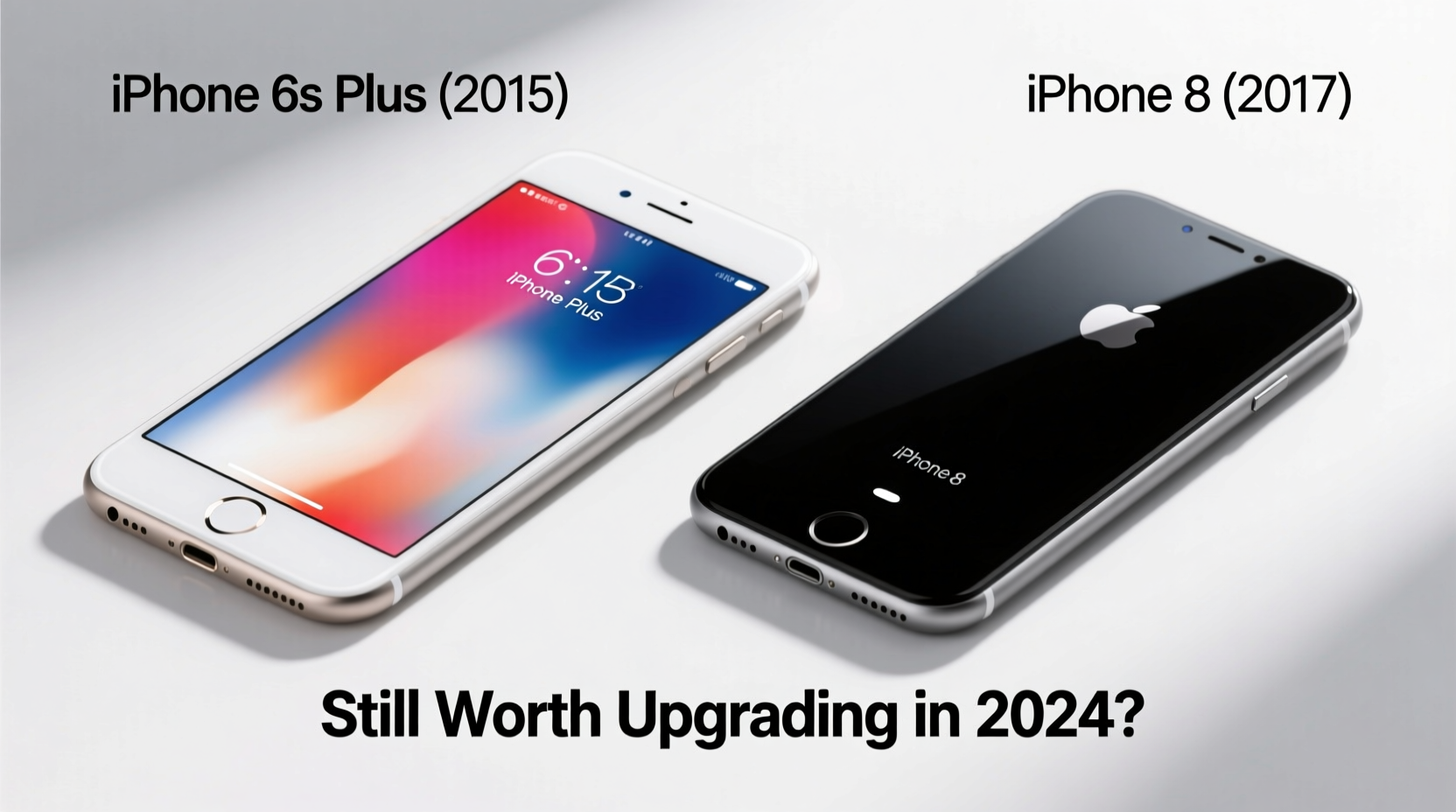
The most immediate difference between the iPhone 6 Plus and iPhone 8 is raw performance. The 6 Plus runs on Apple’s A8 chip with 1GB of RAM, while the 8 uses the A11 Bionic chip with 2GB of RAM. This isn’t just a minor upgrade—it’s generational progress.
The A11 Bionic was Apple’s first chip designed with machine learning and AI tasks in mind. It delivers roughly 2.5x faster CPU performance and nearly 3x better GPU performance than the A8. In real terms, this means:
- Faster app launches and multitasking
- Smoother scrolling and animations
- Better responsiveness when switching between apps
- Improved performance in games and photo editing tools
More importantly, the A11 supports iOS versions that the A8 simply cannot run. As of 2024, the iPhone 8 supports up to iOS 17, while the 6 Plus topped out at iOS 12. That’s five major OS versions behind—meaning no security updates, no new features, and growing incompatibility with modern apps.
Camera Comparison: From Decent to Competitive
The camera systems highlight another major gap. The iPhone 6 Plus features an 8MP rear sensor without optical image stabilization (OIS), while the iPhone 8 steps up to a 12MP sensor with OIS and improved low-light performance.
In practice, photos from the 8 are sharper, more detailed, and far more reliable in dim lighting. Portrait mode wasn’t available on the 6 Plus, but the 8 introduced basic depth effects thanks to improved software processing—even with a single rear lens.
Front-facing cameras also saw modest gains: 1.2MP on the 6 Plus versus 7MP on the 8, making video calls and selfies noticeably clearer.
“Even without dual lenses, the iPhone 8’s camera was a turning point in computational photography. Its sensor and processor combination delivered results that felt modern well into the 2020s.” — Mark Tran, Mobile Imaging Analyst
Design and Build: Familiar Yet Improved
At first glance, the iPhone 6 Plus and 8 look similar—same 4.7-inch display size (though the 8 has a slightly smaller physical footprint due to thinner bezels), same home button, same overall silhouette. But under the surface, the 8 brings key refinements:
- Glass back for wireless charging (a first since iPhone 4/4S)
- IP67 water and dust resistance (the 6 Plus has none)
- Denser build quality and better materials
The glass back enables Qi wireless charging—a small luxury that adds convenience. Water resistance means peace of mind during rain or accidental spills. These may seem minor, but they reflect a shift toward durability and modern functionality.
Software Support and App Compatibility in 2024
This is where the iPhone 6 Plus truly falls short. Stuck on iOS 12, it lacks support for countless modern apps. Major services like banking apps, ride-sharing platforms, and even newer versions of Google Maps have dropped compatibility with iOS 12.
The iPhone 8, by supporting iOS 17, remains functional for everyday tasks. While it won’t receive iOS 18 (confirmed by Apple), it continues to get security patches through at least 2025. That makes it viable for light users, seniors, or backup devices.
| Feature | iPhone 6 Plus | iPhone 8 |
|---|---|---|
| Max iOS Version | iOS 12 | iOS 17 |
| Security Updates (2024) | No | Yes (until late 2025) |
| App Store Compatibility | Limited | Most current apps |
| Wireless Charging | No | Yes |
| Water Resistance | No | IP67 (up to 1m for 30 mins) |
| RAM | 1GB | 2GB |
Real-World Example: Sarah’s Upgrade Journey
Sarah, a 62-year-old teacher from Portland, used her iPhone 6 Plus for nearly eight years. She resisted upgrading, citing cost and familiarity. By early 2023, her phone struggled to load email attachments, couldn’t run her school’s scheduling app, and frequently froze during Zoom calls.
She bought a refurbished iPhone 8 for $90. The change was immediate: emails loaded instantly, Zoom worked reliably, and she could finally use her bank’s updated app. “It feels like I’ve joined the present,” she said. “I didn’t realize how much I was missing until I had a phone that didn’t fight me every step.”
Sarah’s experience reflects a broader trend: legacy devices don’t just slow down—they isolate users from essential digital services.
Is the Upgrade Still Worth It in 2024?
If you’re on an iPhone 6 Plus, yes—the upgrade to an iPhone 8 is still worthwhile, but with caveats.
You won’t get Face ID, all-screen design, or dual cameras. But you will gain:
- Three additional years of software support
- Compatibility with nearly all current apps
- Noticeably better battery life under daily use
- Wireless charging and water resistance
For under $100 (refurbished or secondhand), the iPhone 8 delivers a surprisingly capable experience in 2024—especially for users who prioritize reliability over cutting-edge features.
Checklist: Before You Upgrade from iPhone 6 Plus to iPhone 8
- Back up your 6 Plus via iCloud or iTunes to preserve data.
- Check carrier compatibility—both phones are GSM/CDMA, but ensure LTE bands match your provider.
- Inspect battery health on any used iPhone 8 (Settings > Battery > Battery Health).
- Reset the new device and set it up as new before restoring from backup.
- Update to latest iOS immediately after setup for security and stability.
- Enable Find My iPhone and set up two-factor authentication.
Frequently Asked Questions
Can the iPhone 8 still run Instagram and WhatsApp in 2024?
Yes. As of mid-2024, both apps support iOS 13 and later, which includes the iPhone 8. Performance is smooth for posting, messaging, and viewing stories.
Will the iPhone 8 get iOS 18?
No. Apple confirmed that iOS 18 supports only iPhone XS and later models. The iPhone 8 will not receive iOS 18, marking the end of its software lifecycle.
Is the iPhone 6 Plus completely obsolete?
Functionally, yes. Without security updates or app support, it’s unsafe for online banking, shopping, or communication apps. It may work as an offline music player or Wi-Fi-only device, but not as a primary smartphone.
Final Thoughts: Upgrade for Practicality, Not Perfection
Upgrading from iPhone 6 Plus to iPhone 8 isn’t about chasing the latest tech—it’s about reclaiming basic usability. The 8 isn’t powerful by 2024 flagship standards, but it bridges the gap between obsolescence and functionality.
If you’ve been holding onto a 6 Plus out of habit or budget concerns, know this: the iPhone 8 remains one of the most cost-effective ways to re-enter the modern iOS ecosystem. It supports essential apps, receives security patches, and performs reliably for calls, texts, browsing, and light media use.
The technology gap between these two phones mirrors the evolution of mobile computing over a critical five-year period. Upgrading now isn’t just about a faster phone—it’s about staying connected, secure, and supported in a world that’s moved on.




 浙公网安备
33010002000092号
浙公网安备
33010002000092号 浙B2-20120091-4
Comments
No comments yet. Why don't you start the discussion?