
When Apple released the iPhone 6 and iPhone 6 Plus in September 2014, they marked a turning point in smartphone design. For the first time, Apple embraced larger screens, stepping away from the compact form factor that had defined its earlier models. The iPhone 6 featured a 4.7-inch display, while the 6 Plus brought a significantly larger 5.5-inch screen. But beyond the numbers, the real question remained: was the bigger size of the 6 Plus actually worth it for most users?
The answer depends on individual needs—how you use your phone, what kind of media you consume, and even how you carry it. While both devices shared core components like the A8 chip and 8MP rear camera, the differences in size, battery life, display quality, and usability created distinct experiences. Let’s break down the key factors to determine whether upgrading to the larger model delivered meaningful benefits.
Design and Build: Form Meets Function
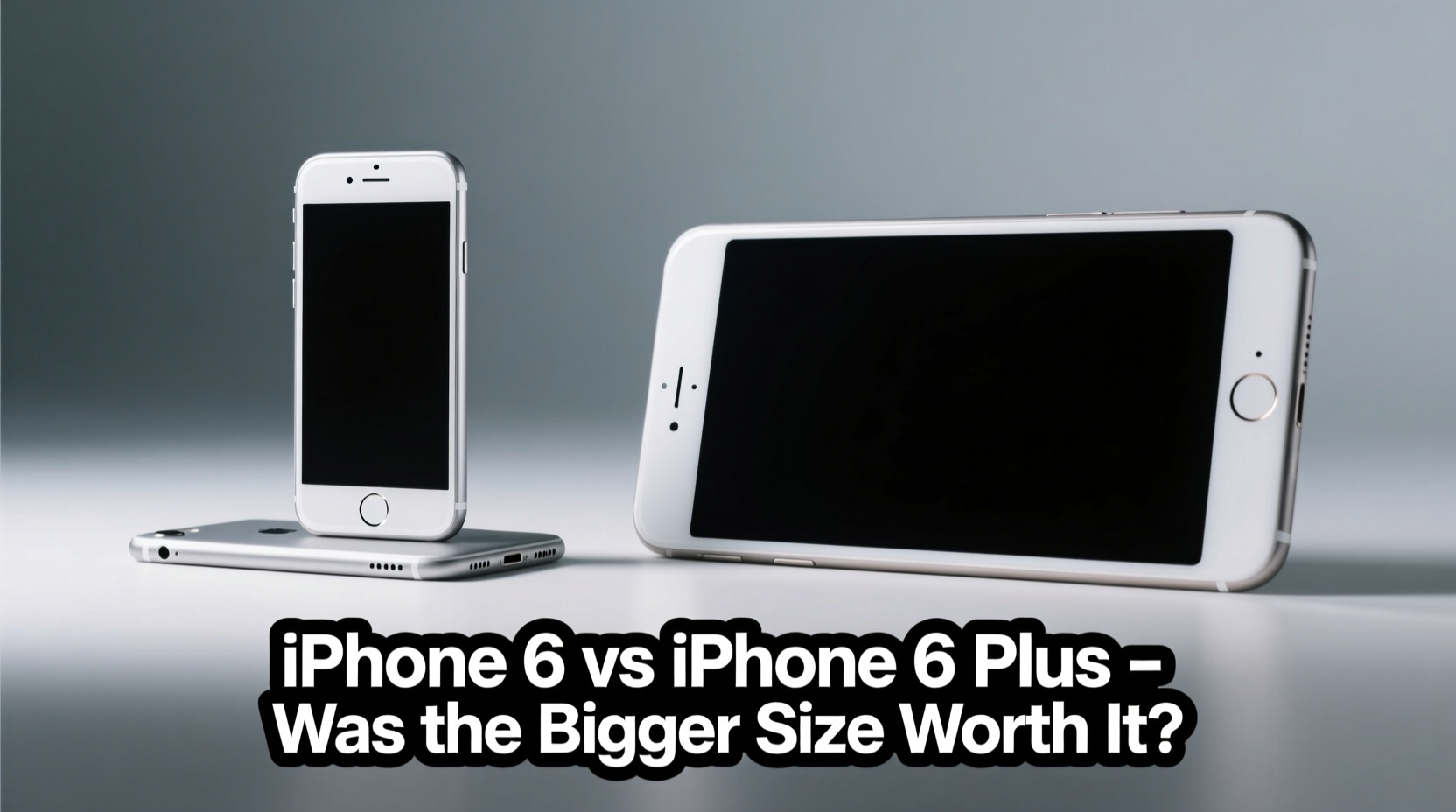
The iPhone 6 and 6 Plus shared a nearly identical design language—curved edges, aluminum unibody construction, and a minimalist aesthetic. However, their dimensions told very different stories. The iPhone 6 measured 138.1 x 67.0 x 6.9 mm and weighed 129 grams, making it comfortable to hold and easy to operate with one hand. In contrast, the 6 Plus was substantially larger at 158.1 x 77.8 x 7.1 mm and 172 grams, pushing the limits of pocketability and single-handed use.
Despite the size jump, the 6 Plus didn’t feel unwieldy for everyone. Users who prioritized screen real estate—especially for reading, video, or multitasking—found the extra space liberating. The taller display allowed more content to be visible at once, improving web browsing and email management. However, those with smaller hands often struggled to reach across the screen without shifting their grip.
Battery Life: Where the 6 Plus Shines
One of the most tangible advantages of the larger iPhone 6 Plus was its superior battery capacity. With a 2,915 mAh battery compared to the iPhone 6’s 1,810 mAh, the 6 Plus offered noticeably longer endurance. In real-world usage, this translated to up to 24 hours of mixed use—including calls, browsing, and media playback—versus about 14–16 hours on the smaller model.
This difference mattered most for heavy users: travelers, professionals on the go, or anyone relying on their phone throughout the day without easy access to charging. The 6 Plus could comfortably last from morning to night, even with GPS navigation or streaming audio. The iPhone 6, while adequate for average use, often required midday charging under similar conditions.
“Battery life is the silent enabler of productivity. The 6 Plus wasn’t just bigger—it gave users freedom from constant charging anxiety.” — David Lin, Mobile Tech Analyst at GadgetInsight
Display and Media Experience
The screen size difference wasn’t just about inches—it influenced how users interacted with content. The iPhone 6’s 4.7-inch Retina HD display (1334x750 resolution) offered sharp text and vibrant colors, but the 6 Plus took it further with a 5.5-inch display at 1920x1080 resolution, delivering true 1080p Full HD clarity.
For watching videos, reading e-books, or playing games, the 6 Plus provided a more immersive experience. Text was easier to read without zooming, and apps with split-view layouts (like Mail) made better use of the space. Additionally, the larger screen enabled native support for landscape keyboard shortcuts and improved multitasking gestures in later iOS versions.
However, there was a trade-off: pixel density. The iPhone 6 had a higher PPI (326 vs. 401), meaning individual pixels were less visible to the naked eye. While most users wouldn’t notice the difference in daily use, purists argued the 6 Plus sacrificed some visual crispness for screen size.
Performance and Camera: Nearly Identical, But Not Quite
Both phones ran the same A8 chip and M8 motion coprocessor, ensuring comparable app performance and responsiveness. Day-to-day tasks like launching apps, scrolling through social feeds, or switching between Safari tabs felt equally smooth on both models.
The rear cameras were also rated at 8MP with optical image stabilization (OIS)—but only the iPhone 6 Plus included OIS. This meant better low-light photos and reduced blur from hand movement, giving the larger model a subtle but meaningful edge in photography. In side-by-side comparisons, 6 Plus images consistently showed improved detail and stability, especially in dim environments.
Front-facing cameras, video recording (1080p at 60fps), and audio quality were identical. So while the core experience was the same, the 6 Plus quietly outperformed its sibling where hardware enhancements were possible.
Real-World Usage: A Mini Case Study
Consider Sarah, a freelance journalist who used her iPhone extensively for note-taking, interviews, and photo editing. She initially leaned toward the iPhone 6 for its portability but ultimately chose the 6 Plus after testing both in-store.
Within weeks, she noticed significant workflow improvements. The larger screen made typing faster and more accurate, reducing errors during long-form writing. She could preview full article layouts in Safari without constant zooming. During interviews, the enhanced battery life meant she never worried about her recorder app dying. And when shooting supplemental images, the OIS on the 6 Plus ensured clearer shots in poorly lit cafes.
While she occasionally found the phone bulky in tight pockets, the trade-offs were overwhelmingly positive. For her, the bigger size wasn’t just worth it—it became essential to her productivity.
Comparison Table: iPhone 6 vs iPhone 6 Plus
| Feature | iPhone 6 | iPhone 6 Plus |
|---|---|---|
| Screen Size | 4.7 inches | 5.5 inches |
| Resolution | 1334x750 (326 PPI) | 1920x1080 (401 PPI) |
| Battery Capacity | 1,810 mAh | 2,915 mAh |
| Optical Image Stabilization | No | Yes |
| Weight | 129 g | 172 g |
| Standby Time | Up to 10 days | Up to 16 days |
| Talk Time (3G) | Up to 14 hours | Up to 24 hours |
Frequently Asked Questions
Was the iPhone 6 Plus harder to repair or maintain?
Due to its larger internal layout and curved back design, the 6 Plus was slightly more complex to service than the 6. Screen replacements and battery swaps cost more due to part availability and labor. However, common issues like cracked glass or water damage were manageable through authorized and third-party providers.
Did the iPhone 6 Plus support split-screen apps?
No, iOS 8 and 9 did not include true split-screen multitasking. That feature arrived later with the iPad and iPhone 6s Plus in specific apps. However, the 6 Plus did introduce Reachability and landscape keyboard shortcuts, which improved usability on the larger screen.
Is the iPhone 6 Plus still usable today?
As of 2024, the iPhone 6 and 6 Plus no longer receive iOS updates and lack support for many modern apps. Performance with current software is sluggish, and security risks are higher. While functional for basic calls and texts, they’re not recommended for daily use.
Actionable Checklist: Choosing Between iPhone 6 and 6 Plus (At Launch)
- ✅ Assess your daily usage: Do you read, watch videos, or type heavily?
- ✅ Test both phones in-hand: Can you comfortably reach across the 6 Plus screen?
- ✅ Prioritize battery life: Will you be away from chargers for extended periods?
- ✅ Consider photography: Do you often shoot in low light? (6 Plus has OIS)
- ✅ Think about pocket fit: Will the 6 Plus fit in your jeans or jacket?
- ✅ Evaluate long-term value: The 6 Plus held resale value better due to higher demand.
Final Verdict: Was the Bigger Size Worth It?
For many users, yes—the iPhone 6 Plus offered meaningful upgrades that justified its size. The combination of longer battery life, superior display for media, and optical image stabilization made it a compelling choice, especially for professionals, travelers, and multimedia consumers. It represented Apple’s first serious step into the phablet category, setting the stage for future large-screen iPhones.
But it wasn’t for everyone. Those who valued portability, one-handed operation, or minimalism found the iPhone 6 more than sufficient. Its balanced design and solid performance catered to mainstream users who didn’t need extra screen space.
In hindsight, the iPhone 6 Plus wasn’t just a bigger phone—it was a signal of changing user expectations. As apps grew more visually rich and mobile workflows expanded, screen size became a critical factor in usability. Apple’s decision to offer both sizes acknowledged a shift in consumer behavior, and the 6 Plus proved that, for a growing segment, bigger truly was better.




 浙公网安备
33010002000092号
浙公网安备
33010002000092号 浙B2-20120091-4
Comments
No comments yet. Why don't you start the discussion?