
For millions of smartphone users in the mid-to-late 2010s, the decision to upgrade from an iPhone 6 to a Samsung Galaxy J4 wasn’t just about switching brands—it represented a shift in ecosystem, usability, and long-term value. The iPhone 6, launched in 2014, was a landmark device for Apple, known for its sleek design and smooth iOS integration. The Samsung Galaxy J4, released in 2018, targeted budget-conscious Android users with modest specs but broader customization options. But for someone making the leap between these two devices, was the upgrade truly beneficial? Or did it come with hidden trade-offs?
This article breaks down the key differences across hardware, software, camera quality, battery life, and daily usability to determine whether switching from the iPhone 6 to the Samsung J4 was a smart move—or a step sideways.
Design and Build Quality: A Tale of Two Philosophies
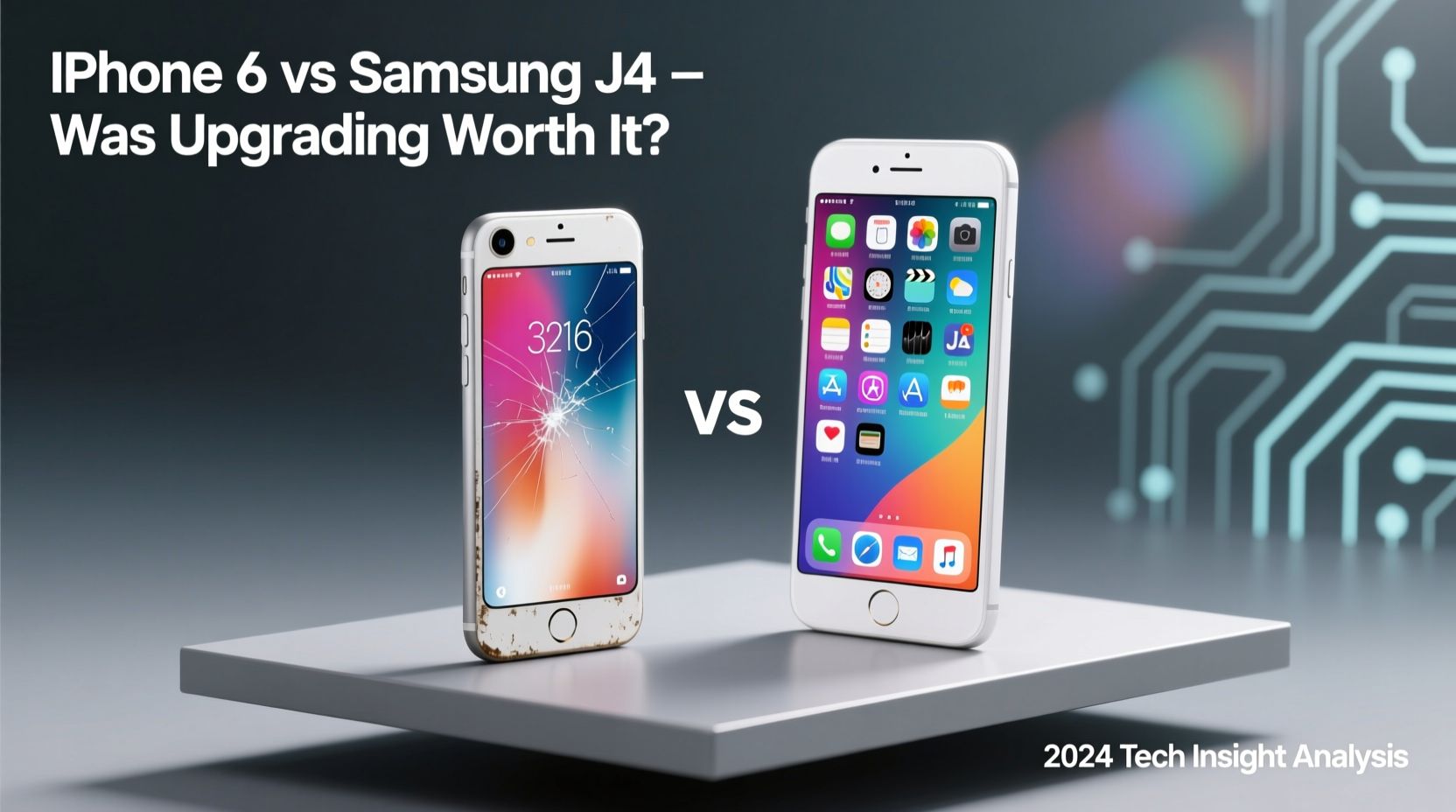
The iPhone 6 set a new standard for Apple’s industrial design. Its aluminum unibody, rounded edges, and compact 4.7-inch form made it one of the most comfortable phones to hold at the time. Despite being four years older than the J4, the iPhone 6 still feels premium in hand, thanks to its solid construction and tight tolerances.
In contrast, the Samsung Galaxy J4 adopted a more utilitarian approach. It featured a plastic body, a larger 5.5-inch display, and noticeably thicker bezels. While the size offered better media consumption, the build quality felt less refined. Drop tests and long-term use revealed that the J4’s plastic back was prone to scratches and creaking under pressure.
From a design standpoint, the iPhone 6 wins on craftsmanship, while the J4 offers screen real estate at the cost of elegance.
Performance and Software Experience
Under the hood, the iPhone 6 ran Apple’s A8 chip with 1GB of RAM. By modern standards, this is minimal, but iOS optimization allowed it to handle everyday tasks smoothly until around 2018. However, as iOS updates progressed, performance degraded—especially after iOS 12, where even basic animations became sluggish.
The Samsung J4 countered with an Exynos 7570 processor and 2GB of RAM—double the memory. On paper, this looks like a clear win. In practice, however, the reality was different. Samsung’s TouchWiz (later rebranded One UI Core) was heavier than iOS, and the entry-level chipset struggled with multitasking and app loading times. Users reported frequent app reloads and occasional stutters when navigating between screens.
iOS remained snappier for core functions like calling, messaging, and Safari, while the J4 offered more background flexibility but paid for it in responsiveness.
“Even with lower specs, iOS efficiency often outperforms higher-spec Android devices in day-to-day use.” — Raj Mehta, Mobile Systems Analyst at TechInsight Group
Camera Comparison: Photos Over Megapixels
The iPhone 6 featured an 8MP rear camera with Apple’s signature color science, reliable autofocus, and excellent dynamic range for its era. Video recording topped out at 1080p at 60fps, which was impressive at launch. Even years later, photos taken in good light held up remarkably well.
The Samsung J4 came with a 13MP rear sensor—a number that sounds superior—but image processing told a different story. Low-light performance was poor, colors were oversaturated, and detail was often lost to noise reduction. The front-facing 5MP camera also struggled with skin tones and lacked flash support.
| Feature | iPhone 6 | Samsung J4 |
|---|---|---|
| Rear Camera | 8MP, f/2.2 | 13MP, f/1.9 |
| Front Camera | 1.2MP, f/2.2 | 5MP, f/2.2 |
| Video Recording | 1080p@60fps | 1080p@30fps |
| Low-Light Performance | Moderate | Poor |
| Color Accuracy | Natural | Oversaturated |
Despite the megapixel advantage, the iPhone 6 consistently produced more balanced, natural-looking photos. The J4’s camera was functional for social media snapshots but fell short in consistency and post-processing potential.
Battery Life and Charging: Quantity vs Longevity
The iPhone 6 shipped with a 1,810mAh battery—small by today’s standards. With moderate use, it lasted about a day, though aging batteries after 2017 significantly reduced that. Fast charging wasn’t supported, and wireless charging was absent.
The Samsung J4 packed a 3,000mAh battery—nearly 66% larger—which translated to noticeably longer screen-on time. Many users reported 1.5 days of light use. However, the lack of power-saving modes and background app drain limited its efficiency gains.
Charging speed was similar on both—5W via micro USB (J4) or Lightning (iPhone)—but the J4 had the edge purely due to capacity. Still, battery health degradation over time hit both models hard, especially without official battery replacement programs readily available in some regions.
Mini Case Study: Maria’s Upgrade Dilemma
Maria, a teacher from Manila, used her iPhone 6 from 2015 to 2018. By 2017, her battery drained within half a day, apps crashed frequently, and iOS updates slowed everything down. She upgraded to the Samsung J4 hoping for better battery and newer features.
Initially, she loved the bigger screen and longer battery life. But she quickly missed the fluidity of iOS, found Android’s interface confusing, and was disappointed by photo quality during school events. After six months, she switched back to a refurbished iPhone 7, citing “better balance of performance and familiarity.”
Maria’s experience highlights a crucial point: raw specs don’t always translate to satisfaction. Usability, ecosystem comfort, and reliability matter just as much as hardware upgrades.
Is the Upgrade Worth It? A Practical Checklist
Before making a switch like this, consider the following factors. Use this checklist to evaluate whether moving from an iPhone 6 to a Samsung J4 makes sense for your lifestyle.
- ✅ Need longer battery life? → J4 has a clear advantage
- ✅ Want a larger screen for videos or reading? → J4’s 5.5” display wins
- ✅ Prioritize photo quality and color accuracy? → iPhone 6 still holds up better
- ✅ Prefer a premium, compact build? → iPhone 6 feels more durable
- ✅ Comfortable with Android after using iOS? → Learning curve may affect satisfaction
- ✅ Need consistent software updates? → iOS offered longer support than J4’s single major update
- ✅ Budget-constrained? → J4 was cheaper, but long-term value favors Apple
Frequently Asked Questions
Could the Samsung J4 run modern apps smoothly in 2024?
No. The Exynos 7570 and 2GB RAM are insufficient for current versions of Instagram, WhatsApp, or Chrome. App crashes and slow loading are common. Most users would struggle with basic functionality today.
Did the iPhone 6 receive security updates longer than the J4?
Yes. Apple supported the iPhone 6 with security updates until 2022 (iOS 12.5.7), while Samsung provided only two years of updates for the J4, ending around 2020. This gave the iPhone 6 a significant edge in long-term security and trustworthiness.
Was the Samsung J4 a true successor to the iPhone 6 in terms of user experience?
Not really. While it offered newer hardware on paper, the overall experience was less polished. iOS offered tighter app integration, smoother animations, and better long-term reliability. The J4 served budget needs but didn’t match the iPhone 6’s cohesive ecosystem.
Final Verdict: Was the Upgrade Worth It?
For users seeking only battery life and screen size, the jump to the Samsung J4 delivered tangible benefits. But for those valuing performance consistency, camera quality, software support, and build integrity, the upgrade often felt underwhelming—even regressive.
The iPhone 6, despite its age, benefited from Apple’s unmatched software optimization and update longevity. The J4, while newer, was hamstrung by its budget-tier components and limited upgrade path. In many ways, switching from an aging iPhone 6 to a base-model Android phone in 2018 meant trading ecosystem strength for marginal hardware gains.
If the goal was future-proofing, a better choice might have been an iPhone 7 or even a mid-range Android like the Moto G series, which offered better balance. As it stands, the iPhone 6 to J4 transition was rarely a clear win—it was often a compromise.




 浙公网安备
33010002000092号
浙公网安备
33010002000092号 浙B2-20120091-4
Comments
No comments yet. Why don't you start the discussion?