
When Apple released the iPhone 8 Plus in 2017 as a successor to the iPhone 7 Plus, it didn’t come with a dramatic redesign. Both phones look nearly identical, share the same screen size, and feature dual-lens rear cameras. That similarity raises a practical question for users considering an upgrade: Is the camera on the iPhone 8 Plus actually better than the one on the 7 Plus?
The answer isn’t just about megapixels or marketing claims. It’s about real-world improvements in image processing, low-light performance, and subtle but meaningful enhancements that affect how your photos look every day. Let’s break down the differences—beyond the specs—and determine whether the upgrade is worth it.
Camera Hardware: What’s Changed?
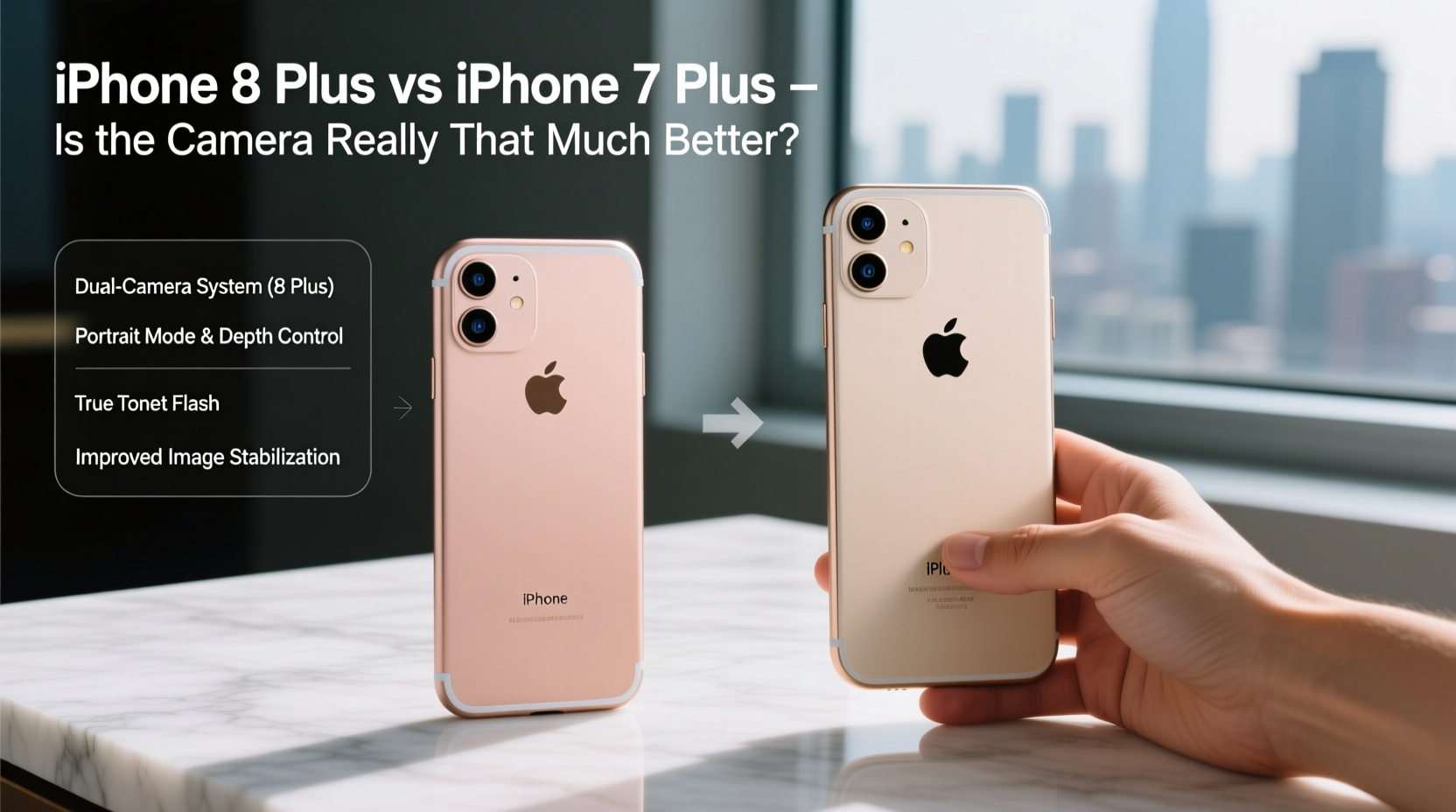
At first glance, the hardware specs seem almost identical:
- Both models have a 12MP wide-angle lens (f/1.8) and a 12MP telephoto lens (f/2.8).
- Both support 2x optical zoom, portrait mode (software-based depth effect), and 4K video recording.
- Both include optical image stabilization (OIS) on the wide-angle lens only.
So what’s different? The key upgrades are internal. The iPhone 8 Plus uses a newer image signal processor (ISP) built into the A11 Bionic chip, compared to the A10 Fusion in the 7 Plus. This allows faster processing, improved noise reduction, and smarter HDR handling. Additionally, the 8 Plus features a larger and faster sensor, even if the resolution remains the same.
Apple also improved the color filter and micro-lenses on the 8 Plus sensors, which helps capture more light and detail—especially in challenging conditions.
Low-Light Performance: Where the 8 Plus Shines
In dim lighting—like indoor dinners, evening walks, or concerts—the iPhone 8 Plus consistently outperforms its predecessor. Thanks to the enhanced ISP and improved sensor efficiency, it captures brighter images with less noise and better color accuracy.
On the 7 Plus, low-light shots often appear grainy, especially in the shadows, and dynamic range can suffer. The 8 Plus handles these situations with greater balance. Highlights are preserved, and dark areas retain more detail without looking muddy.
A real-world example: shooting inside a candlelit restaurant. The 7 Plus might struggle to expose properly, resulting in either a too-dark image or blown-out highlights around the flame. The 8 Plus adjusts more intelligently, preserving ambiance while still capturing facial details.
“Even without changing the lens or megapixel count, Apple managed to extract noticeably better low-light results through computational photography advancements.” — David Pogue, Tech Journalist and Former New York Times Columnist
Detailed Comparison: iPhone 8 Plus vs 7 Plus Camera Features
| Feature | iPhone 7 Plus | iPhone 8 Plus |
|---|---|---|
| Wide-Angle Lens | 12MP, f/1.8, OIS | 12MP, f/1.8, OIS |
| Telephoto Lens | 12MP, f/2.8 | 12MP, f/2.8 |
| Image Signal Processor | A10 Fusion | A11 Bionic (next-gen) |
| Sensor Improvements | Standard backside-illuminated | Larger, faster, improved color filter |
| Portrait Mode Quality | Good edge detection, occasional errors | Sharper subject isolation, fewer artifacts |
| Low-Light Performance | Average; noticeable noise | Better exposure, less noise |
| HDR Processing | Manual or auto (slower) | Faster, more natural blending |
| Video Stabilization | Optical + digital | Enhanced optical + digital |
Portrait Mode and Depth Control: Subtle but Meaningful Gains
Both phones introduced Portrait Mode with the dual-camera setup, but the 8 Plus delivers a more refined experience. Edge detection—how well the phone separates the subject from the background—is sharper and more accurate. Hair strands, glasses, and complex outlines are handled better, reducing the “halo” effect sometimes seen on the 7 Plus.
Additionally, the 8 Plus benefits from later iOS updates that introduced adjustable depth control *after* taking the photo—a feature not initially available on the 7 Plus. While the 7 Plus eventually gained this capability through software, the 8 Plus processes it more smoothly due to superior hardware acceleration.
If you frequently take portraits—of people, pets, or objects—the incremental improvements add up to more professional-looking results with less need for editing.
Real Example: Family Portrait in Mixed Lighting
Consider Sarah, a parent using her iPhone to photograph her child during a backyard birthday party at dusk. She uses both an old 7 Plus and an 8 Plus to take the same shot.
On the 7 Plus, the image comes out slightly underexposed. The background lights are bright, causing the camera to darken the foreground. The child’s face lacks detail, and noise creeps into the shadows. Portrait Mode activates, but the blur effect cuts off part of an ear.
On the 8 Plus, the same scene is brighter and more balanced. Face detection locks in faster, and the background blur looks more natural. Even without flash, the child’s expression is clear, and colors remain true.
This difference may seem minor in isolation, but over hundreds of photos, it translates to more keepers and fewer retakes.
Do You Need to Upgrade?
If you’re still using an iPhone 7 Plus, you might wonder whether upgrading to the 8 Plus is worthwhile purely for the camera. The truth is, the improvements are real but incremental—not revolutionary.
The 8 Plus offers:
- Better low-light clarity
- Faster HDR and processing
- Improved portrait edge detection
- Smoother video stabilization
However, if you're satisfied with your 7 Plus photos in daylight and average lighting, the gains may not justify the cost—especially since both models are now several generations behind current iPhones.
Checklist: Should You Upgrade from 7 Plus to 8 Plus for the Camera?
- Are you frequently disappointed by blurry or noisy low-light photos? → Upgrade
- Do you use Portrait Mode often and notice poor edge detection? → Upgrade
- Is your 7 Plus showing signs of battery degradation or slow performance? → Upgrade makes sense
- Are you mainly taking photos in good lighting and rarely edit them? → Stay with 7 Plus
- Can you get a significant discount on an 8 Plus (or go newer)? → Consider jumping to iPhone XR or later
Frequently Asked Questions
Can the iPhone 8 Plus shoot better video than the 7 Plus?
Yes, though the resolution and frame rates are identical (4K at 30fps, 1080p at 60fps), the 8 Plus has improved video stabilization thanks to the A11 chip. Footage appears smoother, especially when walking or in motion. Audio recording is also clearer due to better noise suppression.
Does the 8 Plus have Night Mode?
No. Night Mode was introduced with the iPhone 11 series. However, the 8 Plus still performs better in low light than the 7 Plus due to hardware and processing gains, even without a dedicated night mode.
Is the front-facing camera better on the 8 Plus?
No significant change. Both models feature a 7MP FaceTime camera with Retina Flash. Selfie quality is nearly identical, though the 8 Plus may process images slightly faster and with more consistent white balance.
Final Verdict: Is the Camera Really That Much Better?
The iPhone 8 Plus camera is objectively better than the 7 Plus—but not dramatically so. The improvements lie in refinement: cleaner low-light shots, smarter HDR, and more reliable portrait effects. These upgrades reflect Apple’s shift toward computational photography, where software and processing matter as much as hardware.
If you're deciding between buying a used 7 Plus or 8 Plus today, go for the 8 Plus. The extra few dollars are justified by the imaging advantages and longer software support. But if you already own a 7 Plus and are happy with your photos, the upgrade isn’t urgent.
For most users, the real value isn’t in isolated “wow” moments but in consistent reliability across everyday shooting conditions. The 8 Plus delivers that just a little more often.




 浙公网安备
33010002000092号
浙公网安备
33010002000092号 浙B2-20120091-4
Comments
No comments yet. Why don't you start the discussion?