
In an era where flagship smartphones receive biannual updates and software support cycles stretch just three to four years, holding onto a device from 2015 or even 2017 might seem like digital heresy. Yet, thousands of users still rely daily on phones like the Samsung Galaxy S6 and the Apple iPhone 8 Plus. One launched in early 2015; the other arrived nearly three years later. Comparing them isn’t just about specs—it’s about real-world longevity, usability, and whether clinging to older tech is stubbornness or smart minimalism.
The Galaxy S6 was once hailed as Samsung’s design revolution. The iPhone 8 Plus represented Apple’s last home button flagship before the full-screen shift. Today, both are long past official support, but their legacies live on in pockets and purses around the world. So, is it truly insane to still be using the S6 when an iPhone 8 Plus—let alone modern alternatives—exists? Let’s break it down.
Design and Build: Glass, Metal, and Longevity
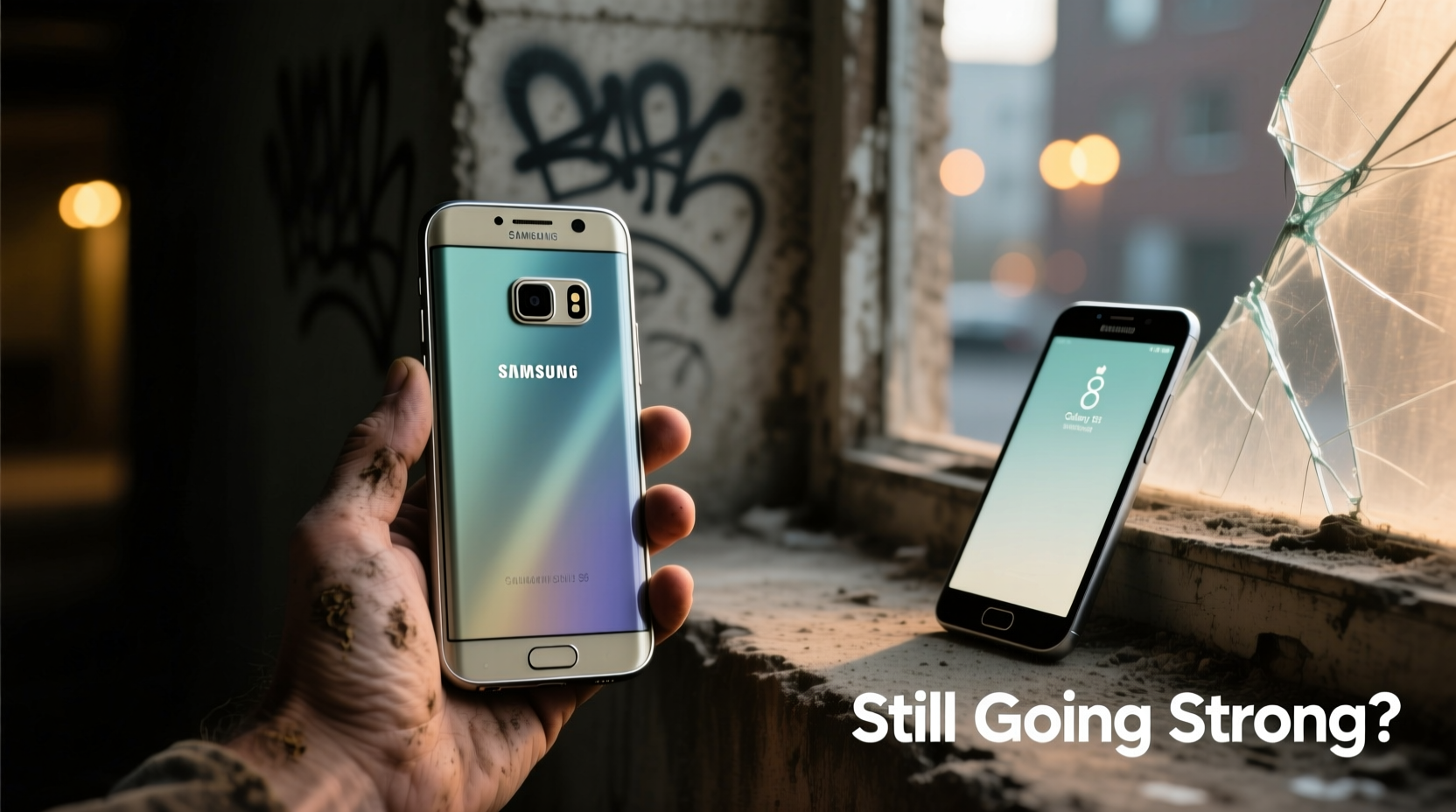
The Galaxy S6 marked a turning point for Samsung. After years of plastic builds, the S6 introduced a glass-and-metal unibody that felt premium and looked stunning. Its 5.1-inch curved display framed by slim bezels made it stand out in 2015. However, that elegance came at a cost: fragility. The glass back cracked easily, and its non-removable battery meant repairs were costly.
In contrast, the iPhone 8 Plus (2017) adopted a similar glass-back, aluminum-frame design with wireless charging capability—a feature absent on the S6. At 6.5mm thick and weighing 200g, it was heavier and larger than the S6, but offered better ergonomics for media consumption thanks to its 5.5-inch Retina HD display.
While both phones aged poorly in terms of durability, the iPhone 8 Plus benefits from more robust component integration and better long-term availability of third-party repair parts.
Performance and Software Support: The Real Divide
This is where the gap widens significantly. The Galaxy S6 shipped with Samsung’s Exynos 7420 (in most regions) or Snapdragon 810, paired with 3GB of RAM. For its time, performance was excellent. But Android’s increasing bloat and app demands have overwhelmed the S6. It never received Android Nougat updates globally, stalling at Android 7.0 in many markets—and security patches ended in 2018.
The iPhone 8 Plus, powered by Apple’s A11 Bionic chip, was leagues ahead in processing power. Even in 2024, iOS 16 remains functional on this device, offering access to modern apps, security updates, and cloud integrations. While not eligible for iOS 17, the 8 Plus supports over five years of OS updates—a stark contrast to the S6’s two-year run.
“Hardware longevity means little without software support. The S6 was brilliant in 2015, but without updates, it's now a security liability.” — David Lin, Mobile Security Analyst at TechShield Insights
Running outdated software exposes S6 users to vulnerabilities. Many modern apps—including banking, messaging, and social platforms—no longer support Android versions below 8.0, effectively locking S6 owners out of essential services.
Camera Comparison: Then vs. Now Expectations
In 2015, the Galaxy S6’s 16MP rear camera was among the best on Android. Its f/1.9 aperture, optical image stabilization, and HDR capabilities delivered vibrant, sharp photos in daylight. Low-light performance was decent for its time, though noise crept in quickly.
The iPhone 8 Plus brought dual 12MP cameras—one wide, one telephoto—enabling 2x optical zoom and Portrait Mode, a feature the S6 lacked entirely. Apple’s computational photography, even in 2017, produced more natural color grading and superior dynamic range. In 2024, while neither matches current flagships, the 8 Plus still captures usable images, especially with third-party apps leveraging its deeper iOS API access.
| Feature | Galaxy S6 | iPhone 8 Plus |
|---|---|---|
| Rear Camera | 16MP, f/1.9, OIS | Dual 12MP (wide + telephoto), OIS |
| Front Camera | 5MP, f/1.9 | 7MP, f/2.2 |
| Video Recording | 4K @ 30fps | 4K @ 60fps |
| Portrait Mode | No | Yes (software-enabled) |
| iOS/Android Version Supported | Up to Android 7.0 | Up to iOS 16 |
Real-World Example: Meet James, the S6 Loyalist
James, a 42-year-old electrician from Austin, has used the same Galaxy S6 since 2016. He replaced the battery twice and uses a protective case lined with foam. “It does everything I need,” he says. “Calls, texts, Google Maps, and my work app for job tracking.”
But challenges persist. His bank app stopped working in 2022. WhatsApp dropped support in 2023. He now uses an older APK sideloaded from a trusted source—but admits it worries him. “I know it’s risky, but buying a new phone costs $800. My S6 cost me $200 secondhand. As long as it turns on, I’m sticking with it.”
James’ story isn’t rare. For budget-conscious users or those who prioritize function over features, aging phones remain viable. But his experience also highlights the growing friction: diminishing app compatibility, rising security risks, and slower performance.
When Holding On Makes Sense (And When It Doesn’t)
There’s a difference between practical frugality and technological denial. Here’s a checklist to assess if your S6—or any aging device—is still a reasonable choice:
- Does it power your essential apps? If your banking, email, and communication tools no longer work reliably, it’s time to upgrade.
- Is it secure? No security patches since 2018 mean increased risk of malware, phishing, and data theft.
- Can it handle basic tasks smoothly? If typing lags, apps crash, or the battery dies in three hours, usability is compromised.
- Is repair still feasible? Parts for the S6 are scarce. Replacing screens or batteries now often costs more than the phone’s resale value.
- Do you need modern features? Things like QR code scanning, contactless payments (Samsung Pay worked on S6 but is now deprecated), and accessibility tools may be missing or broken.
FAQ: Common Questions About Using Older Phones
Can I still use the Galaxy S6 as a daily driver in 2024?
Possibly, but with significant limitations. Basic functions like calling and SMS work, but most modern apps won’t install or update. Security risks are high due to lack of patches. It’s not recommended for anyone handling sensitive data.
Is the iPhone 8 Plus a better long-term option than the S6?
Unequivocally yes. With support up to iOS 16, better hardware, and access to current app ecosystems, the 8 Plus remains functional for light users. Its A11 chip handles multitasking far better than the S6’s aging processor.
Why do some people still use outdated phones?
Reasons vary: financial constraints, environmental concerns, preference for simplicity, or distrust of newer technologies. Some users don’t need smartphones to do much beyond calls and messages.
Conclusion: Sentimental Value vs. Practical Reality
Is it insane to still be rocking the Galaxy S6? Not emotionally. Devices become companions—we form attachments. But from a practical standpoint, yes, it’s increasingly unreasonable. Compared to the iPhone 8 Plus, the S6 lacks performance headroom, software support, security updates, and app compatibility. The 8 Plus, while also aging, offers a bridge to modern mobile experiences.
Technology evolves not just for novelty, but for safety, efficiency, and connectivity. Holding onto outdated devices can isolate you from essential services and expose you to preventable risks. That said, the decision isn’t purely technical—it’s economic, personal, and sometimes necessary.
If you’re still on an S6, give yourself credit for making it last. But consider this: upgrading doesn’t mean abandoning reliability. It means choosing continued access, security, and peace of mind. Whether through a budget Android, a refurbished iPhone, or a hand-me-down from a friend, there are smarter ways to stay connected without clinging to hardware that’s outlived its purpose.




 浙公网安备
33010002000092号
浙公网安备
33010002000092号 浙B2-20120091-4
Comments
No comments yet. Why don't you start the discussion?