
In 2024, comparing an iPhone 8 and a Galaxy S9 might seem like a trip down memory lane. Both devices were flagship models in 2017 and 2018, respectively—powerhouses of their time. But with smartphone photography advancing at breakneck speed, how do these older models stack up today? More specifically, does the Galaxy S9 still outperform the iPhone 8 in photo quality? The answer isn’t as straightforward as specs suggest, especially when real-world use, software updates, and lighting conditions come into play.
This analysis dives deep into camera hardware, image processing, low-light performance, dynamic range, and user experience to determine which device holds up better nearly seven years after release.
Camera Hardware: Specs on Paper
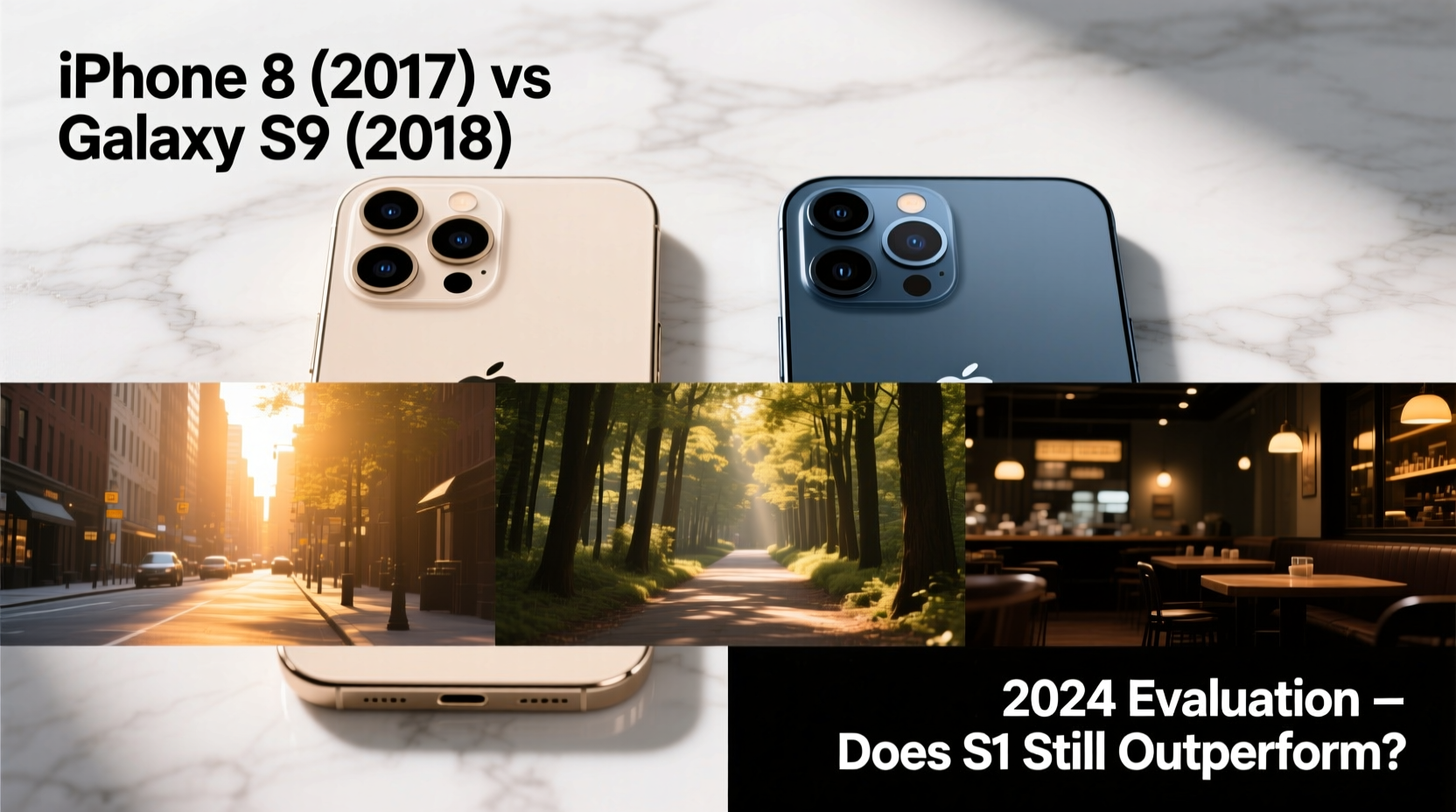
At launch, the Galaxy S9 had a clear edge in hardware flexibility. It featured a single 12MP rear sensor with variable aperture (f/1.5–f/2.4), a feature that was revolutionary at the time. The ability to shift between apertures allowed it to adapt to different lighting environments—wide open in dim light, closed down for sharper daylight shots.
The iPhone 8, by contrast, used a fixed-aperture 12MP f/1.8 wide-angle sensor. While it lacked the adaptive hardware of the S9, Apple compensated with advanced image signal processing and consistent color science.
| Feature | iPhone 8 | Galaxy S9 |
|---|---|---|
| Rear Camera | 12MP, f/1.8, OIS | 12MP, f/1.5–f/2.4, OIS |
| Front Camera | 7MP, f/2.2 | 8MP, f/1.7 |
| Video Recording | 4K @ 60fps | 4K @ 30fps |
| Aperture Control | No | Yes (Dual Aperture) |
| Software Updates (as of 2024) | iOS 17 supported | Security-only updates (One UI 5) |
On paper, the S9’s hardware appears superior—especially its low-light capabilities thanks to the f/1.5 aperture. However, hardware is only part of the equation. Image processing, algorithm tuning, and long-term software support often make the difference in daily usability.
Image Processing and Color Science
Apple has long prioritized natural color reproduction and balanced exposure. The iPhone 8, even in 2024, delivers images with accurate skin tones, stable white balance, and predictable results across scenes. Its Smart HDR and tone mapping may not be as aggressive as modern iPhones, but they’re remarkably consistent.
Samsung, in contrast, leaned toward vibrant, saturated colors during the S9 era—a preference some users loved and others found unrealistic. The S9’s processing also introduced more noise reduction, sometimes at the cost of fine detail. In daylight, this can produce punchy social media-ready shots, but in mixed lighting, colors can skew unnatural.
Another key factor is consistency. The iPhone 8 applies similar processing whether you're shooting portraits, landscapes, or close-ups. The S9, while capable, varies more depending on scene detection—sometimes over-sharpening or oversaturating without warning.
Low-Light and Dynamic Range Performance
This is where the S9’s dual aperture should shine. In theory, opening to f/1.5 lets in significantly more light than the iPhone 8’s f/1.8. In practice, the advantage is noticeable but not transformative—especially given that both phones lack Night Mode or computational multi-frame stacking.
In dim indoor settings, the S9 captures brighter images with slightly better shadow recovery. However, it often introduces more noise in the midtones and loses texture in faces or fabrics. The iPhone 8, while darker in comparison, maintains cleaner grain structure and better highlight preservation.
“Even without AI night modes, older phones with good sensors and OIS can still capture usable low-light shots—if you keep them steady.” — David Tran, Mobile Photography Instructor
Dynamic range—the ability to retain detail in both shadows and highlights—is another area where modern smartphones have pulled far ahead. Neither the iPhone 8 nor the S9 can match current HDR capabilities. That said, the iPhone handles high-contrast scenes (like backlit windows) more gracefully, preserving sky detail without crushing shadows as aggressively as the S9.
Real-World Use Case: Travel Snapshot Comparison
Consider Sarah, a casual photographer who uses her old iPhone 8 as a backup device during weekend trips. She recently visited a coastal town with mixed lighting: bright seaside sun, shaded alleys, and evening street markets.
During the day, both phones produced acceptable images. The S9 made beach photos look more vivid—bluer skies, greener foliage—but at the expense of realism. When photographing a mural in a narrow alley, the iPhone 8 retained more texture in the paint, while the S9 blurred subtle cracks due to heavy noise reduction.
At dusk, the S9 captured brighter market stalls, making food vendors’ carts more visible. But when reviewing the shots later, Sarah noticed the iPhone 8’s version had truer color representation—warm amber lights instead of harsh orange blobs. The S9’s image looked “louder,” but less authentic.
In this scenario, neither phone delivered modern standards of clarity or stabilization, but the iPhone 8 provided more consistent, trustworthy results across changing conditions.
Software Support and Usability in 2024
Software plays a crucial role in camera longevity. As of 2024, the iPhone 8 runs iOS 17, receiving security patches and minor camera optimizations through system-level improvements. Apps like Lightroom or Halide are still compatible, allowing manual control over focus, exposure, and RAW capture.
The Galaxy S9, meanwhile, stopped receiving major OS updates after Android 10. It now receives only quarterly security patches. Samsung’s default camera app no longer gets feature enhancements, and third-party app support is dwindling. Google Photos and Adobe apps still function, but performance lags on the Exynos 9810 or Snapdragon 845 chipsets.
This means the iPhone 8 benefits from ecosystem continuity. Even if its camera hardware hasn’t changed, running a modern OS allows better integration with cloud services, editing tools, and sharing platforms.
Checklist: Maximizing Camera Performance on Legacy Phones
- Clean lenses regularly: Dust and grease drastically reduce sharpness.
- Use grid lines: Enable rule-of-thirds overlay for better composition.
- Avoid digital zoom: Both phones lack optical zoom; cropping degrades quality.
- Shoot in good light: Maximize natural illumination to compensate for aging sensors.
- Use third-party apps: Try ProCamera (iOS) or Open Camera (Android) for manual controls.
- Keep storage free: Low space can slow processing and prevent 4K recording.
- Stabilize your hands: Use both hands or lean against a surface for sharper shots.
Frequently Asked Questions
Can the Galaxy S9 beat the iPhone 8 in low light?
Marginally, yes—thanks to its wider f/1.5 aperture. However, the difference is modest, and the S9 often sacrifices detail for brightness. Without Night Mode, neither phone excels in darkness, but the S9 pulls ahead slightly in very dim environments.
Is the iPhone 8 camera still good enough for social media?
Absolutely. For Instagram, WhatsApp, or Facebook posts, the iPhone 8 produces perfectly adequate 12MP images. Its color accuracy and stability make it ideal for everyday sharing, especially in daylight.
Which phone has better video quality?
The iPhone 8 supports 4K at 60fps, compared to the S9’s 4K at 30fps. This gives the iPhone smoother motion and better slow-motion options (1080p at 240fps). For vlogging or capturing action, the iPhone 8 remains the stronger choice.
Final Verdict: Does the S9 Still Take Better Photos?
In 2024, the Galaxy S9 no longer holds a definitive lead over the iPhone 8 in photo quality. While it had hardware advantages at launch, those gains are diminished by outdated software, inconsistent processing, and limited ongoing support. The iPhone 8, though technically simpler, benefits from Apple’s long-term optimization, consistent color science, and continued iOS compatibility.
If your priority is vibrant, eye-catching snapshots in daylight, the S9 can still impress. But for reliability, natural tones, and broader usability across apps and conditions, the iPhone 8 emerges as the more dependable option today.
Ultimately, both phones remind us that camera excellence isn’t just about megapixels or aperture size—it’s about balance, consistency, and ecosystem support. And in that regard, Apple’s approach continues to age better.




 浙公网安备
33010002000092号
浙公网安备
33010002000092号 浙B2-20120091-4
Comments
No comments yet. Why don't you start the discussion?