
When Apple released the iPhone 8 in 2017 and Samsung followed with the Galaxy S9 Plus in early 2018, consumers faced a pivotal choice: stick with iOS or jump to Android’s flagship offering for a more modern experience. While both phones are now considered legacy devices, many users still own them or consider buying one secondhand. The question remains relevant: if you’re upgrading from an iPhone 8, does the Galaxy S9 Plus offer enough improvements to justify the switch?
This isn’t just about specs on paper—it’s about real-world usability, long-term satisfaction, ecosystem loyalty, and whether the newer Samsung truly delivers a meaningful leap over Apple’s solid but conservative design.
Design and Build Quality
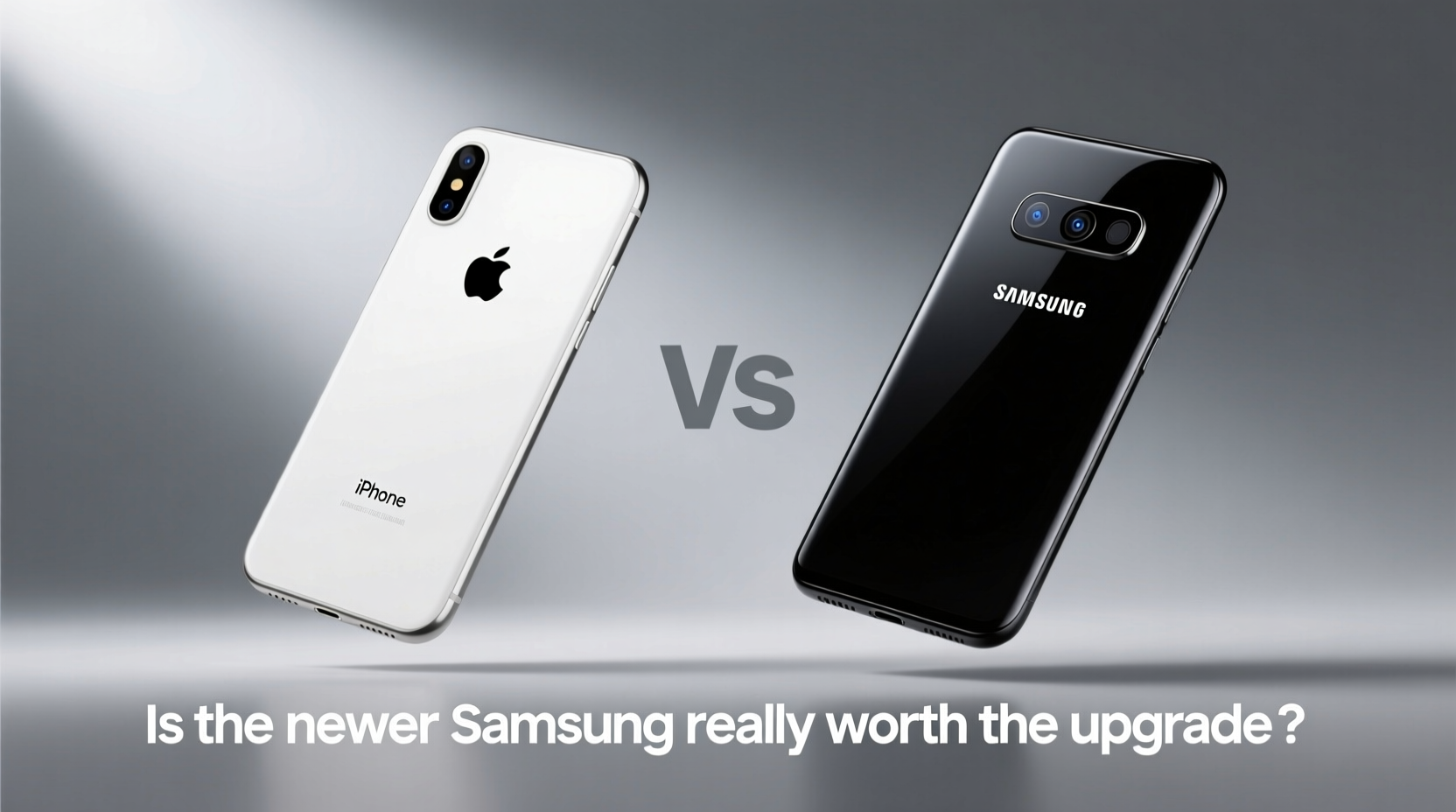
The iPhone 8 retains Apple’s classic design language with a glass back and aluminum frame, making it one of the last iPhones to feature a physical Home button and non-edge-to-edge display. It’s compact, weighing 148 grams, and fits comfortably in one hand. The glass enables wireless charging—a first for Apple at the time—but also makes it prone to cracking without protection.
In contrast, the Galaxy S9 Plus embraces a sleeker, more futuristic aesthetic. With its curved edge display, slimmer bezels, and seamless metal-and-glass construction, it feels more premium in motion. At 189 grams, it’s significantly heavier, but that weight translates into sturdiness and a high-end tactile feel. Samsung’s Infinity Display offers deeper blacks and more vibrant colors thanks to its Super AMOLED technology.
Performance and Software Experience
Under the hood, the differences become more nuanced. The iPhone 8 runs on Apple’s A11 Bionic chip—an architecture known for exceptional optimization. Even years later, iOS updates remain smooth, app launches are snappy, and multitasking is reliable. iOS 16 was the last supported update for the iPhone 8, meaning it no longer receives major feature upgrades, though security patches may continue intermittently.
The Galaxy S9 Plus uses either the Exynos 9810 or Snapdragon 845 (depending on region), paired with 6GB of RAM—double that of the iPhone 8’s 2GB. On paper, this suggests a significant advantage in multitasking and heavy app usage. In practice, however, Android’s memory management and background processes can sometimes negate those gains. Still, Samsung’s One UI (upgradable to One UI 5) offers features like split-screen mode, DeX desktop support, and customizable navigation that the iPhone 8 simply can’t match.
“Even with older hardware, iOS efficiency often outperforms higher-spec Android phones in daily tasks.” — David Lin, Mobile Performance Analyst at TechPulse Labs
Camera Comparison: Real-World Photography
Camera quality is where most users expect a clear winner—and the results depend heavily on usage patterns.
The iPhone 8 features a 12MP rear sensor with optical image stabilization (OIS) and a 7MP front camera. Photos are consistently well-balanced, with accurate color reproduction and excellent dynamic range in daylight. Portrait Mode works reliably, though it relies on software simulation due to the single-lens setup. Low-light performance is acceptable but not outstanding.
The Galaxy S9 Plus counters with a dual-camera system: a 12MP variable-aperture main lens (f/1.5–f/2.4) and a 12MP telephoto lens. The standout feature is “Super Slow-mo” video at 960fps, ideal for creative clips. Its low-light capability is notably better thanks to the adaptive aperture, which opens wider in dim conditions. However, Samsung’s processing can oversaturate colors and over-sharpen images, leading to less natural-looking photos compared to Apple’s restrained approach.
| Feature | iPhone 8 | Galaxy S9 Plus |
|---|---|---|
| Rear Camera | 12MP, f/1.8, OIS | 12MP+12MP dual, f/1.5-2.4, OIS |
| Front Camera | 7MP, f/2.2 | 8MP, f/1.7 |
| Video Recording | 4K@30fps | 4K@30/60fps, Super Slow-mo 960fps |
| Portrait Mode | Software-based | Dual-lens depth sensing |
| Low-Light Performance | Fair | Very Good |
Battery Life and Charging
Battery longevity is a critical factor for daily drivers. The iPhone 8 packs a modest 1,821mAh battery. In real-world use, this typically lasts about 12–14 hours with moderate usage—less if streaming or gaming. It supports fast charging (with a separate adapter) and Qi wireless charging, but lacks the stamina of larger phones.
The Galaxy S9 Plus, with its 3,500mAh battery, nearly doubles the capacity. This translates into consistent all-day use, even with screen-on times exceeding six hours. Fast charging is built-in, and wireless charging is equally efficient. Additionally, Samsung’s Adaptive Battery learns usage patterns over time, extending effective life between charges.
Should You Upgrade? A Real User Scenario
Consider Maria, a freelance photographer who used her iPhone 8 for four years. She loved the ecosystem—her iPad, Mac, and AirPods synced seamlessly—but found herself frustrated by slow app switches, limited multitasking, and weak low-light shots during evening gigs.
She upgraded to a refurbished Galaxy S9 Plus for $220. The change was immediate: she could edit RAW files faster, shoot in near-darkness with usable results, and run two editing apps side-by-side. However, she missed iMessage and had to adjust to Google’s productivity suite. After three months, she concluded the trade-off was worth it—not because the S9 Plus was objectively “better,” but because it aligned with her evolving workflow.
Maria’s case illustrates a key truth: the value of an upgrade depends on your priorities. If you rely on Apple’s ecosystem and prefer simplicity, staying with iOS might be smarter. But if you want flexibility, advanced camera features, and longer battery life, the S9 Plus delivers.
Checklist: Is the Galaxy S9 Plus Right for You?
- ✅ Need a larger, brighter display for videos and multitasking?
- ✅ Want better low-light photography and slow-motion video?
- ✅ Require longer battery life without constant charging?
- ✅ Comfortable switching from iMessage to WhatsApp or Google Messages?
- ✅ Looking for expandable storage (microSD up to 512GB)?
- ❌ Still deeply invested in Apple services (iCloud, FaceTime, AirDrop)?
- ❌ Prefer compact phones that fit easily in pockets?
Frequently Asked Questions
Can the Galaxy S9 Plus still receive software updates?
Samsung ended major OS updates for the S9 series in 2020 (Android 10). Security patches were provided until 2022. While third-party ROMs exist, official support has ended. Use caution regarding app compatibility and security risks.
Is the iPhone 8 still usable in 2024?
Yes, for basic tasks—calls, messaging, email, light browsing, and older apps. However, newer apps may run slowly or lack full functionality. iOS 16 was the final update, so no new features will be added.
Which phone holds resale value better?
Historically, iPhones retain value longer than Android phones. However, due to its age and lack of ongoing support, the iPhone 8 has depreciated significantly. The S9 Plus, being a high-end model at launch, sometimes commands slightly higher prices in the refurbished market, especially in regions where dual-SIM or microSD are valued.
Final Verdict: Is the Upgrade Worth It?
The Galaxy S9 Plus represents a generational shift from the iPhone 8—not just in hardware, but in philosophy. Samsung embraced innovation: curved screens, dual cameras, expandable storage, and multimedia power. Apple, meanwhile, prioritized refinement within a familiar framework.
If you’re coming from an iPhone 8, the S9 Plus offers measurable improvements: a superior display, better cameras (especially in low light), longer battery, and more RAM. But the upgrade isn’t automatic. You’ll need to adapt to Android, lose iMessage, and accept that neither device receives current software support.
For users seeking a temporary, capable phone on a budget, the S9 Plus is the stronger performer. But if you value ecosystem cohesion and don’t push your phone hard, sticking with the iPhone 8—or saving for a newer model—might be wiser.




 浙公网安备
33010002000092号
浙公网安备
33010002000092号 浙B2-20120091-4
Comments
No comments yet. Why don't you start the discussion?