
For households bustling with two or more pets—whether dogs, cats, rabbits, or even birds—keeping floors clean can feel like a never-ending chore. Shed fur, tracked-in dirt, and occasional accidents turn routine cleaning into a daily battle. In this environment, a robot vacuum isn’t just a luxury; it could be a game-changer. But is it truly worth the investment? The answer depends on your lifestyle, home layout, pet behavior, and expectations. This guide explores the practical benefits, limitations, and smart considerations when choosing a robot vacuum for multi-pet homes.
Why Multi-Pet Homes Need Smarter Cleaning Solutions
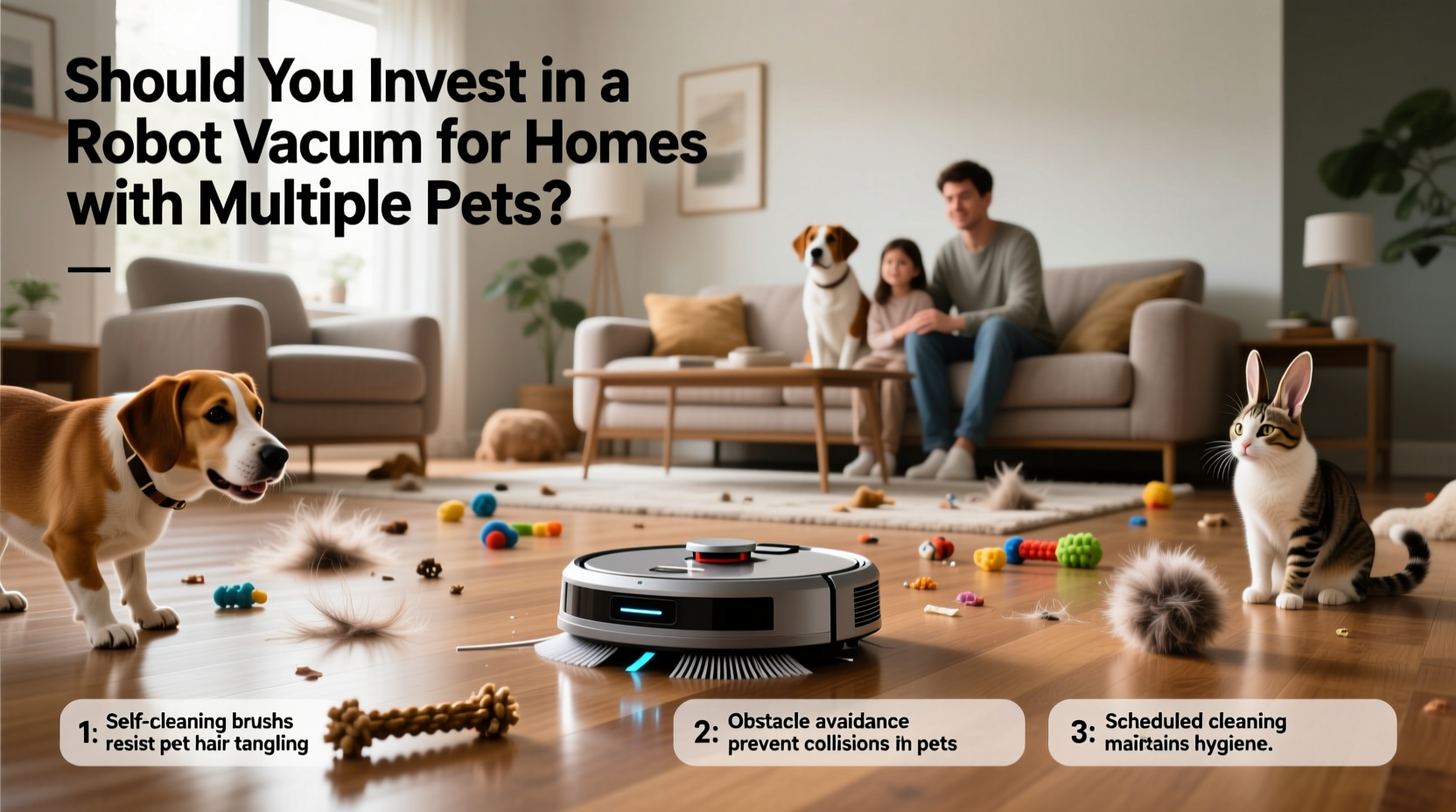
Homes with multiple pets accumulate debris faster than average. A single dog can shed hundreds of hairs daily, while cats groom themselves constantly, leaving clumps of fur on carpets and hardwood. Add muddy paws after rain or litter box tracking from multiple felines, and the floor maintenance burden grows exponentially. Traditional vacuuming, often done once or twice a week, struggles to keep up. Even diligent owners may find themselves sweeping every other day just to maintain basic cleanliness.
This is where automation offers tangible relief. Robot vacuums operate on schedules, navigating under furniture and along baseboards without human intervention. For busy families, remote workers, or those with mobility challenges, these devices can restore consistency to cleaning routines. More importantly, they reduce allergens, improve indoor air quality, and minimize the time spent on household chores—freeing up energy for what matters most: enjoying time with your pets.
Key Features to Look for in a Pet-Friendly Robot Vacuum
Not all robot vacuums are built to handle the chaos of multi-pet living. To get real value from your investment, focus on models engineered for high-efficiency pet hair pickup, durability, and intelligent navigation. Here are the essential features:
- High-Suction Power (2000Pa or higher): Strong suction ensures effective removal of embedded pet hair from carpets and rugs. Look for models specifically advertising “pet hair” performance.
- Tangle-Free Brush Rolls: Traditional bristle brushes easily clog with long pet hair. Rubberized or dual-brush systems resist tangling and are easier to clean.
- Advanced Navigation (LIDAR or Vision Mapping): Precision mapping helps the robot avoid obstacles like pet toys, food bowls, and sleeping animals while ensuring full room coverage.
- Large Dustbin Capacity: With more debris collected daily, a larger bin reduces how often you need to empty it—ideal for hands-off operation.
- Self-Emptying Base Stations: Some premium models automatically empty their dustbins into a sealed bag that lasts weeks. This is especially valuable in homes with heavy shedding.
- All-Surface Compatibility: Your robot should transition seamlessly between hardwood, tile, and thick carpeting without getting stuck.
- Pet-Safe Sensors: Reliable cliff detection prevents falls down stairs, and obstacle avoidance helps prevent collisions with curious pets.
“Pet owners benefit most from robot vacuums with strong suction and tangle-free designs. These features directly address the two biggest pain points: hair buildup and maintenance downtime.” — Dr. Lena Patel, Home Robotics Researcher at MIT Media Lab
Pros and Cons: Is It Really Worth the Investment?
Like any tech purchase, a robot vacuum comes with trade-offs. Understanding both sides helps set realistic expectations and avoid buyer’s remorse.
| Advantages | Drawbacks |
|---|---|
| Daily Maintenance Made Easy: Scheduled runs mean floors are cleaned consistently, not just weekly. | Upfront Cost: Quality models range from $300–$800, with self-emptying versions exceeding $1,000. |
| Allergen Reduction: Regular vacuuming captures dander, reducing allergy triggers for humans and pets. | Limited Spot-Cleaning: Most robots can’t target small messes like spilled kibble or liquid accidents without manual intervention. |
| Time Savings: Frees up hours each month previously spent vacuuming manually. | Pet Interference: Curious animals may bat at the robot, block its path, or even ride on it (yes, it happens). |
| Remote Control & Scheduling: Start cleaning via app while away from home or set quiet nighttime cycles. | Maintenance Required: Brushes need monthly cleaning, filters require replacement, and sensors must be wiped free of dust. |
| Improved Home Hygiene: Continuous cleaning reduces bacteria buildup from tracked-in dirt and organic matter. | No Deep Carpet Cleaning: Robots supplement but don’t replace deep-cleaning methods like steam extraction. |
The financial break-even point varies. If you currently spend 45 minutes vacuuming three times a week, that’s nearly four hours per month. Over a year, that totals 48 hours. At even a modest hourly rate of $15 for your time, the labor savings exceed $700—making many mid-range robot vacuums cost-effective over time.
Real-Life Example: The Thompson Family’s Experience
The Thompsons live in a 1,800-square-foot suburban home with two golden retrievers, a cat, and a toddler. Before purchasing a robot vacuum, they vacuumed manually every other day just to manage the constant fur tumbleweeds. Despite their efforts, guests often commented on the visible pet hair on furniture and floors.
They invested in a mid-tier model with LIDAR navigation, tangle-free rollers, and a self-emptying base ($650). After setup, they scheduled cleanings for 10 a.m. and 7 p.m.—times when the pets were either outside or napping. Within a week, they noticed fewer allergy flare-ups in their child and less time spent on cleaning.
There were hiccups: one dog initially barked at the robot, and the cat knocked over the charging dock twice. But within a month, both animals adapted. The robot now runs autonomously six days a week, and the family reports spending 80% less time vacuuming. They still do a deep clean monthly, but day-to-day upkeep is no longer overwhelming.
Step-by-Step Guide to Choosing and Using a Robot Vacuum in a Multi-Pet Home
Selecting and integrating a robot vacuum successfully requires planning. Follow this timeline to ensure a smooth transition:
- Week 1: Assess Your Needs
Map out high-traffic zones, pet feeding areas, and common shedding spots. Note flooring types and potential hazards like loose cords or low-hanging curtains. - Week 2: Research Models
Filter options by suction power, brush type, navigation tech, and customer reviews from pet owners. Prioritize brands known for reliability (e.g., iRobot, Roborock, Ecovacs). - Week 3: Purchase and Unbox
Buy from a retailer with a return policy. Ensure the model includes boundary strips or virtual walls to protect off-limit zones like litter boxes. - Day 1: Initial Setup
Charge fully, install the app, and perform a test run in an open area. Watch how the robot handles transitions between surfaces and reacts to stationary objects. - Days 2–3: Map Your Home
Let the robot complete full scans of each floor. Use the app to label rooms and set no-go zones around pet beds or food stations. - Day 4: Introduce to Pets
Allow pets to observe the robot while it’s off. Then run short sessions so they become accustomed to the sound and movement. - Day 5+: Optimize Schedule
Set daily or every-other-day cleaning cycles during low-pet-activity periods. Monitor performance and adjust suction levels or timing as needed.
Checklist: Is Your Home Ready for a Robot Vacuum?
Before buying, verify your home environment supports successful robot vacuum operation:
- ✅ Floors are relatively clutter-free (toys, shoes, and cords picked up)
- ✅ Stairs are blocked or have secure railings (for fall prevention)
- ✅ Wi-Fi signal is strong throughout main living areas
- ✅ Charging dock has 3 feet of clearance on all sides
- ✅ You’re willing to perform monthly maintenance (brush cleaning, filter changes)
- ✅ Pets are not excessively aggressive or fearful of moving objects
If most items check out, your home is likely ready. If not, consider preparatory steps—like organizing storage baskets or installing stair gates—before bringing the robot home.
Frequently Asked Questions
Can a robot vacuum handle large amounts of pet hair?
Yes, but only if it has strong suction and a tangle-resistant brush system. High-end models with rubber extractors (like those from Dyson or Roborock) excel at collecting long pet hair without frequent jams. However, very heavy shedders (e.g., huskies or persian cats) may require daily brush roll inspections.
Will my pets be scared of the robot vacuum?
Reactions vary. Some pets ignore it, others follow curiously, and a few may bark or swat at it initially. Most adapt within a few days. Running the robot at low volume and allowing supervised exposure speeds up acclimation. Avoid forcing interaction—let pets approach on their own terms.
Do I still need to vacuum manually?
Yes, but much less frequently. Robot vacuums excel at maintenance cleaning, not deep carpet restoration or spot treatment. Plan to manually vacuum high-traffic areas every 4–6 weeks and use a handheld tool for upholstery and stairs as needed.
Conclusion: A Smart Investment for the Right Household
A robot vacuum isn't a magic solution, but for homes with multiple pets, it can significantly reduce the physical and mental load of keeping floors clean. When chosen wisely—based on suction power, navigation intelligence, and pet-specific design—it becomes a reliable partner in daily home care. The initial cost pays off in saved time, improved hygiene, and long-term convenience.
If you're tired of chasing fur bunnies across the floor or dread stepping on kibble in the dark, now may be the perfect time to automate. Evaluate your space, understand your pets’ behaviors, and select a model built for real-world demands. With the right setup, a robot vacuum won’t just clean your floors—it will change how you experience your home.




 浙公网安备
33010002000092号
浙公网安备
33010002000092号 浙B2-20120091-4
Comments
No comments yet. Why don't you start the discussion?