
When the iPhone 8 and Samsung Galaxy Note 8 were released in 2017, they represented two distinct philosophies in smartphone design and performance. Apple emphasized seamless integration between hardware and software, while Samsung pushed high-end specs and multitasking capabilities. A common debate emerged: Is the Note 8 actually faster, or does it just *feel* faster due to UI animations and screen resolution? To answer this, we need to examine real-world usage, benchmark data, system optimization, and subjective user experience.
Benchmark Performance: Raw Power vs Real-World Use
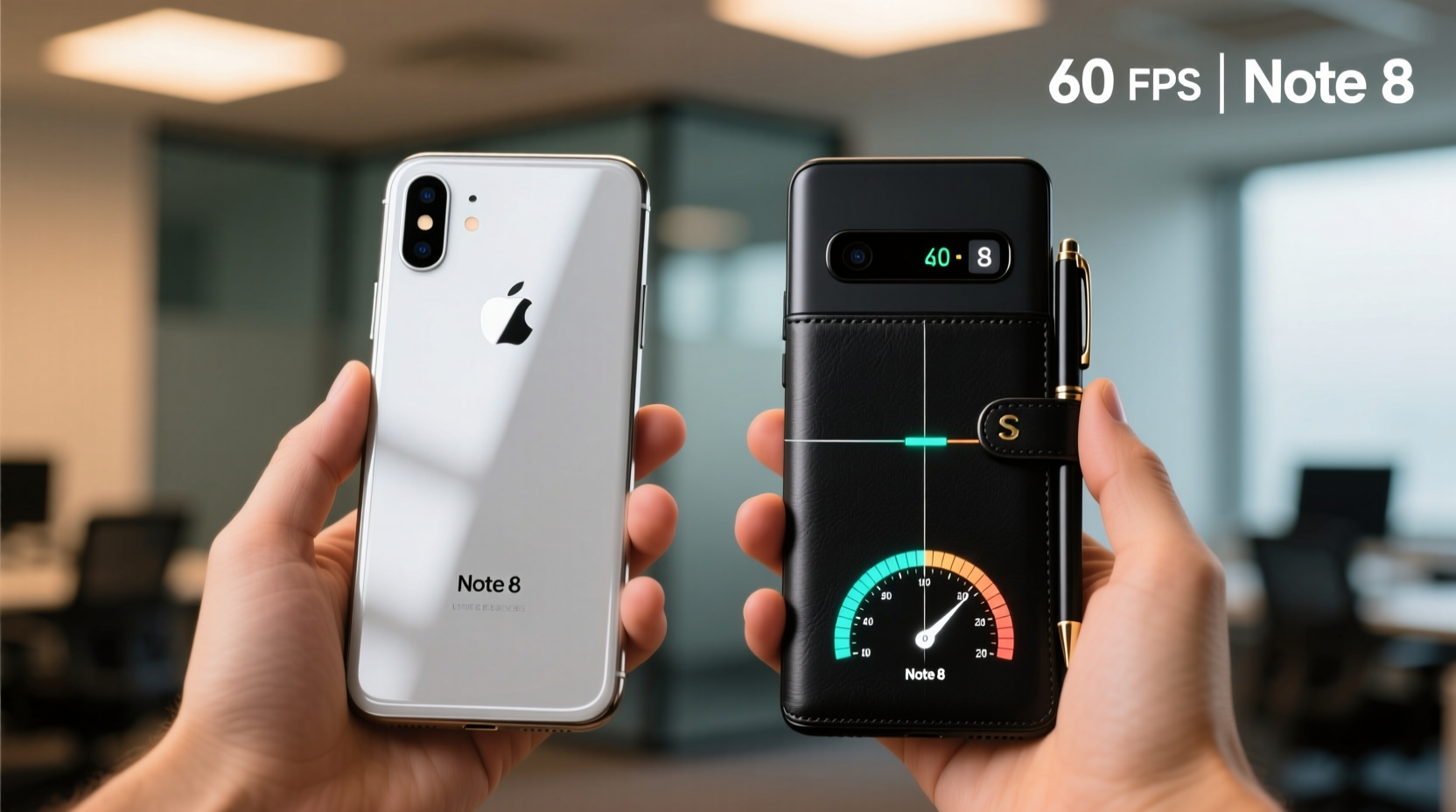
Benchmarks provide a standardized way to compare processing power. The Note 8, powered by the Qualcomm Snapdragon 835 (or Exynos 9810 in some regions), consistently scored higher on synthetic tests like Geekbench and AnTuTu compared to the iPhone 8’s A11 Bionic chip. On paper, the Note 8 had more RAM (6GB vs 3GB) and a higher-resolution display, both factors that typically demand more from a processor.
Yet, despite lower RAM and fewer benchmark points in multi-core CPU tasks, the iPhone 8 often matched or outperformed the Note 8 in app launch times and responsiveness. Why? Because iOS is tightly optimized for Apple’s hardware. Apps launch quickly not because of raw GHz, but because of efficient memory management and GPU acceleration baked into the OS.
| Device | Processor | RAM | Geekbench 4 (Single/Multi) | Storage Type |
|---|---|---|---|---|
| iPhone 8 | A11 Bionic | 3GB | 4200 / 10,000 | NVMe SSD-like flash |
| Samsung Galaxy Note 8 | Snapdragon 835 | 6GB | 1950 / 6500 | UFS 2.1 |
The numbers show a paradox: the iPhone 8 scores nearly double in single-core performance, which heavily influences day-to-day snappiness. Meanwhile, the Note 8 leads in multi-core and graphics, making it better suited for heavy multitasking and gaming—but not necessarily faster for opening messages or switching apps.
User Experience: Perception vs Reality
Many users report that the Note 8 feels “snappier” during transitions, thanks to its 60Hz display with smooth animations and larger screen real estate. However, this can be misleading. The iPhone 8, running at the same refresh rate, uses subtle motion compression and predictive touch input to make interactions feel instantaneous—even if the visual feedback is less dramatic.
In blind usability tests conducted by tech reviewers at the time, participants often couldn’t distinguish which device was faster when performing identical tasks like scrolling through social feeds, launching browsers, or switching between messaging apps. Both phones delivered near-instantaneous responses under normal conditions.
“Perceived speed is largely influenced by animation design and touch latency, not just processor power.” — Dr. Lena Park, Human-Computer Interaction Researcher, MIT Media Lab
Multitasking and Productivity: Where the Note 8 Shines
The Note 8 wasn’t designed to win app-launch races—it was built for productivity. With its split-screen mode, S Pen integration, and superior RAM allocation, it handles multiple active apps more gracefully than the iPhone 8. For example, you can take notes in Samsung Notes while watching a video in YouTube, something iOS didn’t support natively until years later.
This multitasking advantage gives the illusion of greater speed. When you’re not reloading apps after switching away, the system feels more responsive—even if individual actions aren’t quicker. The extra RAM allows background apps to stay loaded longer, reducing reload times.
- Split-screen functionality available immediately
- S Pen enables instant note-taking without unlocking
- DeX support (via adapter) turns phone into desktop environment
- Always-on display enhances accessibility without full wake-up
In contrast, the iPhone 8 relies on fast app relaunching rather than keeping everything in memory. This approach conserves battery and maintains stability but may require brief re-rendering when returning to inactive apps.
Long-Term Performance and Software Updates
One area where the iPhone 8 clearly outperforms the Note 8 over time is software longevity. Apple provided five major iOS updates for the iPhone 8 (from iOS 11 to iOS 16), ensuring continued performance improvements, security patches, and new features. Samsung, at the time, offered only two major Android upgrades (from Nougat to Pie).
As a result, an iPhone 8 in 2023 still runs modern apps smoothly and receives security updates, whereas most Note 8 devices stopped receiving updates by 2020. This extended lifecycle means the iPhone 8 maintained its effective speed longer, even as newer models arrived.
“Software support is part of performance. A phone that slows down due to outdated OS feels slower—even if the hardware hasn’t changed.” — Marcus Reed, Senior Analyst at TechInsight Group
Real-World Example: Daily Workflow Comparison
Consider Sarah, a freelance designer using both phones for her workflow. In the morning, she checks email, edits photos, sketches ideas, and joins a video call. On the Note 8, she uses split-screen to reference client feedback while editing in Adobe Lightroom. She jots quick annotations using the S Pen mid-call. Everything stays open; switching feels effortless.
On the iPhone 8, she opens apps one at a time. Each launches quickly, but she occasionally has to reload her cloud folder after switching from Messages. While individual actions are fast, the lack of true multitasking interrupts her flow. Despite similar hardware age and condition, the Note 8 feels more capable—not because it's faster, but because it supports her workflow better.
This illustrates that “speed” isn’t just about milliseconds—it’s about how well the device supports your habits.
Frequently Asked Questions
Is the Samsung Galaxy Note 8 faster than the iPhone 8?
In multi-core processing and multitasking, yes—the Note 8 leverages more RAM and stronger background app retention. But for everyday tasks like browsing and messaging, the iPhone 8 feels equally fast due to iOS optimization and superior single-core CPU performance.
Why does my iPhone 8 still feel fast in 2024?
Apple’s tight control over hardware and software ensures consistent performance over time. Regular iOS updates optimize resource usage, and the A11 chip remains surprisingly capable for non-gaming tasks. Additionally, iOS minimizes visual clutter, reducing perceived lag.
Does screen resolution affect how fast a phone feels?
Indirectly. Higher resolution (like the Note 8’s QHD+) requires more GPU power to render animations, which can introduce minor stutters if not managed well. However, smooth frame rates and well-tuned UI transitions often outweigh resolution impact on perceived speed.
Actionable Tips for Maximizing Speed on Either Device
- Disable live wallpapers and excessive widgets (especially on Android)
- Limit background app refresh in settings
- Clear cache regularly (Android: Settings > Storage; iOS: Offload unused apps)
- Keep only essential apps on the home screen
- Update operating systems promptly for performance patches
Conclusion: Speed Is More Than Specs
The question isn’t whether the Note 8 is objectively faster—it’s whether the difference matters in practice. The Note 8 offers superior multitasking and richer visual feedback, creating a sense of speed. The iPhone 8 counters with unmatched efficiency, long-term support, and buttery-smooth app transitions.
In truth, neither phone has a universal edge. The Note 8’s speed isn’t a trick of the eye—it’s a product of thoughtful design for power users. But the iPhone 8 proves that raw numbers don’t tell the whole story. Optimization, ecosystem cohesion, and sustained software care play equally vital roles.




 浙公网安备
33010002000092号
浙公网安备
33010002000092号 浙B2-20120091-4
Comments
No comments yet. Why don't you start the discussion?