
If you’ve ever walked into a room to find a motionless beetle on your pillow or a lifeless moth by your coffee mug, you’re not alone. Many cat owners have been on the receiving end of their feline’s “gifts.” While the gesture might seem strange—or even slightly disturbing—it's surprisingly common. But what drives this behavior? Is your cat trying to show love, express hunger, or simply act on deep-rooted instincts? The answer lies in a blend of biology, social structure, and learned behavior.
Cats are natural predators, and even well-fed domestic cats retain the hunting drive that once ensured survival in the wild. Bringing dead prey—whether insects, mice, or birds—to their human companions isn’t random. It reflects complex motivations shaped by evolution and social dynamics. Understanding why your cat brings you dead bugs can deepen your bond and help you respond appropriately.
The Evolutionary Roots of Feline Hunting Behavior
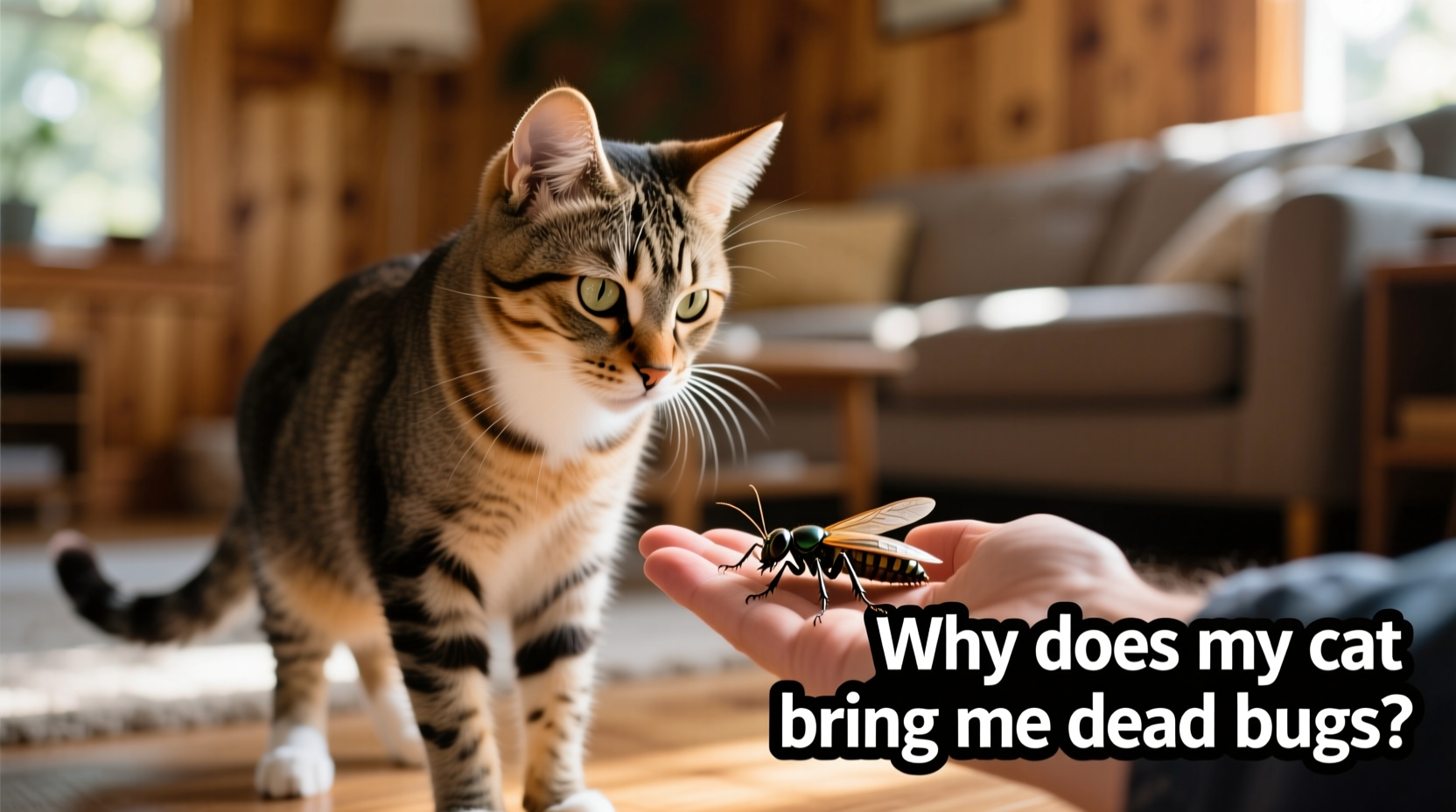
Cats are obligate carnivores with finely tuned predatory instincts. In the wild, survival depends on successful hunting. Even though your indoor cat doesn’t need to hunt for food, its brain and body are still wired for pursuit, capture, and kill sequences. These behaviors are triggered not by hunger alone but by environmental stimuli—such as movement, sound, and shape—that resemble prey.
Insects like crickets, flies, and moths often activate a cat’s prey drive due to their erratic movements and small size. A flickering shadow across the floor or a buzzing near a window can be enough to set off a full stalking sequence: crouch, pounce, catch, and deliver. This entire process satisfies an innate behavioral loop, regardless of whether the cat eats the prey afterward.
“Cats don’t hunt solely out of hunger. They hunt because it’s deeply embedded in their neurobiology. The act itself is rewarding.” — Dr. Sarah Ellis, Feline Behavior Scientist, University of Lincoln
This explains why even plump, well-fed housecats will chase after bugs. The motivation isn’t nutritional; it’s psychological and instinctual. Capturing prey fulfills a primal need, much like how dogs enjoy chewing even when they aren’t hungry.
Is It a Sign of Affection? Decoding the “Gift” Gesture
One of the most widely accepted interpretations of a cat bringing dead bugs (or other prey) to its owner is that it’s a form of bonding or teaching. In feral colonies, mother cats bring injured or dead prey to their kittens to teach them how to eat and hunt. By extension, when your cat brings you a bug, it may see you as part of its social group—possibly even as an inept kitten in need of instruction.
This theory suggests that your cat isn’t merely dumping evidence of its prowess; it’s attempting to care for you. From the cat’s perspective, you’re a clumsy, furless member of the pride who clearly doesn’t know how to catch food. So, it steps in to provide.
Alternatively, the act could be a way of sharing resources. In multi-cat households, cats sometimes leave prey near their preferred companions. If your cat consistently brings bugs to you rather than hiding them elsewhere, it likely views you as a trusted ally.
Behavioral Signals That Suggest Affection
- Your cat stays nearby after dropping the bug, watching your reaction.
- It purrs, rubs against you, or head-bumps you after the delivery.
- It has brought you multiple \"gifts\" over time, indicating a pattern of sharing.
These signs point toward social bonding rather than mere instinctual dumping. The cat isn’t just discarding prey—it’s engaging with you through the act.
Hunger vs. Instinct: What’s Really Driving the Behavior?
A common concern among pet owners is whether their cat is bringing dead bugs because it’s underfed or nutritionally deficient. While hunger can increase predatory activity, it’s rarely the primary reason for presenting dead prey—especially if the cat is fed regularly and maintains a healthy weight.
Studies show that feeding frequency and diet quality have minimal impact on a cat’s tendency to hunt. In one long-term observation, well-fed cats hunted just as frequently as those on restricted diets. The key trigger was opportunity, not appetite.
| Motivation | Signs It’s Present | How to Address It |
|---|---|---|
| Instinct | Hunting occurs daily, even after meals; prey often left uneaten | Provide interactive toys to satisfy hunting urges |
| Affection/Sharing | Brings prey directly to owner; seeks attention afterward | Respond positively; offer praise or playtime |
| Hunger | Increased restlessness, vocalization, or scavenging; eats all prey | Review feeding schedule and portion sizes with a vet |
If your cat eats every bug it catches, hunger might be a contributing factor. However, if it drops the insect at your feet and walks away, instinct and social behavior are more likely explanations.
What You Can Do: Managing the Bug-Drop Habit
While you can’t eliminate your cat’s hunting instincts, you can redirect them in ways that preserve both your sanity and your home’s cleanliness. The goal isn’t to stop the behavior entirely but to channel it constructively.
Step-by-Step Guide to Reducing Unwanted Prey Drops
- Assess Your Cat’s Diet – Ensure your cat is receiving adequate calories and nutrients. Consult your veterinarian if you suspect underfeeding.
- Increase Mental Stimulation – Use puzzle feeders, treat-dispensing toys, and timed feeders to simulate the effort of hunting.
- Introduce Daily Play Sessions – Engage your cat in 10–15 minutes of active play using wand toys that mimic insect flight or rodent scurrying.
- Limit Access to Insects – Seal windows, use screens, and reduce indoor lighting at night to minimize bug attraction.
- Reinforce Positive Alternatives – When your cat plays with a toy instead of chasing a bug, reward it with treats or affection.
Over time, consistent redirection can reduce the frequency of real prey captures by satisfying the same psychological needs through safer outlets.
Checklist: Creating a Low-Prey Indoor Environment
- ✅ Install tight-fitting window screens
- ✅ Use yellow or LED lights that attract fewer insects
- ✅ Keep food sealed and surfaces clean to avoid attracting pests
- ✅ Rotate interactive toys weekly to maintain interest
- ✅ Schedule two play sessions per day (morning and evening)
Real-Life Example: Bella the Apartment Hunter
Consider Bella, a three-year-old tabby living in a high-rise apartment with no outdoor access. Her owner, Mark, began noticing dead fruit flies and gnats on his laptop and shoes. Initially concerned, he thought Bella might be stressed or underfed. After consulting a feline behaviorist, he realized Bella wasn’t lacking anything—she was bored.
The behaviorist recommended introducing a structured play routine using a feather wand to simulate insect movement. Within two weeks, Mark noticed a dramatic drop in bug deliveries. Bella still caught the occasional gnat, but she no longer brought them to him. Instead, she played with her toys more intensely and seemed more relaxed overall.
This case illustrates how understanding the root cause—instinctual drive without proper outlet—can lead to simple, effective solutions.
FAQ: Common Questions About Cats and Dead Bugs
Do cats know we don’t eat bugs?
Likely not in the way humans understand dietary preferences. Cats operate on instinct and association. They see you as part of their social unit and assume that, like kittens, you benefit from prey offerings. They don’t grasp human disgust or dietary norms.
Should I punish my cat for bringing dead bugs?
No. Punishment can damage trust and increase anxiety. Instead, calmly remove the bug and redirect your cat’s attention to a toy or treat. Positive reinforcement works far better than correction.
Is it dangerous if my cat eats dead bugs?
Most household insects aren’t toxic, but some—like stink bugs, fireflies, or pesticide-exposed bugs—can cause vomiting or drooling. If your cat eats a bug and shows signs of distress (drooling, lethargy, vomiting), contact your vet immediately.
Conclusion: Embracing the Quirks of Feline Love
Your cat bringing you dead bugs isn’t a cry for food or a hygiene issue to be scolded. It’s a multifaceted behavior rooted in millions of years of evolution, shaped by trust, instinct, and social connection. Whether it’s a lesson, a gift, or simply the completion of a hardwired ritual, this act reflects your cat’s inner world—one where you play a central role.
Instead of reacting with disgust, consider the gesture for what it likely is: a unique expression of feline affection. With thoughtful enrichment and understanding, you can honor your cat’s instincts while minimizing messes. Celebrate the quirks, learn from the behavior, and continue building a relationship grounded in mutual respect.




 浙公网安备
33010002000092号
浙公网安备
33010002000092号 浙B2-20120091-4
Comments
No comments yet. Why don't you start the discussion?