
Carrying your iPhone, wallet, and keys has long been a daily balancing act. Over the years, manufacturers and third-party brands have introduced solutions to simplify this—none more talked about than Apple’s MagSafe ecosystem. But how does it truly stack up against traditional card cases? For users weighing convenience, security, durability, and cost, the decision isn’t as straightforward as marketing might suggest.
This guide dives deep into the real-world differences between standard iPhone card cases and MagSafe-compatible options. From everyday usability to long-term reliability, we’ll examine what each offers—and whether the premium price tag of MagSafe delivers proportional benefits.
The Evolution of On-the-Go Convenience
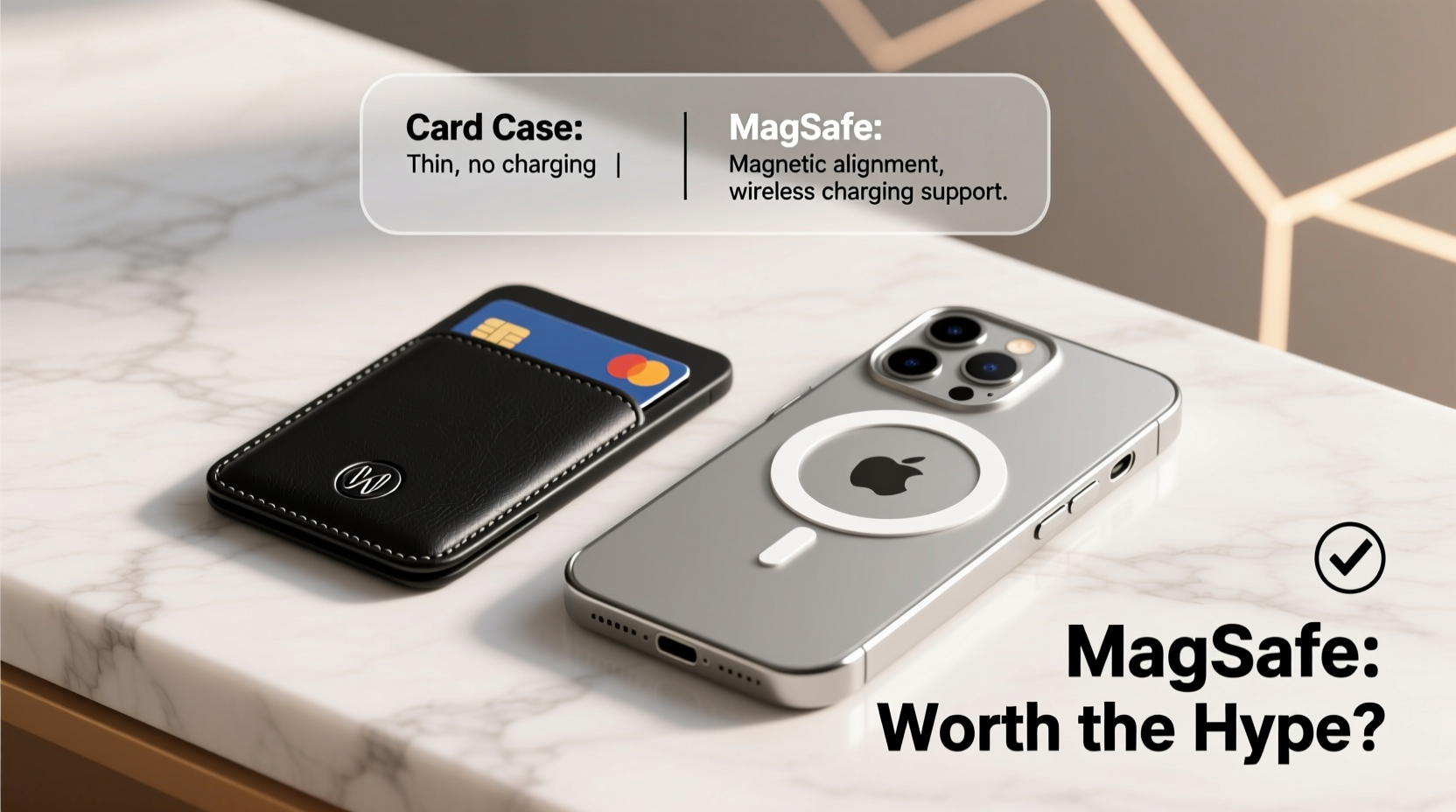
Smartphones have become digital wallets, ID carriers, and access keys—all in one. It’s no surprise that integrating physical cards into phone cases gained popularity. Early card cases were simple: a slim sleeve or slot behind the back cover, designed to hold one or two essential cards. These were affordable, lightweight, and eliminated the need for a separate wallet.
However, they came with trade-offs: bulkiness, card slippage, difficulty accessing cards quickly, and potential signal interference. Apple’s 2020 introduction of MagSafe—a ring of magnets built into the iPhone 12 and later models—promised a smarter solution. With magnetic alignment and secure attachment, accessories like chargers, wallets, and mounts could snap on seamlessly.
But does seamless integration justify the cost? Let’s break it down.
Design & Functionality Compared
At first glance, both card cases and MagSafe cases serve the same purpose: holding your phone and a few essential cards. However, their design philosophies diverge significantly.
- Traditional Card Cases: Typically feature built-in card slots (often 2–3) inside a leather or synthetic flap or rear pocket. They rely on friction to keep cards in place.
- MagSafe Cases: Include a magnetic ring compatible with Apple’s alignment system. Most do not have integrated card storage but support attachable MagSafe wallets that snap on magnetically.
The key distinction is modularity. With MagSafe, you can use your case without a wallet attached and add one only when needed. This flexibility appeals to users who don’t always carry cards or prefer minimalist setups during workouts or errands.
Security and Reliability: Which Keeps Your Cards Safer?
One of the biggest concerns with any card-carrying solution is retention. How often have you reached for your card only to find it missing from a loose pocket?
Traditional card cases vary widely in quality. Budget models may use thin materials that stretch over time, leading to cards falling out when the phone is set down or pulled from a pocket. Premium versions use tighter tolerances and stiffer materials, improving retention—but even these aren't immune to wear.
MagSafe wallets, by contrast, are secured via strong neodymium magnets. Once snapped on, they stay firmly attached—even during movement or light impact. Apple claims its MagSafe wallet won’t detach under normal use, and independent tests largely confirm this. The wallet itself holds up to three cards in a tight, RFID-shielded compartment.
“MagSafe’s magnetic attachment is engineered for precision and strength. In lab conditions, it withstands repeated attachment cycles without degradation.” — Dr. Alan Zhou, Senior Engineer at Mobile Accessory Labs
That said, the wallet must be actively snapped on. Leaving cards inside a detached MagSafe wallet creates a new risk: forgetting it somewhere. Unlike a permanently integrated card case, the modular nature means you can misplace the wallet just like a standalone one.
Performance Comparison Table
| Feature | Traditional Card Case | MagSafe Case + Wallet |
|---|---|---|
| Card Capacity | 2–3 cards (fixed) | Up to 3 cards (removable wallet) |
| Attachment Security | Moderate (friction-based) | High (magnetic lock) |
| Flexibility | Low (always carries cards) | High (wallet optional) |
| Durability Over Time | Slot may loosen | Magnets degrade slowly (~5+ years) |
| Price Range | $15–$40 | $50–$130+ |
| Compatibility | All iPhones | iPhone 12 and newer only |
| Wireless Charging | May interfere or require removal | Optimized for seamless charging |
Real-World User Experience: A Mini Case Study
Take Sarah, a freelance designer in Austin who commutes daily and frequently meets clients. She used a leather card case for two years but grew frustrated with her credit card slipping out during transit. After upgrading to an iPhone 15 Pro, she invested in a MagSafe-compatible case and Apple’s official MagSafe wallet.
Initially, she loved the sleek look and ease of snapping the wallet on and off. She appreciated being able to leave it behind during gym visits. However, after three months, she accidentally left the wallet at a coffee shop. “It felt like losing my wallet,” she said. “I had to cancel cards and wait days for replacements.”
She now uses a hybrid approach: a MagSafe case with a third-party wallet that has a subtle tether strap. “It’s not perfect, but it gives me peace of mind,” she explained. Her experience highlights a critical insight: convenience should never override security.
Is MagSafe Worth the Hype? A Step-by-Step Decision Guide
Deciding between a card case and MagSafe isn’t about which is objectively better—it’s about matching the solution to your lifestyle. Follow this sequence to make an informed choice:
- Assess Your Daily Carry Needs: Do you always carry multiple cards, or just ID and a credit card?
- Evaluate Your Forgetfulness Level: Are you prone to leaving small items behind? If yes, a permanent card case may be safer.
- Check Your iPhone Model: MagSafe only works on iPhone 12 and later. Older models gain no benefit.
- Consider Charging Habits: If you use wireless charging regularly, MagSafe offers smoother integration.
- Set a Budget: Factor in total cost—MagSafe cases and wallets often exceed $100 combined.
- Test Alternatives: Third-party MagSafe-compatible wallets offer similar functionality at lower prices.
Frequently Asked Questions
Can I use a regular card case with MagSafe charging?
Yes, but thick or metal-reinforced card cases may block or slow wireless charging. Apple recommends removing non-MagSafe accessories before charging. Thin, non-metallic card cases usually work fine, though alignment may be less precise.
Do MagSafe wallets damage credit cards or IDs?
No. Modern cards use chip technology and are resistant to magnetic fields. The magnets in MagSafe are not strong enough to erase data. However, avoid placing hotel key cards or older magnetic stripe cards directly against the magnet for extended periods.
Are third-party MagSafe cases as good as Apple’s?
Many reputable brands (like ESR, Spigen, and Belkin) meet Apple’s MagSafe certification standards, ensuring reliable attachment and charging. While Apple’s design is refined, certified third-party options often deliver comparable performance at lower prices.
Final Verdict: Practical Recommendations
MagSafe represents a thoughtful evolution in mobile accessory design—offering secure attachment, effortless charging, and modular convenience. But it’s not universally superior.
For users who value adaptability, frequent wireless charging, and clean aesthetics, MagSafe is absolutely worth the investment—especially if you own a recent iPhone. The seamless integration with Apple’s ecosystem adds tangible daily value.
On the other hand, if you prioritize affordability, permanence, or use an older iPhone model, a well-made traditional card case remains a smart, functional choice. It eliminates the risk of losing a detachable wallet and avoids unnecessary spending.
Conclusion: Make the Choice That Fits Your Life
Technology should serve your lifestyle—not dictate it. Whether you choose a classic card case or embrace the MagSafe ecosystem, the best option is the one that reduces friction, enhances security, and aligns with how you actually live.
If you’re on the fence, try renting or borrowing both types for a week. Real-world use reveals more than specs ever can. And once you’ve found your ideal setup, stick with it—consistency is the true key to long-term satisfaction.




 浙公网安备
33010002000092号
浙公网安备
33010002000092号 浙B2-20120091-4
Comments
No comments yet. Why don't you start the discussion?