
Notifications are essential for staying connected, but not all alerts need to linger. On the iPhone, Apple introduced two distinct notification behaviors—persistent and temporary—to give users more control over how interruptions appear and behave. The difference may seem subtle at first, but choosing the right mode can significantly reduce digital fatigue and keep your lock screen clutter-free.
Understanding when and why each type appears—and how to manage them—is key to creating a distraction-minimized iOS experience. Whether you're trying to stay focused during work hours or simply want fewer visual reminders piling up, this guide breaks down everything you need to know about persistent versus temporary notifications, including real-world use cases, setup steps, and expert-backed strategies for smarter alert management.
What Are Persistent and Temporary Notifications?
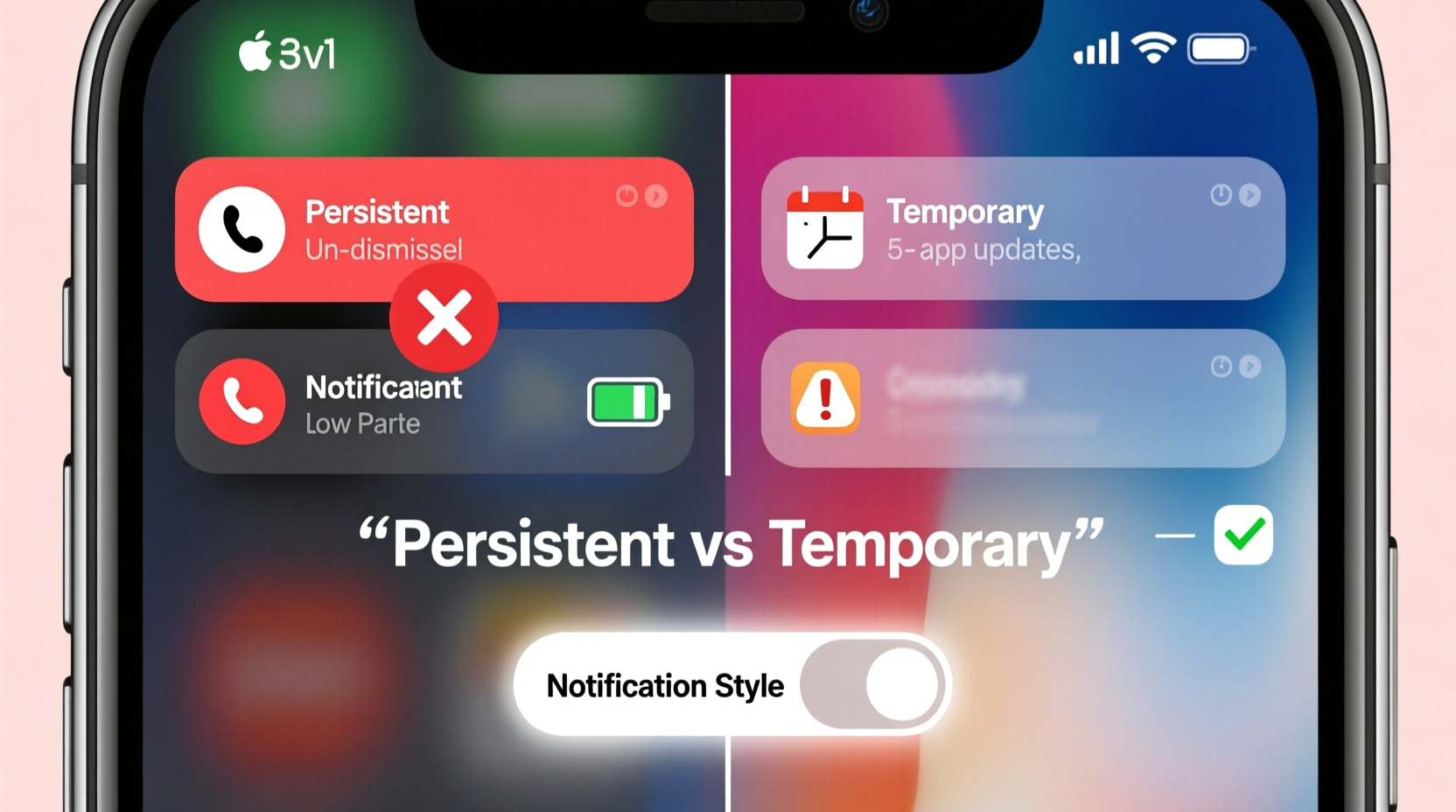
With the release of iOS 14, Apple began refining how notifications appear on the lock screen and in the Notification Center. These changes culminated in clearer distinctions between persistent and temporary notifications—two display modes that determine how long an alert stays visible after appearing.
- Persistent notifications remain on your lock screen and stack in the Notification Center until you manually dismiss them or interact with them.
- Temporary notifications appear briefly—usually for a few seconds—then vanish from the lock screen without leaving a trace in the Notification Center unless they’re flagged as important.
The behavior depends on your notification settings per app, especially whether “Show as Persistent” is enabled. This setting controls whether alerts stick around or disappear automatically.
Which Type Is Less Annoying? A Practical Comparison
Annoyance is subjective, but research into digital wellbeing suggests that constant visual reminders contribute to stress and reduced focus. A 2023 study by the University of California found that users reported higher levels of mental fatigue when their devices displayed accumulating notifications—even if they weren’t actively interacting with them.
In general, temporary notifications are less disruptive because they don’t create backlog. They deliver information in the moment and then exit gracefully, reducing cognitive load. Persistent notifications, while useful for follow-up tasks (like unread messages), can feel overwhelming when too many pile up.
“Reducing notification persistence is one of the most effective ways to minimize digital clutter. It creates a sense of closure after receiving an alert.” — Dr. Lena Torres, Cognitive Psychologist specializing in digital wellness
When to Use Each Mode
| Scenario | Recommended Mode | Why |
|---|---|---|
| Email, Messaging Apps | Persistent | Requires response; easy to forget if dismissed instantly |
| Calendar Reminders | Persistent | Time-sensitive events need visibility until acknowledged |
| Weather Alerts | Temporary | Informational only; no action required after viewing |
| Workout Completion | Temporary | Celebratory; doesn’t require follow-up |
| Social Media Likes | Temporary | High volume, low importance; contributes to notification fatigue |
How to Change Between Persistent and Temporary Notifications
Changing how notifications behave isn’t done globally—it’s configured individually for each app. You decide which apps deserve lasting attention and which should deliver fleeting updates.
Step-by-Step Guide
- Open the Settings app on your iPhone.
- Tap Notifications.
- Select the app you want to modify (e.g., Messages, Gmail, Instagram).
- Scroll down to find the option labeled “Show as Persistent”.
- Toggle it ON for persistent behavior or OFF for temporary.
Note: If you don’t see “Show as Persistent,” ensure your iPhone is running iOS 15 or later. Older versions use different logic and lack this explicit toggle.
Once disabled, future alerts from that app will appear briefly on the lock screen and disappear unless marked as critical by the system (such as repeated calls or emergency alerts).
Real Example: Managing Work-Life Balance with Smart Notifications
Consider Sarah, a project manager who uses her iPhone heavily for both professional communication and personal apps. Her morning used to start with 40+ stacked notifications—emails, team chats, social media likes, and calendar reminders—all competing for attention.
After learning about temporary notifications, she adjusted her settings:
- Set Slack and email to persistent—she needs to respond.
- Switched Instagram and Strava to temporary—updates are nice to see but not urgent.
- Enabled Notification Summary for newsletters and low-priority apps.
The result? Her lock screen now shows only actionable items. Non-critical alerts flash briefly and fade away. She reports feeling less overwhelmed and more in control of her time, particularly during focused work blocks.
Best Practices Checklist
To optimize your notification experience, follow this checklist:
- ✅ Audit your top five most frequent apps and decide which truly need persistent alerts.
- ✅ Turn off “Show as Persistent” for social media, fitness trackers, and promotional apps.
- ✅ Enable Focus Modes (e.g., Work, Sleep) to suppress non-essential notifications during key hours.
- ✅ Use Notification Summary for apps like News, Podcasts, or shopping platforms.
- ✅ Review notification settings quarterly to adapt to changing routines.
Frequently Asked Questions
Do temporary notifications still appear in Notification Center?
No, temporary notifications do not appear in the Notification Center after they disappear from the lock screen. However, if you have Focus modes or summaries enabled, some may be grouped and delivered later in a digest format.
Can I revert back to persistent if I miss important alerts?
Absolutely. If you find you’re missing critical messages, go back to Settings > Notifications > [App] and re-enable “Show as Persistent.” There’s no downside to experimenting until you find your ideal balance.
Why don’t I see the 'Show as Persistent' option for some apps?
This option appears only for apps that support interactive notifications and are updated for iOS 15+. Outdated or lightweight apps may not offer full customization. Updating the app or checking developer settings within the app itself may resolve this.
Take Control of Your Attention
Your iPhone should serve you—not distract you. By thoughtfully assigning persistent or temporary behavior to each app, you reclaim mental space and reduce digital noise. The goal isn’t to eliminate notifications, but to make them meaningful and manageable.
Start today: open Settings, pick one high-volume app, and switch it to temporary. Notice how its brief appearance affects your sense of calm. Then gradually refine the rest. Small changes compound into significant improvements in focus, productivity, and overall digital wellbeing.




 浙公网安备
33010002000092号
浙公网安备
33010002000092号 浙B2-20120091-4
Comments
No comments yet. Why don't you start the discussion?