
In the United States, the battle between iPhone and Android isn’t just about specs or software. It’s a cultural, economic, and psychological divide that shapes how millions communicate, work, and consume media. Despite Android dominating globally with over 70% market share, iPhones control nearly 60% of the U.S. smartphone market—a reversal few predicted two decades ago. Lately, whispers have grown louder: Are people really switching from iPhone to Android, or vice versa? Or is this talk more hype than reality? The truth lies in a complex mix of ecosystem loyalty, pricing shifts, privacy concerns, and evolving user needs.
The State of Smartphone Loyalty in America
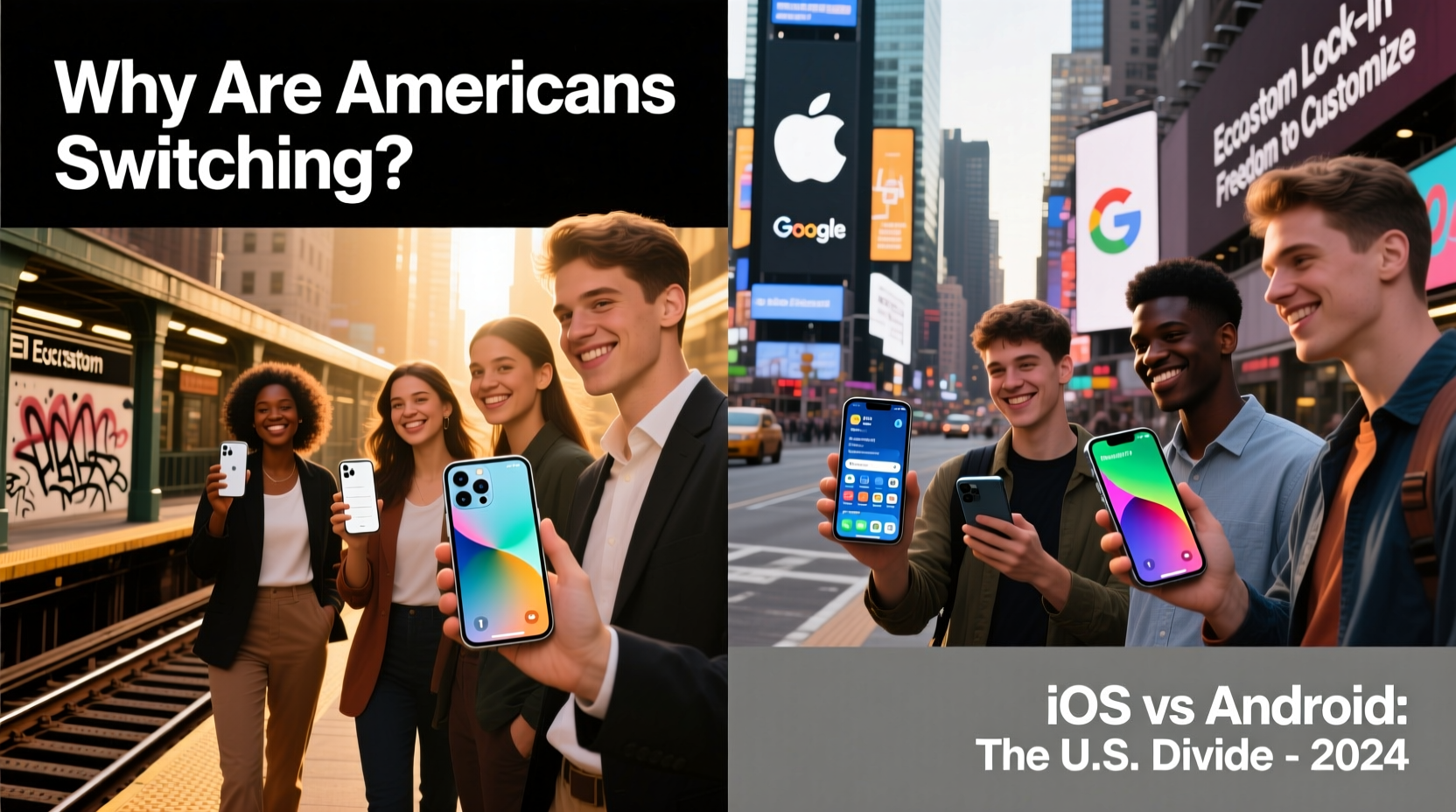
Apple's retention rate remains remarkably high. According to a 2023 survey by Consumer Intelligence Research Partners (CIRP), 92% of iPhone users stayed with Apple when upgrading their device—up from 86% just five years earlier. Meanwhile, Samsung reports around 78% Android loyalty in the U.S., indicating stronger churn but also greater opportunity for cross-platform movement.
This entrenched loyalty stems largely from ecosystem integration. Once users invest in AirPods, MacBooks, Apple Watches, or iCloud storage, the friction of switching becomes tangible. Similarly, Android users embedded in Google’s world—with Gmail, Google Photos, Pixel Buds, or Nest devices—face comparable inertia.
Why Some iPhone Users Are Switching to Android
Despite Apple’s strong hold, there are growing pockets of defection. Several key factors drive iPhone-to-Android migration:
- Price sensitivity: With iPhone starting prices hovering near $700—and Pro models exceeding $1,000—many consumers seek value. Mid-range Android phones like the Google Pixel 7a or Samsung Galaxy A54 offer flagship-level cameras and performance at half the cost.
- Customization: Android allows deeper personalization—from default apps to launchers and widgets—appealing to tech-savvy users frustrated by iOS restrictions.
- Better hardware variety: Android supports foldables, ultra-wide aspect ratios, stylus integration (Galaxy Note series), and diverse charging options, giving users more physical choices.
- Camera innovation: While iPhone cameras remain top-tier, brands like Google and Samsung have pushed computational photography further, offering superior night modes, zoom capabilities, and real-time HDR processing.
“People don’t leave ecosystems; they outgrow them. The shift happens when functionality outweighs familiarity.” — Dr. Lena Torres, Tech Anthropologist at NYU
Why Most Americans Still Stick with iPhone
Switching costs go beyond money. For many, the iPhone represents seamless reliability. Key reasons for continued loyalty include:
- iMessage dominance: In social and professional circles, green vs. blue text bubbles carry social weight. Leaving iOS risks exclusion from group threads, disappearing messages, and lost formatting.
- Resale value: iPhones retain up to 60% of their value after one year, compared to 40–45% for most Android devices. This makes upgrades financially easier.
- Software longevity: Apple supports iPhones with updates for 5–6 years on average. Most Android phones receive only 3–4 years, creating long-term security and feature gaps.
- Perceived prestige: Especially among higher-income demographics, the iPhone remains a status symbol. A 2023 Pew study found iPhone ownership correlates strongly with household income over $75,000.
Android Gains Ground Through Strategic Innovation
While Apple plays it safe with iterative design, Android OEMs are pushing boundaries. Samsung’s Galaxy Z Fold series redefines productivity, while Google’s AI-powered features—such as Call Screen, Magic Eraser, and Live Translate—offer practical daily benefits unmatched on iOS.
Moreover, Google has tightened its ecosystem game. Features like Fast Pair, Nearby Share, and cross-device continuity between Chromebooks and phones now rival Apple’s Handoff and Continuity tools. For younger users less tied to legacy systems, Android’s momentum feels inevitable.
| Feature | iPhone Advantage | Android Advantage |
|---|---|---|
| Software Updates | 5+ years of consistent OS support | Limited to 3–4 years (except Pixel) |
| App Ecosystem | Slightly better app optimization and exclusives | Greater flexibility (sideloading, alternative stores) |
| Privacy Controls | Strong app tracking transparency | Granular permission controls per-use basis |
| Device Variety | Fewer models, consistent experience | Wide range of sizes, prices, and form factors |
| Ecosystem Integration | Tight hardware-software synergy across Apple products | Growing Google ecosystem with open compatibility |
Mini Case Study: A College Student’s Platform Shift
Jessica, a 21-year-old college junior in Austin, switched from an iPhone 12 to a Pixel 8 after her screen cracked and repair costs hit $289. She’d used iPhones since high school but grew frustrated with limited file management and lack of customization. After borrowing a friend’s Pixel, she was drawn to the cleaner UI, longer battery life, and free unlimited photo backups in original quality. Though she missed iMessage initially, she adapted using RCS and WhatsApp. “It took two weeks,” she said, “but now I feel more in control of my phone—not the other way around.” Her decision reflects a broader trend among Gen Z: functionality and affordability increasingly outweigh brand allegiance.
Checklist: Should You Switch Platforms?
Before making a jump, consider these practical steps:
- ✅ Audit your current ecosystem: List all connected devices and services (smartwatch, headphones, cloud storage).
- ✅ Test messaging interoperability: Try group chats with friends using different platforms to see how media and replies behave.
- ✅ Evaluate app availability: Check if critical apps (banking, fitness, work tools) perform equally well on the other OS.
- ✅ Calculate total cost: Include device price, accessories, potential repairs, and resale value over 2 years.
- ✅ Simulate daily use: Use a loaner or demo unit for one week to assess navigation, battery, and workflow fit.
FAQ
Can I transfer my data easily from iPhone to Android?
Yes—Google’s “Move to Android” app simplifies transferring contacts, messages, photos, and calendars over Wi-Fi. However, iMessages, Health data, and some app settings won’t migrate. Plan for manual backup of critical information.
Is Android less secure than iPhone?
Historically, yes—due to fragmentation and slower update rollouts. But modern Android (especially on Pixel and Samsung devices with monthly patches) has closed the gap significantly. User behavior (app downloads, phishing awareness) matters more than platform alone.
Will switching hurt my work productivity?
It depends on your tools. If you rely heavily on Apple-specific workflows (e.g., Notes syncing, Continuity, FaceTime for meetings), expect a learning curve. For cloud-based work (Gmail, Zoom, Microsoft 365), the transition is smoother.
Conclusion: The Switch Is Real—But Not Universal
The narrative that “everyone” is switching from iPhone to Android—or the reverse—is misleading. What’s actually happening is a quiet realignment. A small but growing number of users, particularly under 30 or budget-conscious families, are reevaluating their choices based on value, flexibility, and innovation. At the same time, Apple’s ecosystem moat keeps the majority locked in place.
Ultimately, the decision isn’t just technological—it’s emotional and financial. The best choice depends not on trends, but on how deeply each platform aligns with your lifestyle, budget, and digital habits.




 浙公网安备
33010002000092号
浙公网安备
33010002000092号 浙B2-20120091-4
Comments
No comments yet. Why don't you start the discussion?