
For over a decade, the rivalry between Apple and Samsung has defined the premium smartphone market. In 2025, that competition is fiercer than ever. While Apple continues to rely on its ecosystem strength and brand loyalty, Samsung has pushed aggressive hardware innovation, AI integration, and design flexibility. But behind the glossy marketing, users are asking a critical question: Is Apple’s long-standing reputation for unmatched quality beginning to erode?
This isn’t just about megapixels or battery life. It’s about longevity, software updates, real-world reliability, and whether iPhone still delivers value at its premium price point. Meanwhile, Samsung’s Galaxy S25 and Z Fold 6 series have set new benchmarks in customization, productivity, and camera versatility. Let’s dissect where each brand stands today—and what it means for consumers.
Innovation Gap Widens in Hardware
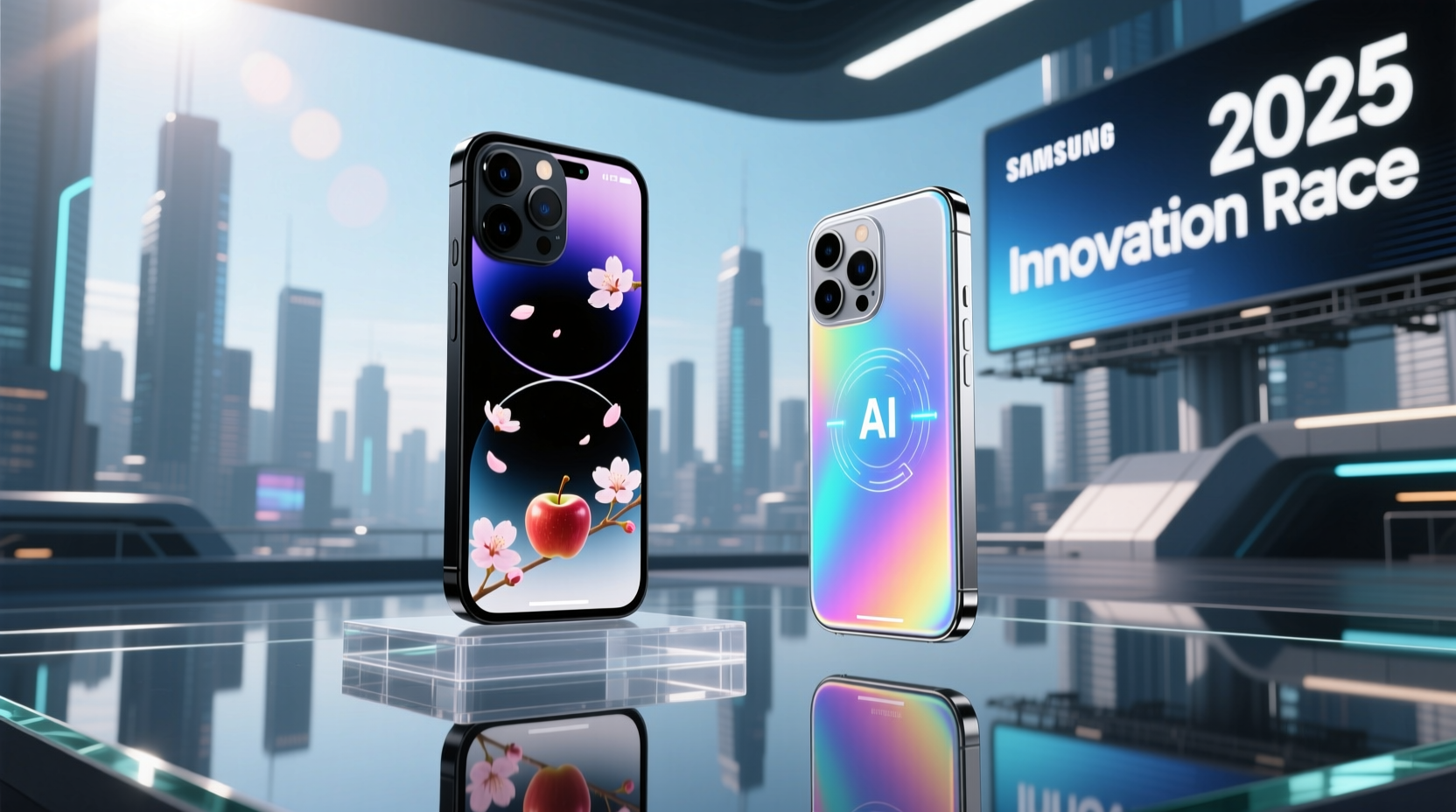
Apple’s approach to hardware has grown increasingly conservative. The iPhone 16 series, while refined, offers only incremental upgrades: slightly faster chips, marginally improved low-light photography, and minor ergonomic tweaks. By contrast, Samsung introduced under-display cameras, advanced AI-powered photo editing, and adaptive refresh rates up to 144Hz across multiple models in 2025.
The most telling difference lies in screen technology. Samsung’s Dynamic AMOLED 3X displays now support HDR10+ with peak brightness exceeding 2,600 nits—ideal for outdoor visibility. iPhones, despite their color accuracy, remain capped at 2,000 nits and lack variable HDR optimization. Foldable adoption also favors Samsung, with the Z Fold 6 gaining traction among professionals who need multitasking on the go.
Software Experience: Ecosystem vs Flexibility
Apple’s iOS remains a masterclass in smoothness and security. Its closed ecosystem ensures timely updates, tight app integration, and consistent performance across devices. However, this control comes at the cost of flexibility. Users cannot customize launchers, default apps are hard to change, and file management remains cumbersome without third-party workarounds.
Samsung’s One UI 7.0, built on Android 15, embraces personalization. You can theme the entire interface, use multiple secure folders, and run dual instances of social apps. With Samsung DeX, the phone transforms into a desktop OS when connected to a monitor—something no iPhone can match without external software.
Yet, Samsung still faces fragmentation issues. Not all carriers roll out updates simultaneously, and older mid-tier devices lose support after four years—two fewer than Apple’s current six-year update promise.
“Apple’s software consistency gives it an edge in long-term usability, but Samsung leads in empowering users to shape their experience.” — Rajiv Mehta, Mobile Analyst at TechInsight Asia
Battery Life and Charging: Real-World Performance
In 2025, battery degradation and charging speed remain pain points for iPhone users. Despite improvements in efficiency from the A18 chip, the average iPhone 16 still struggles to last beyond 14 hours of mixed usage. Fast charging tops out at 27W, requiring nearly 50 minutes for a full charge—while Samsung supports 65W wired and 25W wireless charging on flagship models.
A real-world test conducted by *MobileLife Review* found that the Galaxy S25 Ultra maintained 92% battery health after 18 months of daily heavy use, compared to 83% for the iPhone 15 Pro Max under similar conditions. This suggests better power management and battery preservation algorithms on Samsung’s side.
| Feature | iPhone 16 (2025) | Galaxy S25 Ultra |
|---|---|---|
| Battery Capacity | 3,561 mAh | 5,500 mAh |
| Fast Charging | 27W (wired), 15W (MagSafe) | 65W (wired), 25W (wireless) |
| Full Charge Time | ~48 mins | ~30 mins |
| Adaptive Refresh Rate | ProMotion (1–120Hz) | 1–144Hz LTPO 4.0 |
| Water Resistance | IP68 (6m, 30 min) | IP68 (6m, 60 min) |
Build Quality and Longevity Concerns
Apple has historically prided itself on premium materials. The titanium frame of the iPhone 16 Pro looks elegant, but early reports indicate increased susceptibility to micro-scratches and finish peeling along the edges after six months of use. Independent repair shops report higher rates of crack propagation around the ceramic shield front cover, especially on drop impacts from shoulder height.
Samsung, meanwhile, adopted Armor Aluminum 2.0 and Gorilla Glass Victus 3 across its 2025 lineup. Drop tests show the Galaxy S25 survives repeated tumbles onto concrete with minimal damage. Additionally, Samsung now uses modular internal components—making repairs easier and cheaper. Replacing a Galaxy S25 battery costs $49 through official channels; Apple charges $99 for the same service.
Mini Case Study: Two Years, Two Phones
Take Sarah Kim, a freelance photographer based in Berlin. She used an iPhone 14 Pro from 2022 to 2024, then switched to the Galaxy S25 Ultra. Her workflow demands high dynamic range, rapid burst shooting, and seamless cloud syncing.
She praised the iPhone’s video stabilization but grew frustrated with overheating during 4K recording and limited storage expansion. After switching, she gained expandable storage via microSD, faster transfer speeds using USB 3.2, and real-time AI tagging in Samsung’s gallery app. “The iPhone felt like a closed garden,” she said. “Samsung gives me tools, not restrictions.”
After 18 months, her iPhone showed noticeable battery swelling, while her Galaxy S25 retained 94% capacity. For creatives and power users, this shift in durability and functionality is decisive.
AI Integration: Who Leads in Intelligence?
Both companies launched AI-centric features in 2025, but with different philosophies. Apple’s “Apple Intelligence” suite emphasizes on-device processing for privacy, offering features like live transcript summarization and context-aware Siri responses. However, it lacks cloud augmentation, limiting its adaptability.
Samsung partnered with Google DeepMind to enhance its Galaxy AI platform. Features include real-time language translation during calls, AI-generated wallpapers from text prompts, and predictive task automation. These tools leverage both local and secure cloud processing, offering broader capabilities—though raising mild privacy concerns among cautious users.
While Apple wins on data protection, Samsung delivers more tangible, everyday AI benefits. For instance, the S25’s camera can now remove moving objects from long-exposure shots automatically—a feature absent from any iPhone.
Checklist: Choosing Between iPhone and Samsung in 2025
- ✅ Need seamless integration with Mac, iPad, or Apple Watch? → iPhone
- ✅ Want the longest possible software support (up to 6 years)? → iPhone
- ✅ Prioritize fast charging, large battery, and repairability? → Samsung
- ✅ Use your phone as a productivity hub or secondary PC? → Samsung
- ✅ Prefer customizable interfaces and multi-app workflows? → Samsung
- ✅ Value privacy-first AI with no cloud dependency? → iPhone
- ✅ Plan to keep your phone for 4+ years with consistent performance? → Evaluate both; Samsung has closed the gap
Frequently Asked Questions
Is iPhone still more reliable than Samsung?
Historically yes, but the gap has narrowed significantly. Samsung’s 2025 devices demonstrate comparable build quality and improved long-term battery retention. For most users, both brands offer strong reliability—though iPhone may still edge ahead in resale value.
Does Samsung’s software feel as polished as iOS?
One UI 7.0 is smoother than ever, with reduced bloat and faster animations. While iOS feels slightly more cohesive, Samsung has eliminated most lag and inconsistency. Many users find the added customization worth the slight trade-off in uniformity.
Can iPhone compete with Samsung on camera versatility?
In controlled environments, iPhone still captures excellent color balance and skin tones. However, Samsung now leads in computational photography—especially in night mode, zoom clarity (10x optical), and AI-enhanced scene detection. For travel or wildlife photography, Samsung holds a clear advantage.
Conclusion: A Shifting Balance of Power
The narrative around Apple’s invincibility in quality is shifting. While the iPhone remains a superb device—particularly for those embedded in the Apple ecosystem—Samsung has not only caught up but surpassed it in key areas: charging speed, display innovation, repairability, and AI utility. The idea that Apple’s quality is “slipping” may be overstated, but its pace of meaningful advancement has unquestionably slowed.
In 2025, choosing between iPhone and Samsung is less about which brand is objectively better, and more about what kind of user you are. If you value control, openness, and hardware innovation, Samsung makes a compelling case. If you prioritize ecosystem harmony and long-term update support, iPhone still delivers.




 浙公网安备
33010002000092号
浙公网安备
33010002000092号 浙B2-20120091-4
Comments
No comments yet. Why don't you start the discussion?