
In 2017, Apple and Samsung released two landmark smartphones: the iPhone X and the Galaxy S8. Both devices represented major design shifts—edge-to-edge displays, facial recognition (in different forms), and a move away from physical home buttons. But beyond hardware, the real divergence lay in software. The iPhone X launched with iOS 11, while the Galaxy S8 ran Android 8.0 Oreo with Samsung’s custom skin. This raises a critical question: amid all the pixel-counting and bezel-measuring, did users actually have strong preferences for one operating system over the other?
The answer isn’t as straightforward as brand loyalty might suggest. While many consumers stayed with their preferred ecosystem out of habit, a closer look reveals genuine software-driven preferences rooted in usability, customization, ecosystem integration, and long-term reliability.
User Experience: Simplicity vs. Flexibility
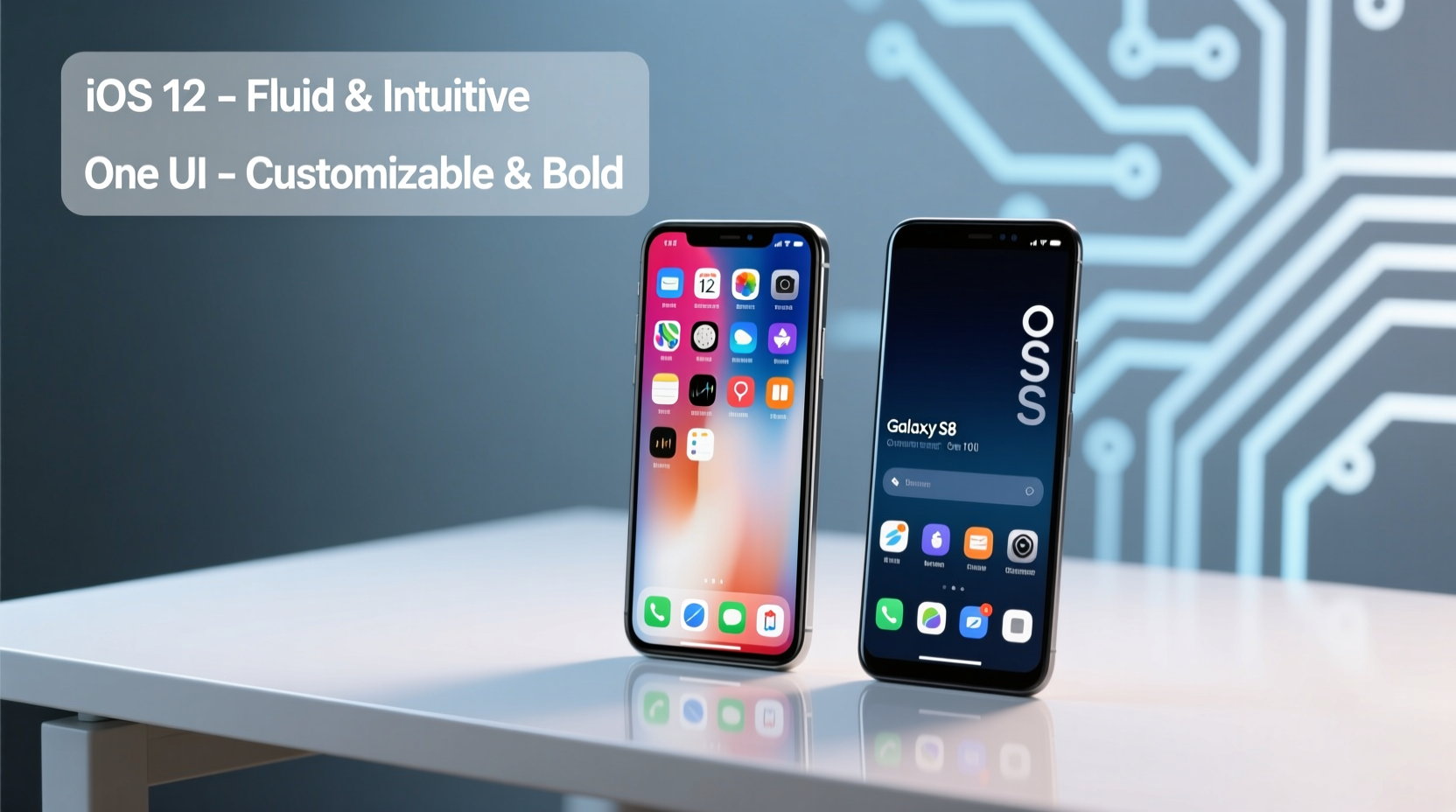
iOS 11, introduced alongside the iPhone X, emphasized fluid animations, gesture-based navigation, and a refined visual language. For longtime iPhone users, the transition felt natural. The removal of the home button was initially jarring, but the swipe-up gesture to return to the home screen quickly became second nature. The Control Center was redesigned into a single pane, and the introduction of Face ID brought a new biometric paradigm—albeit one that occasionally struggled in low light.
On the other hand, the Galaxy S8 ran Samsung Experience (then called TouchWiz) atop Android 8.0. It offered split-screen multitasking, customizable quick settings, and a high degree of personalization—from icon packs to always-on display options. Users could sideload apps, use alternative launchers, or even root the device for deeper control. For tech-savvy users, this flexibility was a major win.
Ecosystem Lock-In and Brand Loyalty
One reason software preference often goes unnoticed is ecosystem entrenchment. By 2017, most iPhone X buyers were already invested in Apple’s ecosystem: iCloud, iMessage, AirPods, MacBooks, and Apple Watch. Switching to Android meant losing seamless continuity features like Handoff, Instant Hotspot, and universal clipboard. Similarly, Samsung users often owned Galaxy Buds, SmartThings devices, or Windows PCs synced via Samsung Flow.
A study by Consumer Intelligence Research Partners (CIRP) in early 2018 found that 92% of iPhone X buyers were upgrading from another iPhone. This suggests that software familiarity—not just hardware—played a role in retention. Meanwhile, 78% of Galaxy S8 buyers came from another Android device, indicating similar inertia.
“People don’t switch ecosystems because the software feels right—they stay because everything works together.” — David Pierce, Former Editor-in-Chief, The Verge
Software Comparison: iOS 11 vs. Android 8 with Samsung UX
| Feature | iOS 11 (iPhone X) | Android 8.0 + Samsung UX (S8) |
|---|---|---|
| Update Frequency | Annual major updates for 5+ years | Major updates limited; Samsung promised 2 OS upgrades |
| Customization | Minimal (wallpapers, app layout) | High (themes, fonts, gestures, edge panels) |
| Privacy & Security | Strong sandboxing, limited data sharing | More permissions control, but fragmentation increased risk |
| Performance Over Time | Consistently smooth due to tight hardware-software integration | Slowed slightly after 1–2 years due to bloatware and background processes |
| Voice Assistant | Siri (limited third-party app support) | Bixby (new, underdeveloped), Google Assistant (superior) |
| Multitasking | Basic slide-over in iPad; limited on iPhone | Split-screen, pop-up view, Samsung Dex (with monitor) |
Real-World Preferences: A Mini Case Study
Consider Mark, a freelance photographer based in Portland, who switched from an iPhone 7 to a Galaxy S8 in 2017. His decision wasn’t driven by camera specs—it was about workflow. He used Adobe Lightroom Mobile extensively and appreciated Android’s file system access, which allowed him to organize RAW files directly on the device. He also relied on dual-window mode to edit photos while referencing client emails.
“I missed iMessage and some apps didn’t work as well,” Mark admitted, “but being able to plug my S8 into a monitor with DeX and use it like a desktop? That changed how I worked. No iPhone could do that in 2017.”
Conversely, Lisa, a school administrator in Austin, upgraded from an iPhone 6S to the iPhone X. She had no interest in customization. What mattered was that her calendar synced instantly with her MacBook, her reminders appeared on her iPad, and her kids could be located via Family Sharing. “I don’t want to think about my phone,” she said. “I want it to just work. And the iPhone does.”
Expert Insights on Software Philosophy
The divide between iOS and Android at the time wasn’t just technical—it was philosophical. Apple prioritized coherence, security, and long-term support. Google and Samsung focused on adaptability, openness, and innovation—even if it came at the cost of consistency.
As Jan Dawson, founder of Jackdaw Research, noted: “iOS gives you a tightly curated garden. Android gives you a vast forest where you can build your own path—but you might get lost.”
This distinction influenced user satisfaction. In a 2018 American Customer Satisfaction Index (ACSI) report, iPhones scored 83 out of 100 for customer satisfaction, compared to 78 for Android smartphones overall. Samsung ranked highest among Android brands, but still trailed Apple.
Step-by-Step: How to Decide Which Software Was Better for You (In 2017)
- Assess your ecosystem: Are you using a Mac, iPad, or Apple Watch? If yes, iOS likely offers smoother integration.
- Evaluate your need for customization: Do you want to change default apps, use dark mode system-wide, or install third-party launchers? Android wins here.
- Consider long-term updates: iOS devices received 5+ years of updates; most Android phones got 2–3. If longevity matters, iOS had the edge.
- Test multitasking needs: Professionals needing split-screen or desktop-like functionality benefited more from the S8’s DeX and multi-window support.
- Check app availability and optimization: Some apps (especially banking and streaming) launched earlier or performed better on iOS due to smaller device fragmentation.
Frequently Asked Questions
Did the iPhone X have better software than the Galaxy S8?
It depends on priorities. The iPhone X offered a more polished, consistent, and secure experience with longer update support. The Galaxy S8 provided greater customization and multitasking features. Neither was universally \"better\"—they served different user needs.
Was Android 8.0 stable on the Galaxy S8?
Generally, yes. Samsung had improved its software stability by 2017, and Android 8.0 brought Project Treble, which helped streamline future updates. However, some users reported occasional lag after extended use, particularly with pre-installed apps running in the background.
Could you live without iMessage if you switched to the S8?
This was a major pain point. iMessage’s blue bubbles and read receipts created social friction when switching to Android. While third-party apps like WhatsApp helped, they weren’t universally adopted in the U.S. at the time, making the transition difficult for some.
Final Thoughts: Yes, People Did Prefer One Software—But It Was Personal
Yes, people genuinely preferred the software on one device over the other—but not for blanket reasons. Preference was deeply personal, shaped by lifestyle, workflow, existing devices, and tolerance for complexity.
Those who valued reliability, security, and ecosystem harmony often found iOS 11 on the iPhone X to be the superior choice. Meanwhile, users who wanted control, customization, and advanced multitasking capabilities leaned toward the Galaxy S8’s Android implementation.
The truth is, in 2017, both platforms were mature enough that the \"best\" software wasn’t determined by features alone—it was defined by fit. The iPhone X and Galaxy S8 didn’t just showcase new hardware; they highlighted a fundamental divergence in digital philosophy. And for millions of users, that difference was decisive.




 浙公网安备
33010002000092号
浙公网安备
33010002000092号 浙B2-20120091-4
Comments
No comments yet. Why don't you start the discussion?