
The iPhone XR, released in 2018, was a standout in Apple’s lineup for its balance of price, performance, and design. Even today, it remains a capable device for everyday use—running modern apps smoothly, supporting current iOS versions, and delivering solid battery life. However, with newer models like the iPhone 11 now widely available at competitive prices, many XR owners are asking: is it worth upgrading?
This question isn’t just about specs—it’s about real-world benefits, longevity, and whether the upgrade delivers enough meaningful improvements to justify the cost. Let’s break down the key differences and help you decide if moving from the XR to the iPhone 11 makes sense for your lifestyle and usage.
Performance and Hardware: A Noticeable Leap
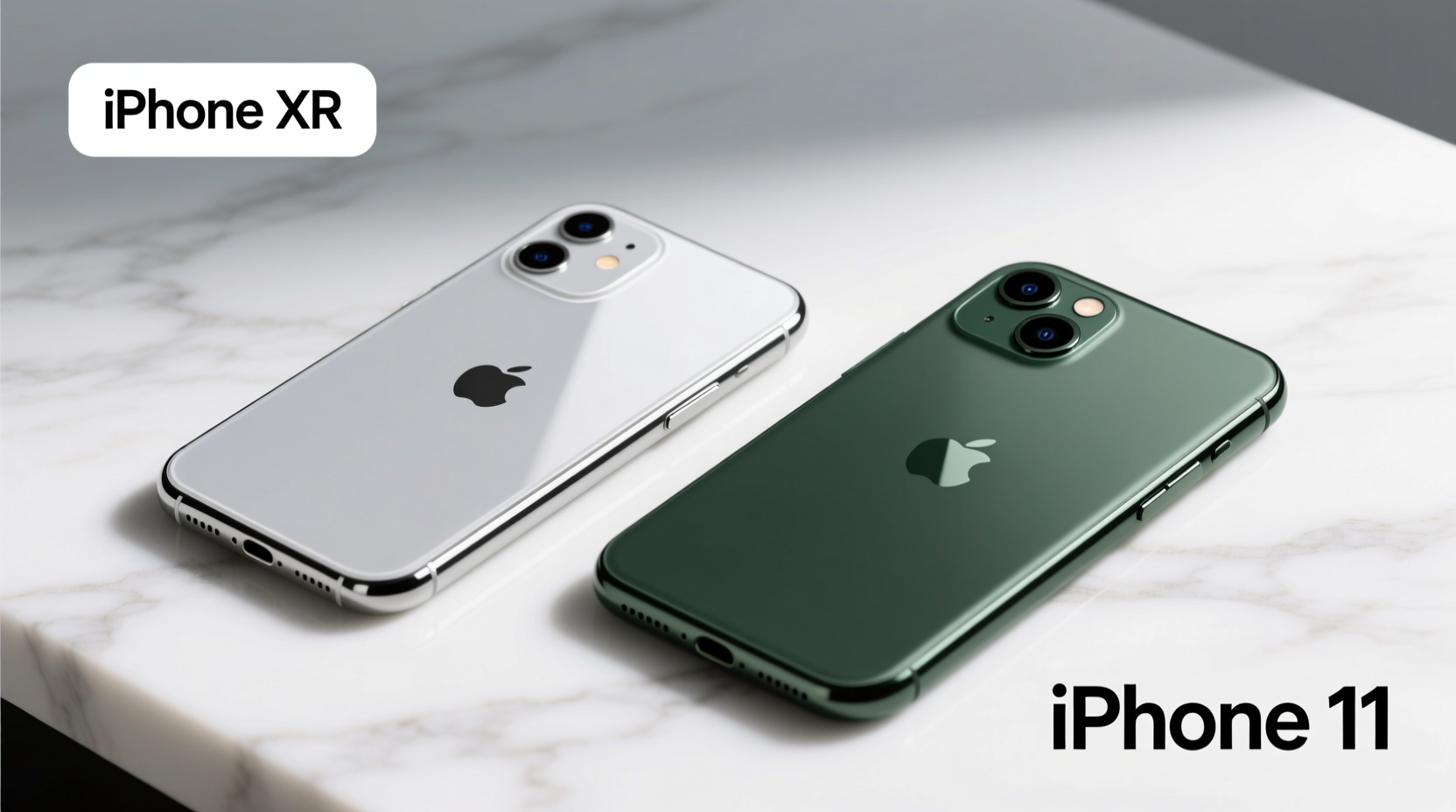
At the heart of any smartphone decision lies performance. The iPhone XR runs on Apple’s A12 Bionic chip, which was groundbreaking in 2018. Fast forward to 2019, and the iPhone 11 introduced the A13 Bionic—a chip that not only improved CPU and GPU performance by around 20% but also enhanced efficiency and machine learning capabilities.
In practical terms, the A13 ensures smoother multitasking, faster app launches, and better handling of graphics-intensive games and AR applications. While the XR still manages daily tasks well, users who frequently switch between apps, edit photos, or play mobile games will notice a tangible difference with the iPhone 11.
Camera Improvements: More Than Just Megapixels
The most significant upgrade from the iPhone XR to the iPhone 11 lies in the camera system. The XR features a single 12MP rear camera, which performs admirably in daylight but lacks versatility. The iPhone 11, meanwhile, introduces a dual-camera setup: a 12MP wide lens and a 12MP ultra-wide lens.
This addition transforms the photography experience. You can now capture landscapes, architecture, or group shots with a broader field of view—something the XR simply cannot do. Night mode, introduced with the iPhone 11, is another game-changer. It automatically activates in low light, producing brighter, clearer, and more detailed photos than the XR’s standard exposure.
Front-facing cameras also see an upgrade. The iPhone 11 bumps the selfie camera to 12MP (from 7MP) and adds 4K video recording and slow-motion support—features that content creators and social media users will appreciate.
“Smartphone photography isn’t just about resolution anymore—it’s about flexibility and computational power. The iPhone 11’s night mode and ultra-wide lens represent real usability gains.” — David Chen, Mobile Photography Analyst
Display and Design: Subtle Differences
Both phones share a similar design language: aluminum frame, glass back, and Face ID. They’re both IP67 water-resistant, meaning they can survive brief submersion in up to 1 meter of water. However, there are subtle distinctions.
The iPhone XR uses an LCD “Liquid Retina” display, while the iPhone 11 retains the same panel type. Despite being the newer model, the 11 doesn’t offer OLED quality—but it does improve brightness and color accuracy slightly. Both have 6.1-inch screens, so size remains consistent.
One often-overlooked improvement is haptic feedback. The iPhone 11 features a refined Taptic Engine, delivering more precise vibrations during interactions. It’s a small detail, but one that enhances the overall user experience over time.
Battery Life and Charging: Incremental Gains
Battery life on the iPhone XR is already strong—Apple rated it at up to 16 hours of video playback. The iPhone 11 extends that by about 1–2 hours under typical use, thanks to the more efficient A13 chip and slight battery capacity increase.
More importantly, the iPhone 11 supports faster charging out of the box. While both phones come with a 5W charger in the box, the 11 is compatible with 18W fast charging (with a separate adapter). This means you can charge from 0 to 50% in about 30 minutes, a convenience the XR technically supports but wasn’t marketed for.
If you're someone who charges quickly in the morning or relies on short top-ups during the day, this feature adds real value—even if it requires purchasing an additional charger.
Detailed Comparison: iPhone XR vs iPhone 11
| Feature | iPhone XR | iPhone 11 |
|---|---|---|
| Processor | A12 Bionic | A13 Bionic |
| Rear Camera | 12MP Wide (f/1.8) | 12MP Wide (f/1.8) + 12MP Ultra-Wide (f/2.4) |
| Front Camera | 7MP (f/2.2) | 12MP (f/2.2), 4K video, Slofies |
| Night Mode | No | Yes (rear and front) |
| Battery Life | Up to 16 hrs video playback | Up to 17 hrs video playback |
| Fast Charging | Supported (with adapter) | Officially supported (18W) |
| Colors | White, Black, Blue, Yellow, Coral, Red | Black, Green, Yellow, Purple, Red, White |
| iOS Support (Expected End) | ~2024–2025 | ~2026–2027 |
Is It Worth Upgrading? A Practical Checklist
Deciding whether to upgrade depends on your priorities and how you use your phone. Ask yourself the following questions before making a move:
- Do you regularly take photos in low light?
- Would having an ultra-wide lens improve your photography?
- Are you starting to notice slowdowns in apps or games?
- Do you want longer iOS support (security updates, new features)?
- Have you maxed out your storage and need more space?
- Are you still satisfied with your XR’s battery life?
Real-World Example: Sarah’s Upgrade Decision
Sarah has used her iPhone XR since 2019. She takes occasional photos, mostly during weekend outings and family events. Over time, she noticed her night photos were grainy and lacked detail. When her nephew’s birthday party moved indoors, her attempts to capture moments came out dark and blurry.
After researching, she upgraded to the iPhone 11 primarily for Night mode and the ultra-wide lens. At a local park, she tested the new camera—capturing a wide-angle shot of her family under a tree and crisp indoor shots of cake-cutting later that evening. The improvement was immediate and emotionally rewarding. For Sarah, the upgrade wasn’t about raw speed—it was about preserving memories more clearly.
Frequently Asked Questions
Will the iPhone XR stop working if I don’t upgrade?
No. The iPhone XR continues to receive iOS updates and security patches. As of 2024, it’s expected to support iOS 17 and possibly iOS 18. It will remain functional for daily tasks like calling, messaging, browsing, and using major apps for at least another year or two.
Can I use my iPhone XR accessories with the iPhone 11?
Yes. Both phones have the same form factor, Lightning port, and wireless charging capability. Cases, chargers, and headphones designed for the XR fit the iPhone 11 perfectly.
Is the iPhone 11 significantly better for video recording?
Yes. The iPhone 11 supports extended dynamic range for video up to 60fps (vs 30fps on XR), offering smoother and more balanced footage in high-contrast scenes. It also enables stereo recording and improved stabilization, making it better suited for vlogging or social media content.
Final Verdict: When to Upgrade and When to Wait
The iPhone XR is still a good phone—there’s no denying that. It handles modern software well, looks great, and performs reliably for average users. But the iPhone 11 isn’t just a minor refresh; it brings meaningful upgrades in camera capabilities, processing power, and long-term viability.
If you're a casual user who rarely pushes your phone’s limits, sticking with the XR makes financial sense. However, if you value photography, plan to keep your device for several more years, or want access to features like Night mode and ultra-wide shooting, the iPhone 11 is absolutely worth the upgrade—even in 2024.
Moreover, as refurbished and carrier-offer prices for the iPhone 11 continue to drop, the cost gap narrows. At $150–$200 difference (or less), the added functionality becomes hard to ignore.




 浙公网安备
33010002000092号
浙公网安备
33010002000092号 浙B2-20120091-4
Comments
No comments yet. Why don't you start the discussion?