
The iPhone XR was a standout when it launched in 2018—offering flagship-level performance at a more accessible price point. Fast forward to today, and the iPhone 13 has taken its place as a modern workhorse with improved hardware, efficiency, and camera capabilities. But if you're still using an iPhone XR, is upgrading to the iPhone 13 truly worthwhile—especially when considering physical size, usability, and daily experience?
This isn’t just about specs on paper. It’s about how those changes affect real-world use: one-handed handling, pocket fit, screen clarity, battery life, and whether the slightly larger footprint of the iPhone 13 delivers meaningful benefits or just bulk.
Design and Physical Dimensions: Size Matters More Than You Think
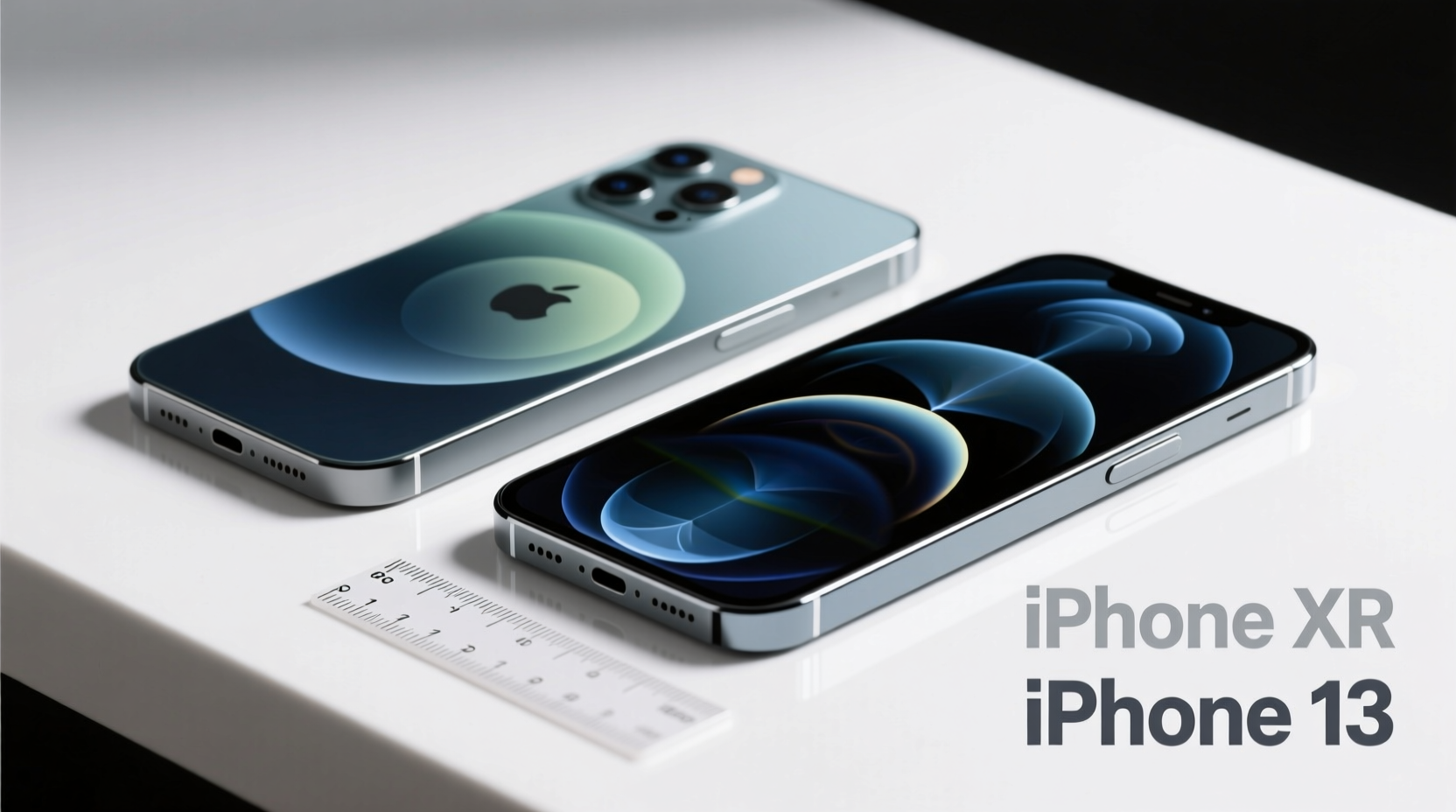
At first glance, the iPhone XR and iPhone 13 look similar—both feature flat aluminum edges, glass backs, and Face ID. However, subtle but significant differences in dimensions impact how each phone feels in hand and fits into your lifestyle.
| Model | Height | Width | Thickness | Weight | Display Size |
|---|---|---|---|---|---|
| iPhone XR | 150.9 mm | 75.7 mm | 8.3 mm | 194g | 6.1 inches |
| iPhone 13 | 146.7 mm | 71.5 mm | 7.65 mm | 173g | 6.1 inches |
Despite sharing the same 6.1-inch display size, the iPhone 13 is actually shorter and narrower than the XR, thanks to reduced bezels. It's also thinner and lighter—making it more compact overall, even though both devices occupy the same screen class. This means better grip, easier reach across the screen, and improved comfort during extended use.
Display and Visual Experience: Beyond Inches
Both phones have Liquid Retina LCD displays measuring 6.1 inches, but there’s a crucial difference: the iPhone XR uses LCD technology, while the iPhone 13 retains the same panel type but improves brightness, contrast, and power efficiency.
- Brightness: iPhone 13 peaks at 800 nits (vs. 625 nits on XR), making outdoor visibility noticeably better.
- Contrast Ratio: Improved by nearly 50%, delivering deeper blacks and richer colors.
- Power Efficiency: The iPhone 13’s OLED-like tuning helps extend battery life, even with similar screen sizes.
The visual upgrade may not seem dramatic at first, but after switching, users often report that text appears sharper and media content feels more immersive—even without a resolution bump.
Performance and Longevity: Two Generations Apart
The gap between the A12 Bionic (XR) and A15 Bionic (13) is substantial—not just in raw speed, but in future-proofing.
“Two generations in chip design can mean up to three extra years of software support.” — Mark Tran, Mobile Hardware Analyst at TechPulse Insights
The A15 Bionic outperforms the A12 by roughly 50% in CPU tasks and over 60% in graphics. More importantly, apps are increasingly optimized for newer architectures. Features like Cinematic Mode, enhanced AR experiences, and faster machine learning tasks simply run better—or only function properly—on the iPhone 13.
If you plan to keep your phone beyond two years, the iPhone 13 will likely receive iOS updates until 2027 or later. In contrast, the XR, already on its sixth major OS update, may see diminishing returns in performance with future upgrades.
Camera Comparison: When Better Optics Change How You Shoot
On paper, both models have single-lens rear systems (though the 13 adds a second ultra-wide lens). But the real story lies in computational photography advancements.
- Dual-camera system: iPhone 13 includes a 12MP wide + 12MP ultra-wide setup; XR has only a single 12MP wide lens.
- Night mode: Available on all lenses of the iPhone 13, including front-facing; limited to main sensor on XR.
- Sensor-shift stabilization: Exclusive to iPhone 13, offering superior video smoothness and low-light photo clarity.
- Photographic Styles: Customizable color and tone presets introduced with iPhone 13, absent on XR.
For casual shooters, the difference might be subtle. But for anyone who values creative flexibility—zooming out without stepping back, capturing clearer night shots, or shooting stabilized vlogs—the upgrade pays off quickly.
Mini Case Study: Sarah’s Upgrade Decision
Sarah, a freelance photographer based in Portland, held onto her iPhone XR for four years, satisfied with its durability and camera quality. But she began noticing limitations when editing photos directly on her phone—slow rendering, app crashes during multi-layer edits, and poor low-light output.
After testing an iPhone 13 at a local Apple Store, she was struck by how much smoother Lightroom ran, how Night mode transformed dimly lit street scenes, and how the ultra-wide lens eliminated the need for awkward backing up during indoor shoots.
She upgraded primarily for workflow efficiency, not screen size. Yet, she found the slightly sleeker form factor made handheld shooting more comfortable during long days on location.
Battery Life and Charging: Real-World Endurance
Apple claims the iPhone 13 offers up to 1.5 hours more battery life than the XR under typical usage. Independent tests confirm this: around 10–12 hours of mixed screen-on time for the 13, compared to 8–9 for the XR.
Why the improvement despite a similar-sized device? The A15 chip’s efficiency architecture and smaller transistors reduce power draw, allowing Apple to pack a slightly larger battery into a thinner body.
Additionally, both support Fast Charging and wireless charging, but the iPhone 13 charges about 25% faster due to firmware optimizations and heat management improvements.
Checklist: Should You Upgrade from iPhone XR to iPhone 13?
Use this checklist to evaluate your personal needs:
- ✅ Are you experiencing slow app launches or frequent crashes?
- ✅ Do photos in low light appear grainy or lack detail?
- ✅ Have you noticed shorter battery life requiring midday charging?
- ✅ Do you want to use advanced features like Cinematic Mode or Photographic Styles?
- ✅ Is your current phone showing signs of wear (cracked screen, swollen battery)?
- ✅ Are you planning to keep your next phone for 3+ years?
If you answered “yes” to three or more, the iPhone 13 represents a meaningful upgrade—not because it’s bigger, but because it’s fundamentally more capable.
Frequently Asked Questions
Is the iPhone 13 harder to use one-handed than the XR?
No. Despite having the same screen size, the iPhone 13’s narrower width (71.5mm vs. 75.7mm) makes it easier to operate with one hand. Combined with Reachability enabled in Settings, most users find it more manageable.
Does the iPhone 13 justify its higher price over the XR now?
If bought used or refurbished, yes. The iPhone 13 typically retails $100–$150 more than a used XR, but delivers longer software support, better cameras, and improved efficiency. Over two years, the cost per benefit favors the 13.
Can the iPhone XR still handle everyday tasks in 2024?
Yes, for basic use—calls, messaging, social media, and light browsing. However, newer versions of apps like Instagram, TikTok, and Google Maps are becoming heavier, leading to lag and longer load times on the A12 chip.
Final Verdict: Worth the Upgrade—But Not for Size Alone
The iPhone 13 isn’t meaningfully larger than the XR, but it is smarter, faster, and built for the next generation of mobile computing. The slight refinement in dimensions actually enhances usability, while internal upgrades deliver tangible improvements in photography, battery life, and longevity.
If you’re clinging to your iPhone XR out of habit or satisfaction with its size, consider this: the upgrade isn’t about adding bulk—it’s about gaining capability within a more refined package. The iPhone 13 proves that progress isn’t always measured in inches, but in intelligence, efficiency, and experience.




 浙公网安备
33010002000092号
浙公网安备
33010002000092号 浙B2-20120091-4
Comments
No comments yet. Why don't you start the discussion?