
The iPhone XR, released in 2018, was a game-changer for Apple—offering flagship-level performance at a more accessible price. Fast forward to 2025, and the iPhone 16 represents the cutting edge of smartphone technology. For millions still using an iPhone XR, the question isn’t just about desire—it’s about value. Is upgrading to the iPhone 16 truly necessary, or can the XR still hold its own in today’s demanding mobile landscape?
This comparison goes beyond specs. It’s about real-world usability, longevity, software support, and whether the leap justifies the cost. Let’s break down what’s changed—and what hasn’t.
Performance: A Quantum Leap in Processing Power
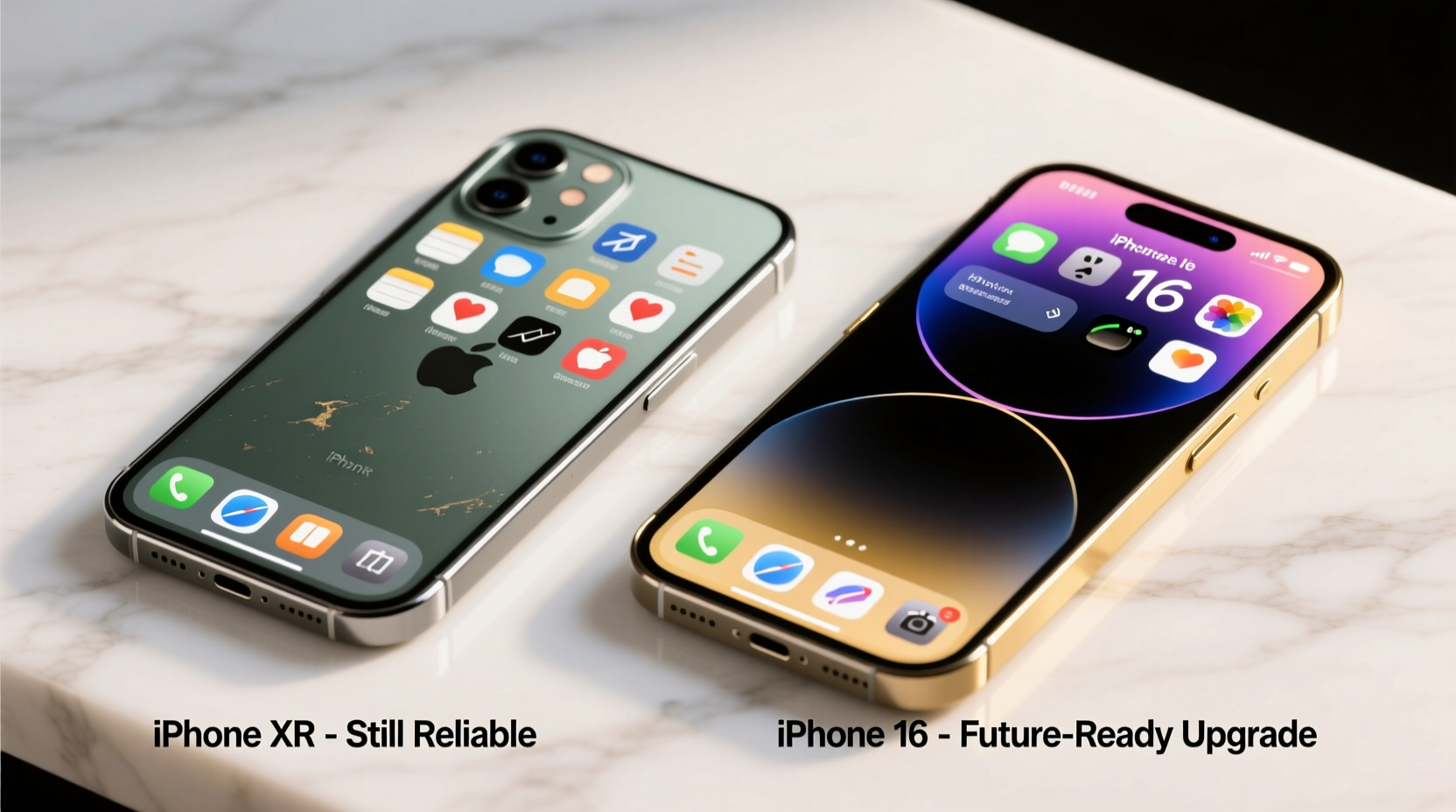
The iPhone XR was powered by the A12 Bionic chip—a powerhouse in its time. It handled multitasking, gaming, and iOS updates smoothly through several generations. However, the iPhone 16 runs on the A18 Pro chip (or newer), built on a 3nm process with significantly faster CPU, GPU, and neural engine performance.
In practical terms, this means:
- Apps open nearly instantly on the iPhone 16, even heavy ones like video editors or 3D games.
- Machine learning tasks—like photo enhancement, voice recognition, and AR features—are exponentially faster.
- The XR may struggle with future iOS updates beyond iOS 18, while the iPhone 16 will likely receive support until 2031 or later.
Camera Capabilities: From Good to Professional-Grade
The iPhone XR featured a single 12MP rear camera. While Apple’s software optimization made it punch above its weight, it lacked Night mode, Deep Fusion, and telephoto or ultra-wide lenses. The iPhone 16, depending on model, includes multiple cameras with advanced computational photography.
| Feature | iPhone XR | iPhone 16 |
|---|---|---|
| Rear Cameras | 1x 12MP (Wide) | 48MP Main + 12MP Ultra-Wide + 12MP Telephoto (5x zoom) |
| Night Mode | No (added via update but limited) | Yes, across all lenses |
| Video Recording | 4K @ 60fps | 4K @ 120fps with Cinematic Mode in HDR |
| Front Camera | 7MP | 12MP with Auto-Focus and Portrait Mode |
| Photographic Styles & ProRAW | No | Yes, full manual control |
The difference is most noticeable in low light and portrait photography. The iPhone 16’s sensor-shift stabilization and Smart HDR 6 produce sharper, more detailed images with natural color grading. If you frequently share photos or create content, the upgrade is transformative.
“Smartphone photography has evolved from capturing moments to creating art. The gap between entry-level and pro models now mirrors that of DSLRs a decade ago.” — Lena Park, Mobile Photographer & Tech Journalist
Battery Life and Charging: Efficiency Meets Speed
The iPhone XR was praised for its all-day battery life—even under heavy use. But battery degradation over six years means most remaining units now last only 4–6 hours of screen-on time. In contrast, the iPhone 16 offers up to 22 hours of video playback and optimized power management.
Charging has also evolved:
- The XR supports only 5W charging out of the box (up to 18W with a USB-C adapter and cable, unofficially).
- The iPhone 16 supports 27W fast charging and MagSafe wireless charging up to 15W.
- Newer power-saving modes and adaptive refresh rates (ProMotion up to 120Hz) extend usage without sacrificing performance.
Real Example: Daily Use Comparison
Consider Sarah, a freelance designer who’s used her iPhone XR since 2019. She starts her day at 7 AM with a 30% charge despite overnight charging. By noon, she’s hunting for outlets. After upgrading to an iPhone 16, she charges once every two days, edits client photos on the go, and uses FaceTime in 4K without lag. The improvement wasn’t just convenience—it boosted her productivity.
Design and Display: From LCD to Super Retina XDR
The iPhone XR’s 6.1-inch Liquid Retina LCD display was bright and colorful, but it couldn’t match OLED clarity. The iPhone 16 features a Super Retina XDR OLED panel with higher resolution, deeper blacks, and better outdoor visibility.
Physical design has evolved too:
- The XR has wide bezels and a thick lower chin.
- The iPhone 16 features a Dynamic Island, slimmer borders, and aerospace-grade aluminum or titanium frame (depending on model).
- Improved water resistance (IP68 vs older IP67) and dust protection make it more durable in real-world conditions.
While both are 6.1 inches, the iPhone 16 feels more immersive and modern—especially when watching HDR content or navigating maps.
Software and Security: The Hidden Cost of Staying Behind
Apple typically supports iPhones for 5–6 years with major iOS updates. The iPhone XR received updates from iOS 12 to iOS 18 (expected), meaning it’s nearing the end of its lifecycle. Once updates stop:
- No new features or interface improvements.
- Security vulnerabilities may go unpatched.
- App developers drop support for older OS versions, limiting access to banking, social media, and productivity tools.
The iPhone 16 will receive updates until at least 2031. That’s seven more years of security patches, AI integrations, and ecosystem compatibility.
Is Upgrading Worth It? A Practical Checklist
Before making the jump, ask yourself the following:
- Does your iPhone XR struggle with basic tasks? (e.g., app crashes, slow typing, long load times)
- Have you noticed shorter battery life? (needing midday charging daily)
- Do you take photos regularly? (and wish they looked better in low light or zoomed shots)
- Are you missing new iOS features? (like StandBy mode, improved Siri, or Apple Intelligence)
- Do you rely on your phone for work? (editing, video calls, document sharing)
- Can you resell or trade in your XR? (Apple and third parties still offer $50–$120 credit)
If you answered “yes” to three or more, upgrading makes practical sense.
FAQ: Common Questions About the Upgrade
Can the iPhone XR still run Instagram, WhatsApp, and banking apps?
Yes—for now. Most mainstream apps still support iOS 15+, which the XR can run. However, some newer versions may drop support after 2025, especially as apps adopt AI features requiring stronger processors.
Is the iPhone 16 much larger or harder to use one-handed?
Despite similar screen sizes, the iPhone 16 feels more compact due to edge-to-edge design. iOS 17+ also includes Reachability improvements, making top-of-screen navigation easier. One-handed use remains comfortable for most.
Should I consider an iPhone 15 instead to save money?
Absolutely. The iPhone 15 offers the same core upgrades over the XR—A16 chip, USB-C, better cameras, and OLED display—at a lower price than the iPhone 16. It’s a sweet spot for value seekers.
Conclusion: Balancing Value, Longevity, and Real Needs
The iPhone XR was an exceptional device in its era—well-built, reliable, and surprisingly enduring. But technology moves fast. After six years, even the best hardware shows its age.
Upgrading to the iPhone 16 isn’t just about having the latest gadget. It’s about gaining faster performance, superior photography, longer software support, and peace of mind knowing your device won’t become obsolete in a year. For users who depend on their phones for communication, creativity, or work, the investment pays off in reliability and efficiency.
However, if your XR still meets your needs, isn’t slowing you down, and you mainly use it for calls, messages, and light browsing—you’re not late. You’re just practical. There’s no shame in extending a device’s life.
But when the time comes, know this: the leap from iPhone XR to iPhone 16 isn’t incremental. It’s generational. And for many, it’s worth every penny.




 浙公网安备
33010002000092号
浙公网安备
33010002000092号 浙B2-20120091-4
Comments
No comments yet. Why don't you start the discussion?