
When Apple released the iPhone XR in 2018, it was positioned as the accessible flagship—offering most of the premium features of the XS at a lower price. The iPhone 8 Plus, already a year old by then, remained a popular choice for those who preferred larger screens and dual cameras without paying top dollar. Now, three years later, both devices are well into their lifecycle. For budget-conscious buyers shopping secondhand or refurbs, the question arises: Is the iPhone XR still the smarter purchase over the 8 Plus?
The answer isn’t just about specs on paper. It’s about long-term usability, software updates, camera quality, and how each phone handles modern apps and iOS versions. Let’s break down the key differences and real-world performance to determine which device holds up better today.
Performance and Hardware Longevity
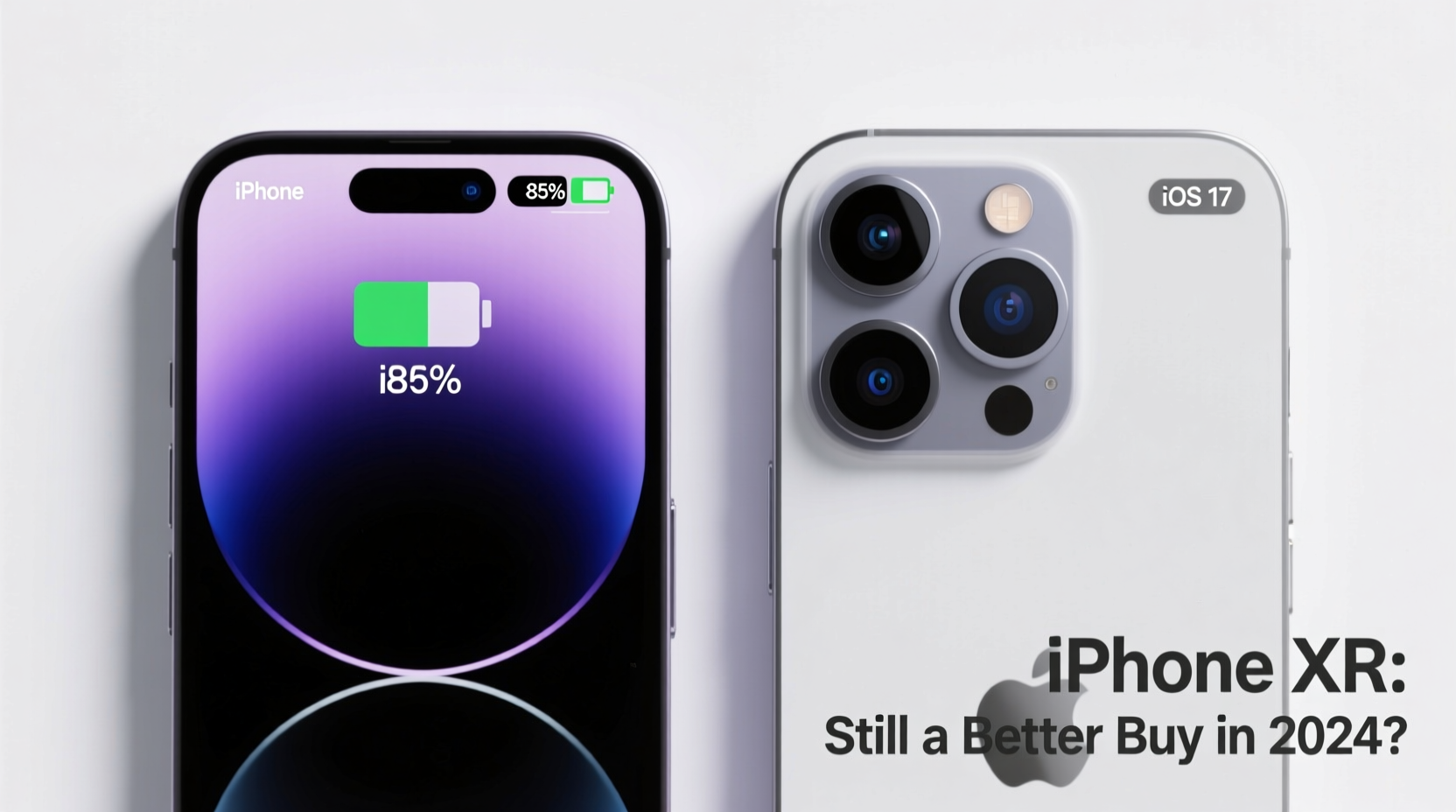
At launch, the iPhone XR came with Apple’s A12 Bionic chip—the first 7nm processor in any smartphone. The iPhone 8 Plus used the previous-generation A11 Bionic. On paper, that’s a generational leap. But three years later, what does that difference mean in practice?
In day-to-day use, the A12 offers noticeably smoother multitasking, faster app launches, and better efficiency under load. More importantly, Apple’s software optimization favors newer chips when rolling out iOS updates. As of iOS 17, the iPhone 8 Plus is no longer supported, while the iPhone XR continues to receive updates—a critical factor for security, app compatibility, and feature access.
Real-world testing shows that the XR handles Safari tabs, social media apps, and even light gaming (like Genshin Impact on medium settings) more reliably than the 8 Plus, which can struggle with memory-heavy sites or multitasking in later iOS versions.
Battery Life and Charging Experience
Battery degradation is inevitable, but original capacity and charging options play a big role in long-term satisfaction. The iPhone 8 Plus has a slight edge in raw battery capacity and typically delivers around 13 hours of mixed usage. The XR, despite a smaller physical battery, benefits from the more efficient A12 chip and iOS power management, achieving similar results—around 12–13 hours under normal conditions.
However, the XR supports faster charging (with a compatible adapter) and wireless charging, neither of which the 8 Plus offers. This may seem minor, but over time, the convenience of dropping your phone on a Qi pad or getting 50% charge in 30 minutes adds up—especially if you're using the phone daily.
“Battery longevity isn't just about mAh—it's about efficiency and charging flexibility. The XR’s hardware gives it an edge even with a smaller cell.” — David Lin, Mobile Tech Analyst at iDevice Weekly
Display and Design: Modern vs Familiar
This is where preferences diverge. The iPhone 8 Plus uses a traditional 5.5-inch LCD with thick bezels and a Home button. It runs on IPS technology with a 1400:1 contrast ratio and True Tone support. While perfectly functional, it feels dated compared to modern smartphones.
The iPhone XR, meanwhile, introduced Apple’s “Liquid Retina” display—a 6.1-inch edge-to-edge LCD with thinner bezels and no Home button. Despite being LCD (not OLED), its screen appears sharper and more immersive due to the higher screen-to-body ratio. Face ID replaces Touch ID, offering quicker unlock times in good lighting but requiring adaptation for users accustomed to fingerprint sensors.
From a durability standpoint, the XR’s glass back makes it more prone to cracks if dropped, whereas the 8 Plus’s aluminum body is slightly more forgiving. However, both lack water resistance beyond basic splash protection (IP67), so caution is needed in wet environments.
Camera Comparison: One Lens vs Two
The iPhone 8 Plus features a dual 12MP rear camera system: wide and telephoto. This allows for 2x optical zoom and Portrait Mode with depth control—a rarity among single-lens phones. Photos in daylight are excellent, with natural color reproduction and good dynamic range.
The iPhone XR also has a single 12MP wide lens but leverages advanced software processing from the A12 chip. It supports Smart HDR, improved noise reduction, and computational Portrait Mode using machine learning. While it lacks optical zoom, its portrait shots often appear more consistent, especially in mixed lighting.
| Feature | iPhone XR | iPhone 8 Plus |
|---|---|---|
| Rear Cameras | Single 12MP (wide) | Dual 12MP (wide + telephoto) |
| Portrait Mode | Yes (software-based) | Yes (dual-sensor) |
| Optical Zoom | No | 2x |
| Front Camera | 7MP with Portrait Mode | 7MP, no Portrait Mode |
| Smart HDR | Yes | No |
In low light, the XR generally produces cleaner images thanks to better noise suppression. The 8 Plus tends to blur details when pushing ISO levels. For most users today, the XR’s photo experience feels more modern and reliable across diverse conditions—even with fewer lenses.
Software Support and Future-Proofing
This is perhaps the most decisive factor. As of 2023, the iPhone 8 Plus stopped receiving major iOS updates with iOS 16. It remains functional but will miss out on new features, security patches, and future app optimizations.
The iPhone XR, however, supports iOS 17 and is expected to receive at least one more major update. That extra year of software relevance ensures compatibility with banking apps, messaging platforms, and emerging services that increasingly require newer OS versions.
App developers are beginning to optimize for devices with Face ID and gesture navigation. Some newer apps either don’t support older interfaces or run poorly on outdated hardware. If you plan to use your phone beyond 2024, the XR is clearly the safer bet.
Mini Case Study: Sarah’s Upgrade Dilemma
Sarah, a college student, needed a reliable phone on a tight budget in early 2022. She considered both the iPhone 8 Plus and XR, finding both available refurbished for around $220. She chose the 8 Plus because she liked the Home button and optical zoom for her photography class.
Within a year, she noticed slowdowns on Instagram and TikTok, frequent app crashes, and inability to install certain school-related tools requiring iOS 15+. When iOS 17 launched, her phone couldn’t update, limiting her access to new accessibility features and security enhancements.
She eventually traded up to an XR six months later, realizing that the slightly higher initial cost would have saved her time, frustration, and money in the long run.
Frequently Asked Questions
Can the iPhone 8 Plus still be used in 2024?
Yes, but with limitations. It runs iOS 16.7 and can handle basic tasks like calling, texting, email, and light browsing. However, lack of iOS 17+ support means reduced app compatibility and no future security updates.
Is the iPhone XR waterproof?
It has an IP67 rating, meaning it can survive submersion in up to 1 meter of water for 30 minutes. However, this protection degrades over time, especially on used units. Avoid intentional exposure.
Which phone has better resale value now?
The iPhone XR retains slightly better resale value due to longer software support and broader appeal. However, prices for both models have stabilized at entry-level ranges.
Final Verdict: Yes, the XR Is Still the Better Buy
Three years on, the iPhone XR outperforms the iPhone 8 Plus in nearly every meaningful way for today’s user. Its superior processor, longer software support, modern design, and better camera processing make it more capable of handling current and near-future demands.
The 8 Plus still appeals to those loyal to Touch ID or who frequently use optical zoom, but these advantages are outweighed by systemic limitations in performance and update lifespan. For anyone seeking a dependable, budget-friendly iPhone that won’t feel obsolete in six months, the XR is the clear winner—even in 2024.




 浙公网安备
33010002000092号
浙公网安备
33010002000092号 浙B2-20120091-4
Comments
No comments yet. Why don't you start the discussion?