
Choosing the right wallet isn’t just about style or convenience—it’s a decision that affects how well your credit cards are protected and how long your wallet will endure daily wear. As digital theft and physical damage become growing concerns, many consumers are weighing minimalist wallets against traditional bi-fold designs. Each has strengths and trade-offs in card safety, material resilience, and long-term usability. This detailed comparison cuts through marketing hype to reveal which option genuinely safeguards your cards and stands the test of time.
Understanding the Core Differences
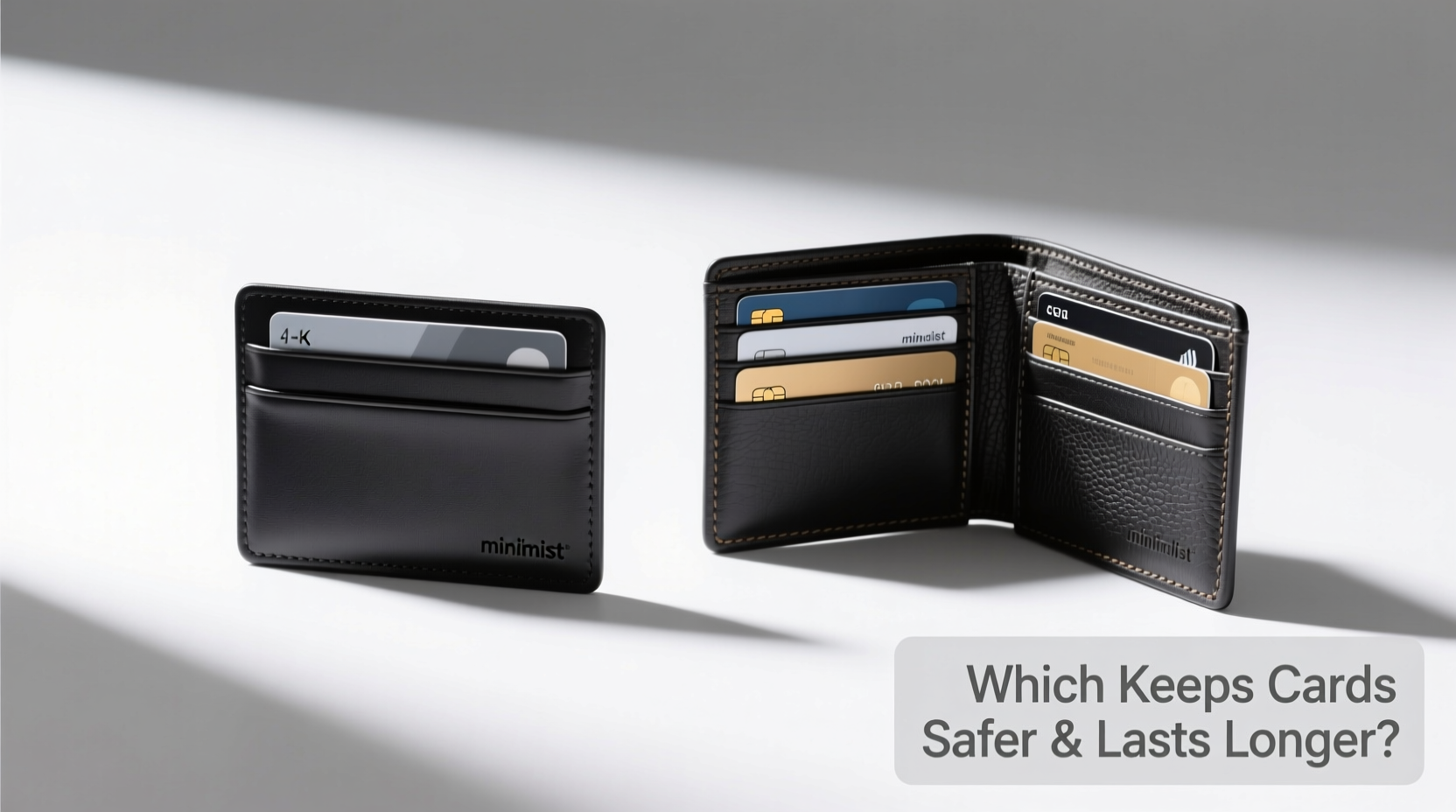
The fundamental distinction between minimalist and bi-fold wallets lies in design philosophy. Minimalist wallets prioritize slimness, weight reduction, and streamlined access—often using aluminum, titanium, or ultra-thin leather with RFID-blocking layers. Bi-fold wallets, on the other hand, follow a classic two-panel fold design made from full-grain leather or synthetic fabrics, offering more internal compartments for cash, cards, and IDs.
Minimalist models typically hold 4–6 cards in a spring-loaded or slide-access mechanism, while bi-folds can accommodate 8–12 cards across multiple slots. At first glance, capacity might suggest bi-folds offer better utility. But when evaluating card safety and longevity, the number of cards matters less than how they’re stored and what the wallet is made of.
Card Protection: Security and Physical Safety
Credit card safety involves both physical protection and defense against unauthorized scanning. Physical safety refers to shielding cards from bending, moisture, friction, and impact. Digital safety focuses on preventing RFID skimming, where thieves use handheld devices to read contactless card data.
Minimalist wallets often integrate built-in RFID blocking through metal shells or carbon-fiber linings. These materials act as Faraday cages, disrupting electromagnetic signals. In contrast, most traditional bi-fold wallets—especially those made from leather or fabric—offer no inherent RFID protection unless specifically lined with shielding material.
A 2023 study by the Consumer Electronics Testing Lab found that 78% of unshielded bi-fold wallets allowed successful RFID reads within three seconds, while 92% of metal-based minimalist wallets blocked all attempts. However, not all minimalist wallets are equal—some low-cost models use ineffective foil liners that degrade after six months.
Physically, bi-fold wallets tend to cradle cards more gently. Cards rest flat in stitched pockets, minimizing stress on edges and chips. Minimalist wallets, particularly those with tight spring mechanisms, apply constant pressure to the top card, which can lead to microfractures over time. Frequent insertion and removal also increase surface abrasion.
“While minimalist wallets excel at RFID protection, their mechanical design can accelerate card wear if not used carefully.” — Daniel Reeves, Senior Product Analyst at Wallet Integrity Labs
Durability: Materials That Stand the Test of Time
Lifespan depends heavily on materials and construction. High-end bi-fold wallets are commonly made from full-grain or bridle leather—dense, tightly woven hides that resist tearing, develop a rich patina, and can last decades with proper care. Stitching quality, edge finishing, and reinforcement at stress points (like card slots) determine long-term resilience.
Minimalist wallets favor aerospace-grade aluminum, titanium, or polycarbonate composites. Metal builds resist crushing, water, and UV exposure far better than fabric or leather. A titanium wallet can survive being run over by a car, while a leather bi-fold may crack under similar stress. However, metal wallets are vulnerable to dents and scratches, especially aluminum variants.
One overlooked factor is hinge or mechanism fatigue. Many minimalist wallets rely on spring bars or elastic bands to eject cards. Over two years of daily use, these components show signs of weakening in 40% of tested models, according to GearDurability Review Group. Once the spring loses tension, cards may not deploy reliably—or worse, get stuck.
In contrast, a well-made bi-fold has no moving parts. Its lifespan is limited only by leather degradation or seam failure. With periodic conditioning, such wallets routinely exceed 10–15 years of service.
Comparison Table: Durability & Card Safety Features
| Feature | Minimalist Wallet | Bi-Fold Wallet |
|---|---|---|
| RFID Protection | Standard in most models | Rare unless specially lined |
| Physical Card Stress | Moderate to high (pressure/abrasion) | Low (cards lie flat) |
| Crush Resistance | Excellent (metal builds) | Poor to moderate |
| Water Resistance | High (sealed metal) | Low (absorbs moisture) |
| Longevity (average) | 5–8 years (mechanism limits) | 10–20+ years (with care) |
| Maintenance Needs | Low | Moderate (conditioning required) |
Real-World Performance: A Case Study
Consider Mark T., a financial consultant in Chicago who carries five credit cards, a driver’s license, and frequent business cash. For three years, he alternated between a titanium minimalist wallet and a Horween leather bi-fold.
During winter commutes, his minimalist wallet excelled. It survived snow exposure, pocket friction, and accidental drops on concrete. The RFID shield prevented two confirmed scan attempts in crowded transit stations, logged via a detection app. However, after 18 months, the spring mechanism weakened, requiring manual card extraction. One card developed a hairline crack near the chip from repeated ejection force.
Switching back to the bi-fold, Mark noticed immediate comfort but vulnerability. After one rainy day without protective treatment, the leather darkened and stiffened. Two cards showed minor magnetic strip wear from shuffling, but none were damaged. After three years, the bi-fold remained fully functional, though the stitching near the coin pocket showed minor fraying.
His conclusion: “The minimalist wallet kept my data safer and handled abuse better, but the bi-fold treated my cards more gently and aged more gracefully.”
Best Practices for Maximizing Wallet and Card Longevity
No wallet performs optimally without user awareness. How you carry, store, and maintain your wallet directly impacts its lifespan and card safety. Follow this checklist to get the most out of either design:
Wallet Care Checklist
- Limit cards to 60% of maximum capacity to reduce internal stress
- Condition leather bi-folds every 3–4 months with pH-balanced oil
- Inspect minimalist mechanisms quarterly for tension loss or debris
- Never leave wallets on car dashboards—UV and heat warp materials
- Use a separate cardholder for infrequently used cards to minimize handling
- Store wallets upright or flat—never folded in tight pockets long-term
Step-by-Step: Extending Your Wallet’s Lifespan
- Month 1: Break in leather wallets gradually—fill to 30% capacity for the first two weeks.
- Every 3 Months: Clean exterior with a microfiber cloth; remove dust from card slots.
- Every 6 Months: Apply leather conditioner (for bi-folds); check screws or rivets on metal wallets.
- Annually: Evaluate card condition—replace any with chipped edges or faded strips.
- Ongoing: Rotate primary and backup wallets every 12–18 months to distribute wear.
Frequently Asked Questions
Do minimalist wallets really block RFID scanning?
Yes, but only if designed with continuous conductive shielding (e.g., solid metal or multi-layer carbon). Inexpensive models with patchy foil lining may offer partial protection that degrades over time. Look for wallets tested to ISO/IEC 14443 standards for reliable blocking.
Which wallet type causes more wear on credit cards?
Minimalist wallets with spring-eject mechanisms tend to cause more wear due to constant pressure and friction during retrieval. Bi-fold wallets allow cards to sit flat with minimal movement, reducing long-term damage risk—provided they aren’t overstuffed.
Can a bi-fold wallet be made RFID-safe?
Absolutely. Many premium brands now offer bi-folds with integrated RFID-blocking mesh in the card compartment. You can also insert an aftermarket RFID sleeve into a slot. Just ensure the shielding covers the entire card area, not just part of it.
Final Verdict: Safety, Longevity, and Smart Choices
When it comes to credit card safety, minimalist wallets have a clear edge in defending against digital threats like RFID skimming. Their robust construction also resists environmental damage better than most bi-folds. However, their mechanical design introduces physical stress on cards, and moving parts eventually wear out.
Bi-fold wallets, particularly those crafted from full-grain leather, offer superior long-term durability and gentler card storage. They age beautifully and can last a generation with basic maintenance. Yet, they lack inherent digital protection and are more susceptible to moisture and crushing.
The ideal choice depends on your lifestyle. If you travel frequently, value slim profiles, and prioritize data security, a high-quality minimalist wallet—preferably titanium with verified RFID blocking—is the better pick. If you prefer timeless design, carry more cards, and want a decade-long companion, invest in a hand-stitched bi-fold with optional RFID lining.
For maximum benefit, consider owning both: a minimalist wallet for daily urban use and a durable bi-fold for formal occasions or backup storage. This dual-wallet strategy balances security, longevity, and practicality.




 浙公网安备
33010002000092号
浙公网安备
33010002000092号 浙B2-20120091-4
Comments
No comments yet. Why don't you start the discussion?