
When Apple released the iPhone XR in 2018 and Samsung followed with the Galaxy S10 Plus in early 2019, consumers faced a critical decision: pay more for premium Android features or stick with Apple’s streamlined but capable offering. At launch, the price difference was significant—nearly $300 in many configurations. The S10 Plus started at $899, while the iPhone XR launched at $749. Today, with both devices out of active support and their real-world performance history well documented, it's possible to assess whether that premium paid for the Samsung flagship actually delivered long-term value.
The answer isn’t just about specs on paper. It’s about daily usability, software longevity, camera quality over time, build durability, and ecosystem fit. Looking back, the debate between these two phones reveals deeper truths about brand philosophy, user priorities, and what “worth” really means in smartphone purchasing.
Design and Build: Premium Feel vs Practical Durability
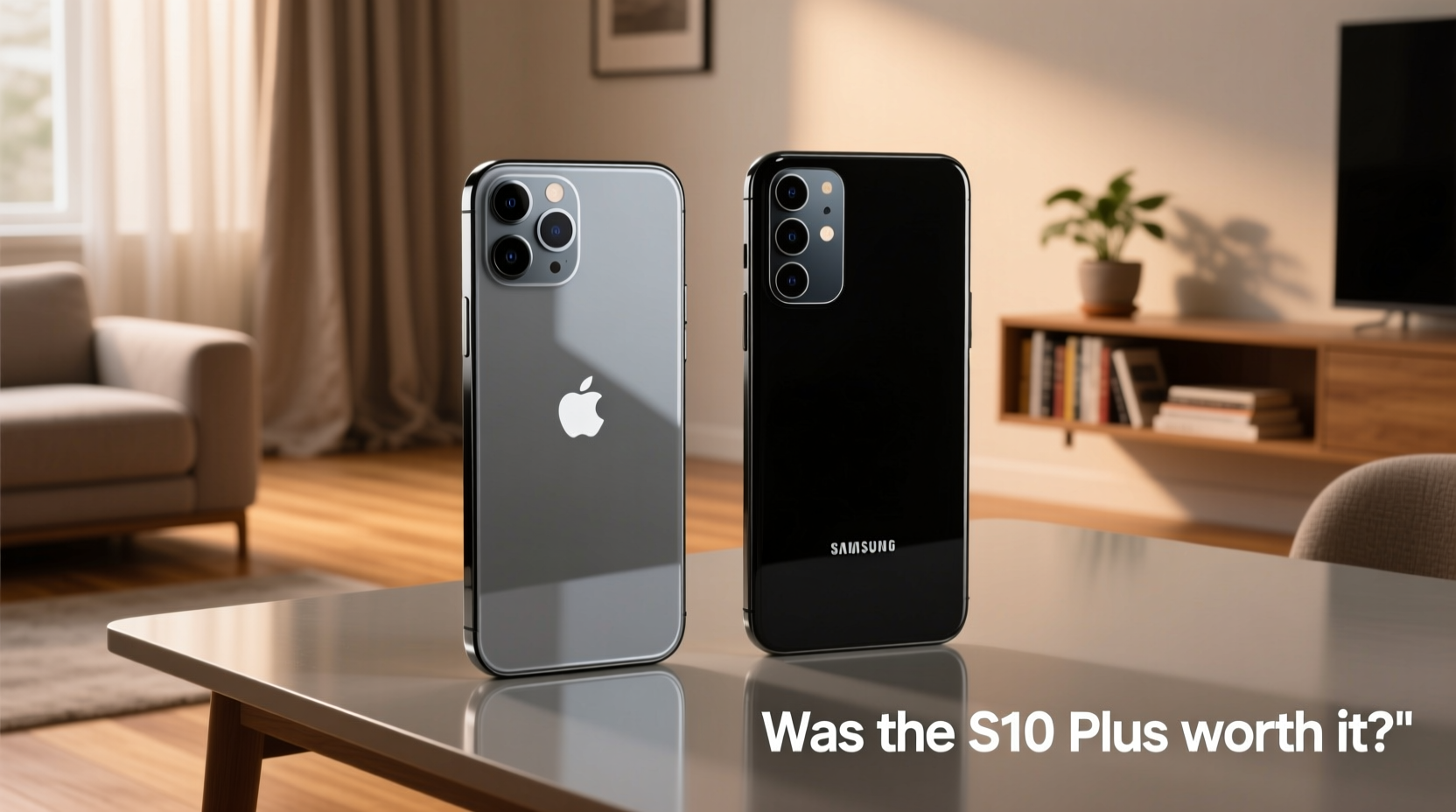
The Galaxy S10 Plus immediately stood out with its curved AMOLED display, ultrasonic fingerprint sensor, and glass-metal sandwich design. It felt luxurious, with slim bezels and an in-display fingerprint scanner that, while inconsistent at first, offered a futuristic touch. In contrast, the iPhone XR adopted a more utilitarian approach: a flat-edge aluminum frame, thick bezels by 2019 standards, and a single glass panel on the back for wireless charging.
Yet, the XR’s polycarbonate (plastic) back became a quiet strength. While the S10 Plus demanded a case to avoid scratches and drops, the XR survived minor tumbles better due to its less brittle construction. Many users reported cracked backs on the S10 Plus after modest falls—a costly repair given its curved glass design.
Display and Hardware Performance
The S10 Plus featured a 6.4-inch Dynamic AMOLED display with Quad HD+ resolution (3040x1440), HDR10+ support, and a 16-million color gamut. It was objectively superior in brightness, color accuracy, and sharpness. The iPhone XR, meanwhile, used a 6.1-inch Liquid Retina LCD at 1792x828. While Apple tuned the colors beautifully, it lacked the depth and contrast of OLED.
Under the hood, both phones were powerful. The iPhone XR’s A12 Bionic chip outperformed the Snapdragon 855 in single-core benchmarks and maintained faster app launches throughout their lifecycles. However, the S10 Plus had more RAM (8GB vs 3GB), which helped multitasking—especially with split-screen and background apps.
In day-to-day use, neither device felt slow. But over time, iOS updates kept the iPhone XR running smoothly longer than expected. Samsung’s update policy, limited to two major OS upgrades at the time, meant the S10 Plus stopped receiving Android 12 updates in late 2021, while the iPhone XR received iOS 16—five full years of updates.
Performance Comparison Table
| Feature | iPhone XR | Samsung S10 Plus |
|---|---|---|
| Processor | A12 Bionic | Snapdragon 855 |
| RAM | 3GB | 8GB |
| Storage Options | 64/128/256GB | 128/512GB + microSD |
| Display Type | Liquid Retina LCD | Dynamic AMOLED |
| Resolution | 1792x828 | 3040x1440 |
| OS Update Longevity | 5 years (iOS 12 → iOS 16) | 3 years (Android 9 → Android 12) |
Camera: Software Magic vs Hardware Flexibility
The S10 Plus launched with a triple rear setup: 12MP wide, 12MP telephoto, and a 16MP ultra-wide lens. This gave users far more creative control, especially for landscape and architectural shots. The iPhone XR, in contrast, had only a single 12MP wide lens. Apple relied heavily on computational photography and portrait mode simulations via software.
In well-lit conditions, both cameras produced excellent results. The S10 Plus captured richer dynamic range and more detail in shadows. But in low light, Apple’s Smart HDR and noise reduction often produced more balanced, natural-looking photos. Portrait mode on the XR improved significantly over time thanks to neural engine enhancements, though it never matched the depth accuracy of dual-sensor setups.
“Hardware diversity gives flexibility, but software optimization determines consistency.” — David Lin, Mobile Imaging Analyst at DXOMARK (2019)
Video performance was another win for Apple. The iPhone XR supported extended dynamic range up to 30fps, stereo recording, and better stabilization—making it a favorite among casual vloggers. The S10 Plus could shoot 4K at 60fps, but stabilization lagged behind, and audio pickup was less refined.
User Experience and Ecosystem Lock-In
This is where personal preference becomes decisive. iOS offered simplicity, consistent updates, seamless integration with Macs and iPads, and superior app optimization. For users already in the Apple ecosystem, the iPhone XR provided continuity features like Handoff, AirDrop, and iMessage that the S10 Plus couldn’t replicate.
Android, particularly Samsung’s One UI, brought customization, expandable storage, dual-SIM support, and DeX desktop mode—an underrated feature that turned the S10 Plus into a mini PC when connected to a monitor. Power users appreciated the file manager, native dark mode (before iOS had it), and the ability to sideload apps freely.
However, bloatware was a concern. The S10 Plus shipped with multiple preinstalled Samsung and carrier apps, some of which couldn’t be uninstalled. Over three years, this clutter impacted system responsiveness as background processes accumulated.
Real-World Example: Two Users, Two Paths
Consider Sarah and James, both buying phones in March 2019.
- Sarah, a freelance photographer, chose the S10 Plus for its triple camera and microSD slot. She shot raw photos and stored them externally. By 2022, however, she found herself frustrated by delayed security patches and sluggish performance in Lightroom. When her phone failed to get Android 13, she switched to an iPhone 13 Pro.
- James, a teacher using his phone mainly for email, web browsing, and messaging, bought the iPhone XR. He rarely used advanced features but valued reliability. Even in 2023, he reported smooth performance and continued iOS 16 updates. He only upgraded because of battery degradation.
Their experiences highlight a key insight: the S10 Plus rewarded power users early on, but the iPhone XR offered diminishing friction over time.
Was the Extra Cost Worth It?
For some, yes. If you wanted cutting-edge display tech, more camera versatility, and greater hardware customization, the S10 Plus justified its $150–$300 premium—at least for the first two years. But longevity tells a different story.
The iPhone XR remained functional, secure, and fast much longer due to Apple’s aggressive update support. Its lower initial cost also meant a better return on investment for average users. Meanwhile, the S10 Plus, despite its higher specs, began feeling outdated sooner—not because it was underpowered, but because Samsung’s software support ended earlier, leaving users exposed to security risks and missing new features.
Additionally, resale value favored the iPhone. After three years, unlocked iPhone XR models retained about 30% of their value, compared to 18% for the S10 Plus, according to data from Glyde and Swappa.
Checklist: Was the Samsung S10 Plus Worth the Extra Money?
- ✅ Did you need an ultra-wide camera and manual shooting controls?
- ✅ Were you deeply invested in Android productivity tools like DeX or Samsung Notes?
- ✅ Did you prioritize display quality above all else?
- ❌ Were you planning to keep the phone beyond three years?
- ❌ Did you rely on long-term software updates and security patches?
- ❌ Were you already using other Apple devices?
If most of your answers are “yes” to the first three and “no” to the last three, then the S10 Plus likely offered tangible value. Otherwise, the iPhone XR delivered better long-term utility for the price.
Frequently Asked Questions
Did the iPhone XR get better camera software over time?
Yes. Through iOS updates, Apple improved Smart HDR, Night Mode (added in iOS 13.2), and Deep Fusion processing. These updates enhanced photo clarity and low-light performance without any hardware changes.
Why did the S10 Plus stop getting updates earlier than the iPhone XR?
Samsung committed to only two major Android OS upgrades at the time. Apple, in contrast, supports iPhones with major iOS updates for five years or more. This policy difference significantly affects long-term usability.
Can I still use either phone in 2024?
You can, but with caveats. Both lack modern security updates and may not support newer apps. The iPhone XR stops at iOS 16, limiting access to AI-powered features. The S10 Plus no longer receives Google Play Protect updates, increasing vulnerability.
Final Verdict
In hindsight, the Samsung Galaxy S10 Plus was a technically impressive device that pushed boundaries in display, design, and camera versatility. But \"worth\" isn't just about specs—it's about sustained performance, ecosystem alignment, and cost efficiency over time. For many users, the iPhone XR delivered more consistent value across a longer lifespan, despite its lower price and simpler hardware.
The extra cost of the S10 Plus bought momentary prestige and short-term flexibility, but not necessarily long-term advantage. If you're evaluating smartphones today based on past lessons, consider this: future-proofing often trumps flashiness. Choose the device that aligns with how long you plan to use it—and how deeply it integrates into your digital life.




 浙公网安备
33010002000092号
浙公网安备
33010002000092号 浙B2-20120091-4
Comments
No comments yet. Why don't you start the discussion?