
When the iPhone XS Max and Galaxy S10 Plus launched in 2019, they represented the pinnacle of smartphone engineering from Apple and Samsung. Three years on, both devices have aged out of official flagship status, but many users still rely on them daily. For those considering a used or discounted model—or simply curious about long-term ownership—this comparison cuts through marketing to assess real-world longevity, usability, and value.
Performance, battery life, software updates, and repairability all play crucial roles in determining whether either device remains a smart buy today. This analysis goes beyond specs to examine how these phones hold up under daily use, third-party app demands, and evolving operating systems.
Performance After Three Years
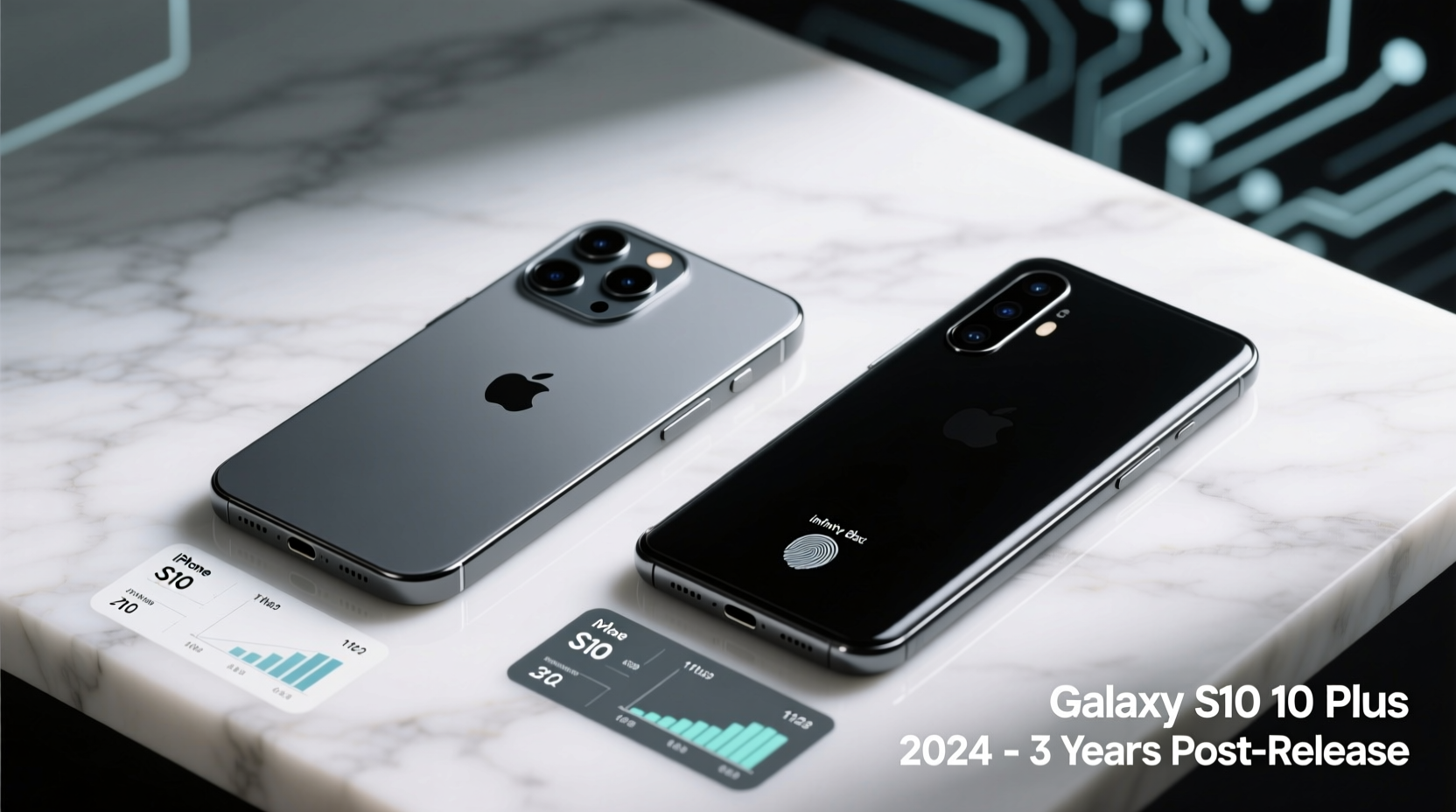
The iPhone XS Max was powered by Apple’s A12 Bionic chip—a 7nm processor that set new standards for efficiency and speed at launch. In contrast, the Galaxy S10 Plus came with either the Qualcomm Snapdragon 855 (in the U.S.) or Exynos 9820 (internationally), depending on region. While both were top-tier chips in 2019, their long-term trajectories differ significantly.
Apple’s tight integration between hardware and software allows older iPhones to remain surprisingly capable. Even in 2023, the A12 handles iOS 16 smoothly, including multitasking, camera processing, and modern apps like Instagram and TikTok. Most users report minimal lag, though some heavier games and augmented reality features show signs of strain.
Samsung’s approach, however, relies more heavily on Android’s general optimization. By 2023, the S10 Plus runs One UI 5 (based on Android 13), which introduces noticeable slowdowns. Apps take longer to load, background processes are more aggressive, and occasional stutters occur during transitions. The Exynos variant, in particular, struggles more than the Snapdragon version due to weaker GPU performance and thermal throttling.
Battery Life and Charging Realities
Original battery capacities don’t tell the full story after three years. Lithium-ion batteries degrade with charge cycles, temperature exposure, and usage patterns. Both phones started with modest endurance: the iPhone XS Max offered around 11–12 hours of screen-on time; the S10 Plus slightly more, thanks to its 4,100mAh cell versus the iPhone’s 3,174mAh.
In real-world 2023 usage, most surviving units show diminished capacity. Users commonly report needing midday charging, especially if pushing brightness or using GPS navigation. However, the S10 Plus retains one key advantage: faster wired and wireless charging. It supports 15W wireless charging and 12W reverse wireless charging, while the iPhone XS Max maxes out at 7.5W wireless and 18W wired (with an adapter).
But here's a critical point: battery replacement availability differs. Apple offers official battery services for the XS Max at reasonable prices ($49–$69), with calibration handled seamlessly via iOS. Samsung discontinued official S10 Plus battery replacements in many regions, forcing users toward third-party shops where quality varies.
“After three years, battery health is the single biggest factor in smartphone usability. A well-maintained iPhone often outlasts a poorly cycled Android device—even if the latter had superior specs initially.” — David Lin, Mobile Repair Technician, iFix Solutions
Software Support and Security Updates
This is where the divergence becomes stark. As of 2023, the iPhone XS Max continues to receive full iOS updates, including iOS 16 and security patches. Apple typically provides five years of OS support, meaning the XS Max will likely be supported through late 2024 or early 2025.
The Galaxy S10 Plus, despite being a premium device, stopped receiving major Android upgrades after Android 12. Samsung now only delivers quarterly security patches for legacy models—and even those ended in 2023. Without regular updates, the phone becomes increasingly vulnerable to exploits and incompatible with newer app requirements.
For example, banking and productivity apps are beginning to require Android 10 or higher with ongoing patch validation. Some already refuse to run on unsupported devices, citing compliance risks.
| Feature | iPhone XS Max (2023) | Galaxy S10 Plus (2023) |
|---|---|---|
| Latest OS | iOS 16 | One UI 5 / Android 13 |
| Major Updates Remaining | 1–2 more expected | None (ended) |
| Security Patches | Monthly, ongoing | Irregular, discontinued |
| App Compatibility | Full (modern apps optimized) | Limited (some apps declining support) |
Durability and Repairability: Real-World Longevity
A phone’s lifespan isn’t just about software—it’s also about physical resilience. The iPhone XS Max uses glass front and back with an aluminum frame. While elegant, it’s prone to cracking when dropped. Apple’s build quality ensures internal components last, but screen repairs cost upwards of $279 without AppleCare.
The S10 Plus shares a similar design but adds IP68 water resistance with improved sealing. Many users report surviving accidental submersions and heavy rain exposure. Its modular construction also makes certain repairs easier—like replacing the ultrasonic fingerprint sensor or individual charging coils.
Still, neither phone has excellent repairability scores. iFixit rated the XS Max at 6/10 and the S10 Plus at 4/10 due to glued batteries and complex disassembly. However, third-party parts for the S10 are more widely available and cheaper than for the iPhone.
Mini Case Study: Two Users, Three Years Later
Consider two hypothetical users: Maria kept her iPhone XS Max since 2019, replaced the battery once in 2021, and updated to iOS 16. She uses it for work emails, social media, and photography. Her phone feels snappy, and she hasn’t encountered app crashes or compatibility issues.
James bought a Galaxy S10 Plus at launch. He upgraded to Android 12 in 2022 but noticed increasing lag. By early 2023, his bank app stopped working, citing “outdated security.” He switched to a secondary phone for finance tasks. Though he loves the dual front cameras and expandable storage (via microSD), he finds himself relying less on the device.
Maria’s experience reflects Apple’s strength in long-term optimization. James’s illustrates the limitations of Android fragmentation—even on high-end Samsung devices.
Is the Samsung Still Worth It in 2023?
If you’re looking at a used Galaxy S10 Plus today, ask yourself: what do you need it for? As a secondary device, music player, or offline media hub, it’s still functional. At bargain prices ($100–$150), it offers a large Dynamic AMOLED display, headphone jack, and microSD expansion—features Apple never adopted.
But as a primary smartphone handling messaging, banking, navigation, and modern apps, the S10 Plus shows its age. Security gaps, inconsistent performance, and lack of future updates make it a liability. The iPhone XS Max, while similarly aged, remains more dependable thanks to continued software investment.
That said, consider newer alternatives. Refurbished iPhone 11s or Samsung Galaxy S20 FE models are now priced near used S10s but offer better processors, longer update paths, and improved cameras.
Checklist: Buying a Used Flagship Phone Today
- Verify the model number and regional variant (e.g., Snapdragon vs Exynos)
- Check battery health percentage (below 80% indicates need for replacement)
- Confirm current OS version and update eligibility
- Test all sensors: fingerprint, face unlock, proximity, charging
- Inspect for water damage indicators
- Ensure iCloud or Samsung account is fully removed (avoid blacklisted devices)
FAQ
Can the Galaxy S10 Plus get Android 14?
No. Samsung confirmed the S10 series would not receive Android 14. The final major update was Android 12 with One UI 4.1.
Does the iPhone XS Max still receive security updates?
Yes. As of mid-2023, Apple continues to release monthly security patches for the XS Max under iOS 16.
Which phone holds resale value better?
The iPhone XS Max retains higher resale value. Even after three years, unlocked models sell for 20–30% more than equivalent-condition S10 Pluses.
Conclusion
Three years after launch, the iPhone XS Max emerges as the more sustainable choice. Not because it was inherently superior at release, but because Apple’s ecosystem prioritizes long-term usability. The Galaxy S10 Plus was innovative—offering a punch-hole display, ultrasonic fingerprint sensor, and microSD support—but its shorter software lifecycle undermines its practicality today.
While the S10 Plus may still function, its diminishing app compatibility and lack of security updates make it a riskier investment. Unless you’re acquiring it for under $100 or as a backup device, newer budget or refurbished models offer better value and peace of mind.




 浙公网安备
33010002000092号
浙公网安备
33010002000092号 浙B2-20120091-4
Comments
No comments yet. Why don't you start the discussion?