
When Apple released the iPhone XS and iPhone XR in 2018, they represented two distinct philosophies: one focused on premium craftsmanship and dual-camera versatility, the other on value and accessibility with a single-lens system. Three years later—well beyond the typical upgrade cycle—many users are asking whether the XS’s higher original price tag still translates into meaningful advantages today. With both models now widely available at discounted prices or through trade-in programs, it's worth examining real-world performance, software support, camera quality, and long-term usability to determine if the XS remains the better investment.
Performance and Longevity: A Closer Look at the A12 Bionic
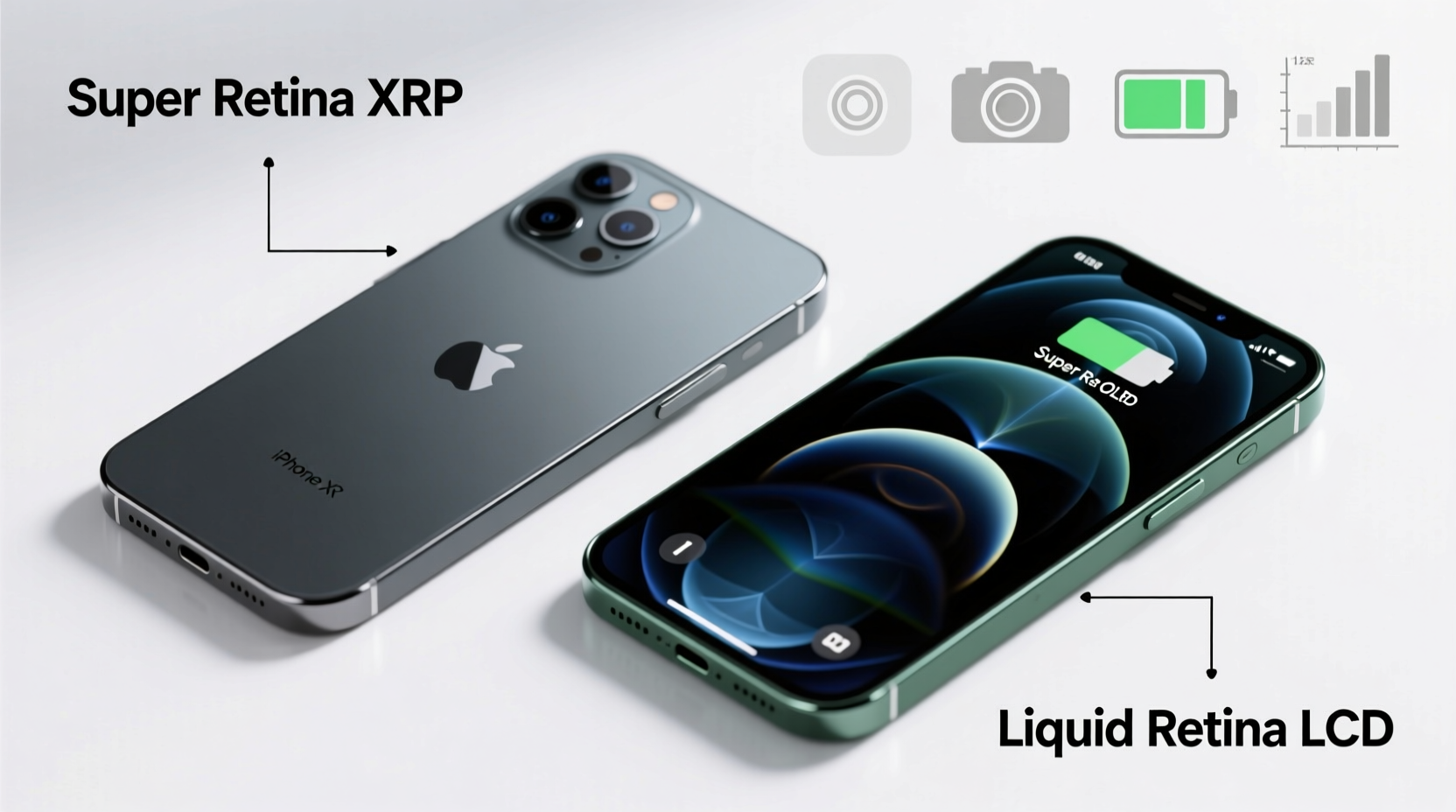
Both the iPhone XS and XR are powered by Apple’s A12 Bionic chip—the first 7nm processor in a smartphone at the time. This architecture gave both devices significant speed and efficiency improvements over the previous generation. In day-to-day use, that means smooth app launches, responsive multitasking, and excellent gaming performance even by 2023 standards.
However, subtle differences exist. The XS has slightly better thermal management due to its stainless steel frame and internal layout, allowing it to sustain peak performance longer under heavy loads. The XR, while functionally identical in CPU benchmarks, uses a more power-efficient but less thermally robust aluminum chassis, which can lead to minor throttling during extended tasks like video editing or intensive AR applications.
As of iOS 16, both devices remain fully supported, but rumors suggest iOS 17 may be the last update for the A12 platform. Given this shared limitation, neither device holds a long-term software advantage—but the XS’s hardware edge could extend its usable life by a few extra months in demanding scenarios.
Display and Design: Glass vs Glass (and Aluminum)
The most visible difference between the two phones lies in their design and display technology. The iPhone XS features a 5.8-inch OLED Super Retina display with deep blacks, high contrast, and superior color accuracy. The XR, in contrast, uses a 6.1-inch LCD Liquid Retina display. While Apple optimized the XR’s screen well, it lacks true blacks and has lower contrast, making HDR content and dark-mode interfaces feel less immersive.
In terms of build, the XS uses a surgical-grade stainless steel frame and dual glass panels, giving it a noticeably heavier, more premium feel. The XR swaps stainless steel for aerospace-grade aluminum, reducing cost and weight but also perceived durability. Both are rated IP67 for water resistance, meaning they can survive brief submersion up to 1 meter for 30 minutes—but the XS’s sturdier materials may fare better over years of drops and daily wear.
“After three years, build quality becomes more than just aesthetics—it impacts how well a phone ages through daily use.” — David Kim, Mobile Hardware Analyst at TechInsight Group
Camera Comparison: One Lens vs Two
The camera systems highlight a fundamental trade-off between cost and capability. The iPhone XS boasts a dual 12MP setup: a wide lens and a telephoto lens with 2x optical zoom. The XR has only a single 12MP wide lens, relying on digital zoom and software cropping for tighter shots.
In practical terms, this means the XS excels in portrait photography, offering better depth sensing, natural background blur, and true optical zoom. It also supports Portrait Mode on more subjects, including pets and objects, thanks to its secondary sensor. The XR uses computational photography to simulate depth, which works well in ideal lighting but struggles with complex edges or fast-moving subjects.
For low-light performance, both benefit from Smart HDR and improved noise reduction in iOS updates, but the XS’s larger sensor aperture (ƒ/1.8 vs ƒ/1.8) and dual-pixel autofocus give it a slight edge in focusing speed and detail retention.
| Feature | iPhone XS | iPhone XR |
|---|---|---|
| Display Type | OLED | LCD |
| Screen Size | 5.8\" | 6.1\" |
| Rear Cameras | Dual 12MP (Wide + Telephoto) | Single 12MP (Wide) |
| Optical Zoom | 2x | None |
| Front Camera | 7MP TrueDepth | 7MP TrueDepth |
| Frame Material | Stainless Steel | Aluminum |
| Battery Life (Video Playback) | Up to 14 hours | Up to 16 hours |
| Starting Storage (2018) | 64GB | 64GB |
Note: Despite the smaller battery (2,658 mAh vs 2,942 mAh), the XS achieves comparable battery life due to OLED efficiency. However, the XR often lasts slightly longer in real-world mixed usage, especially when brightness is managed.
Real-World Example: Sarah’s Upgrade Dilemma
Sarah bought an iPhone XR in late 2018, attracted by its vibrant colors and lower price. By 2021, she noticed occasional lag in photo processing and wanted better zoom for her travel photos. She considered upgrading but found used iPhone XS units within her budget. After switching, she immediately appreciated the richer display and crisper portraits—even though the overall performance felt familiar. “It wasn’t a revolutionary leap,” she said, “but the camera and screen made my old photos look better and new ones easier to compose.”
Her experience reflects a common pattern: users who value photographic flexibility and display fidelity tend to prefer the XS, while those prioritizing battery life and screen size lean toward the XR.
Step-by-Step Guide: Choosing Between XS and XR Today
If you're considering either model in 2024—whether buying used, refurbished, or from a friend—follow this decision framework:
- Evaluate your primary use case: Are you a casual user who texts and browses, or do you take lots of photos and edit them?
- Assess camera needs: Do you regularly shoot portraits or need optical zoom? If yes, the XS is clearly superior.
- Consider display preferences: Prefer deeper blacks and richer contrast? OLED (XS) wins. Want a brighter, larger screen for videos? XR’s LCD may suffice.
- Check battery habits: If you charge once a day and want maximum uptime, the XR’s slightly better endurance helps.
- Inspect physical condition: Stainless steel frames on the XS can scratch easily; aluminum on the XR dents more but hides wear better.
- Verify storage: Neither supports expandable storage. Aim for at least 128GB if you take many photos or download apps.
Frequently Asked Questions
Can both phones run the latest iOS smoothly?
Yes, as of iOS 16, both the iPhone XS and XR handle everyday tasks like messaging, web browsing, and social media without issue. However, some newer features like Live Text or enhanced AR apps may run slower or not be supported. iOS 17 could mark the end of updates for these models.
Is the iPhone XS waterproof?
Both phones have an IP67 rating, meaning they’re dust-tight and can withstand immersion in up to 1 meter of water for 30 minutes. However, water resistance diminishes over time, especially after drops or repairs, so avoid intentional submersion.
Which holds resale value better?
Historically, the iPhone XS retained value better due to its premium materials and dual-camera system. But three years later, depreciation has largely equalized both models. Differences in resale price now depend more on storage capacity, color, and condition than model alone.
Final Verdict: Is the XS Still Worth the Extra Cost?
For most users today, the answer depends on priorities. If you value photographic versatility, a higher-end display, and a more durable build, the iPhone XS justifies a modest price premium—especially if found in good condition with healthy battery life. Its dual-camera system and OLED screen deliver tangible benefits that persist even in 2024.
On the other hand, the iPhone XR remains an excellent choice for budget-conscious buyers. It offers nearly identical core performance, slightly better battery life, and a larger screen—all at a lower cost. For someone who primarily uses apps, streams content, and takes casual photos, the XR delivers 90% of the experience at 75% of the original price.
Ultimately, neither phone feels obsolete, but the XS offers a more future-proof package for enthusiasts and photographers. The extra cost is only “worth it” if those advantages align with how you actually use your phone.




 浙公网安备
33010002000092号
浙公网安备
33010002000092号 浙B2-20120091-4
Comments
No comments yet. Why don't you start the discussion?