
Intelligence Quotient (IQ) has long been used as a benchmark to assess cognitive ability. While average IQ scores fall between 85 and 115, individuals scoring significantly higher are often classified as \"gifted.\" But what exactly constitutes a gifted IQ? How is it measured, and what does it mean for personal development, education, and long-term success? This article explores the thresholds, interpretations, and real-world implications of being identified as gifted based on IQ.
What Is a Gifted IQ Score?
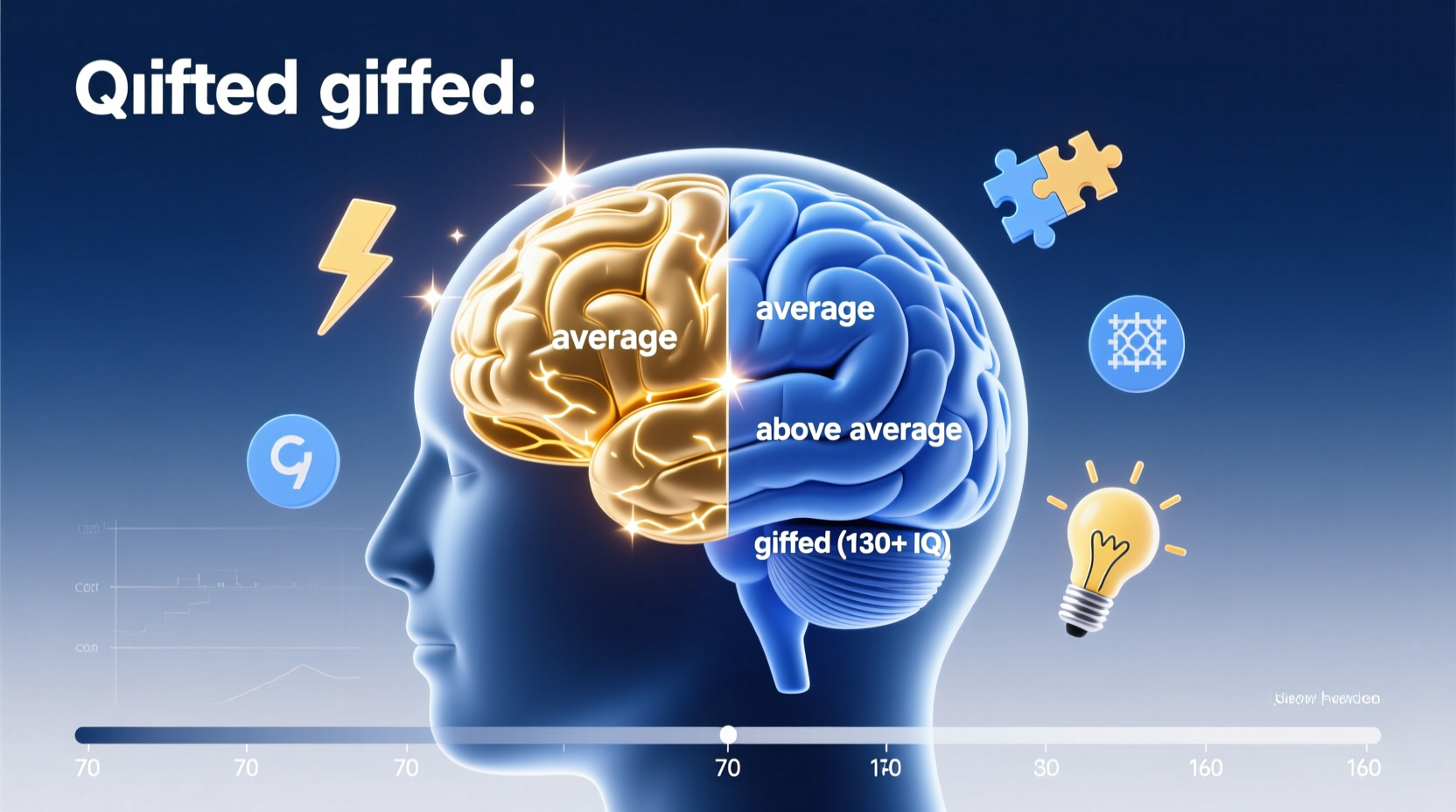
The classification of \"gifted\" typically begins at an IQ score of 130 or above, which places an individual in the top 2% of the population. This threshold is widely accepted by psychologists and educational institutions, though some organizations use slightly different ranges depending on context and assessment goals.
IQ tests such as the Wechsler Intelligence Scale for Children (WISC), Stanford-Binet, and Raven’s Progressive Matrices are designed to measure various aspects of cognitive function, including verbal reasoning, perceptual reasoning, working memory, and processing speed. A composite score derived from these domains determines overall intelligence level.
Levels of Giftedness Based on IQ
Not all gifted individuals are equally rare in terms of cognitive ability. Experts have categorized giftedness into multiple tiers based on deviation from the mean (average IQ of 100 with a standard deviation of 15).
| IQ Range | Classification | Population Percentile |
|---|---|---|
| 130–144 | Mildly Gifted | Top 2% |
| 145–159 | Moderately Gifted | Top 0.1% |
| 160–179 | Highly Gifted | Top 0.03% |
| 180+ | Exceptionally/Profoundly Gifted | Less than 1 in 1 million |
These levels matter because they influence educational planning, psychological support needs, and social-emotional development. For example, a child scoring 132 may thrive in a standard accelerated classroom, while one scoring 170 might require radical acceleration or specialized programs due to asynchronous development.
What Being Gifted Actually Means
A high IQ does not automatically translate into academic achievement, emotional maturity, or life satisfaction. Giftedness often comes with unique challenges:
- Asynchronous development: Cognitive abilities may far outpace emotional or physical growth.
- Sensory sensitivity: Many gifted individuals experience heightened awareness of sounds, lights, or emotions.
- Perfectionism: High expectations can lead to anxiety, procrastination, or fear of failure.
- Social isolation: Difficulty relating to peers due to advanced vocabulary, interests, or intensity.
“Gifted children are not inherently more valuable than others, but they do have different developmental paths that require understanding and appropriate support.” — Dr. Miraca Gross, Professor of Gifted Education, University of New South Wales
Being labeled gifted should not be seen as a guarantee of future success, nor should it place undue pressure on a child. Instead, it signals the need for tailored learning environments and emotional guidance.
How Giftedness Is Identified and Assessed
Identification usually occurs through formal IQ testing administered by licensed psychologists. These assessments are most reliable when conducted between ages 5 and 8, although older individuals can also be evaluated.
Key components of modern IQ tests include:
- Verbal Comprehension: Vocabulary, general knowledge, and language reasoning.
- Visual-Spatial Processing: Ability to interpret visual information and solve puzzles.
- Fluid Reasoning: Solving novel problems using logic.
- Working Memory: Holding and manipulating information mentally.
- Processing Speed: Efficiency in completing simple cognitive tasks.
Schools may use group-administered tests like the CogAT (Cognitive Abilities Test) for initial screening, followed by individual assessments for confirmation. Parents seeking private evaluation should ensure the psychologist uses up-to-date, norm-referenced instruments.
Real-Life Implications: A Mini Case Study
Consider the case of 8-year-old Maya, who scored 148 on the WISC-V. Her school placed her in a gifted pull-out program once a week, but she remained bored and frustrated in her regular classroom. Despite excelling in math and reading, she began resisting homework and acting out during lessons.
After consultation with a gifted education specialist, her parents advocated for subject-based acceleration—allowing her to take fifth-grade math while remaining with her age group for other subjects. The school also introduced independent study projects aligned with her interest in marine biology.
Within months, Maya’s engagement improved dramatically. She still faced challenges making friends, so she joined a weekend enrichment program for gifted students, where she found intellectual peers. This holistic approach—academic adjustment plus social-emotional support—proved essential.
Actionable Checklist for Parents and Educators
If you suspect a child is gifted, here’s what to do next:
- Observe consistent patterns of advanced learning, curiosity, or problem-solving.
- Discuss concerns and observations with teachers or school counselors.
- Request formal cognitive assessment through the school or a private psychologist.
- Review test results with an expert who understands gifted identification.
- Explore educational options: enrichment, acceleration, magnet programs, or homeschooling.
- Prioritize emotional well-being—gifted children need safe spaces to express fears and frustrations.
- Connect with local or online communities of gifted families for support.
Frequently Asked Questions
Does a high IQ guarantee success in life?
No. While high IQ correlates with academic and professional achievement, factors like motivation, emotional intelligence, resilience, and opportunity play equally important roles. Some highly gifted individuals underachieve due to misdiagnosis, lack of challenge, or social difficulties.
Can someone become gifted later in life?
Giftedness is generally considered an innate trait present from early childhood. However, environmental stimulation, education, and effort can significantly enhance intellectual performance. Late bloomers may demonstrate gifted-level output without meeting formal IQ criteria.
Are there downsides to being labeled gifted?
Potentially, yes. Labels can create pressure to perform, lead to social alienation, or result in reduced effort if a child believes intelligence alone ensures success. It’s vital to emphasize growth mindset—valuing effort over innate ability.
Conclusion: Beyond the Number
An IQ score indicating giftedness opens doors—but only if accompanied by thoughtful support. Whether a child scores 130 or 160, their potential depends not on the number itself, but on how families, educators, and society respond. Recognition must lead to action: differentiated instruction, emotional nurturing, and opportunities to explore passions deeply.
Giftedness isn’t about superiority; it’s about difference. And differences, when understood and respected, enrich everyone.




 浙公网安备
33010002000092号
浙公网安备
33010002000092号 浙B2-20120091-4
Comments
No comments yet. Why don't you start the discussion?