
The decision between a floor standing and a tabletop Christmas tree often comes down to more than just preference—it's about space, tradition, lifestyle, and the kind of holiday atmosphere you want to create. While both options bring festive cheer, they serve different purposes and suit different environments. A towering floor model commands attention in a living room, while a compact tabletop version adds charm to smaller spaces or complements a larger setup. Understanding the strengths and limitations of each helps ensure your holiday display feels intentional, balanced, and joyful.
Size and Visual Impact: Commanding Presence vs. Subtle Charm
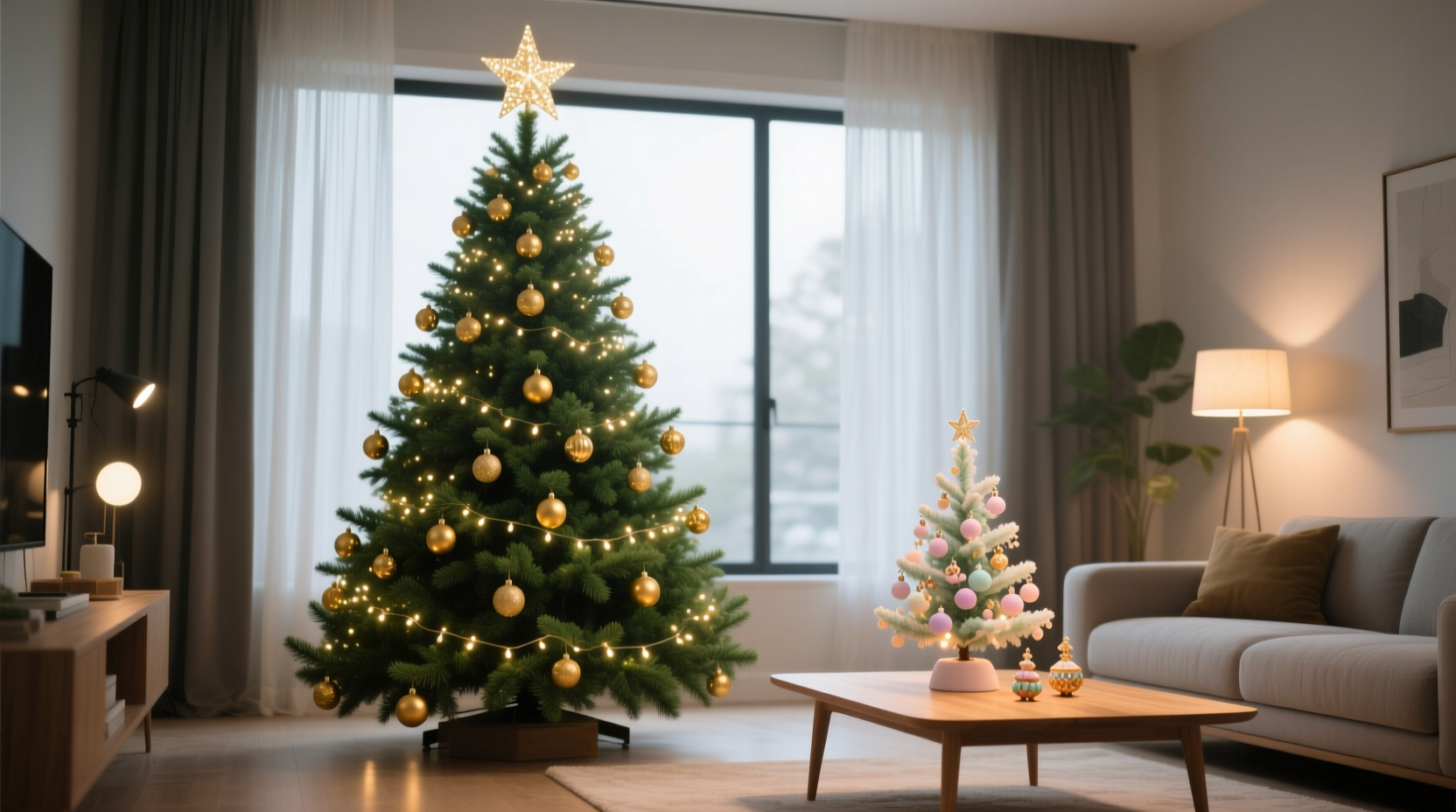
The most immediate difference between floor standing and tabletop trees is scale. Floor standing trees typically range from 6 to 9 feet tall, anchoring the room with their presence. They become the centerpiece of holiday decor, especially when adorned with lights, heirloom ornaments, and a star or angel at the top. Their height allows for layered decoration—larger ornaments near the base, delicate ones toward the middle, and twinkling lights woven throughout.
In contrast, tabletop trees usually stand between 12 and 36 inches. While they don’t dominate a room, they offer an intimate, curated aesthetic. Placed on a console, mantel, or dining table, they draw people in rather than announcing themselves from across the room. This subtlety can be ideal for apartments, cozy cottages, or homes where multiple small displays are preferred over a single focal point.
Interior designer Laura Bennett notes:
“A large floor tree creates emotional resonance—it’s what many people picture when they think of Christmas morning. But a well-styled tabletop tree can evoke the same warmth on a human scale, especially when placed where people gather, like near a coffee station or entryway.” — Laura Bennett, Interior Stylist & Holiday Decor Consultant
Space Requirements and Practicality
One of the biggest practical considerations is available space. Floor standing trees require a clear footprint—typically 3 to 5 feet in diameter at the base—and enough ceiling clearance. In homes with vaulted ceilings or high windows, an 8-foot tree can enhance vertical space. But in studios, dorm rooms, or cluttered living areas, such a tree may feel overwhelming or even impractical.
Tabletop trees solve this issue elegantly. They fit on furniture without disrupting traffic flow. They’re also easier to move—ideal for renters who may need to disassemble decor quickly or homeowners rotating seasonal pieces between rooms. Families with pets or young children might prefer a smaller tree placed out of reach, reducing the risk of tipping or tangled lights.
Still, downsizing comes with trade-offs. A smaller tree holds fewer ornaments and lights, limiting decorative expression. It also doesn’t accommodate large gifts underneath, which many families consider part of the tradition.
Comparison: Floor Standing vs. Tabletop Trees
| Feature | Floor Standing Tree | Tabletop Tree |
|---|---|---|
| Height Range | 6–9 feet | 1–3 feet |
| Footprint | Large (3+ ft diameter) | Small (fits on furniture) |
| Decor Capacity | High – hundreds of ornaments | Low to moderate – 10–30 ornaments |
| Gift Storage | Yes – fits many presents | No – limited space |
| Mobility | Low – heavy, hard to move | High – easy to relocate |
| Ideal For | Large rooms, family homes, traditional setups | Small spaces, secondary displays, modern decor |
Decorative Flexibility and Thematic Expression
Floor standing trees offer more canvas for storytelling through decor. Whether you're going for a rustic farmhouse look with burlap ribbons and pinecones, a glamorous gold-and-white theme, or a nostalgic collection of vintage glass balls, a full-size tree gives you room to layer textures, colors, and lighting effects.
However, tabletop trees shine in thematic precision. Because they’re smaller, every ornament choice feels deliberate. A silver mini-tree with blue LED lights and snowflake picks becomes a cohesive winter wonderland statement. A red-and-green pre-lit tree on a dining table can mirror the color scheme of your holiday place settings. These micro-displays work well when you want consistency across multiple rooms—a matching pair on either side of a bed, or a series of themed trees in a gallery wall setting.
For those who love rotating decor, tabletop trees are easier to store and redecorate year after year. You might keep one as a classic green tree, another as a pink “ugly sweater” edition, and a third as a minimalist white branch design—all without needing extra floor space during setup.
A Real-Life Example: The Urban Apartment Dilemma
Maria Lopez, a graphic designer in Chicago, lives in a 600-square-foot loft with high ceilings but limited floor space. Every November, she debates whether to assemble her old 7-foot artificial tree. Last year, she tried it—and immediately regretted it.
“I spent an hour assembling the base, only to realize the tree blocked half the walkway to the kitchen. My cat knocked over an ornament within minutes. I ended up taking it down two days later,” Maria recalls. “This year, I bought three 24-inch pre-lit trees—one for the entry console, one for the dining nook, and one for my home office desk. Together, they give me that festive feeling without sacrificing functionality.”
Maria’s solution reflects a growing trend: using multiple small trees to achieve the grandeur of a single large one, but with greater flexibility. She rotates ornaments seasonally and uses smart plugs to control lighting remotely. Her approach proves that impact isn’t solely determined by size—placement, lighting, and personal meaning matter just as much.
Step-by-Step: Choosing the Right Tree for Your Home
Follow this process to determine whether a floor standing or tabletop tree is better for your space and lifestyle:
- Measure your available space. Note ceiling height, floor area, and proximity to furniture or walkways. Allow at least 18 inches between the tree and any wall or object.
- Assess your decor goals. Do you want a central holiday feature, or subtle accents throughout the home?
- Consider household dynamics. Are there pets, toddlers, or frequent guests who might bump into a low-hanging branch?
- Evaluate storage capacity. Full-size trees require large bins or garment bags; tabletop models can fit in closets or under beds.
- Decide on budget and maintenance. Larger trees use more lights, require longer setup time, and may need watering (if real). Smaller trees are cheaper and faster to decorate.
- Test placement before assembly. Use painter’s tape to outline the tree’s footprint. Walk around it to check flow.
- Start small if unsure. Try a tabletop tree this year. If you miss the grandeur, upgrade next season.
Checklist: Picking Your Perfect Holiday Tree
- ☐ Measured ceiling height and floor space
- ☐ Determined primary location (living room, entryway, bedroom)
- ☐ Considered safety (pets, kids, fire hazards)
- ☐ Selected tree type (real, artificial, pre-lit)
- ☐ Counted available ornaments and lights
- ☐ Checked storage options post-holiday
- ☐ Planned for assembly and disassembly time
- ☐ Decided on theme or color scheme
Frequently Asked Questions
Can I use both a floor standing and a tabletop tree?
Absolutely. Many households use a large tree as the main display and smaller ones in secondary areas like bedrooms, bathrooms, or offices. Just ensure they complement rather than compete—use similar color schemes or lighting styles for cohesion.
Are tabletop trees worth it for families with kids?
Yes, especially if you have very young children. A small tree placed on a sturdy surface keeps fragile ornaments out of reach while still letting kids enjoy decorating. Some parents use a tabletop tree as a “starter” project before introducing a full-size one.
Do floor standing trees increase fire risk?
Real trees that aren’t watered regularly can dry out and become fire hazards, especially near heat sources. Artificial trees labeled “fire-resistant” are safer. Regardless of type, avoid overloading electrical outlets, keep trees away from radiators, and turn off lights when leaving the house or sleeping.
Final Verdict: It Depends on Your Home and Heart
There’s no universal answer to whether a floor standing tree is better than a tabletop one. The “better” option depends entirely on your environment, habits, and emotional connection to the holiday season. For many, the ritual of assembling a towering evergreen, filling the house with its scent, and gathering beneath it on Christmas morning is irreplaceable. That experience is deeply tied to memory, tradition, and shared joy.
But modern living demands adaptability. Not everyone has a spacious living room or the ability to dedicate weeks to a single decor piece. In those cases, a tabletop tree isn’t a compromise—it’s a smart, stylish alternative that honors the spirit of the season without sacrificing comfort or convenience.
The best approach may be inclusive: embrace the grandeur of a floor tree if your space allows, or celebrate the charm of a smaller one if it fits your life better. Or do both. What matters most isn’t the height of the tree, but the warmth it brings to your home.




 浙公网安备
33010002000092号
浙公网安备
33010002000092号 浙B2-20120091-4
Comments
No comments yet. Why don't you start the discussion?