
As winter nights grow longer and colder, many people turn to electric warmth solutions for comfort and energy savings. Two popular options—electric blankets and heated blankets—are often used interchangeably, but they are not the same. Understanding the differences between them is essential for making an informed decision about which option offers better value, safety, and long-term benefits. While both provide warmth, their construction, functionality, and performance vary significantly.
The choice isn't just about staying warm—it's also about how efficiently and safely that warmth is delivered, how comfortable the experience feels night after night, and whether the investment pays off over time. This article dives deep into the distinctions, advantages, and drawbacks of each type, helping you determine if a heated blanket is truly worth choosing over a traditional electric blanket.
Understanding the Key Differences
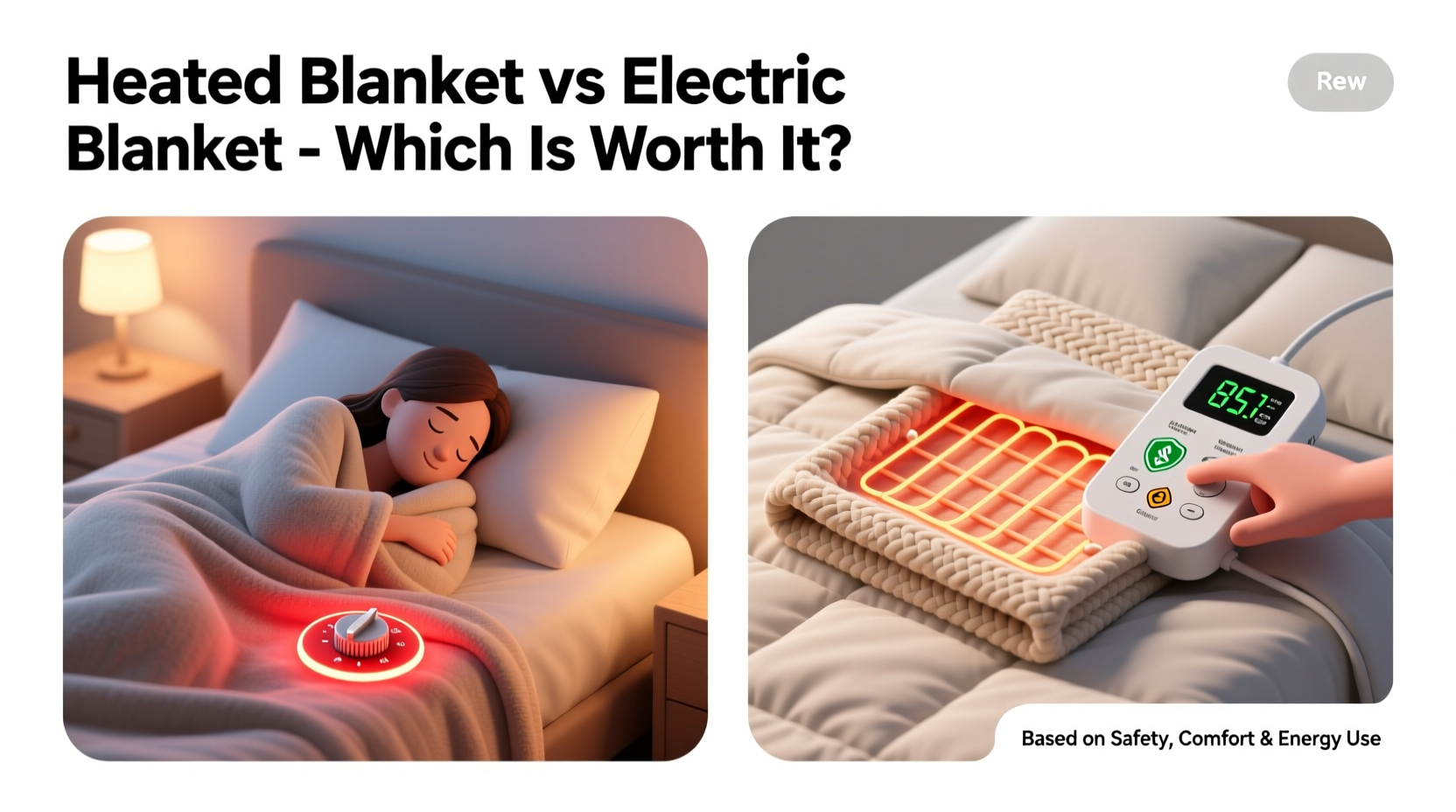
At first glance, \"electric blanket\" and \"heated blanket\" may seem like synonyms. However, in modern usage, these terms refer to different generations and technologies of warming bedding.
Electric blankets have been around since the early 20th century. They typically consist of thin wires woven into fabric layers. When plugged in, electrical current runs through these wires, generating heat across the surface. These models are generally affordable and widely available, but they come with limitations in temperature control, safety features, and material quality.
Heated blankets, on the other hand, represent a newer evolution. Most use advanced heating elements such as carbon fiber or micro-alloy wires, offering more even heat distribution, faster warm-up times, and enhanced safety mechanisms like auto-shutoff and overheat protection. Many heated blankets now feature digital controls, multiple heat zones, and compatibility with smart home systems.
The key difference lies in technology and user experience: while all heated blankets are electric, not all electric blankets qualify as modern \"heated\" ones due to outdated designs and fewer safety features.
“Modern heated blankets leverage safer materials and smarter thermostats, reducing fire risk and improving sleep quality.” — Dr. Lena Patel, Sleep Health Researcher at the National Institute of Thermal Wellness
Performance Comparison: Heat Distribution and Efficiency
One of the most critical factors when evaluating warmth solutions is how evenly and effectively heat is distributed across the body. Poorly designed electric blankets can create hot spots—areas that become uncomfortably warm while others remain cold—leading to disrupted sleep and discomfort.
Traditional electric blankets often rely on coiled metal wires spaced unevenly throughout the fabric. These wires take longer to heat up and cool down, making precise temperature regulation difficult. In contrast, newer heated blankets use flexible carbon fiber strips or ultra-thin alloy conductors embedded in a grid pattern. This allows for uniform warmth without concentrated heat zones.
| Feature | Traditional Electric Blanket | Modern Heated Blanket |
|---|---|---|
| Heating Element | Metal coils | Carbon fiber or micro-wires |
| Heat Distribution | Inconsistent (hot spots common) | Even and consistent |
| Warm-Up Time | 10–15 minutes | 3–7 minutes |
| Energy Use (avg.) | 150–200 watts | 80–120 watts |
| Lifespan | 3–5 years | 6–10 years |
The improved efficiency of heated blankets means they consume less electricity while delivering superior comfort. For households aiming to reduce heating bills during winter months, using a heated blanket instead of raising the thermostat can lead to meaningful energy savings—up to 10% on monthly utility costs, according to the U.S. Department of Energy.
Safety Features and Long-Term Reliability
Safety remains a top concern for consumers considering any product that uses electricity near the body. Older electric blankets have earned a reputation for being riskier due to exposed wiring, lack of automatic shutoffs, and potential for overheating—especially if folded or damaged.
Reputable manufacturers of modern heated blankets adhere to strict safety standards set by Underwriters Laboratories (UL) and similar bodies. These include:
- Auto shut-off after 10 hours (prevents overnight hazards)
- Overheat protection sensors
- Low-voltage operation (typically under 24V)
- Washable, insulated connections resistant to moisture damage
A 2022 study published in the *Journal of Home Appliance Safety* found that incidents related to heated bedding dropped by 68% over the past decade, largely due to advancements in low-heat diffusion technology and stricter regulatory compliance among premium brands.
Additionally, many heated blankets today are machine-washable thanks to sealed connectors and water-resistant circuitry—a major upgrade from older models that required spot cleaning only. This enhances hygiene and extends usable life, especially for allergy sufferers or those sharing beds.
Real Example: Sarah’s Winter Upgrade
Sarah, a 42-year-old teacher from Vermont, used a basic electric blanket for over a decade. She frequently experienced uneven heating—one side of the bed too hot, the foot area still cold. After her old unit began emitting a burning smell, she replaced it with a dual-control heated blanket featuring carbon fiber elements.
\"The difference was immediate,\" she said. \"It heats up fast, doesn’t make noise, and I can set different temperatures for me and my husband. Plus, I’ve washed it three times already without issues.\" Her heating bill dropped $38 in the first month after switching to localized bed warming instead of cranking the furnace.
Comfort, Materials, and User Experience
Beyond technical specs, the tactile experience matters. A blanket should feel soft, breathable, and natural against the skin—not stiff, plasticky, or overly synthetic.
Modern heated blankets are often made with premium fabrics like brushed microfiber, fleece, cotton blends, or bamboo-derived textiles. These materials enhance moisture-wicking, reduce static buildup, and offer a luxurious drape similar to high-end bedding. Some even include anti-pill treatment and hypoallergenic finishes.
In contrast, many budget electric blankets use coarse polyester weaves that trap heat unevenly and contribute to night sweats. Their controllers are often bulky analog dials with limited settings, whereas heated blankets usually come with digital remotes or smartphone apps allowing fine-tuned adjustments.
Another advantage: zone-based heating. High-end heated blankets allow independent control of left and right sides, ideal for couples with differing temperature preferences. You won’t find this feature in standard electric blankets priced under $50.
Cost Analysis: Upfront Price vs. Long-Term Value
There’s no denying that heated blankets typically cost more upfront. Entry-level electric blankets range from $30–$60, while quality heated blankets start around $80 and can exceed $200 for king-size, smart-enabled versions.
However, evaluating worth requires looking beyond initial price. Consider:
- Durability: Heated blankets last nearly twice as long on average.
- Energy efficiency: Lower wattage reduces operating costs.
- Health benefits: Consistent warmth improves circulation and may ease muscle stiffness or arthritis symptoms.
- Sleep quality: Studies show optimal bedding temperature (around 66°F/19°C) supports deeper REM cycles.
When amortized over six years, a $150 heated blanket costing $12 annually in electricity totals $222. Compare that to replacing two $50 electric blankets ($100 total), consuming more power (~$20/year), and risking earlier failure: the cumulative cost reaches $220+ with inferior performance.
“Heated blankets aren’t just appliances—they’re wellness tools. The right one supports better sleep, pain relief, and energy conservation.” — Dr. Marcus Tran, Clinical Sleep Specialist
Step-by-Step Guide to Choosing the Right Option
- Assess your needs: Are you looking for temporary warmth or a long-term solution? Do you share the bed?
- Set a realistic budget: Aim for at least $80+ if longevity and safety are priorities.
- Check certifications: Ensure the product has UL, ETL, or CSA approval.
- Evaluate controls: Prefer digital over dial; look for dual-zone options if needed.
- Review washability: Confirm whether the entire unit or just the cover is removable/washable.
- Read customer feedback: Focus on reviews mentioning durability, consistency, and customer service.
- Test return policy: Choose retailers offering at least a 30-day trial period.
Frequently Asked Questions
Can I leave a heated blanket on all night?
Most modern heated blankets are safe to leave on thanks to built-in auto-shutoff (usually 8–12 hours). However, it’s best practice to use timer settings and avoid continuous operation unless explicitly approved by the manufacturer.
Are heated blankets safe for seniors?
Yes, especially beneficial for older adults who struggle with circulation or sensitivity to cold. Opt for models with low-surface-temperature modes and dual controls to prevent burns or overheating.
Do heated blankets work well on memory foam mattresses?
Absolutely. Unlike older electric blankets that could overheat on dense surfaces, modern heated blankets regulate output dynamically and perform reliably on memory foam, latex, or hybrid mattresses.
Final Verdict: Is It Worth the Upgrade?
For most users, yes—a heated blanket is worth the investment compared to a conventional electric blanket. The combination of superior safety, energy efficiency, comfort, and durability makes it a smarter long-term choice. While budget models serve short-term needs, they lack the innovation and reliability expected in today’s smart home environments.
If you value restful sleep, personal comfort, and household efficiency, upgrading to a quality heated blanket delivers tangible returns. Advances in textile engineering and thermal regulation mean today’s best models do more than keep you warm—they enhance overall well-being.




 浙公网安备
33010002000092号
浙公网安备
33010002000092号 浙B2-20120091-4
Comments
No comments yet. Why don't you start the discussion?