
In recent years, the jade roller has become a staple on bathroom shelves and Instagram skincare routines. Touted as a centuries-old beauty secret from Chinese tradition, this cool stone tool promises reduced puffiness, improved circulation, and even anti-aging effects. But with prices ranging from $10 to over $100, many consumers are asking: Is a jade roller actually effective, or is it just another overhyped wellness accessory?
The answer isn’t black and white. While scientific evidence remains limited, anecdotal reports and dermatological principles suggest that jade rollers may offer real, albeit modest, benefits—when used correctly and consistently. The key lies in understanding what the tool can realistically achieve and how it fits into a broader skincare regimen.
What Is a Jade Roller and How Does It Work?
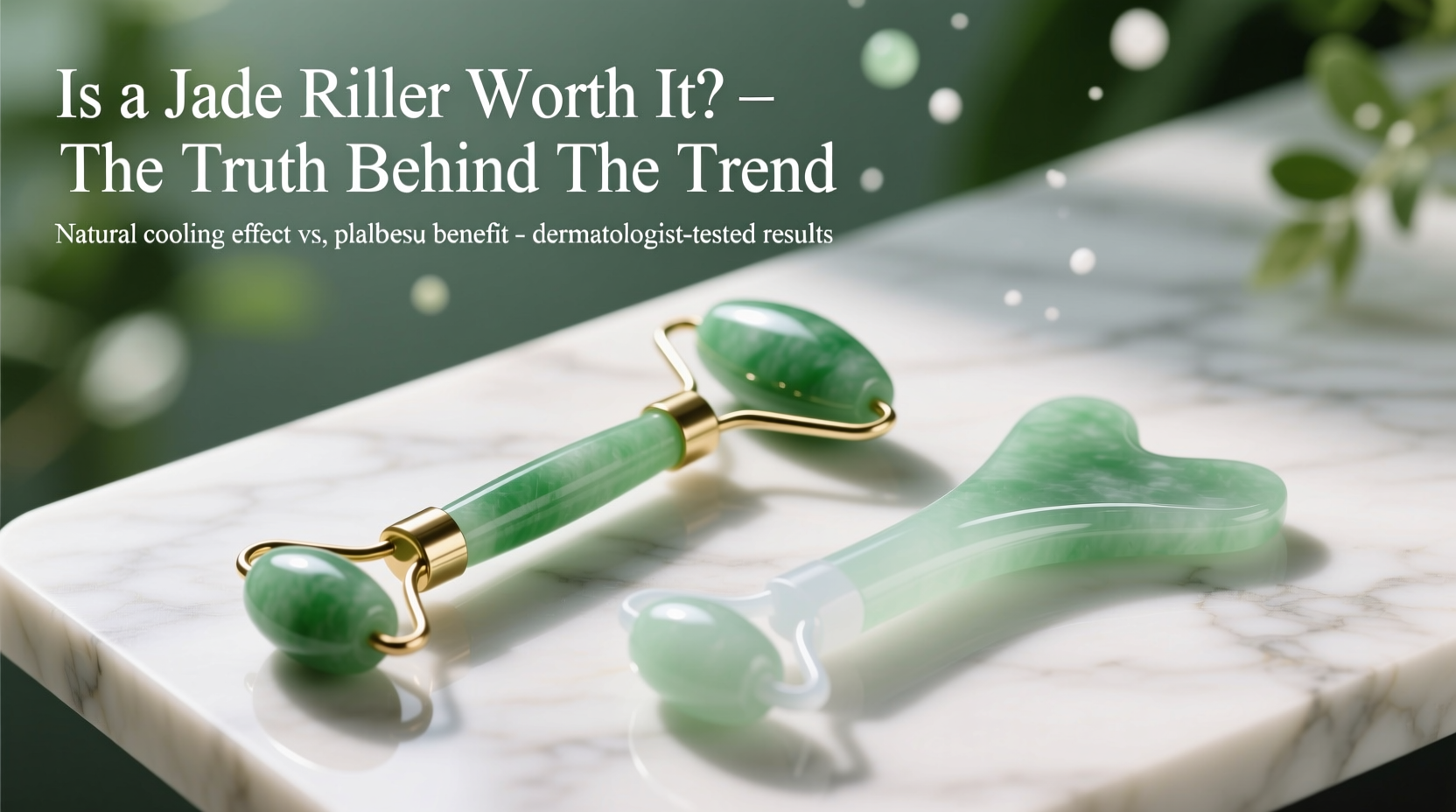
A jade roller typically consists of a handheld handle with two smooth stone wheels—one larger for cheeks and forehead, one smaller for under-eyes and contours. Though traditionally made from natural jade (nephrite), many modern versions use alternatives like rose quartz or synthetic stones due to cost and durability concerns.
The technique involves gently rolling the tool across cleansed skin, usually upward and outward, following lymphatic drainage pathways. Advocates claim this motion helps:
- Reduce facial puffiness by stimulating lymphatic flow
- Enhance blood circulation for a brighter complexion
- Improve absorption of serums and moisturizers
- Temporarily tighten skin through cooling effects
- Relieve facial muscle tension
The cooling property of jade is central to its appeal. When stored in the fridge, the stone provides a soothing sensation that can constrict blood vessels and reduce inflammation—similar to applying a cold compress. This immediate effect often translates into visible depuffing, especially around the eyes after a poor night’s sleep.
Scientific Evidence vs. Skincare Hype
Despite widespread popularity, clinical research on jade rollers remains sparse. There are no large-scale, peer-reviewed studies proving that jade rollers reduce wrinkles, reverse aging, or deliver long-term skin transformation. However, some underlying mechanisms do have scientific backing.
Lymphatic drainage, for example, is a legitimate physiological process. The face contains lymph nodes near the jawline, ears, and neck. Gentle massage can encourage fluid movement, potentially reducing water retention and morning puffiness. A 2018 study published in *Lymphology* noted that manual lymphatic drainage techniques could reduce edema and improve skin texture, though the research focused on medical applications rather than cosmetic tools.
Similarly, facial massage itself has documented benefits. According to Dr. Whitney Bowe, board-certified dermatologist and author of *The Beauty of Dirty Skin*, “Facial massage increases microcirculation, which brings more oxygen and nutrients to skin cells. Over time, this can support collagen production and give skin a healthier glow.”
“While jade rollers aren't miracle workers, they can complement a good skincare routine by boosting product penetration and offering relaxation benefits.” — Dr. Shereene Idriss, Cosmetic Dermatologist
However, experts caution against overstating results. “There's no evidence that the material of the roller—jade, quartz, amethyst—adds any unique benefit beyond its ability to stay cool,” says Dr. Hadley King, a dermatologist based in New York. “Metal or ceramic rollers would produce similar effects.”
Jade Roller Benefits: What’s Realistic?
Based on expert insights and user experiences, here are the most plausible benefits of regular jade rolling—along with their limitations.
| Claimed Benefit | Evidence Level | Reality Check |
|---|---|---|
| Reduces puffiness | Moderate | Cooling + massage helps drain fluid; best seen in morning use. |
| Improves skin glow | Low to Moderate | Increased circulation may temporarily brighten complexion. |
| Minimizes fine lines | Low | No proven anti-aging impact; any tightening is temporary. |
| Boosts serum absorption | Moderate | Massage can enhance penetration of active ingredients. |
| Detoxifies skin | None | \"Detox\" is a marketing myth; skin detoxifies naturally. |
| Relieves tension | High | Routine facial massage reduces stress-related clenching. |
One major misconception is that jade rollers \"detox\" the skin. In reality, the liver and kidneys handle detoxification. The skin acts as a barrier, not a filter. Claims about \"drawing out toxins\" are pseudoscientific and lack biological basis.
How to Use a Jade Roller Effectively: A Step-by-Step Guide
Using a jade roller incorrectly can lead to irritation or no noticeable results. Follow this dermatologist-approved routine for optimal outcomes.
- Cleanse your face. Start with a fresh canvas to prevent pushing dirt into pores.
- Apply a serum or oil. Use a hydrating or firming product to reduce friction and boost benefits.
- Begin with the neck. Roll downward from the chin to the collarbone to clear lymph nodes.
- Move to the jawline. Use upward strokes from the center of the chin toward the ears.
- Tackle the cheeks. Roll from the nose outward along the cheekbones, repeating 3–5 times per side.
- Address under-eyes. Gently roll from the inner corner toward the temples using the small end.
- Finish the forehead. Sweep upward from eyebrows to hairline, then outward to temples.
- Sanitize after use. Wipe with a soft cloth and mild soap; avoid soaking porous stones.
Duration: Aim for 3–5 minutes per session. Use daily—morning application is ideal for depuffing, while evening use promotes relaxation.
Real User Experience: A Mini Case Study
Sarah M., a 34-year-old graphic designer from Portland, struggled with chronic under-eye puffiness due to seasonal allergies and screen fatigue. After seeing influencers promote jade rollers, she purchased an affordable nephrite model for $22.
Initially skeptical, she committed to a 30-day trial: rolling each morning for five minutes after applying hyaluronic acid serum. By day 10, she noticed her eyes looked less swollen. “It wasn’t dramatic, but my concealer didn’t crease as much,” she said. “By week four, coworkers started commenting that I looked ‘more rested.’”
She attributes the change to consistency and refrigeration of the roller. “I don’t think the jade itself is magical, but the ritual helped me slow down and care for my skin better overall.”
Her experience reflects a common pattern: modest physical improvements paired with psychological benefits from mindful self-care.
Jade vs. Alternatives: Is Natural Stone Worth It?
With rising demand, brands now sell rollers made from rose quartz, amethyst, bian stone, and even stainless steel. Are these materials functionally different?
- Jade (Nephrite): Known for durability and cooling retention. Traditionally linked to balance and healing in Eastern philosophy—but these properties aren’t scientifically measurable.
- Rose Quartz: Softer than jade, believed to promote love and emotional well-being. Slightly less effective at staying cool.
- Amethyst: Porous and fragile; requires careful cleaning. No added skincare benefit.
- Stainless Steel: Holds cold longer, easier to sanitize. Often used in professional settings. More effective for depuffing but lacks aesthetic appeal.
From a performance standpoint, metal rollers outperform natural stones in temperature retention and hygiene. However, many users value the sensory and ritualistic aspects of working with natural crystals. If mindfulness enhances your routine, the emotional payoff may justify choosing jade despite functional trade-offs.
Checklist: Maximizing Your Jade Roller Investment
To get real value from your jade roller, follow this practical checklist:
- ✅ Clean your skin before rolling
- ✅ Apply a slip-friendly serum or facial oil
- ✅ Store the roller in the fridge for enhanced cooling
- ✅ Use upward and outward motions only
- ✅ Focus on lymphatic zones: jawline, neck, sides of nose
- ✅ Avoid rolling over active acne or broken skin
- ✅ Clean the roller weekly with mild soap and water
- ✅ Pair with other healthy habits: hydration, sleep, SPF
Remember: a jade roller is not a standalone solution. It amplifies results when combined with proven skincare practices like sunscreen use, retinoids, and antioxidant serums.
Frequently Asked Questions
Can a jade roller really reduce wrinkles?
No, there is no clinical evidence that jade rollers reduce wrinkles or stimulate collagen long-term. Any firming effect is temporary and due to increased circulation or mild swelling reduction. For wrinkle prevention, prioritize sun protection, retinoids, and peptides.
How often should I use a jade roller?
Daily use is safe and recommended. Morning sessions help reduce puffiness, while evening use can be part of a relaxing wind-down routine. Consistency matters more than frequency—aim for at least 3–4 times per week to notice subtle changes.
Are cheap jade rollers effective?
Yes, affordability doesn’t necessarily mean ineffectiveness. Many budget rollers use genuine nephrite or close substitutes. Just ensure the stone is smooth, free of cracks, and securely mounted. Avoid dyed or resin-based imitations sold as “real jade.”
Conclusion: Practical Tool or Pretty Gimmick?
The truth about jade rollers lies between extremes. They are neither miracle anti-aging devices nor worthless trinkets. As a facial massage tool, they offer mild but tangible benefits—particularly for reducing puffiness, enhancing product absorption, and promoting relaxation. Their effectiveness depends heavily on correct usage and realistic expectations.
If you approach the jade roller as a complementary step in a thoughtful skincare ritual—not a cure-all—you’re more likely to appreciate its subtle rewards. And if the act of gliding a cool stone across your face encourages you to pause, breathe, and connect with your body, that mental reset may be the greatest benefit of all.




 浙公网安备
33010002000092号
浙公网安备
33010002000092号 浙B2-20120091-4
Comments
No comments yet. Why don't you start the discussion?