
For millions of people who sleep on their side, finding the right pillow isn't just about comfort—it's essential for spinal alignment, neck health, and uninterrupted sleep. Memory foam has become a popular choice in the bedding industry due to its contouring properties and pressure relief. But when it comes to side sleepers, a common concern arises: is a memory foam pillow truly supportive, or does its density make it too bulky?
The answer isn’t a simple yes or no. It depends on the design, height, firmness, and individual anatomy. This article explores the benefits and drawbacks of memory foam pillows for side sleepers, analyzes what makes a pillow \"too bulky,\" and provides practical guidance for choosing the best option.
Why Side Sleepers Need Special Pillow Support
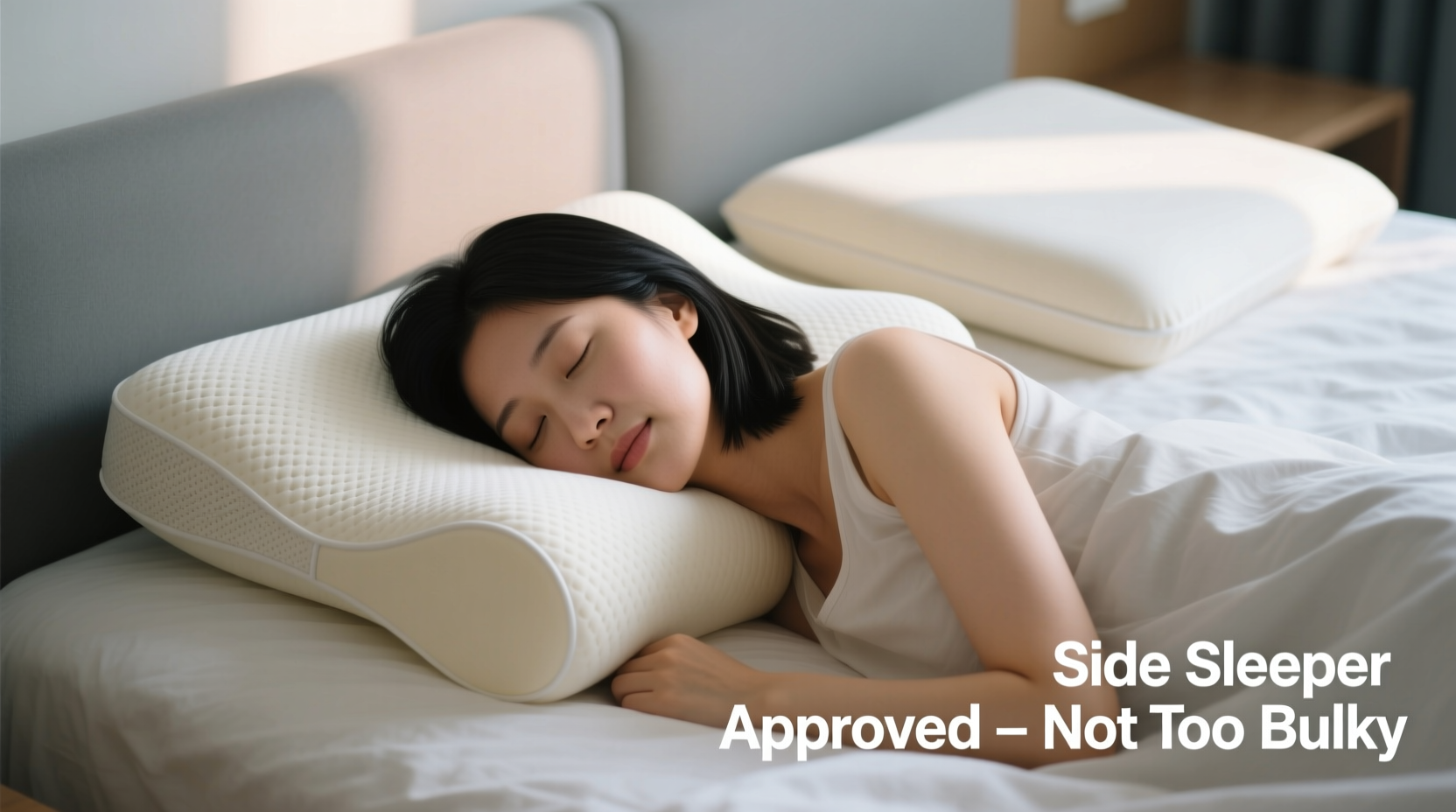
Side sleeping is one of the most common sleep positions, particularly among adults. However, it places unique demands on the neck and spine. When lying on your side, your head rests horizontally relative to your mattress, creating a gap between your shoulder and neck that must be filled by a pillow.
If this gap isn’t properly supported:
- The neck tilts downward, straining cervical muscles.
- The spine loses its natural alignment, potentially causing back or shoulder pain.
- Nerve compression may occur over time, leading to numbness or tingling in the arms.
Therefore, side sleepers need a pillow with enough loft (height) and firmness to keep the head aligned with the spine. A pillow that’s too flat will cause the head to drop; one that’s too high forces the neck upward—both scenarios compromise posture and comfort.
“Proper pillow height is critical for side sleepers. Even a half-inch difference can affect cervical curvature and lead to chronic discomfort.” — Dr. Lena Torres, Chiropractic Sleep Specialist
How Memory Foam Pillows Work for Side Sleepers
Memory foam is viscoelastic polyurethane that responds to heat and pressure by softening and conforming to the shape of the body. Originally developed by NASA, it’s now widely used in mattresses and pillows for its ability to absorb motion and relieve pressure points.
For side sleepers, the advantages include:
- Contoured Support: The foam molds around the head, neck, and shoulder, filling gaps precisely.
- Pressure Relief: Reduces tension on sensitive areas like the base of the skull and upper trapezius.
- Motion Isolation: Minimizes disturbance from a partner moving during the night.
- Durability: High-quality memory foam retains its shape longer than down or polyester fills.
However, not all memory foam pillows are created equal. Some models are designed specifically for side sleepers, featuring higher loft (4–6 inches), contoured shapes, or zoned support. Others are marketed as “medium-firm” or “all-position” pillows but lack the necessary height for proper alignment in side sleepers.
When Memory Foam Becomes Too Bulky
Bulkiness in a pillow doesn’t just refer to physical size—it also relates to how it feels during use. A pillow may be technically supportive but still feel cumbersome if it’s too thick, too firm, or restricts movement.
Here are signs a memory foam pillow might be too bulky for you:
- You wake up with your chin tucked into your chest.
- The pillow lifts your head significantly above shoulder level.
- You feel restricted when turning your head.
- It creates a “perched” sensation rather than a neutral alignment.
- Your shoulders ache upon waking, possibly due to unnatural elevation.
Bulkiness often stems from poor design choices:
- Excessive Loft: Pillows over 6 inches tall are rarely suitable unless the sleeper has broad shoulders.
- Uniform Density: Full-density foam without zoning can resist natural head tilt.
- Lack of Contouring: Flat memory foam blocks don’t accommodate the curve from neck to shoulder.
A well-designed memory foam pillow should feel supportive—not like sleeping on a block of foam. Many modern versions address these issues with ergonomic shaping, such as a curved center or sloped edges.
Choosing the Right Loft Based on Body Type
One-size-fits-all doesn’t apply here. The ideal pillow height varies based on shoulder width and body frame:
| Body Type | Shoulder Width | Recommended Pillow Loft | Notes |
|---|---|---|---|
| Small Frame / Petite | Narrow (under 15\") | 4–5 inches | Avoid ultra-high pillows; opt for contoured designs |
| Average Build | Medium (15–17\") | 5–6 inches | Most high-loft memory foam pillows fit this range |
| Broad Shoulders / Athletic | Wide (17\"+) | 6+ inches | May require custom or dual-layer adjustable pillows |
Real-World Example: Sarah’s Transition to Memory Foam
Sarah, a 38-year-old nurse and habitual side sleeper, struggled with morning neck stiffness for years. She used a standard polyester-filled pillow that flattened within months. After switching to a medium-loft memory foam pillow, she initially felt supported—but began waking with jaw tension and mild headaches.
Upon evaluation by a physical therapist, it was discovered that the pillow, while high-quality, was too firm and elevated her head excessively. Her chin was tilted toward her chest, compressing her cervical discs.
The solution? She switched to a contoured memory foam pillow with a lower profile (4.5 inches) and softer shoulder zone. Within two weeks, her symptoms disappeared. The new pillow allowed her head to rest neutrally, aligning her spine from ear to shoulder to hip.
Sarah’s experience highlights a key truth: even premium materials fail if they don’t match the user’s biomechanics.
Features to Look for in a Side-Sleeper Memory Foam Pillow
Not every memory foam pillow suits side sleepers. To avoid bulkiness while ensuring support, consider these features:
- Contoured Design: A curved depression for the head and a raised edge for the neck helps maintain alignment.
- Zoned Support: Firmer foam under the neck, softer under the head, balances stability and comfort.
- Adjustable Loft Options: Some brands offer removable foam layers or dual-height sides.
- Breathable Cover: Gel-infused or open-cell foam improves airflow, reducing heat retention.
- Hypoallergenic Materials: Important for allergy sufferers; memory foam naturally resists dust mites.
Step-by-Step Guide: How to Test a Memory Foam Pillow at Home
Before committing to a purchase, follow this method to assess compatibility:
- Simulate Sleep Position: Lie on your side on a firm surface (like your bed without sheets).
- Place the Pillow Under Your Head: Align it so your neck rests fully on the support zone.
- Check Alignment: Ask someone to take a photo from behind, or use a mirror. Your ear, shoulder, and hip should form a straight line.
- Assess Comfort: Stay in position for 5 minutes. Note any pressure points, overheating, or restriction.
- Test Movement: Gently turn your head side to side. You should feel supported but not trapped.
- Evaluate After Waking: If testing overnight, note how you feel upon waking—any stiffness or pain indicates misalignment.
Common Misconceptions About Memory Foam and Bulkiness
Several myths persist about memory foam pillows that can mislead buyers:
- Myth: All memory foam is too firm.
Reality: Firmness varies widely. Soft, medium, and firm options exist. Some blends include latex or gel for added comfort. - Myth: Higher loft always means better support.
Reality: Excess height disrupts alignment. Support comes from proper fit, not thickness alone. - Myth: Memory foam pillows never sag.
Reality: Lower-density foams degrade faster. Look for densities of 3.5 lb/ft³ or higher for longevity.
Bulkiness is often a result of misunderstanding personal needs rather than an inherent flaw in the material.
Frequently Asked Questions
Can memory foam pillows cause neck pain?
Yes—if they’re the wrong height, firmness, or shape. A pillow that’s too high or too rigid can strain neck muscles and misalign the spine. However, properly selected memory foam pillows reduce neck pain by supporting natural curvature.
How long do memory foam pillows last?
High-quality memory foam pillows typically last 2–4 years. Signs of wear include permanent indentations, loss of resilience, or off-gassing odors returning after cleaning. Regularly fluffing and airing out the pillow can extend its life.
Are there alternatives to memory foam for side sleepers?
Yes. Buckwheat hull pillows offer adjustable loft and firm support. Latex pillows provide responsive bounce and durability. Hybrid pillows combine memory foam with other materials for balanced performance. Each has pros and cons depending on preference for feel, cooling, and maintenance.
Final Checklist: Choosing the Right Memory Foam Pillow
Before purchasing, ask yourself the following:
- ✅ Do I have broad shoulders requiring higher loft?
- ✅ Am I sensitive to heat? (Look for gel infusion or breathable covers)
- ✅ Do I prefer a soft, medium, or firm feel?
- ✅ Does the pillow have a contoured or zoned design?
- ✅ Can I return it if it doesn’t suit my sleep style?
- ✅ Is the foam CertiPUR-US® certified for safety and quality?
Brands like Tempur-Pedic, Coop Home Goods, and Eliomax offer models tailored to side sleepers with customizable options. Reading verified customer reviews—especially from fellow side sleepers—can provide real-world insights beyond marketing claims.
Conclusion: Finding the Balance Between Support and Comfort
Memory foam pillows can be excellent for side sleepers—if chosen wisely. They offer unmatched contouring and pressure relief, but their effectiveness hinges on proper fit. A pillow that’s too bulky defeats the purpose by disrupting spinal alignment and causing discomfort.
The goal isn’t to avoid memory foam altogether, but to select one engineered for your body type and sleep habits. Prioritize ergonomic design, appropriate loft, and quality materials. Test thoroughly before finalizing your decision.




 浙公网安备
33010002000092号
浙公网安备
33010002000092号 浙B2-20120091-4
Comments
No comments yet. Why don't you start the discussion?