
In the pursuit of creating a more immersive and visually striking holiday display, many decorators are turning to design tricks that manipulate perception. One such innovation gaining traction is the use of a mirrored back panel behind a Christmas tree. The idea is simple: by reflecting the tree and its ornaments, the mirror creates an illusion of depth, making the tree appear fuller and the space larger. But does it actually work? And more importantly, is it worth the effort, cost, and potential drawbacks?
This article explores the effectiveness of mirrored back panels in enhancing the visual impact of a Christmas tree. From optical science to interior design principles, we’ll examine when this technique succeeds, where it falls short, and how to implement it properly—so you can decide whether it belongs in your seasonal setup.
The Science Behind the Illusion
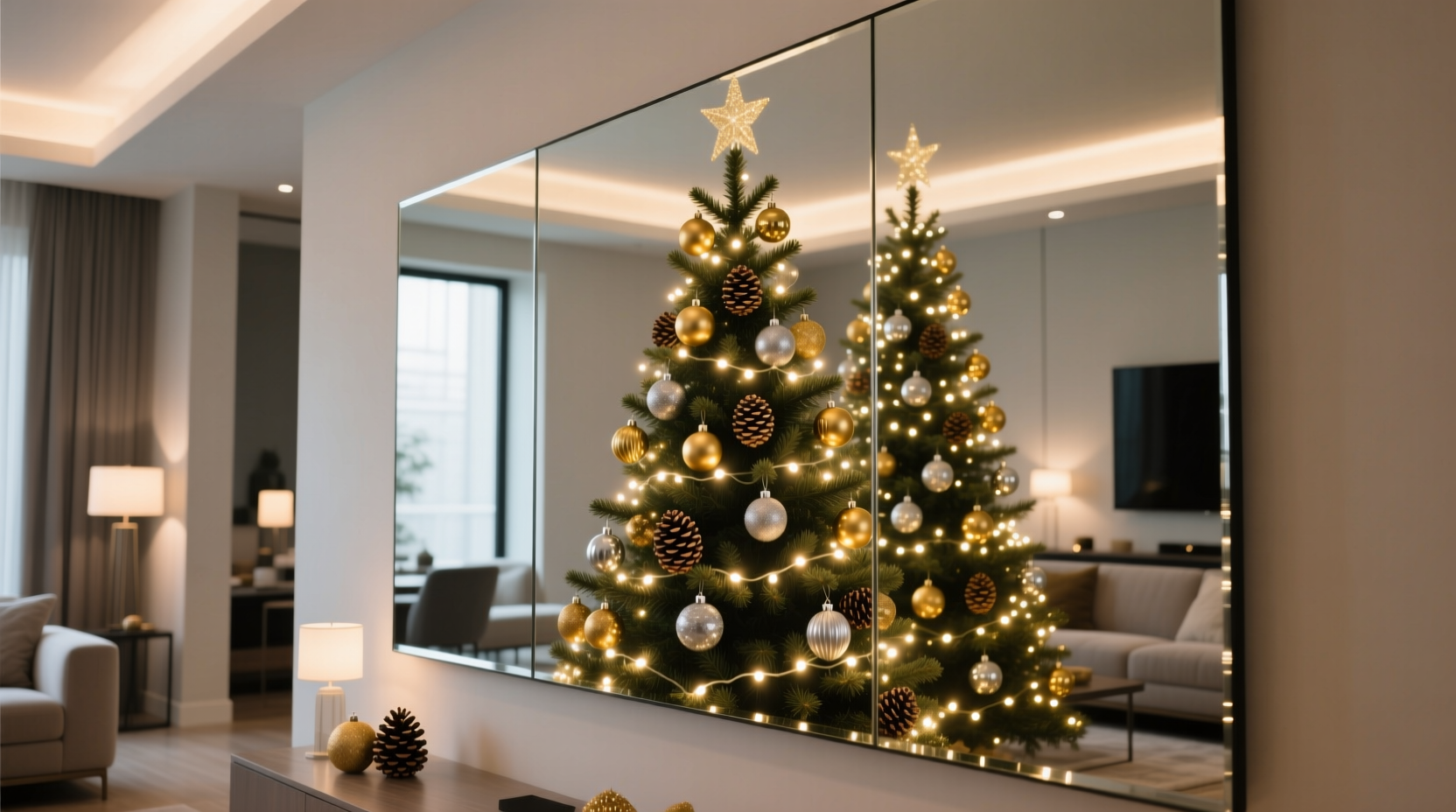
Mirrors have long been used in interior design to create the illusion of space. When light reflects off a surface, our brains interpret the reflected image as part of the physical environment. This phenomenon is especially effective in small rooms, hallways, or areas with limited natural light. A mirror placed behind a focal point—like a Christmas tree—can amplify its presence by doubling the visual information available to the eye.
In the case of a Christmas tree, the mirror doesn’t just reflect the back of the tree (which is often sparse or bare). Instead, it captures lights, tinsel, ornaments, and branches from the front and sides, projecting them backward into the reflection. The result can be a convincing impression that the tree extends deeper into the wall—or that there’s a second, symmetrical tree hidden behind it.
However, the success of this illusion depends on several factors: lighting balance, mirror size, viewing angle, and tree density. If any of these elements are misaligned, the effect may appear disjointed or artificial rather than magical.
Pros and Cons of Using a Mirrored Back Panel
Before committing to installation, consider both the advantages and limitations of using a mirror behind your Christmas tree. While the concept sounds appealing, practical execution varies widely based on context.
| Advantage | Description |
|---|---|
| Creates Depth Illusion | A well-placed mirror can make a narrow room feel wider and give the tree a fuller appearance. |
| Enhances Light Reflection | Twinkling lights multiply in the reflection, adding sparkle without extra wiring. |
| Improves Aesthetic Symmetry | The mirrored image complements asymmetrical arrangements, balancing the overall look. |
| Cost-Effective Alternative to Larger Trees | You can achieve a grander look without upgrading to a bigger tree or spending more on décor. |
| Drawback | Description |
|---|---|
| Exposes Sparse Areas | If the back of the tree isn’t decorated, the mirror reveals gaps and wiring, breaking the illusion. |
| Requires Precise Placement | Misalignment causes distorted reflections that detract from the festive mood. |
| Safety Concerns | Large mirrors pose breakage risks, especially in homes with children or pets. |
| Limited Effect in Wide Rooms | In spacious areas, the mirror may not significantly alter perception of depth. |
When It Works Best: Ideal Conditions for Success
The mirrored back panel technique shines under specific circumstances. Understanding these conditions helps determine whether it’s suitable for your home.
- Small or Narrow Spaces: Apartments, entryways, or compact living rooms benefit most from spatial illusions.
- Evenly Decorated Trees: Full 360-degree ornamentation ensures the reflection looks intentional and lush.
- Controlled Lighting: Soft ambient light combined with warm-toned string lights enhances reflection without glare.
- Clean, Uncluttered Wall Space: The mirror should dominate the background; competing artwork or furniture weakens the effect.
- Centered Focal Point: The tree must be the primary object in the reflection, not competing with doors, windows, or other furniture.
Interior designer Laura Nguyen, known for her minimalist holiday concepts, explains:
“A mirrored panel works like a silent collaborator—it doesn’t add anything new, but it amplifies what’s already there. That means your tree has to be strong visually. If the foundation is weak, the mirror will expose it.” — Laura Nguyen, Interior Stylist & Author of *Seasonal Minimalism*
Step-by-Step Guide to Installing a Mirrored Back Panel
If you’re ready to try this technique, follow these steps to maximize visual impact while minimizing risk.
- Choose the Right Mirror Size: Select a mirror that matches or slightly exceeds the height of your tree. Width should cover at least 80% of the tree’s footprint.
- Select a Safe Mounting Method: Use heavy-duty picture hangers, French cleats, or wall anchors rated for the mirror’s weight. Avoid adhesive strips for large panels.
- Position the Tree First: Place your tree stand centered in front of the planned mirror location. Step back and assess sightlines from key angles.
- Install the Mirror Securely: Have a helper hold the mirror while you level and mark drill points. Double-check stability before final mounting.
- Decorate with Reflection in Mind: Hang ornaments evenly around the entire tree, paying special attention to the backside facing the mirror.
- Test the Visual Effect: View the setup from multiple positions—entry points, seating areas, and adjacent rooms—to ensure the illusion holds.
- Add Finishing Touches: Drape garlands or place reflective baubles near the rear of the tree to enhance continuity between real and reflected surfaces.
Real-World Example: A Studio Apartment Transformation
Jamie, a graphic designer living in a 500-square-foot Brooklyn studio, struggled each year with making her Christmas tree feel impactful without overwhelming her space. In past years, she used a corner placement with fairy lights, but the tree always looked isolated and undersized.
Last holiday season, she installed a 7-foot-tall framed mirror against the longest wall and positioned her 6-foot pre-lit tree 18 inches in front of it. She invested extra time decorating the back half of the tree—adding ribbon, smaller bulbs, and LED icicles—and dimmed overhead lighting during evening viewings.
The result was transformative. Guests consistently remarked that the tree “looked like it belonged in a penthouse,” unaware of the mirror trick. More importantly, Jamie felt the room gained warmth and dimension without clutter. “It didn’t just make the tree look bigger,” she said. “It made the whole apartment feel more intentional and festive.”
Her only regret? Not installing a shatterproof film on the mirror sooner after her cat knocked over a gift box near the base. After that incident, she applied a clear safety coating—a small addition that preserved aesthetics while improving peace of mind.
Alternatives to Full Mirrors
Not everyone is comfortable with a large mirror on the wall—especially in high-traffic areas. Fortunately, several alternatives offer similar benefits with fewer risks.
- Mirror Tiles: Arrange silver-backed tiles in a geometric pattern behind the tree. They reflect light selectively and reduce the risk of full-panel breakage.
- Glittery Backdrop Panels: Metallic fabric or foil-covered boards mimic reflectivity without the true mirror effect.
- LED Strip Enhancements: Install vertical LED strips along the wall beside the tree to draw the eye upward and imply depth.
- Strategic Ornament Placement: Use mirrored or glass ornaments throughout the tree to scatter light naturally, achieving a fragmented version of the same illusion.
These options allow for creative flexibility and are easier to store or remove after the holidays.
Frequently Asked Questions
Does a mirrored back panel work with artificial trees?
Yes, especially with premium artificial trees designed for 360-degree viewing. Cheaper models with flat backs may reveal structural flaws in reflection, so inspect yours carefully before installing a mirror.
Can I use a temporary mirror instead of mounting one?
Absolutely. Lean a large floor mirror or framed panel against the wall behind the tree. Just ensure it’s secured against tipping—use non-slip pads or discreet brackets anchored to baseboards.
Will the mirror make my tree look fake or gimmicky?
Only if poorly executed. A seamless setup with balanced décor and proper lighting feels elegant, not theatrical. Avoid overly bright spotlights or mismatched color tones that highlight the trick.
Checklist: Is a Mirrored Back Panel Right for You?
Before proceeding, go through this quick evaluation:
- ☐ Do I have wall space large enough for a mirror behind the tree?
- ☐ Is my tree fully decorated on all sides?
- ☐ Am I willing to secure the mirror safely and permanently (or semi-permanently)?
- ☐ Does my room layout support a centralized focal point?
- ☐ Are there children or pets who might bump into the mirror?
- ☐ Do I prefer a subtle enhancement over bold holiday statements?
If you answered “yes” to most of these, a mirrored back panel could elevate your holiday display meaningfully.
Final Verdict: Is It Worth It?
A mirrored Christmas tree back panel is not a universal upgrade—it’s a strategic design choice. When implemented thoughtfully, it delivers genuine value: enhanced depth, amplified light, and a more luxurious presentation. It’s particularly effective in smaller homes where space optimization matters.
However, it demands attention to detail. A poorly decorated tree will look worse, not better, in reflection. Safety must be prioritized. And in open-concept or very large rooms, the effect may be negligible.
For those seeking a refined, visually intelligent holiday aesthetic, the mirrored back panel is absolutely worth considering. It’s not about hiding imperfections—it’s about enhancing what’s already beautiful. With careful planning, the illusion becomes indistinguishable from reality, and that’s where true holiday magic lies.




 浙公网安备
33010002000092号
浙公网安备
33010002000092号 浙B2-20120091-4
Comments
No comments yet. Why don't you start the discussion?