
For decades, the mirrored tree topper has shimmered at the apex of holiday decor—reflecting candlelight in vintage parlors and refracting modern LED glimmers with equal flair. Once a symbol of mid-century glamour, its popularity waned as minimalist aesthetics took hold. But design cycles turn like seasons, and today, the mirrored topper is reappearing on social media, boutique storefronts, and editorial spreads. Is it a nostalgic relic best left in the past, or a bold statement piece staging a full-fledged revival?
The answer isn’t binary. The mirrored tree topper’s relevance depends not just on broader design movements, but on how it’s styled, where it’s used, and who’s using it. To understand its current standing, we need to trace its history, examine contemporary interpretations, and consider how interior designers and homeowners are reintegrating—or rejecting—it in today’s festive spaces.
A Brief History of the Mirrored Tree Topper
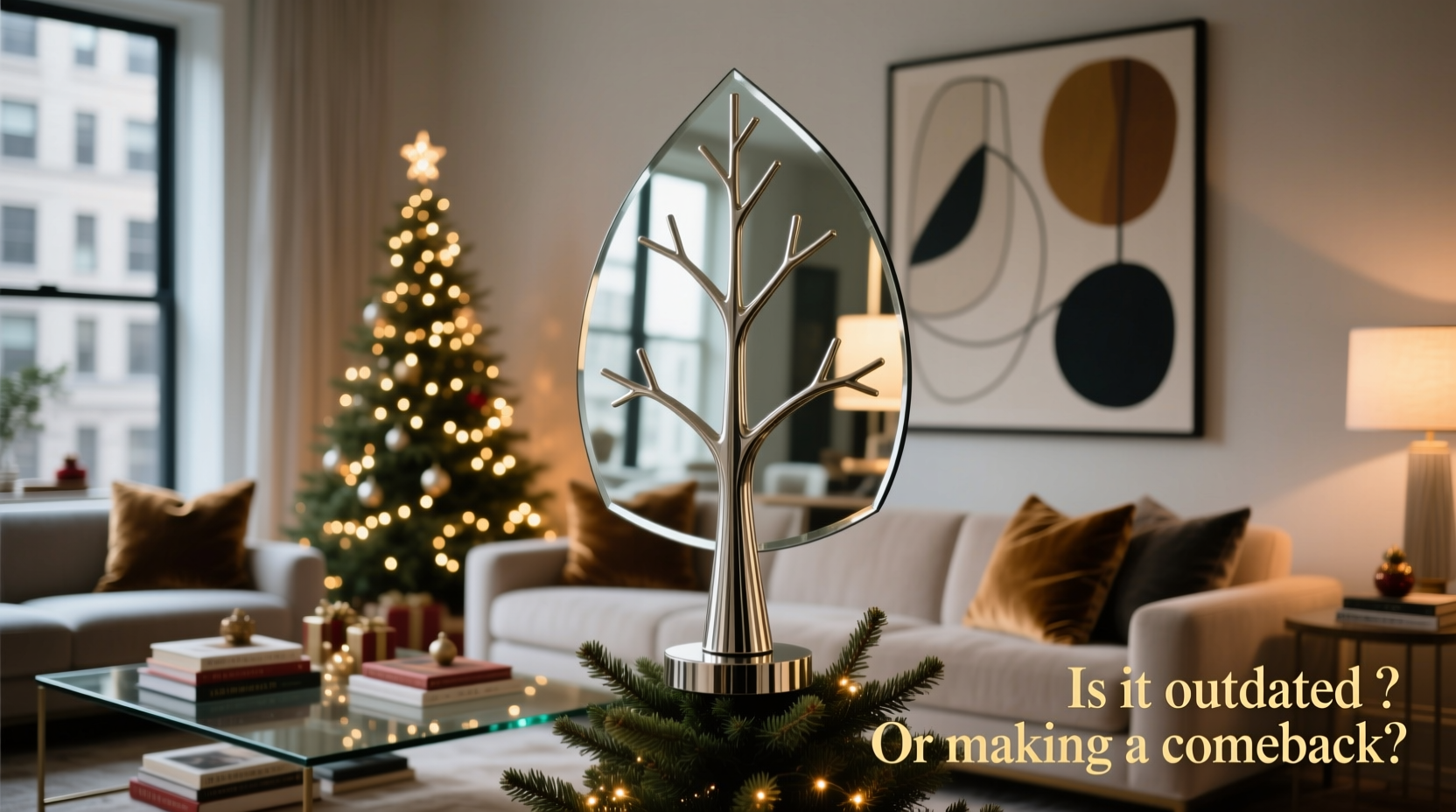
Mirrored ornaments and finials first gained prominence in the 1950s and 1960s, when chrome accents, glass tiles, and reflective surfaces defined mid-century modern interiors. At that time, Christmas trees were often artificial aluminum models in silver or pink, designed specifically to complement shiny décor. A mirrored star or angel perched at the top wasn’t just decorative—it was a functional amplifier of light in homes lit primarily by candles or incandescent bulbs.
By the 1970s and 1980s, mirrored toppers evolved into more elaborate forms: multi-tiered stars with rotating bases, glitter-coated domes, and even motorized spinners. These became emblematic of kitschy holiday charm. While beloved by many, they were also mocked by design purists who favored natural materials and understated elegance.
In the 2000s, as farmhouse chic and Scandinavian minimalism rose in popularity, mirrored toppers were largely shelved—sometimes literally. They were seen as gaudy, outdated, or too “tacky” for curated Instagram-worthy trees. Yet, tucked away in attics and thrift stores, these pieces retained a cult following among vintage collectors and maximalist decorators.
The Comeback: Why Designers Are Reconsidering Mirrors
Fast forward to the early 2020s, and the pendulum of taste is swinging back. Interior design trends now embrace eclecticism, layering, and intentional nostalgia. Platforms like Pinterest and TikTok have normalized “retro glam,” blending vintage elements with modern palettes. In this context, the mirrored tree topper isn’t just acceptable—it’s aspirational.
Designers are reimagining mirrored toppers not as relics, but as tools for dimension and drama. When paired with matte textures like velvet ribbons, dried citrus, or wool garlands, a mirrored star creates visual contrast. It catches ambient light, drawing the eye upward and enhancing the verticality of the tree. In dimly lit rooms or urban apartments with limited natural light, this reflective quality adds brightness without relying on additional fixtures.
“Reflection is one of the most underused tools in holiday design. A well-placed mirrored topper can elevate an entire room’s ambiance.” — Lena Torres, Interior Stylist & Author of *Festive Spaces*
Moreover, sustainability-minded decorators are rediscovering heirloom pieces. Rather than buying new plastic toppers each year, families are dusting off their grandmother’s mirrored star, restoring it with gentle polish, and placing it proudly atop sustainably sourced firs. This shift reflects a broader cultural move toward mindful consumption and emotional connection to objects.
Styling the Mirrored Topper for Modern Appeal
The key to pulling off a mirrored topper today lies in curation. Gone are the days of pairing it with tinsel-heavy trees and flashing multicolored lights. Contemporary styling demands balance, intentionality, and cohesion.
Consider these approaches:
- Monochrome Elegance: Pair a mirrored star with a white, silver, and ice-blue palette. Use frosted pinecones, clear glass bulbs, and white fairy lights to create a frost-kissed effect.
- Maximalist Glamour: Embrace bold contrast. Place the mirrored topper on a deep emerald or black tree adorned with gold beads, crimson velvet bows, and smoked glass ornaments.
- Vintage Revival: Lean into retro charm. Combine the topper with aluminum trees (now considered collectibles), atomic-age décor, and warm-toned vintage bulbs for a 1960s-inspired vignette.
- Minimalist Accent: Use the mirror as a single focal point on an otherwise sparse tree. Choose a small, geometric mirrored star and pair it with neutral linen ribbon and wooden ornaments.
Scale matters. A large mirrored star may overwhelm a narrow tabletop tree but dominate perfectly on a grand floor model. Proportion and placement ensure the topper enhances rather than competes with the overall design.
Do’s and Don’ts: A Practical Guide
| Do | Don't |
|---|---|
| Pair with soft lighting to avoid harsh glare | Use under direct spotlighting that causes blinding reflections |
| Match the finish to other metallics on the tree (e.g., chrome frame + chrome bulbs) | Mix finishes haphazardly (e.g., brass garland with silver mirror) |
| Clean gently before display to restore shine | Use abrasive cleaners that strip the mirrored coating |
| Secure firmly—mirrored toppers can be heavier than expected | Assume it will stay put; always test stability |
| Use as part of a themed display (e.g., Art Deco, retro-futurism) | Place on a themeless tree without stylistic intent |
Real Example: A Brooklyn Apartment’s Holiday Transformation
In 2023, designer Maya Chen was tasked with refreshing a pre-war Brooklyn apartment for the holidays. The client, a young couple, wanted something nostalgic yet modern—“cozy but cool,” as they put it. Chen discovered an old mirrored star in the building’s basement storage, left behind by a previous tenant. Restored with care, the star became the centerpiece of a 7-foot noble fir dressed in matte black ornaments, cream cable-knit stockings, and warm copper string lights.
The result was striking. The mirror caught the flicker of nearby candles and reflected the city skyline visible through tall windows. Guests consistently remarked on the topper, not as a throwback, but as a conversation starter. Local design blog *Urban Tidings* featured the space with the caption: “Proof that vintage sparkle belongs in modern homes.”
This case illustrates a crucial point: context transforms perception. What might seem outdated in one setting becomes iconic in another, depending on execution.
Step-by-Step: How to Style a Mirrored Tree Topper in 5 Steps
- Assess Your Tree Theme: Determine your color scheme and aesthetic (e.g., rustic, glam, minimalist). Ensure the mirror complements rather than clashes.
- Inspect and Clean: Remove dust and grime with a soft cloth. For deeper cleaning, use a glass-safe spray applied lightly to the cloth—not directly on the mirror.
- Test Placement: Before finalizing, place the topper on the tree during daylight. Observe how it interacts with natural light and surrounding décor.
- Balance the Composition: Distribute heavier or bolder ornaments lower on the tree to prevent visual top-heaviness.
- Secure and Step Back: Use a sturdy tree topper holder or floral wire to affix it safely. View from multiple angles to confirm harmony.
Expert Insight: Voices from the Design World
While public opinion varies, professionals are increasingly vocal about the mirrored topper’s potential.
“The idea that mirrors are ‘outdated’ is a myth perpetuated by fleeting trends. Reflection adds depth, movement, and magic—especially during the holidays.” — Diego Mendez, Lighting Consultant at Lumina Interiors
Mendez emphasizes that mirrors are fundamental in architectural lighting design. “We use mirrored surfaces in ceilings, backsplashes, and accent walls all the time. Denying that same principle to holiday décor doesn’t make sense.”
Similarly, vintage décor curator Alicia Rowe notes: “I’ve seen a 300% increase in searches for ‘vintage mirrored Christmas star’ on our online archive since 2021. People aren’t just buying them—they’re researching their history, origin, and craftsmanship.”
Frequently Asked Questions
Are mirrored tree toppers still popular?
Yes, but selectively. They’re regaining popularity among designers, vintage enthusiasts, and those embracing retro or glam aesthetics. Their appeal is niche but growing, particularly in curated, photo-ready holiday displays.
Can I use a mirrored topper on a natural tree?
Absolutely. The contrast between organic texture and polished mirror can be stunning. Just ensure the topper is securely attached and protected from sap, which can cloud the surface over time.
How do I update an old mirrored topper?
You can refresh it by gently polishing the surface, repainting the base in a modern hue (like matte black or brushed gold), or adding subtle embellishments like tiny crystal droplets or micro LEDs around the edges.
Checklist: Is Your Mirrored Topper Ready for a Comeback?
- ☐ It’s clean and free of major tarnishing or peeling
- ☐ It fits the scale of your tree and room
- ☐ It aligns with your overall holiday color story
- ☐ You have a secure method to attach it
- ☐ It evokes joy or personal meaning—not obligation
Conclusion: Outdated or On-Trend? The Verdict
The mirrored tree topper is neither universally outdated nor universally en vogue. Its status depends on perspective, styling, and intention. Dismissed during eras of minimalism, it thrives now in a design climate that values individuality, texture contrast, and sentimental detail.
More than a decoration, it’s a statement. Choosing a mirrored topper signals confidence—a willingness to embrace shine, memory, and spectacle in equal measure. Whether inherited or newly purchased, restored or reinvented, it can serve as both a tribute to the past and a beacon of present-day creativity.
Rather than asking whether it’s “in style,” perhaps the better question is: does it bring you delight? If the answer is yes, then the mirrored tree topper isn’t just relevant—it’s essential.




 浙公网安备
33010002000092号
浙公网安备
33010002000092号 浙B2-20120091-4
Comments
No comments yet. Why don't you start the discussion?