
Every holiday season, millions of households face the same decision: invest in a pre-lit artificial tree or go the traditional route and string lights on a bare tree yourself. It’s more than just a matter of preference—it impacts time, budget, aesthetics, and even long-term storage. With advancements in lighting technology and tree design, pre-lit trees have gained popularity, but they’re not without trade-offs. This guide breaks down the real advantages and drawbacks of each option, backed by practical insights, expert opinions, and real-world experiences.
Convenience vs. Customization: The Core Trade-Off
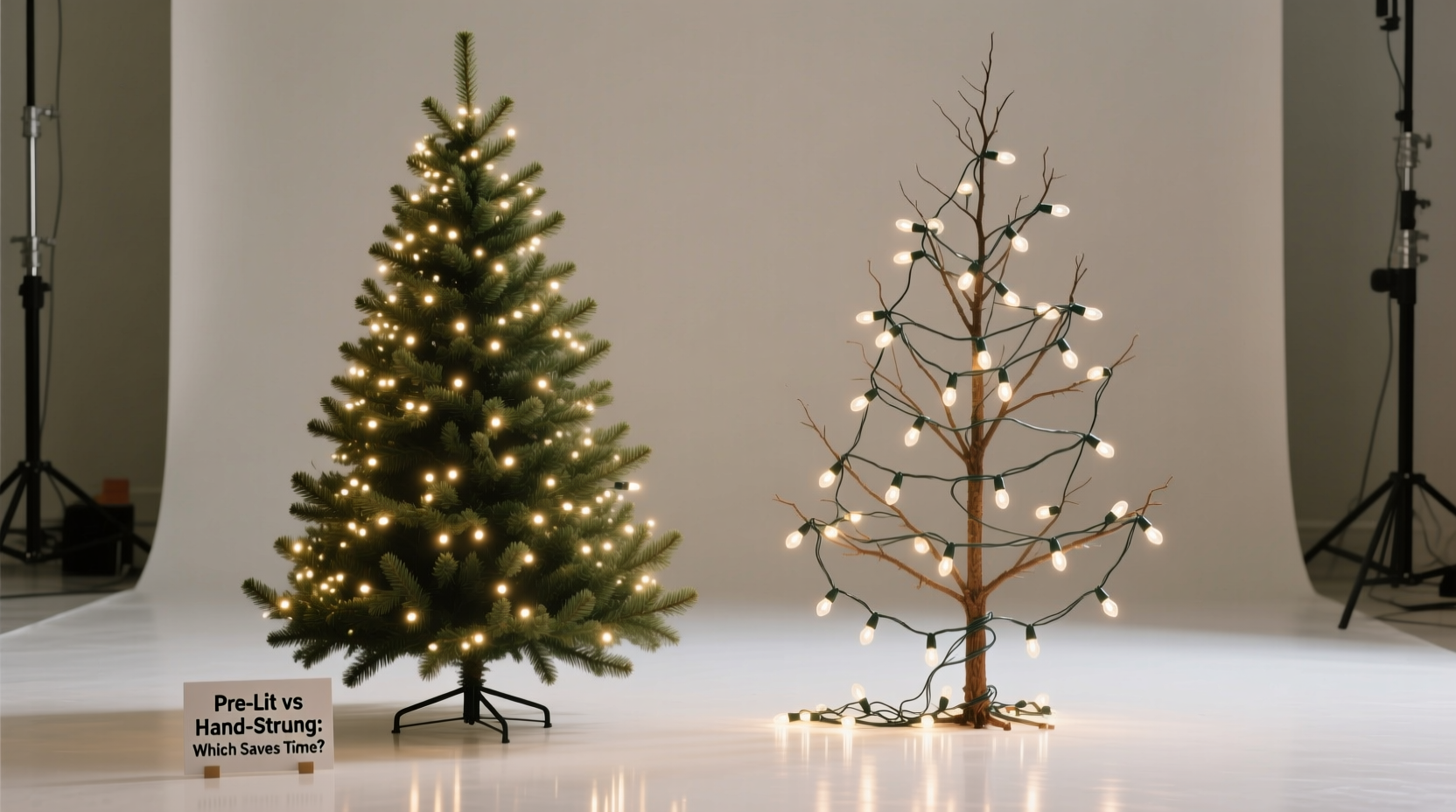
The central dilemma between pre-lit and manually lit trees comes down to convenience versus creative control. A pre-lit tree saves hours of labor—no untangling wires, no testing bulbs, no climbing ladders to adjust strands. You simply unfold, fluff, and plug in. For busy families, working professionals, or anyone short on time, this is a major benefit.
On the other hand, building your own light display allows for complete artistic freedom. Want warm white lights on the lower branches and cool white twinkling LEDs above? Go ahead. Prefer vintage-style C7 bulbs with a retro feel? No problem. You can layer different types of lighting—twinkling, steady, color-changing—for depth and drama. You also choose the number of strands, spacing, and even the direction the lights face.
Interior designer Laura Simmons notes:
“Lighting is one of the most powerful tools in holiday decor. A custom-lit tree can become a centerpiece that reflects your personality. But if time is tight, a well-designed pre-lit tree can still deliver elegance—just with less flexibility.” — Laura Simmons, Interior Designer & Holiday Stylist
Cost Analysis: Upfront Price vs. Long-Term Value
At first glance, pre-lit trees often appear more expensive. A quality 7.5-foot pre-lit artificial tree can range from $200 to $500, while a comparable unlit version may cost $100–$250. However, you must factor in the cost of purchasing lights separately.
A full set of premium LED mini lights (typically 3–5 strands for a 7.5-foot tree) runs $30–$60. Add specialty lights—like icicle strands, spotlights, or color-changing options—and the total can approach $100 or more. When you include these costs, the price gap narrows significantly.
But there’s another financial consideration: longevity. Pre-lit trees integrate wiring into the branches during manufacturing, which means fewer stress points and better durability—assuming the lights are LED and the construction is high-quality. However, if a section fails, repair can be difficult or impossible, potentially rendering the entire tree unusable.
In contrast, individual light strands can be replaced as needed. Burned-out strings? Toss them and buy new. Technology evolves—you might upgrade to smart lights in a few years. This modularity gives DIY lighting an edge in long-term adaptability.
Price Comparison Table: Pre-Lit vs. Unlit + Lights
| Component | Pre-Lit Tree | Unlit Tree + DIY Lights |
|---|---|---|
| Base Tree Cost (7.5 ft) | $250 | $150 |
| Lights Included/Needed | Included (600–750 LEDs) | $80 (4 strands, LED) |
| Total Initial Cost | $250 | $230 |
| Repair Flexibility | Low (wiring embedded) | High (replace strands) |
| Customization Potential | Limited | High |
Durability and Maintenance Challenges
Maintenance plays a crucial role in deciding whether a pre-lit tree is worth the investment. While modern pre-lit trees use shatterproof LED bulbs and fused wire connectors, they are not immune to failure. Common issues include:
- Bulbs burning out due to voltage spikes
- Internal wiring damage from improper storage
- Connector corrosion over time
- Half-lit sections or complete circuit failure
Many manufacturers offer warranty periods (typically 1–3 years), but after that, replacement parts are rarely available. Some third-party repair services exist, but they can cost $50–$150—nearly half the price of a new tree.
With DIY lighting, maintenance is simpler. Each strand operates independently. If one fails, you replace only that strand. You can also stagger purchases—buy two strands this year, two more next year—spreading out costs.
Real Example: The Johnson Family’s Holiday Dilemma
The Johnsons, a family of four in suburban Chicago, bought a premium pre-lit tree in 2019. Setup took under 30 minutes, and the warm white LEDs created a cozy ambiance. Over three seasons, they loved the ease—especially with two young kids and packed December schedules.
But in 2022, during setup, only half the tree lit up. They contacted customer support, but the model was discontinued. After researching repairs, they found a local service—but the quote was $120. Instead, they purchased a new unlit tree and invested in high-quality LED strands totaling $180. Now, they enjoy greater brightness control and added color-changing lights for New Year’s Eve.
“We saved time at first,” says Mark Johnson, “but lost reliability. Now we spend about 45 minutes decorating, but we know we’ll never be stuck with a half-dead tree again.”
Step-by-Step Guide: Choosing the Right Option for Your Home
Follow this six-step process to make a confident decision based on your lifestyle, budget, and aesthetic goals.
- Assess Your Time Availability: How many hours can you realistically dedicate to decorating? If less than two, lean toward pre-lit.
- Determine Your Budget: Calculate total cost—including lights if going DIY. Set a ceiling and compare models within that range.
- Evaluate Storage Space: Pre-lit trees require careful packing to avoid crushing lit branches. If your attic or closet is cramped, an unlit tree may be easier to compress.
- Consider Aesthetic Goals: Do you want a classic, uniform glow or a dynamic, layered lighting effect? Custom setups win for visual impact.
- Check Bulb Type and Energy Use: Ensure any pre-lit tree uses LED bulbs. They last longer, run cooler, and use up to 80% less energy than incandescent.
- Review Warranty and Support: Look for at least a 2-year warranty and accessible customer service. Check online reviews for common failure reports.
Expert Recommendations and Industry Trends
According to the American Christmas Tree Association, over 82% of artificial trees sold in the U.S. in 2023 were pre-lit—a significant increase from just 55% a decade ago. Retailers like Balsam Hill, National Tree Company, and Home Depot now emphasize integrated lighting as a key selling point.
Yet experts caution against assuming all pre-lit trees are equal. Tom Reynolds, a veteran retail analyst specializing in seasonal goods, explains:
“Not all pre-lit trees are built the same. Entry-level models often skimp on bulb density and wire quality. I recommend spending at least $200 for a pre-lit tree to ensure decent durability. Otherwise, you’re better off buying separate components.” — Tom Reynolds, Seasonal Retail Analyst
Another trend is the rise of “hybrid” approaches: using a pre-lit tree as a base and adding supplemental strands for extra sparkle. This balances convenience with customization—ideal for those who want both speed and style.
FAQ: Common Questions Answered
Can I add more lights to a pre-lit tree?
Yes, but do so carefully. Plug additional strands into a power strip, not daisy-chained behind the tree. Avoid covering internal wiring with extra cords to prevent overheating. Many decorators add icicle lights to the outer tips or spotlight strands at the top for dramatic effect.
What happens if the lights on a pre-lit tree stop working?
If under warranty, contact the manufacturer for replacement or repair. If expired, check for a fuse in the plug or foot of the tree. Some models have modular sections—if one fails, others may still work. Third-party repair kits exist but vary in effectiveness.
Are pre-lit trees safe?
Modern pre-lit trees using LED lights are generally safe. LEDs produce minimal heat, reducing fire risk. Always inspect for frayed wires, cracked plugs, or loose connections before use. Never leave a lit tree unattended for long periods, especially around pets or children.
Final Checklist: Make Your Decision Confidently
Use this checklist to finalize your choice:
- ☐ I have less than 1 hour per year to dedicate to lighting the tree → Consider pre-lit
- ☐ I want full control over light color, pattern, and placement → Choose DIY
- ☐ My storage area is small or crowded → Unlit trees pack smaller
- ☐ I plan to keep the tree for 10+ years → Prioritize repairability (DIY may be safer)
- ☐ I prefer a hassle-free, consistent look every year → Pre-lit offers reliability
- ☐ I enjoy decorating as a ritual or family activity → DIY lighting adds engagement
Conclusion: Match the Solution to Your Lifestyle
There’s no universal answer to whether a pre-lit artificial tree is worth it. The right choice depends on your priorities. If time is your scarcest resource and you value consistency, a high-quality pre-lit tree delivers undeniable convenience. But if creativity, long-term value, and repairability matter more, stringing your own lights offers unmatched flexibility and peace of mind.
Many households find a middle ground—starting with a pre-lit tree and enhancing it over time, or alternating based on the year’s demands. The holidays are about joy, not perfection. Whether your tree sparkles uniformly out of the box or glows with hand-crafted charm, what matters most is the warmth it brings to your home.




 浙公网安备
33010002000092号
浙公网安备
33010002000092号 浙B2-20120091-4
Comments
No comments yet. Why don't you start the discussion?