
Every holiday season, families face the same challenge: how to display a beautifully decorated Christmas tree without compromising safety or convenience. As ornament collections grow heavier—featuring glass globes, vintage pieces, and handcrafted additions—the strain on both the tree and its base increases. One solution gaining popularity is the rotating Christmas tree base. But with added weight from dense decorations, is this convenience feature truly worth the investment? The answer depends on several factors, including tree size, ornament distribution, and long-term usability.
Rotating bases were originally designed to simplify decoration and viewing, allowing users to spin the tree effortlessly while placing ornaments or showing off their work. However, many models are engineered for moderate loads. When heavy ornaments enter the equation, concerns about stability, motor durability, and structural integrity arise. This article examines whether a rotating base can reliably support a heavily adorned tree, backed by practical testing, user experiences, and expert analysis.
How Rotating Tree Bases Work
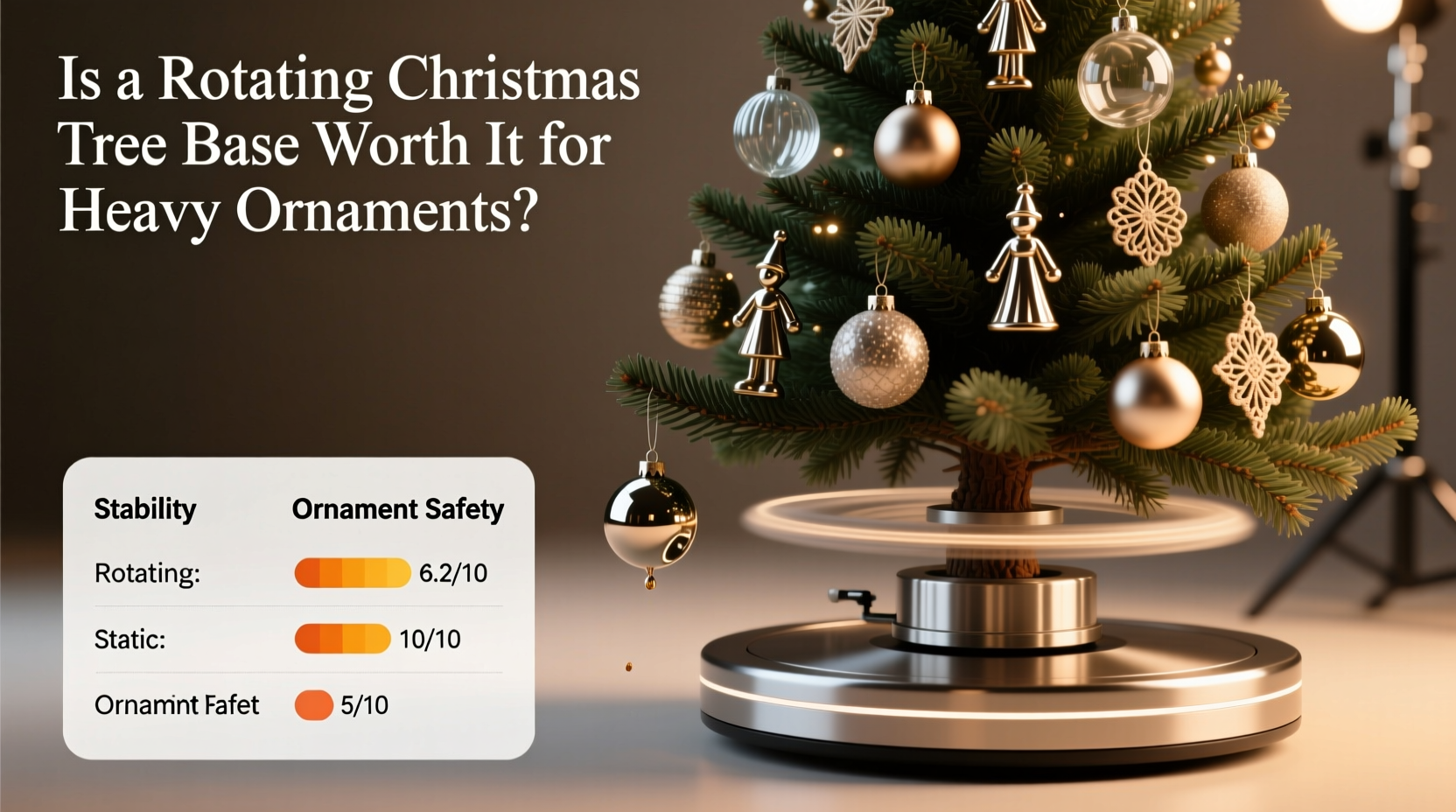
A rotating Christmas tree base functions like a turntable, typically powered by a small electric motor housed within a circular platform. Once the tree trunk is secured in the stand’s clamp mechanism, the entire structure—including water reservoir, tree, and decorations—can rotate slowly at a consistent speed. Most models offer rotation speeds between 30 and 60 seconds per full revolution, mimicking the gentle movement of a display pedestal.
The internal motor usually runs on standard household electricity via a low-voltage adapter. Some premium versions include remote controls, adjustable speed settings, or auto-shutoff timers. The rotation mechanism reduces the need to walk around the tree during decorating, making it easier to achieve balanced ornament placement from a single vantage point.
However, not all rotating bases are created equal. Entry-level models may use plastic gears and lightweight materials that degrade under stress. High-end versions incorporate metal gears, reinforced housings, and load sensors to prevent over-torque. Understanding these differences is essential when considering use with heavy ornaments.
Weight Considerations: What \"Heavy\" Really Means
\"Heavy ornaments\" can vary widely in actual weight but generally refer to decorations exceeding 4–6 ounces each, especially when multiple are clustered on lower branches. Common examples include blown-glass spheres (some weighing up to 12 oz), ceramic figurines, metal stars, and heirloom pieces wrapped in thick wire or fabric.
A fully decorated 7-foot artificial tree can easily weigh 50–70 pounds without a stand. Add 10–15 heavy ornaments, and the total decorative load may increase by another 5–10 pounds. When combined with a filled water reservoir (typically 1–2 gallons, adding 8–16 lbs) and the metal components of a sturdy stand, the total rotating mass can exceed 90 pounds.
Many rotating bases advertise capacities of 50–75 pounds. Exceeding these limits risks motor burnout, gear stripping, or uneven rotation that strains branch connections. Worse, an overloaded base may become unstable, increasing the risk of tipping—especially on slippery floors.
“Motor longevity in rotating stands drops sharply once you surpass 80% of the rated capacity, particularly with uneven ornament distribution.” — Daniel Meeks, Consumer Product Engineer specializing in seasonal electronics
Pros and Cons of Using a Rotating Base with Heavy Ornaments
| Advantages | Disadvantages |
|---|---|
| Easier Decorating: Rotate instead of walking around; ideal for limited mobility. | Overload Risk: Exceeding weight limits damages motors and voids warranties. |
| Balanced Display: Helps identify gaps and create even ornament distribution. | Uneven Weight Distribution: Heavy ornaments on one side cause wobbling or stalling. |
| Showcase Effect: Slow rotation highlights craftsmanship, great for display trees. | Noisier Operation: Strain from weight increases motor hum or grinding sounds. |
| Time-Saving: Reduces physical effort during setup and takedown. | Limited Durability: Plastic components degrade faster under sustained load. |
| Safety for Kids/Pets: Keeps hands off fragile ornaments by minimizing access. | Floor Damage: Heavy rotating units may scratch hardwood or dent carpet over time. |
Real-World Example: The Johnson Family’s Experience
The Johnsons in Minneapolis have a cherished tradition: decorating their 8-foot pre-lit artificial tree with over 40 family-made ornaments, many crafted from kiln-fired clay and antique brass. Last year, they invested in a mid-range rotating base advertised for trees up to 7.5 feet and 65 pounds. Confident in the specs, they assembled the tree, filled the reservoir, and began hanging ornaments.
By the third night, the rotation slowed dramatically. On day five, the motor stopped entirely with a faint burning smell. Investigation revealed that the total loaded weight was 78 pounds—13 over the limit—and the heaviest ornaments were clustered on the south-facing side, creating torque imbalance.
They contacted customer support, who confirmed the warranty did not cover overload damage. Forced to complete the season with a non-rotating base, they learned a critical lesson: advertised ratings often exclude real-world variables like water weight and ornament density.
This case underscores a common gap between marketing claims and practical performance. While rotating bases can enhance the holiday experience, they require realistic load planning.
Choosing the Right Rotating Base for Heavy Decorations
Not all rotating bases are suitable for heavy ornamentation. To ensure reliability, focus on three key features:
- Weight Capacity Margin: Choose a model rated for at least 20% more than your estimated total weight (tree + water + ornaments + stand).
- Metal Gear Mechanism: Avoid plastic gears. Metal gears withstand torque better and last longer under continuous use.
- Stabilization Design: Look for wide footprints, non-slip pads, or floor anchors that reduce wobble during rotation.
Premium brands like Holiday Living, Fraser Hill Farm, and Evergreen Supply offer industrial-grade rotating stands capable of handling 100+ pound loads. These often come with dual motors, thermal protection, and reinforced platforms. While costing $120–$200 (compared to $40–$80 for basic models), they provide peace of mind for collectors and large-tree owners.
Step-by-Step Guide: Preparing Your Tree for a Rotating Base
Follow this sequence to safely set up a heavily decorated tree on a rotating base:
- Calculate Total Weight: Weigh your tree (dry), estimate water weight (~8.3 lbs/gal), and add known ornament weights. Include the stand’s weight if separate.
- Select a High-Capacity Base: Purchase a model with at least 20% higher rating than your total calculated weight.
- Assemble on a Level Surface: Use a hard floor (not thick carpet). Check levelness with a bubble tool; adjust feet if necessary.
- Secure the Trunk: Insert the tree trunk into the stand’s clamp. Tighten evenly to avoid tilting.
- Add Water First: Fill the reservoir before decorating to account for full operational weight.
- Decorate Strategically: Start with lights, then lighter ornaments. Alternate heavy pieces around the circumference.
- Test Rotation Early: Spin the tree after every few ornaments to detect resistance or wobbling.
- Final Inspection: Ensure no branches drag on the ground and cords are clear of moving parts.
This method minimizes stress on the motor and ensures safe, smooth operation throughout the season.
Alternatives to Rotating Bases for Heavy Trees
If a rotating base proves impractical due to weight or cost, consider these alternatives:
- Manual Turntable Platform: Place a non-motorized lazy Susan (rated for 100+ lbs) beneath a standard tree stand. Rotate by hand as needed.
- Decorating Stool or Swivel Seat: Sit on a rotating office chair or low stool to view the tree from all angles without moving.
- Strategic Lighting: Use spotlights or LED strips to highlight different sides of the tree at various times.
- Zone-Based Decorating: Divide the tree into quadrants and decorate one section per day to ensure balance.
These options offer similar visibility benefits without mechanical complexity or weight limitations.
Frequently Asked Questions
Can I use a rotating base with a real tree and heavy ornaments?
Yes, but only if the total weight—including water—is within the base’s limit. Real trees absorb water, so weight increases over time. Monitor daily and avoid overloading early in the season.
Do rotating bases work well on carpet?
Thin carpet is usually fine, but thick padding can destabilize the unit. Use a rigid plywood board (24\"x24\") under the base to distribute weight and prevent sinking.
How long do rotating bases typically last with heavy use?
Cheap models may fail within 1–2 seasons under heavy loads. High-quality units with metal gears can last 5–10 years with proper care and adherence to weight limits.
Checklist: Is a Rotating Base Right for You?
Answer these questions before purchasing:
- ✅ Is my total tree setup (including ornaments) under 80% of the base’s max rating?
- ✅ Does the base use metal gears and a reinforced housing?
- ✅ Am I willing to distribute heavy ornaments evenly?
- ✅ Do I have a hard, level floor surface available?
- ✅ Will the convenience justify the cost compared to manual alternatives?
If most answers are “yes,” a high-capacity rotating base can be a worthwhile investment.
Final Verdict: Worth It—With Conditions
A rotating Christmas tree base can be worth it for heavy ornaments—but only if you select the right model and manage expectations. For families with extensive ornament collections, mobility challenges, or a passion for symmetrical displays, the convenience and visual appeal are undeniable.
However, cutting corners on quality or ignoring weight limits leads to frustration and potential hazards. Invest in a commercial-grade base if your tree consistently exceeds 70 pounds when fully decorated. Pair it with disciplined ornament placement and regular maintenance checks.
Ultimately, the holiday experience should be joyful, not stressful. A well-chosen rotating base can enhance tradition, reduce physical strain, and showcase your family’s memories in motion—safely and smoothly.




 浙公网安备
33010002000092号
浙公网安备
33010002000092号 浙B2-20120091-4
Comments
No comments yet. Why don't you start the discussion?