
When it comes to illuminating your backyard, patio, or garden for evening gatherings, holiday decor, or year-round ambiance, the choice between traditional outdoor string lights and modern rotating light projectors has become a common dilemma. One offers warm, physical illumination; the other delivers dynamic, colorful patterns with minimal effort. But which option truly provides better value, ease, and aesthetic appeal?
This article breaks down both options in depth—examining installation, maintenance, visual impact, versatility, and long-term cost—to help you determine whether a rotating light projector is genuinely worth choosing over classic string lights.
Understanding the Options: Projector vs. Strings
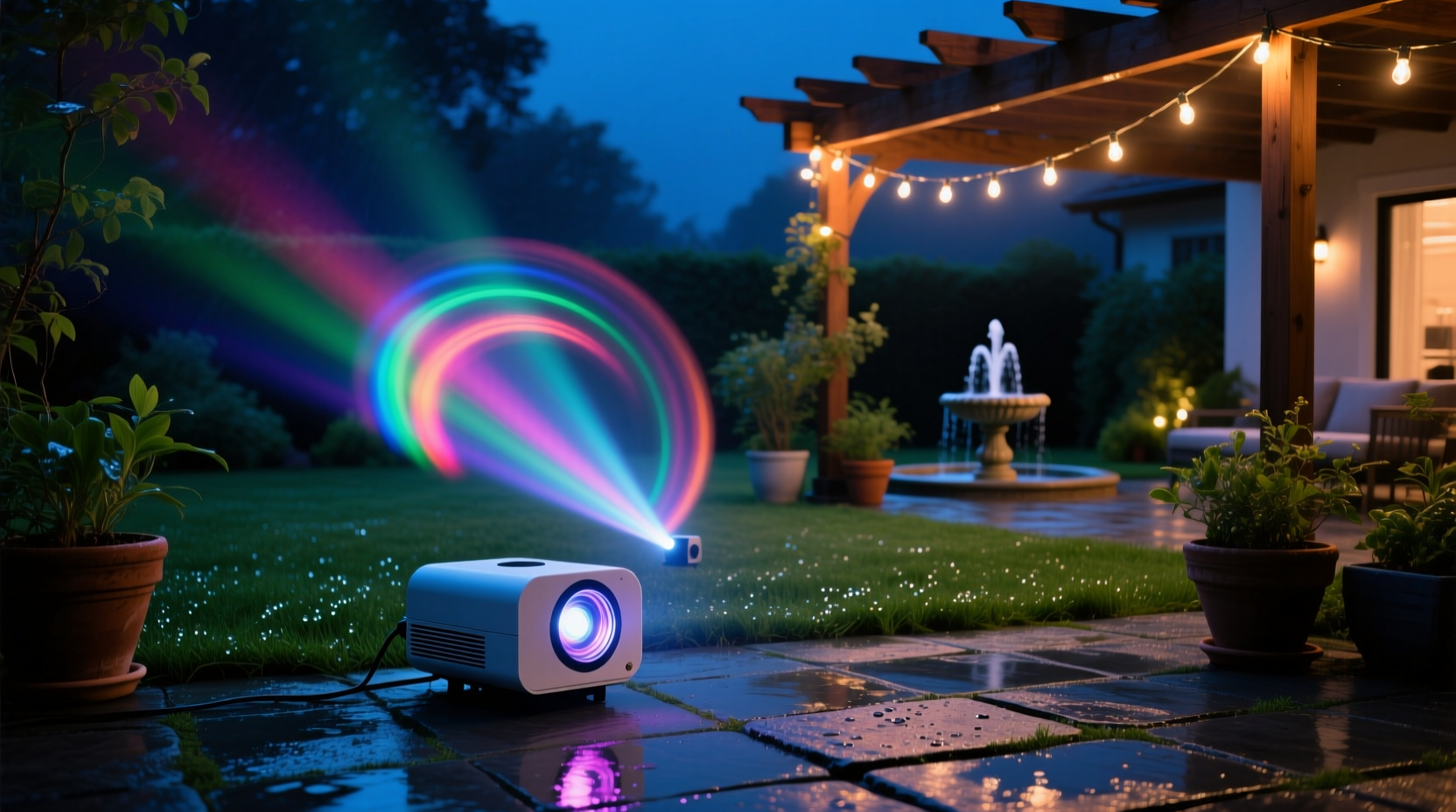
Before comparing, it’s important to understand what each lighting solution entails.
Outdoor String Lights: These are physical bulbs connected by a cord, typically hung across patios, fences, pergolas, or trees. They come in various styles—fairy lights, globe bulbs, Edison-style filaments—and usually require hooks, clips, or extension cords for installation. Most operate on low-voltage electricity or solar power.
Rotating Light Projectors: These compact devices use LED technology to cast moving light patterns (like stars, snowflakes, or swirling colors) onto surfaces such as walls, ceilings, lawns, or trees. With a simple plug-in or battery source, they offer instant coverage without any wiring or mounting beyond placement on a flat surface or stake.
The fundamental difference lies in form versus function: string lights are permanent fixtures that shape a space, while projectors are temporary effects that transform it.
Installation and Setup: Effort vs. Ease
One of the most compelling arguments in favor of rotating light projectors is their simplicity of setup.
String lights often require significant time and planning. You need to measure distances, secure mounting points, hide cords, ensure weatherproof connections, and test functionality after installation. For multi-level homes or large yards, this can take hours—or even days if professional help is needed. Mistakes in spacing or alignment can result in uneven lighting or visible gaps.
In contrast, a rotating light projector takes minutes to deploy. Most models include stakes for lawn insertion or base stands for tabletop use. Plug it in, aim it toward the desired surface, and activate. No drilling, no tangled wires, no climbing ladders.
However, ease comes with limitations. Projected light relies heavily on surface texture and color. A white stucco wall reflects well; a dark brick facade absorbs much of the glow. Shadows from trees or structures can fragment the pattern, reducing uniformity.
String lights, while harder to install, deliver consistent brightness regardless of surface conditions. Their three-dimensional presence adds depth and warmth that projections can't replicate.
Visual Impact and Ambiance Quality
The atmosphere created by each lighting type varies dramatically.
String lights produce a cozy, inviting glow ideal for dining areas, lounges, or romantic settings. The soft twinkle of individual bulbs creates intimacy and comfort. Many people associate them with cafes, weddings, or summer nights—emotional triggers that enhance perceived ambiance.
Projectors, on the other hand, generate spectacle. Rotating galaxies, falling snow, or shimmering stars create a “wow” factor perfect for holidays like Christmas or Halloween. They’re excellent for drawing attention, entertaining kids, or adding drama to events. But they lack subtlety. Unlike steady string lights, projector effects can feel overwhelming or artificial when used daily.
A key consideration is longevity of appeal. While guests may be amazed the first time they see a starry projection, repeated exposure often leads to diminished interest. String lights maintain their charm over time because they blend into the environment rather than dominate it.
“Lighting should support the experience, not distract from it. Projectors are great for moments—but string lights build moods.” — Daniel Reyes, Landscape Lighting Designer
Cost and Long-Term Value Comparison
Initial price tags might suggest projectors are cheaper, but long-term value tells a more nuanced story.
| Feature | String Lights (Average) | Rotating Projector (Average) |
|---|---|---|
| Upfront Cost | $30–$150 per 25-ft strand | $25–$60 per unit |
| Installation Labor | Moderate to high (DIY or pro) | Negligible |
| Lifespan | 3–7 years (with care) | 1–3 years (moving parts) |
| Energy Use | 5–15 watts per strand | 5–10 watts per unit |
| Maintenance Needs | Seasonal checks, bulb replacement | Cleaning lens, motor wear |
| Reusability | Year-round, multiple seasons | Often seasonal/theme-specific |
While a single projector costs less upfront, achieving full yard coverage may require multiple units—especially for larger spaces. In contrast, one or two well-placed strands of string lights can illuminate an entire seating area effectively.
Additionally, projectors contain mechanical components (motors, rotating lenses) that degrade faster than static LEDs. After two or three seasons, performance may decline due to misalignment, flickering, or complete failure. String lights, especially commercial-grade ones, are built to last with minimal degradation.
Practical Scenarios: When Each Option Shines
Neither option is universally superior—the best choice depends on your specific needs.
Choose a Rotating Light Projector If:
- You host occasional themed events (e.g., holiday parties, birthdays).
- You want quick, temporary decoration without permanent modifications.
- Your space lacks mounting points (apartment balconies, rental properties).
- You enjoy changing themes frequently (snow in winter, stars in summer).
Stick With String Lights If:
- You use outdoor lighting regularly throughout the year.
- You prioritize ambiance and usability over novelty.
- You have a fixed layout (patio, deck, pergola) where lights can stay installed.
- You value durability and long-term return on investment.
Mini Case Study: Sarah’s Backyard Upgrade
Sarah, a homeowner in Portland, wanted to upgrade her small backyard for weekend entertaining. She initially bought a rotating projector for $45, excited by online videos showing magical star fields. On launch night, friends were impressed—but within a week, she noticed the effect felt gimmicky. The lights didn’t help her read menus or see food on the table. Worse, rain caused fogging inside the lens.
The following spring, she invested $90 in two strands of commercial-grade string lights, installing them along her fence and overhead beams. Though setup took half a day, the result was immediately functional and beautiful. Now, she leaves them up year-round, using a timer for daily operation. “They make the space feel like an extension of my home,” she says. “The projector was fun for a weekend. The strings changed how I use my yard.”
Step-by-Step Decision Guide
Follow this process to determine which lighting solution fits your situation best:
- Assess Your Usage Frequency: Will you light your space weekly, seasonally, or just for special occasions?
- Measure Your Area: Note dimensions and identify potential mounting points or projection surfaces.
- Determine Your Goal: Are you aiming for mood lighting, decorative flair, or event-specific effects?
- Budget for Longevity: Consider not just purchase price, but expected lifespan and replacement frequency.
- Test Before Committing: Rent or borrow a projector to try it out. Buy one strand of lights first to gauge satisfaction.
- Plan for Control: Decide if you’ll use timers, smart switches, or manual operation for convenience.
This methodical approach prevents impulse buys and ensures alignment with lifestyle needs.
Hybrid Approach: Can You Use Both?
Many homeowners find the best results come from combining both technologies.
For example, use string lights as your primary ambient source—providing reliable, warm illumination for conversation and dining. Then, add a rotating projector as an accent during holidays or parties to elevate the visual experience.
This hybrid model maximizes strengths: strings offer permanence and usability; projectors bring excitement and flexibility. Just be cautious not to over-light the space, which can create visual clutter.
“The most effective outdoor lighting layers different types. Think of projectors as seasoning—they enhance, but shouldn’t be the main ingredient.” — Lena Torres, Outdoor Living Consultant
Frequently Asked Questions
Can a light projector replace string lights entirely?
Not effectively for functional lighting. Projectors are poor at illuminating surfaces for tasks like reading or eating. They work best as supplemental or decorative features, not primary light sources.
Are rotating projectors safe to leave outside?
Most are rated for outdoor use (check IP ratings), but prolonged exposure to moisture and temperature swings reduces lifespan. For best results, bring them indoors during storms or off-seasons.
Do string lights increase home value?
Well-installed, high-quality outdoor lighting—including string lights—can enhance curb appeal and perceived property value, especially in homes marketed for lifestyle living. Permanent low-voltage systems score higher, but tasteful string installations also contribute positively.
Checklist: Choosing the Right Option for You
- ☐ Define your primary use case (daily ambiance vs. seasonal display)
- ☐ Measure your outdoor space and note available power sources
- ☐ Evaluate existing structures for hanging or projecting
- ☐ Set a realistic budget including installation and maintenance
- ☐ Research product reviews focusing on durability and brightness
- ☐ Consider storage needs when not in use
- ☐ Decide if smart controls (app/timer) are important to you
Final Verdict: Is It Worth It?
A rotating light projector can be worth it—if your priorities align with its strengths. For renters, occasional decorators, or those seeking holiday magic with zero commitment, it’s an excellent shortcut. It delivers visual impact fast, requires no tools, and can be stored in a drawer when done.
But if you're looking to create a lasting, livable outdoor environment—one where lighting supports relaxation, conversation, and everyday enjoyment—string lights remain the superior investment. They age gracefully, integrate naturally into landscapes, and provide consistent utility year after year.
Ultimately, the question isn’t just about cost or convenience. It’s about how you want to experience your outdoor space. Do you want fleeting wonder or enduring warmth? Spectacle or sanctuary?
Take Action Today
Don’t let indecision keep your evenings in the dark. Start small: pick one area of your yard and test one lighting type. Take photos at different times, invite feedback from family, and observe how the light affects mood and usability. Whether you choose a dazzling projector or timeless string lights, the goal is the same—to make your outdoor space feel more alive, welcoming, and uniquely yours.




 浙公网安备
33010002000092号
浙公网安备
33010002000092号 浙B2-20120091-4
Comments
No comments yet. Why don't you start the discussion?