
The holiday season brings with it a deep cultural and emotional connection to scent. The aroma of pine, cinnamon, vanilla, and baked spices doesn’t just fill the air—it evokes memories, signals celebration, and enhances the atmosphere of warmth and togetherness. In recent years, one product has gained popularity as a festive fusion of decor and fragrance: the scent diffuser tree ornament. Marketed as both decorative and functional, these ornaments promise to deliver holiday aromas directly from your Christmas tree. But do they actually work? Are they more than just charming novelties, or can they genuinely enhance your home’s olfactory experience?
This article examines the effectiveness of scent diffuser tree ornaments in spreading holiday fragrances. We’ll explore how they function, evaluate their performance compared to other scenting methods, and provide practical guidance on choosing and using them for maximum impact.
How Scent Diffuser Tree Ornaments Work
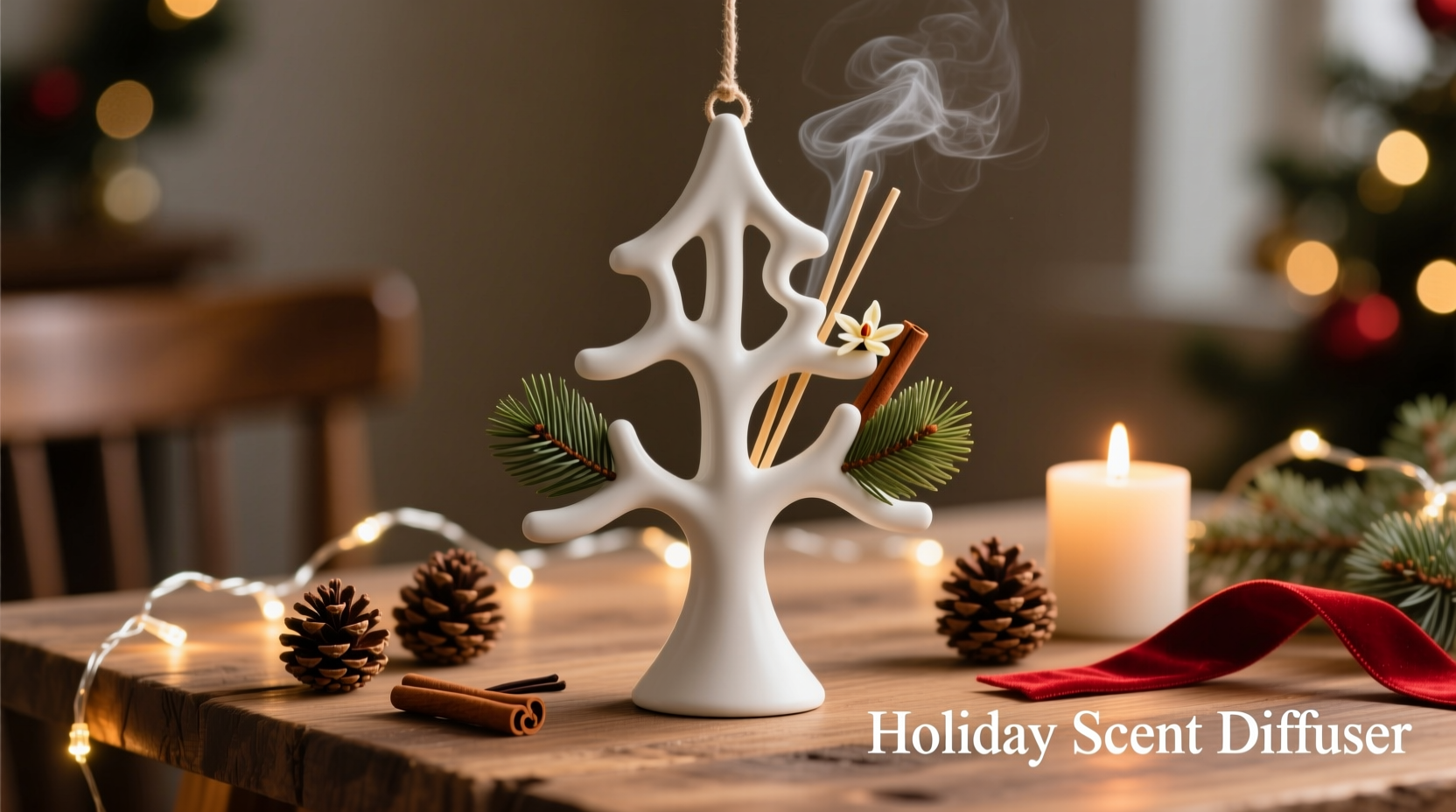
Scent diffuser tree ornaments are typically small, hollow decorations—often shaped like snowmen, stars, pinecones, or classic baubles—with an internal compartment designed to hold essential oils, fragrance oils, or scented gels. They operate on the principle of passive diffusion, meaning they release fragrance gradually into the surrounding air without heat, fans, or electricity.
Most models use absorbent materials such as felt pads, wooden caps, or porous ceramic inserts that soak up liquid fragrance. As the oil evaporates naturally over time, the scent disperses into the nearby environment. Some versions include vented metal or plastic shells to regulate airflow and prolong release.
Because these ornaments rely on natural evaporation, their performance is influenced by several environmental factors:
- Room temperature: Warmer environments accelerate evaporation, increasing scent intensity but shortening lifespan.
- Air circulation: Drafts or proximity to HVAC vents can carry fragrance further but may dilute concentration near the source.
- Humidity: Higher humidity can slow evaporation, reducing initial strength but potentially extending longevity.
- Ornament placement: Being nestled within dense branches limits airflow, while hanging near open spaces improves dispersion.
Effectiveness Compared to Other Fragrance Methods
To assess whether scent diffuser ornaments are truly effective, it's important to compare them against established alternatives. Each method has distinct advantages and limitations depending on room size, desired intensity, and duration.
| Method | Fragrance Strength | Coverage Area | Lifespan | Safety Notes |
|---|---|---|---|---|
| Scent Diffuser Tree Ornament | Mild to moderate (localized) | Immediate vicinity (~5–8 ft radius) | 1–3 weeks | No heat or flame; safe around children/pets if non-toxic oils used |
| Candle (soy/wax blend) | Moderate to strong | Medium room (100–200 sq ft) | 20–40 hours burn time | Fire hazard; not ideal unattended or near flammable decor |
| Electric Reed Diffuser | Moderate (consistent) | Small to medium room | 4–6 weeks | Requires outlet; some emit low hum |
| Potpourri Simmer Pot | Strong (dynamic) | Entire kitchen/living area | Hours per session | Requires stove supervision; risk of boiling dry |
| Plug-in Air Freshener | Variable (adjustable settings) | Room-specific | 1–2 months per refill | May contain synthetic chemicals; sensitive individuals may react |
The data shows that scent diffuser ornaments occupy a niche: they offer mild, localized fragrance with high aesthetic value and excellent safety. However, they cannot match the coverage or intensity of candles, simmer pots, or electric diffusers. Their primary advantage lies in integration—they don’t require additional space, cords, or maintenance beyond occasional re-oiling.
“While not the most powerful option, scent diffuser ornaments succeed where others fail: blending seamlessly into holiday decor while adding subtle sensory charm.” — Dr. Lydia Tran, Environmental Aromatics Researcher, Institute of Home Wellbeing
Maximizing Performance: A Step-by-Step Guide
If you're investing in scent diffuser ornaments, optimizing their use ensures you get the most from both scent and sentiment. Follow this timeline-based approach to enhance fragrance delivery throughout the season.
- Week 1: Select High-Quality Fragrance Oils
Choose concentrated, holiday-themed essential oil blends (e.g., cinnamon bark, orange peel, balsam fir). Avoid diluted or artificially scented solutions, which often have weak throw and shorter longevity. - Day of Setup: Prime the Absorbent Material
Before hanging, apply 6–8 drops of oil directly onto the internal pad or wood insert. Allow 10–15 minutes for full absorption to prevent staining tree branches. - Days 1–7: Monitor Initial Scent Levels
Check daily for noticeable aroma. If faint, add 1–2 drops every few days. Avoid oversaturating, which can shorten material life and create oily residue. - Week 2: Rotate or Refresh Placement
Move ornaments slightly outward on the tree to expose them to better airflow. Consider swapping positions with non-scented ornaments to refresh perception of the fragrance. - Week 3+: Recharge or Replace
By the third week, most passive systems will diminish significantly. Reapply oil or replace the insert if modular. Alternatively, retire the ornament and introduce a new scent theme (e.g., switch from evergreen to gingerbread).
Real-World Example: The Nelson Family Experiment
The Nelsons, a family of four in Portland, Oregon, decided to test the effectiveness of scent diffuser ornaments during the 2023 holiday season. They purchased three premium ceramic star-shaped diffusers labeled “Winter Forest,” “Spiced Cranberry,” and “Vanilla Noel,” each with replaceable felt cores.
They placed one ornament near the top of their 7-foot Douglas fir, one mid-level on the front side, and one toward the back lower branch. Over two weeks, they recorded observations:
- Day 1: Strong scent detected within 3 feet of each ornament. The mid-level one was most noticeable due to open exposure.
- Day 5: Combined effect created a light ambient aroma in the living room, especially when seated nearby.
- Day 10: Back-lower ornament contributed almost nothing—likely blocked by dense foliage. Mid-level still perceptible.
- Day 14: Only minimal trace remained even after reapplication. Switched to a simmer pot for stronger effect during gatherings.
Their conclusion? “The ornaments added a lovely personal touch, especially when decorating or standing close to the tree. But for filling the house with holiday spirit, we needed something stronger.”
Their experience reflects a broader truth: diffuser ornaments excel in intimate moments—not whole-home ambiance.
Pros and Cons Summary
Understanding the trade-offs helps determine whether these products suit your needs.
Advantages
- Decorative dual-purpose: Eliminates need for separate diffusers; enhances visual appeal.
- Safe and flame-free: Ideal for homes with kids, pets, or real trees where open flames are discouraged.
- Low maintenance: No electricity, no refilling water tanks, no monitoring.
- Emotional resonance: Associating scent with a specific ornament can deepen nostalgic connections year after year.
Limitations
- Limited range: Effective only in close proximity; won’t scent adjacent rooms.
- Short duration: Most last under three weeks without aggressive re-oiling.
- Inconsistent output: Dependent on tree density, room conditions, and oil quality.
- Potential mess: Low-quality units may leak, damaging ornaments or tree branches.
Choosing the Right Product: A Buyer’s Checklist
Not all scent diffuser ornaments are created equal. Use this checklist to select ones that deliver real value:
- ✅ Made from non-porous, easy-to-clean materials (ceramic, coated metal, food-safe resin)
- ✅ Features removable or replaceable wicking components
- ✅ Includes ventilation design (slits, perforations, or open lattice)
- ✅ Compatible with essential oils (avoid proprietary cartridges unless cost-effective)
- ✅ Leak-tested or includes absorbent backing to protect surfaces
- ✅ Offers refill instructions and estimated lifespan
- ✅ Uses non-toxic dyes and finishes (especially important if handled by children)
Steer clear of cheaply made plastic versions sold in bulk holiday packs—these often lack proper diffusion mechanics and degrade quickly when exposed to oils.
Frequently Asked Questions
Can I use regular essential oils in my diffuser ornament?
Yes, most high-quality diffuser ornaments are designed to work with standard essential or fragrance oils. Always verify compatibility with the manufacturer. Avoid thick carrier oils (like coconut or jojoba), which may clog wicks or evaporate too slowly.
How many ornaments do I need for a full-sized tree?
For noticeable effect, use 2–4 diffuser ornaments on a 6–7 foot tree. Place them strategically—at eye level and near seating areas—for optimal exposure. More than four may be excessive unless using very mild scents.
Do scent diffuser ornaments damage real Christmas trees?
Generally, no—but caution is advised. Never allow oil to drip directly onto needles or wood. Use ornaments with sealed reservoirs and check weekly for leaks. If using homemade versions (e.g., felt balls in mesh), ensure they’re securely fastened and not touching foliage.
Final Thoughts: Beauty Meets Function—With Limits
Scent diffuser tree ornaments are not a replacement for robust fragrance systems. They won’t transform your entire home into a spiced citrus haven the way a simmer pot or ultrasonic diffuser might. But judged on their own terms—as decorative pieces that add a whisper of seasonal scent—they are surprisingly effective.
Their true power lies in intimacy. When you lean in to adjust a gift tag, when children peer into the branches searching for their favorite decoration, when you pause to admire the lights—those are the moments when a gentle waft of evergreen or clove registers not just in the nose, but in memory.
Used thoughtfully—with quality oils, strategic placement, and realistic expectations—these ornaments contribute meaningfully to the sensory tapestry of the holidays. They represent a growing trend toward multi-sensory design: objects that delight not just the eyes, but the emotions through smell.
“The best holiday scents aren’t the loudest—they’re the ones tied to presence, attention, and ritual.” — Clara Mendez, Sensory Experience Designer
Make This Season Memorable—Start Today
If you’ve been curious about scent diffuser ornaments, now is the perfect time to try them. Pick one or two in your favorite holiday notes, place them where they’ll be seen and smelled, and observe how they influence your experience of the season. Pair them with other methods for layered effects, or let them stand alone as quiet ambassadors of cheer.
And if you discover a combination that works—say, a pinecone diffuser with balsam oil paired with a vanilla star—consider making it an annual tradition. That’s where scent becomes legacy.




 浙公网安备
33010002000092号
浙公网安备
33010002000092号 浙B2-20120091-4
Comments
No comments yet. Why don't you start the discussion?