
Smart mirrors have emerged as one of the most talked-about innovations in home technology. With sleek designs, embedded displays, voice assistants, and ambient lighting, they promise to transform even the most basic bathroom into a futuristic retreat. But when space is limited—like in a small bathroom—the question arises: are these high-tech mirrors genuinely useful, or are they simply overpriced gadgets with flashy features that don’t deliver lasting value?
The answer isn’t straightforward. While smart mirrors can offer tangible improvements in functionality and convenience, their suitability depends heavily on how you use your bathroom, your lifestyle needs, and your budget. In compact spaces, every square inch counts, so adding a device that consumes wall space must justify its presence with real utility—not just novelty.
What Exactly Is a Smart Mirror?
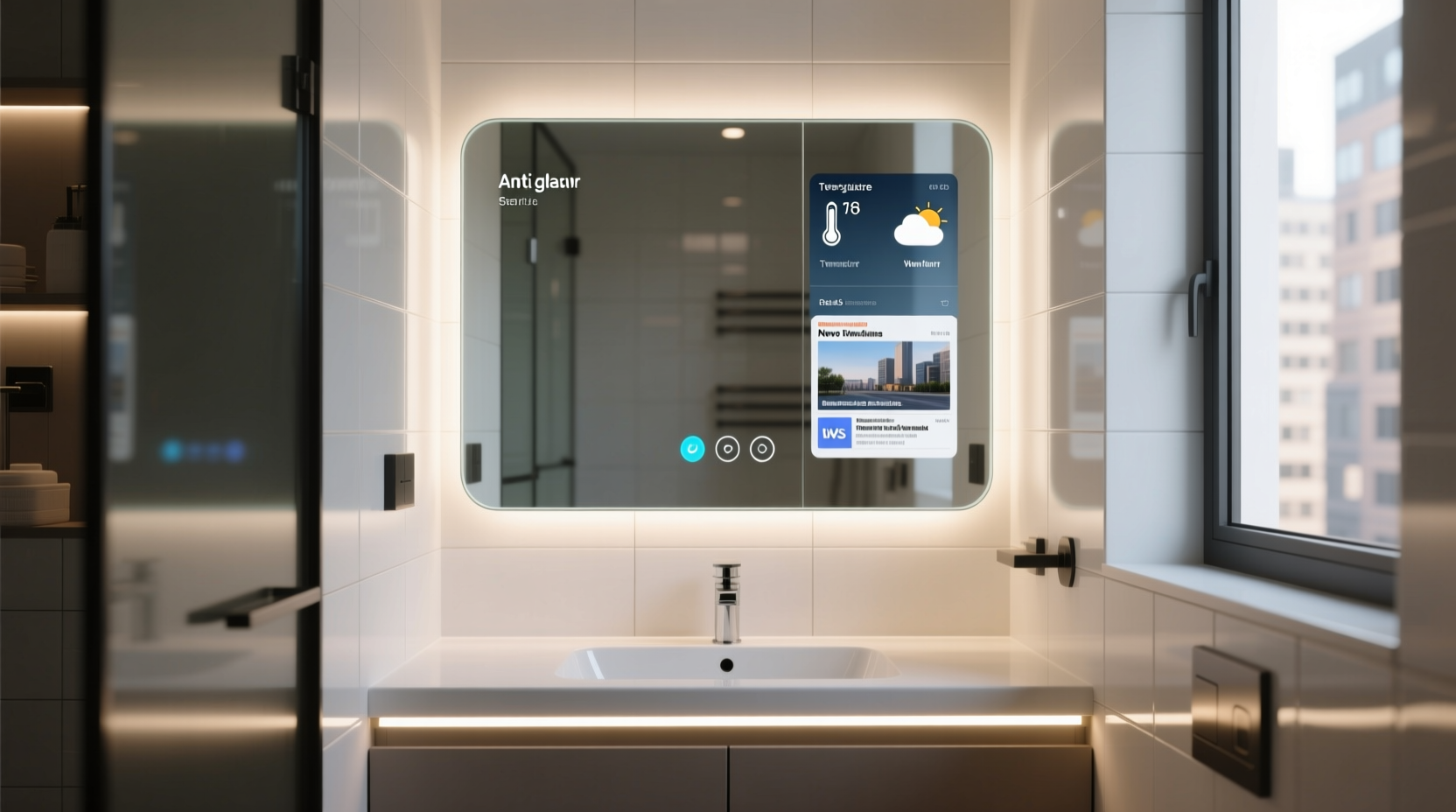
A smart mirror is more than a reflective surface. It’s an interactive display built into a mirror, typically featuring an LCD or OLED screen behind semi-transparent glass. When powered off, it looks like a regular mirror. When activated, it displays information such as weather, time, news, calendar events, and even streaming video. Many models integrate voice assistants (like Alexa or Google Assistant), Bluetooth speakers, anti-fog technology, touch controls, and LED lighting with adjustable color temperatures.
Unlike traditional mirrors, smart mirrors are connected devices. They often require Wi-Fi, power outlets, and sometimes companion apps for full functionality. Some advanced versions include facial recognition, health tracking (e.g., skin analysis), and integration with smart home ecosystems.
While initially seen as luxury items, smart mirrors are becoming more accessible. Entry-level models start around $300, while premium versions with larger screens and advanced features can exceed $1,500.
Benefits of a Smart Mirror in a Small Bathroom
In a confined bathroom, maximizing utility without clutter is essential. A well-chosen smart mirror can serve multiple functions in one compact footprint:
- Dual-purpose design: Combines a mirror with a digital display, eliminating the need for separate clocks, speakers, or tablets.
- Improved lighting control: Many smart mirrors offer tunable LED lighting, helping users achieve optimal brightness and color temperature for grooming tasks.
- Anti-fog capabilities: Built-in heating elements prevent condensation after showers, ensuring visibility without wiping the glass.
- Voice and app integration: Allows hands-free operation for setting alarms, checking the weather, or playing music—ideal when your hands are wet or occupied.
- Space-saving aesthetics: Eliminates the temptation to place phones or tablets on damp surfaces, reducing visual clutter and moisture damage risks.
Real-World Use Case: The Urban Apartment Bathroom
Consider Maria, a graphic designer living in a 500-square-foot downtown apartment. Her bathroom measures just 5 feet by 7 feet. She uses her mornings efficiently—skipping breakfast but relying on quick updates during her skincare routine. Before installing a smart mirror, she’d prop her phone on the sink edge to check emails and weather, risking water exposure and creating clutter.
After installing a 24-inch smart mirror with anti-fog and voice assistant support, her routine changed. She now says, “Alexa, good morning,” and gets a summary of her day while applying moisturizer. The mirror’s warm lighting mimics natural daylight, improving her makeup application. Most importantly, she no longer worries about her phone slipping into the sink.
Maria found the mirror paid for itself in reduced stress and improved efficiency—even in a tiny space.
“Smart mirrors aren’t just about tech—they’re about optimizing micro-moments in daily routines. In small bathrooms, where every action is condensed, integrated tools make a measurable difference.” — David Lin, Smart Home Integration Consultant
Potential Drawbacks and Limitations
Despite their appeal, smart mirrors come with trade-offs—especially in compact environments:
- High upfront cost: Ranges from moderate to steep, with limited resale value.
- Installation complexity: Requires hardwiring or nearby power access; not all renters can install them.
- Screen visibility issues: Brightness may be insufficient in poorly lit bathrooms, or glare can interfere with reflection quality.
- Privacy concerns: Cameras and microphones raise questions about data security, particularly in private spaces.
- Overkill for minimalists: If you only need a mirror and basic lighting, the extra features may go unused.
In small bathrooms, oversized displays can dominate the wall, making the space feel cramped. Additionally, if the mirror lacks proper ventilation, internal electronics may overheat in steam-heavy environments, shortening lifespan.
Do’s and Don’ts of Smart Mirror Use in Compact Bathrooms
| Do | Don't |
|---|---|
| Choose a size proportional to your vanity (e.g., 20–24 inches wide) | Install a 30+ inch mirror in a 5x7 bathroom |
| Opt for models with IP-rated components for moisture resistance | Use non-water-resistant electronics near showers |
| Enable privacy modes when not using voice or camera features | Leave microphones always-on without reviewing data policies |
| Use customizable lighting for task-specific needs (shaving, makeup) | Rely solely on default settings without adjusting brightness |
| Integrate with existing smart home systems for seamless control | Install multiple standalone smart devices that compete for attention |
When a Smart Mirror Makes Sense (And When It Doesn’t)
The decision hinges on your usage patterns and spatial constraints. Here’s a step-by-step guide to help determine if a smart mirror is right for your small bathroom:
- Assess your daily routine: Do you check the weather, news, or messages while getting ready? If yes, a smart mirror adds functional value.
- Evaluate available space: Measure your wall above the sink. If less than 24 inches wide, consider only compact models or skip it altogether.
- Check electrical access: Most smart mirrors need a nearby outlet or professional wiring. Renters should confirm installation feasibility.
- Define your priorities: Rank needs: anti-fog? lighting? entertainment? voice control? Focus on models that excel in top-priority areas.
- Compare alternatives: Could a waterproof tablet mount or a smart speaker with a regular mirror meet your needs at lower cost?
- Test user reviews: Look for feedback on ease of use, durability, and real-world performance in small or humid environments.
- Budget realistically: Include potential installation fees and long-term energy use in your cost analysis.
Cost vs. Value Comparison
To put pricing in perspective, here's a breakdown of typical smart mirror costs versus alternative setups:
| Solution | Estimated Cost | Key Features | Space Efficiency |
|---|---|---|---|
| Mid-range smart mirror (24\") | $600 | Mirror + display + anti-fog + lighting + voice | ★★★★☆ |
| Basic mirror + smart speaker + LED light | $250 | Voice control + lighting + audio | ★★★☆☆ |
| Tablet wall mount + regular mirror | $400+ | Video, apps, calls—but visible device, no anti-fog | ★★☆☆☆ |
| Luxury smart mirror (30\"+, full HD) | $1,400 | Streaming, AI features, advanced integration | ★☆☆☆☆ |
As shown, a mid-tier smart mirror offers the best balance of function and space efficiency for small bathrooms. However, budget-conscious users can achieve similar outcomes with simpler, modular solutions.
Frequently Asked Questions
Can I install a smart mirror myself?
Some plug-and-play models can be mounted like a regular mirror if an outlet is nearby. However, hardwired units—especially those requiring low-voltage cabling—should be installed by a licensed electrician to ensure safety and compliance with bathroom electrical codes.
Do smart mirrors work during power outages?
No. Unlike regular mirrors, smart mirrors depend on electricity. During outages, they revert to passive reflection only if the glass remains clear. Some models retain basic mirror functionality, but displays, lighting, and anti-fog features will be inactive.
Are smart mirrors safe in humid environments?
Yes, but only if they’re designed for it. Look for models with sealed electronics, moisture-resistant coatings, and IP44 or higher ratings. Avoid units without explicit humidity protection, as prolonged exposure to steam can damage internal components.
Final Verdict: Utility vs. Gimmick
A smart mirror isn’t inherently wasteful or overly expensive—it depends on how it’s used. In a small bathroom, where multifunctionality and clean design matter most, a well-selected smart mirror can be a powerful tool. It consolidates several devices into one elegant fixture, enhances daily routines, and improves lighting and usability.
However, it becomes a gimmick when purchased solely for novelty. If you rarely use digital assistants, don’t care about weather updates, or already have a clutter-free routine, the investment may not pay off. Likewise, in extremely tight spaces, even a modest smart mirror can feel intrusive if not carefully sized and positioned.
The key is intentionality. Ask: Will this improve my morning efficiency? Reduce clutter? Enhance grooming accuracy? If the answer is consistently yes, then a smart mirror is more than just expensive tech—it’s a thoughtful upgrade.
Smart Mirror Decision Checklist
Before buying, run through this checklist:
- ✅ My bathroom has enough wall space above the sink
- ✅ I regularly use information (weather, time, calendar) while getting ready
- ✅ I struggle with mirror fogging after showers
- ✅ I want better, adjustable lighting for grooming
- ✅ I own other smart home devices and want integration
- ✅ I have access to a power source near the mirror location
- ✅ I’m willing to invest $400–$800 for long-term convenience
If you checked most of these, a smart mirror could be a worthwhile addition. If not, consider simpler, lower-cost alternatives that meet your core needs without the tech overhead.
Conclusion
A smart mirror in a small bathroom isn’t automatically a luxury indulgence—nor is it a guaranteed necessity. Its value lies in alignment with your lifestyle. For those seeking streamlined routines, enhanced functionality, and a modern aesthetic, it can be a transformative upgrade. For others, it may simply add complexity and cost without meaningful returns.
The smartest choice isn’t about having the latest tech—it’s about choosing what truly serves your space and habits. If a smart mirror simplifies your mornings, improves usability, and fits seamlessly into your compact bathroom, then it’s far more than expensive tech. It’s intelligent design in action.




 浙公网安备
33010002000092号
浙公网安备
33010002000092号 浙B2-20120091-4
Comments
No comments yet. Why don't you start the discussion?