
As remote work becomes more common and awareness of sedentary lifestyle risks grows, standing desks have surged in popularity. Many people adopt them with the hope of improving their posture, reducing back pain, and enhancing overall well-being. But does standing at your desk really lead to better posture over time? And if so, how should you use one to maximize long-term benefits?
The answer isn’t a simple yes or no. While standing desks can support healthier posture when used correctly, they are not a magic fix. Their effectiveness depends on setup, usage patterns, and individual habits. Misuse can even worsen postural problems. This article examines the science, real-world outcomes, and best practices to help you determine whether a standing desk is truly beneficial for your long-term posture.
The Posture Problem: Why Sitting All Day Is Harmful
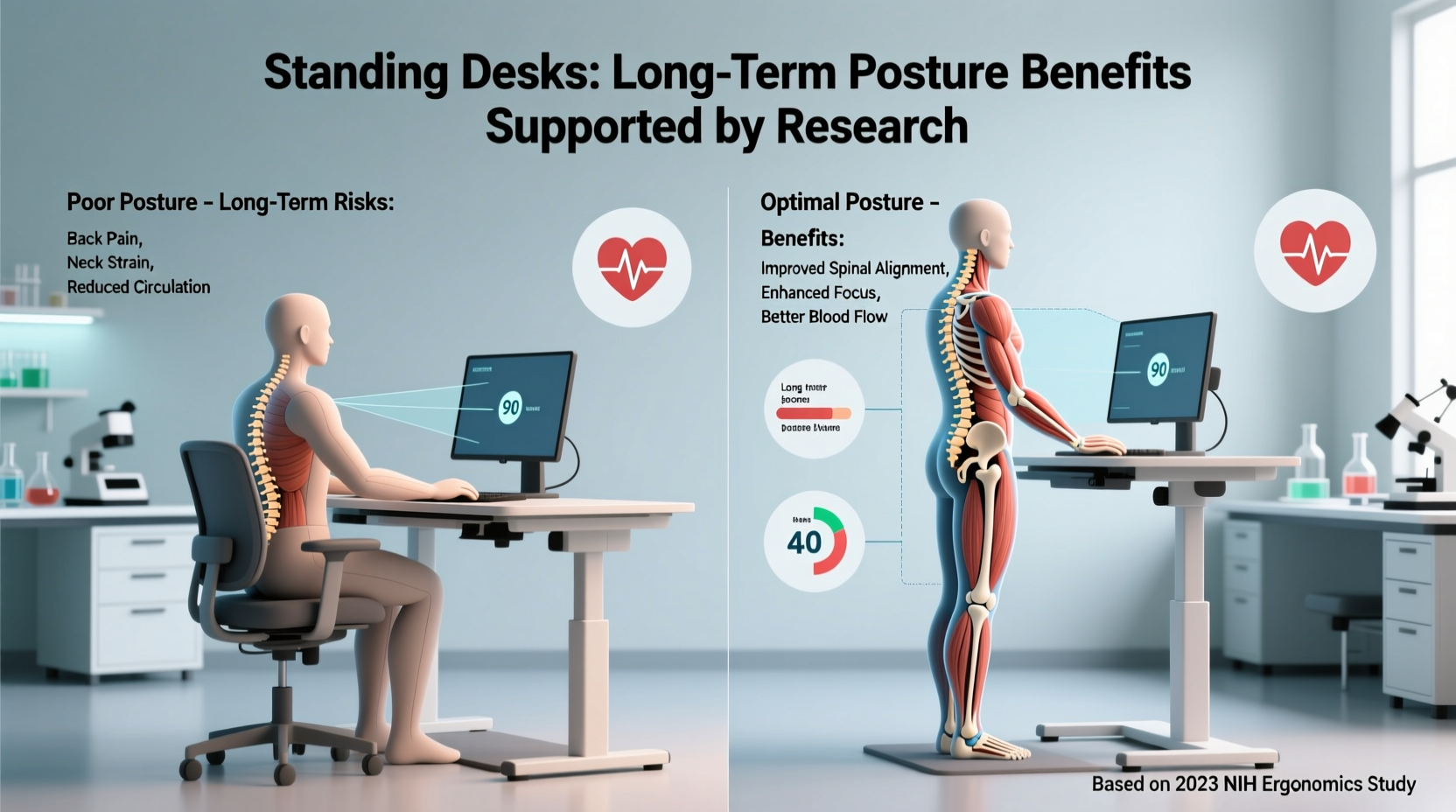
For decades, office workers have spent eight or more hours daily seated—often in chairs that offer poor lumbar support or are improperly adjusted. Prolonged sitting leads to muscle imbalances: hip flexors tighten, glutes weaken, and spinal alignment deteriorates. Over time, this contributes to slouching, forward head posture, and chronic lower back discomfort.
Dr. Sarah Chen, a physical therapist specializing in workplace ergonomics, explains:
“Sitting for extended periods without movement causes what we call ‘postural creep’—a gradual drift into poor alignment. The body adapts to the position it’s in most often, and unfortunately, that’s usually hunched over a keyboard.”
This adaptation increases strain on the spine and supporting musculature. Even ergonomic chairs only mitigate—not eliminate—the risks of prolonged immobility. That’s where standing desks enter the conversation: as a tool to break up sedentary time and encourage more natural spinal alignment.
How Standing Desks Influence Posture
Standing encourages a more neutral spine compared to slumped sitting. When upright, gravity helps align the head over the shoulders and hips, reducing forward head posture and rounded upper back (kyphosis). However, simply standing doesn’t guarantee good posture—it must be active and mindful standing.
A 2021 study published in Ergonomics found that participants who alternated between sitting and standing throughout the day showed measurable improvements in thoracic curvature and reduced reports of neck and shoulder tension after six weeks. But those who stood continuously for over two hours without breaks developed increased lower back stiffness and fatigue, negating some benefits.
The key lies in dynamic posture—frequent shifts between positions, controlled movements, and proper workstation alignment. A standing desk enables this flexibility but doesn’t enforce it.
Long-Term Benefits: What Research Shows
Several longitudinal studies have evaluated the impact of standing desks on posture and musculoskeletal health over months and years. Here's what consistent data reveals:
- Reduced Lower Back Pain: A meta-analysis in the Journal of Occupational Rehabilitation (2022) concluded that users of sit-stand desks reported a 32% average reduction in chronic lower back pain after six months.
- Improved Spinal Alignment: Regular standing breaks were associated with less forward head tilt and improved cervical-thoracic angle in desk workers.
- Greater Muscular Engagement: Standing activates core stabilizers, glutes, and leg muscles, which support upright posture over time.
- Behavioral Shifts: People using adjustable desks tend to move more throughout the day, fostering better body awareness.
However, these benefits are contingent on correct implementation. Standing too long, wearing improper footwear, or using a poorly configured desk can lead to new issues like plantar fasciitis, varicose veins, or increased lumbar strain.
The Role of Ergonomic Setup
No desk improves posture if it’s not set up correctly. A misaligned monitor or awkward arm height forces compensatory postures that undermine any benefit. Below is a comparison of optimal vs. suboptimal standing desk setups:
| Component | Optimal Setup | Poor Practice |
|---|---|---|
| Desk Height | Elbows at 90°, wrists straight when typing | Too high (shoulders hunched) or too low (forward lean) |
| Monitor Position | Top third at eye level, 20–30 inches away | Laptop on desk, forcing downward gaze |
| Foot Position | Flat on floor or anti-fatigue mat; weight balanced | Leaning on one leg or shifting constantly |
| Keyboard/Mouse | Close to body, within easy reach | Extended reach causing shoulder strain |
Proper configuration ensures that standing supports, rather than strains, your posture. It may take trial and error to find your ideal setup—don’t assume factory presets are correct for your body.
Real-World Example: One Year With a Standing Desk
James R., a software developer from Portland, switched to a standing desk after being diagnosed with mild disc degeneration at age 38. Initially skeptical, he committed to alternating 30 minutes sitting with 30 minutes standing each day, using a timer app to stay consistent.
After three months, he noticed less morning stiffness and fewer episodes of midday slumping. By month six, his physical therapist noted improved scapular retraction and reduced lumbar lordosis. After one year, James reported a 70% drop in back pain frequency and no longer needed regular massage therapy.
Crucially, James didn’t just stand—he incorporated micro-movements: calf raises, gentle stretches, and walking meetings. He also invested in an anti-fatigue mat and supportive shoes. His success wasn’t due to standing alone, but to integrating it into a holistic posture strategy.
“You can’t expect a desk to fix years of bad habits overnight. It’s a tool, not a cure.” — James R.
Common Mistakes That Undermine Posture Gains
Even with the best intentions, users often fall into traps that diminish or reverse potential benefits:
- Standing Too Long Without Breaks: Remaining static in one position—standing or sitting—is harmful. Muscles fatigue, circulation slows, and joint stress builds.
- Poor Footwear: Flats, socks, or unsupportive shoes increase foot and lower back strain when standing for extended periods.
- Ignoring Core Engagement: Leaning or locking knees shifts pressure to passive structures instead of active muscular support.
- Not Adjusting the Desk Properly: A desk that’s too high or too low forces unnatural wrist, neck, or shoulder angles.
- No Movement Integration: Standing still is not enough. Posture thrives on variation and activation.
Step-by-Step Guide to Maximizing Posture Benefits
To get lasting postural improvement from a standing desk, follow this structured approach:
- Assess Your Current Posture: Take side-profile photos and note areas of imbalance (e.g., forward head, rounded shoulders).
- Choose the Right Desk: Opt for an electric height-adjustable model that allows smooth transitions between sitting and standing.
- Set Up Ergonomically: Adjust desk height so elbows are at 90°, monitor at eye level, and keyboard close to the body.
- Start Gradually: Begin with 15–20 minutes of standing per hour. Increase by 5-minute increments weekly until reaching a 1:1 ratio.
- Incorporate Movement: Add light stretches, calf raises, or small balance shifts every 10–15 minutes while standing.
- Use Supportive Accessories: An anti-fatigue mat, supportive shoes, and possibly a footrest bar can enhance comfort and alignment.
- Track Progress Monthly: Reassess posture through photos or check-ins with a physiotherapist. Note changes in pain levels or energy.
- Combine With Other Habits: Pair desk use with daily core exercises, walking, and posture-awareness drills.
This methodical integration ensures sustainable change rather than temporary relief.
Frequently Asked Questions
Can a standing desk fix kyphosis or scoliosis?
While a standing desk won’t correct structural conditions like scoliosis, it can help manage symptoms and prevent worsening of postural kyphosis by promoting better alignment and reducing prolonged flexion. Always consult a healthcare provider for medical conditions.
How many hours a day should I stand at my desk?
Most experts recommend no more than 2–4 hours of total standing during an 8-hour workday, broken into 30- to 60-minute intervals. Continuous standing beyond this can lead to fatigue and new musculoskeletal issues.
Do standing desks reduce neck pain?
Yes, but only if the monitor is positioned correctly. Standing naturally encourages a more neutral head position, especially when combined with an elevated screen. Users who keep laptops at desk level often see little improvement.
Expert Insight: What Physical Therapists Recommend
Interviews with ergonomic specialists reveal a consensus: standing desks are valuable tools when integrated into a broader wellness plan.
“The biggest mistake I see is treating the standing desk as a ‘set it and forget it’ solution. True postural health comes from variability, awareness, and strength. The desk enables movement—it doesn’t replace it.” — Dr. Lena Park, DPT, Certified Ergonomic Assessment Specialist
Therapists emphasize that posture is dynamic. It’s not about holding a perfect position all day, but about training the body to transition smoothly between postures with control and minimal strain.
Checklist: Are You Using Your Standing Desk Correctly?
Before assuming your desk is helping your posture, review this checklist:
- ✅ Desk height allows elbows to bend at 90° when typing
- ✅ Monitor top is at or slightly below eye level
- ✅ Feet are flat, shoulder-width apart, weight evenly distributed
- ✅ You alternate between sitting and standing every 30–60 minutes
- ✅ You wear supportive footwear or use an anti-fatigue mat
- ✅ You engage your core lightly and avoid locking knees
- ✅ You incorporate small movements or stretches hourly
- ✅ You’ve noticed reduced discomfort or improved body awareness over time
If multiple items are unchecked, adjustments are needed to unlock long-term postural benefits.
Conclusion: A Tool, Not a Cure-All
A standing desk can contribute meaningfully to better posture—but only when used thoughtfully and consistently. Long-term results depend not on the desk itself, but on how you integrate it into your daily routine. The goal isn’t to stand all day; it’s to reduce sedentary time, increase movement variety, and train your body to maintain alignment across different positions.
Over months, these small changes compound. Muscles strengthen, joints stay mobile, and postural awareness grows. When combined with ergonomic principles and active habits, a standing desk becomes more than a trend—it becomes a cornerstone of sustainable physical health in the modern workspace.




 浙公网安备
33010002000092号
浙公网安备
33010002000092号 浙B2-20120091-4
Comments
No comments yet. Why don't you start the discussion?