
Remote work has reshaped how we think about productivity, comfort, and workspace design. As home offices become permanent fixtures in homes across the world, one piece of furniture has gained cult status: the standing desk. Marketed as a health-conscious upgrade from traditional seated setups, standing desks promise improved posture, reduced back pain, and increased energy. But with sleek designs and premium price tags, many wonder—do they deliver real value, or are they just stylish office decor?
The truth lies somewhere in between. For some remote workers, a standing desk is a transformative tool that enhances focus and physical well-being. For others, it’s an underused investment gathering dust in the corner. The answer depends on individual needs, work habits, and how thoughtfully the transition is managed.
The Hidden Cost of Sitting All Day
Decades of research have painted a troubling picture of prolonged sitting. Studies consistently link sedentary behavior to increased risks of cardiovascular disease, type 2 diabetes, obesity, and musculoskeletal disorders. A 2019 meta-analysis published in the Annals of Internal Medicine found that individuals who sat for more than eight hours daily with little physical activity faced mortality risks comparable to those associated with smoking and obesity.
For remote workers, the danger is amplified. Without the natural movement of commuting, walking to meetings, or visiting colleagues, many log 10–12 hours of near-constant sitting. This passive strain accumulates over time, often manifesting as chronic lower back pain, neck stiffness, or carpal tunnel symptoms.
“Sitting is the new smoking” may be a cliché, but it’s rooted in science. The human body isn’t designed for static postures lasting hours on end. Movement isn’t optional—it’s physiological necessity. — Dr. Lena Patel, Ergonomics Researcher at Stanford University
Standing desks emerged as a countermeasure. By allowing users to alternate between sitting and standing, they introduce micro-movements throughout the day, improve circulation, and reduce spinal compression. But do these benefits justify the investment?
Real Benefits vs. Marketing Hype
Standing desks aren't magic solutions. Their effectiveness hinges on proper use and integration into daily routines. When used correctly, however, several evidence-backed advantages emerge:
- Improved Posture and Spinal Health: Standing encourages a more neutral spine alignment, reducing slouching and forward head posture common during long seated sessions.
- Increased Calorie Expenditure: While not a substitute for exercise, standing burns approximately 0.15 more calories per minute than sitting. Over a full workday, this can add up to 50–100 extra calories burned.
- Enhanced Focus and Alertness: Many users report feeling more alert and less sluggish when standing, likely due to improved blood flow and reduced fatigue.
- Reduced Lower Back Pain: A 2014 study in the Journal of Physical Therapy Science showed that participants using sit-stand desks reported a 32% reduction in lower back discomfort after four weeks.
However, standing all day isn’t the answer either. Prolonged standing introduces its own risks: leg swelling, varicose veins, and foot or knee pain. The key is balance—dynamic movement throughout the day.
Standing Desks: Functional Tool or Office Aesthetic?
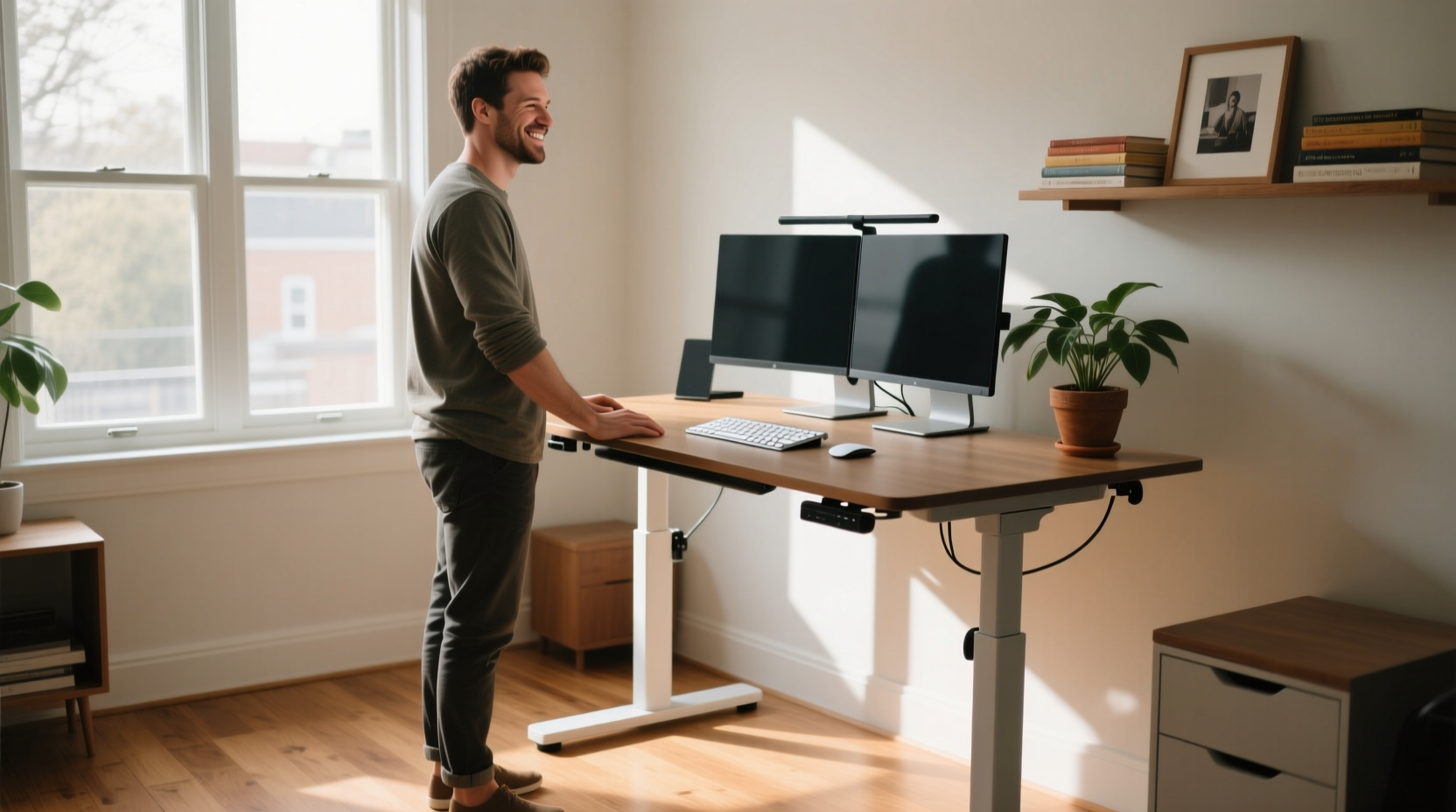
Walk through any co-working space or influencer’s Instagram office tour, and you’ll likely see a minimalist standing desk bathed in natural light. These setups look professional, modern, and intentional. But aesthetics don’t always align with functionality.
Many people buy standing desks expecting immediate transformation—only to revert to sitting within weeks. Why? Poor ergonomics, lack of guidance, or unrealistic expectations. A standing desk isn’t a plug-and-play wellness device. It requires behavioral change, proper setup, and consistent effort.
Conversely, when integrated thoughtfully, standing desks can elevate both performance and well-being. They serve as visual cues to move, promote better workstation organization, and support a culture of self-care in remote environments where boundaries between work and rest blur.
Cost-Benefit Analysis: Is It Worth the Investment?
Standing desks range from $200 for basic models to over $1,000 for advanced electric versions with memory presets and app integration. To assess whether it’s worth it, consider both tangible and intangible returns.
| Factor | Standing Desk Value | Risk of Being \"Just Decor\" |
|---|---|---|
| Health Impact | Reduced back pain, improved circulation, lower sedentary risk | None if unused; potential harm if used incorrectly (e.g., standing too long) |
| Productivity | Some report increased alertness and focus during standing intervals | No measurable gain if not actively used |
| Lifespan & Durability | High-quality models last 5–10 years with regular use | Same durability, but wasted if idle |
| Space Efficiency | Often larger footprint; may require reconfiguration | Can become clutter if not optimized |
| Resale Value | Moderate; popular in secondhand markets | Lower if outdated or poorly maintained |
The verdict? A standing desk is only as valuable as your commitment to using it correctly. If purchased solely for appearance, it risks becoming expensive furniture. But when embraced as part of a holistic approach to workplace wellness, it delivers measurable returns.
How to Maximize Your Standing Desk Investment
Buying a standing desk is the first step. Using it effectively is what matters most. Follow this step-by-step guide to ensure it becomes a functional asset—not forgotten decor.
- Start Slowly: Begin with 15–20 minutes of standing per hour. Sudden shifts can cause fatigue or discomfort.
- Optimize Ergonomics: Ensure your monitor is at eye level, elbows bent at 90 degrees, and wrists neutral. Use an anti-fatigue mat to reduce foot strain.
- Alternate Positions: Use timers or apps (like Stand Up! or Stretchly) to remind you to switch between sitting and standing every 30–60 minutes.
- Wear Supportive Footwear: Even at home, avoid standing barefoot or in slippers. Cushioned shoes or orthotics help distribute pressure.
- Listen to Your Body: Discomfort is a signal, not a challenge. Adjust height, duration, or posture as needed.
Mini Case Study: From Skeptic to Advocate
Sarah, a freelance copywriter based in Portland, bought a mid-range electric standing desk after six months of remote work left her with persistent lower back pain. Initially, she used it once a week—more out of guilt than habit. After reading about active sitting and dynamic workstations, she committed to a structured routine.
She started with 10-minute standing intervals every two hours, gradually increasing to 45 minutes per session. She added an anti-fatigue mat and adjusted her monitor height using a riser. Within three weeks, her morning stiffness decreased significantly. By week six, she was alternating every 30 minutes and noticed improved concentration during afternoon edits.
“I almost sold it after the first month,” Sarah admits. “But once I treated it like training for my body—not just a gadget—I saw real changes. Now I can’t imagine going back.”
Checklist: Is a Standing Desk Right for You?
Before purchasing, ask yourself these questions. Check off each item to determine if a standing desk aligns with your lifestyle.
- ✅ Do you experience back, neck, or shoulder pain from sitting?
- ✅ Are you willing to commit to changing your posture habits?
- ✅ Can you dedicate space for a potentially larger desk setup?
- ✅ Will you invest time in proper ergonomic configuration?
- ✅ Do you already incorporate movement breaks or stretches into your day?
- ✅ Are you open to starting slow and building consistency?
If you checked four or more, a standing desk could be a worthwhile addition. If fewer, consider alternatives like a desktop converter, under-desk treadmill, or scheduled walking meetings before committing.
Frequently Asked Questions
Can a standing desk help me lose weight?
Not directly. While standing burns slightly more calories than sitting, the difference is modest—about 50–100 extra calories per 8-hour day. It won’t replace diet or exercise, but it can complement an active lifestyle by reducing sedentary time.
Are standing desks bad for your knees or feet?
They can be—if used improperly. Standing for extended periods without support increases pressure on joints and soft tissues. Always use an anti-fatigue mat, wear supportive footwear, and avoid locking your knees. If you have pre-existing joint conditions, consult a physiotherapist before transitioning.
Do I need an expensive electric model?
Not necessarily. Manual crank desks are reliable and cost-effective. Electric models offer smoother transitions and memory presets, which enhance convenience—but aren’t essential. Prioritize stability, height range, and build quality over bells and whistles.
Conclusion: Function Over Form
A standing desk isn’t inherently worth it—or worthless. Its value is determined by how you use it. For remote workers committed to improving their physical health, boosting energy, and creating a dynamic workspace, it’s a powerful tool. For those seeking a trendy backdrop for Zoom calls without intent to change habits, it’s little more than office decor.
The future of remote work isn’t about mimicking corporate aesthetics. It’s about designing personalized, sustainable environments that support long-term well-being. A standing desk, when integrated mindfully, becomes part of that evolution—not because it looks good, but because it helps you feel and perform better.




 浙公网安备
33010002000092号
浙公网安备
33010002000092号 浙B2-20120091-4
Comments
No comments yet. Why don't you start the discussion?