
Maintaining healthy gums is essential to overall oral health, yet many people struggle with the daily task of flossing. Traditional string floss has been the gold standard for decades, but in recent years, water flossers have gained popularity as a convenient alternative. With claims of superior plaque removal and gentler gum care, it’s natural to wonder: Is a water flosser actually better than string floss? To answer this, we turn to dental professionals, clinical studies, and real-world usage patterns to provide a clear, evidence-based comparison.
Understanding Gum Health and the Role of Flossing
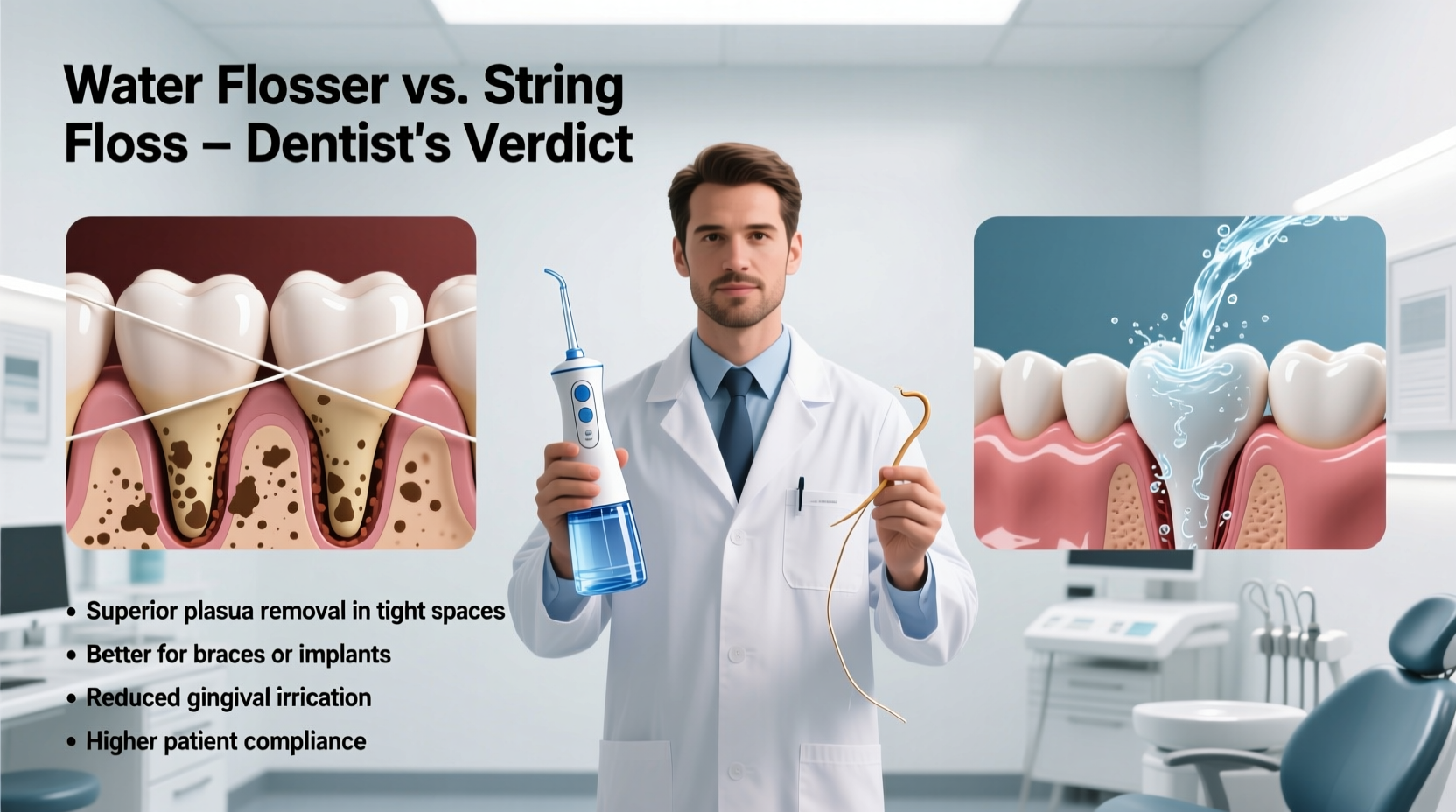
Gum disease, or periodontal disease, begins with plaque buildup along the gumline. If not removed, plaque hardens into tartar, leading to inflammation, bleeding, and eventually tooth loss. While brushing removes surface debris, it cannot reach between teeth or below the gumline—areas where bacteria thrive. This is where interdental cleaning becomes critical.
Flossing disrupts bacterial colonies in tight spaces, reducing the risk of gingivitis and periodontitis. The American Dental Association (ADA) recommends daily flossing as part of a complete oral hygiene routine. But how you floss may influence both consistency and outcomes.
How Water Flossers Work
A water flosser, also known as an oral irrigator, uses a stream of pulsating water to remove food particles, plaque, and bacteria from between teeth and below the gumline. Most models feature adjustable pressure settings and specialized tips for implants, braces, or sensitive gums.
The device directs a focused jet of water through a handheld nozzle, flushing out debris without requiring manual dexterity. This makes it especially appealing for individuals with limited hand mobility, orthodontic appliances, or dental restorations like bridges and implants.
Clinical research supports the efficacy of water flossers. A study published in the *Journal of Clinical Dentistry* found that users of water flossers experienced significantly greater reductions in gingival bleeding and plaque compared to those using string floss alone—especially when used consistently over four weeks.
String Floss: The Traditional Standard
String floss—whether waxed, unwaxed, or PTFE-based—relies on mechanical friction to dislodge plaque. When properly used, it can clean each interdental surface by sliding up and down against both sides of adjacent teeth.
However, proper technique is difficult for many. Common mistakes include snapping the floss into the gums (which causes injury), skipping back teeth, or using a single section of floss for all gaps (spreading bacteria). These issues reduce effectiveness and contribute to low compliance.
Despite these challenges, string floss remains widely recommended due to its precision, portability, and cost-effectiveness. It requires no electricity, fits in a travel bag, and costs pennies per use.
“Flossing isn’t about the tool—it’s about what you do with it. Both water flossers and string floss can be effective, but only if used correctly and consistently.” — Dr. Lisa Park, Board-Certified Periodontist
Comparative Analysis: Water Flosser vs. String Floss
To evaluate which method offers better gum health outcomes, consider the following factors based on clinical data and patient experiences.
| Factor | Water Flosser | String Floss |
|---|---|---|
| Plaque Removal | Effective at removing plaque above and slightly below the gumline; excellent for hard-to-reach areas | Highly effective when used properly; direct contact allows precise plaque disruption |
| Gum Bleeding Reduction | Studies show up to 50% greater reduction in bleeding over time | Effective with consistent use, but results vary based on technique |
| Ease of Use | Easy for most users; ideal for braces, implants, arthritis | Requires coordination and practice; challenging for some |
| Time Efficiency | Faster for full-mouth cleaning (~60 seconds) | Can take 2–3 minutes with proper technique |
| Cost Over Time | Higher initial cost ($50–$100); replacement tips add expense | Very low cost; $5–$10 per year |
| Portability | Bulkier; requires charging and water source | Highly portable; fits in wallet or toiletry kit |
Dentist Opinions: What the Experts Say
Dental professionals acknowledge that while string floss has long been the benchmark, water flossers are not just a gimmick—they’re a legitimate alternative backed by science.
Dr. Alan Chen, a prosthodontist in San Francisco, explains: “For patients with deep pockets or peri-implantitis, I often recommend water flossers because they can deliver antimicrobial solutions directly below the gumline. In those cases, they’re not just easier—they’re clinically superior.”
However, he cautions against abandoning string floss entirely: “There’s still value in mechanical debridement. If your gums are healthy and your teeth are tightly spaced, traditional floss might offer slightly better contact point cleaning.”
The ADA has awarded its Seal of Acceptance to several water flosser models, including those from Waterpik, indicating they meet rigorous safety and efficacy standards. This endorsement signals growing acceptance within the dental community.
Who Benefits Most from Water Flossers?
- People with braces or aligners: Wires and brackets trap food; water flossers navigate around hardware more easily.
- Patients with gum recession or periodontal pockets: The pulsating stream reaches deeper than floss alone.
- Those with arthritis or limited dexterity: No need to grip or maneuver small strings.
- Users with dental implants or bridges: Specialized tips prevent damage while ensuring cleanliness.
Real-World Example: A Patient’s Journey to Better Gum Health
Sarah, a 47-year-old teacher from Portland, struggled with chronic gum bleeding despite brushing twice daily. Her dentist diagnosed early-stage gingivitis and urged her to start flossing. After multiple failed attempts with string floss—she found it painful and time-consuming—she invested in a countertop water flosser.
Within three weeks, she noticed less bleeding during brushing. At her six-week checkup, her hygienist remarked on the improvement in gum firmness and reduced pocket depth. “I finally found something I can stick with,” Sarah said. “It takes less effort, and I actually look forward to doing it.”
While individual results vary, Sarah’s experience reflects a common trend: adherence improves when tools match lifestyle and physical ability.
Step-by-Step Guide to Maximizing Gum Health with Either Tool
Regardless of your choice, follow this sequence for optimal results:
- Brush thoroughly first: Remove surface plaque with fluoride toothpaste and a soft-bristled brush.
- Choose your flossing method: Select water flosser or string floss based on comfort and needs.
- Use proper technique:
- For water flossers: Angle the tip at 90 degrees to the gumline, pause briefly between teeth, and follow the curve of each tooth.
- For string floss: Use a C-shape motion, glide gently beneath the gumline, and use fresh sections for each gap.
- Target all areas: Don’t skip molars or tight spaces. Spend extra time where gums bleed.
- Rinse and maintain: After water flossing, spit but avoid rinsing with water or mouthwash immediately—this washes away protective fluoride.
- Replace regularly: Change water flosser tips every 3–6 months and discard string floss after use.
Common Misconceptions About Water Flossing
Despite growing adoption, myths persist:
- Myth: Water flossers replace brushing.
Truth: They complement brushing but don’t remove surface stains or plaque as effectively. - Myth: They’re only for people with braces.
Truth: They benefit anyone seeking improved gum health, especially those prone to bleeding or inflammation. - Myth: They cause gum damage.
Truth: When used at appropriate pressure, they are gentler than aggressive string flossing.
Checklist: Choosing the Right Option for You
Ask yourself the following questions to determine the best fit:
- Do I have braces, implants, or dental bridges? → Water flosser likely better
- Do I struggle with hand pain or arthritis? → Water flosser recommended
- Am I frequently traveling or on-the-go? → String floss more practical
- Do my gums bleed often despite brushing? → Try water flosser for deeper cleaning
- Is cost a major factor? → String floss is more economical
- Have I tried flossing before and given up? → Switching to water flosser may improve consistency
Frequently Asked Questions
Can I use both a water flosser and string floss?
Yes—and many dentists recommend combining both. Use string floss to physically scrape plaque from contact points, then follow with a water flosser to flush out residual debris and irrigate below the gums. This dual approach maximizes cleanliness.
Are water flossers safe for children?
Generally yes, for children over age six who can reliably hold the device. Use the lowest pressure setting and supervise closely. Pediatric dentists often recommend them for kids with braces or difficulty mastering string floss.
Do I still need professional cleanings if I use a water flosser?
Absolutely. No home tool removes hardened tartar. Regular cleanings every six months are essential to prevent gum disease progression and detect early problems.
Conclusion: Prioritize Consistency Over Perfection
The debate over whether a water flosser is better than string floss ultimately comes down to personal preference and practicality. Evidence shows that water flossers can be equally or even more effective at improving gum health—particularly in reducing bleeding and reaching difficult areas. However, string floss remains a reliable, affordable option when used correctly.
The most important factor isn’t the tool itself, but whether you use it daily. As Dr. Park emphasizes, “The best floss is the one you’ll actually use.” If a water flosser helps you stay consistent, it’s a worthwhile investment in your long-term oral health.




 浙公网安备
33010002000092号
浙公网安备
33010002000092号 浙B2-20120091-4
Comments
No comments yet. Why don't you start the discussion?