
That first whiff when you unbox your artificial Christmas tree—sharp, chemical, musty, or vaguely like burnt plastic—is more than an annoyance. It’s a signal. Most artificial trees are made from polyvinyl chloride (PVC), polyethylene (PE), or a blend of both, and they spend months (sometimes years) sealed in plastic wrap inside cardboard boxes stored in garages, attics, or damp basements. During that time, volatile organic compounds (VOCs) off-gas, moisture condenses, dust accumulates, and microbial growth can take hold—even on synthetic surfaces. The result? A persistent, unpleasant odor that lingers through December and sometimes beyond.
This isn’t just about comfort. Lingering odors often indicate underlying issues: trapped humidity encouraging mold spores, degraded flame-retardant coatings releasing formaldehyde-like compounds, or residual manufacturing solvents reacting with ambient heat. Ignoring the smell means accepting compromised indoor air quality—especially risky for children, seniors, and those with asthma or chemical sensitivities. Fortunately, the problem is almost always fixable. With the right understanding and methodical approach, you can neutralize the odor—not mask it—and restore your tree to a clean, safe, and seasonally inviting centerpiece.
What’s Really Causing That Weird Smell?
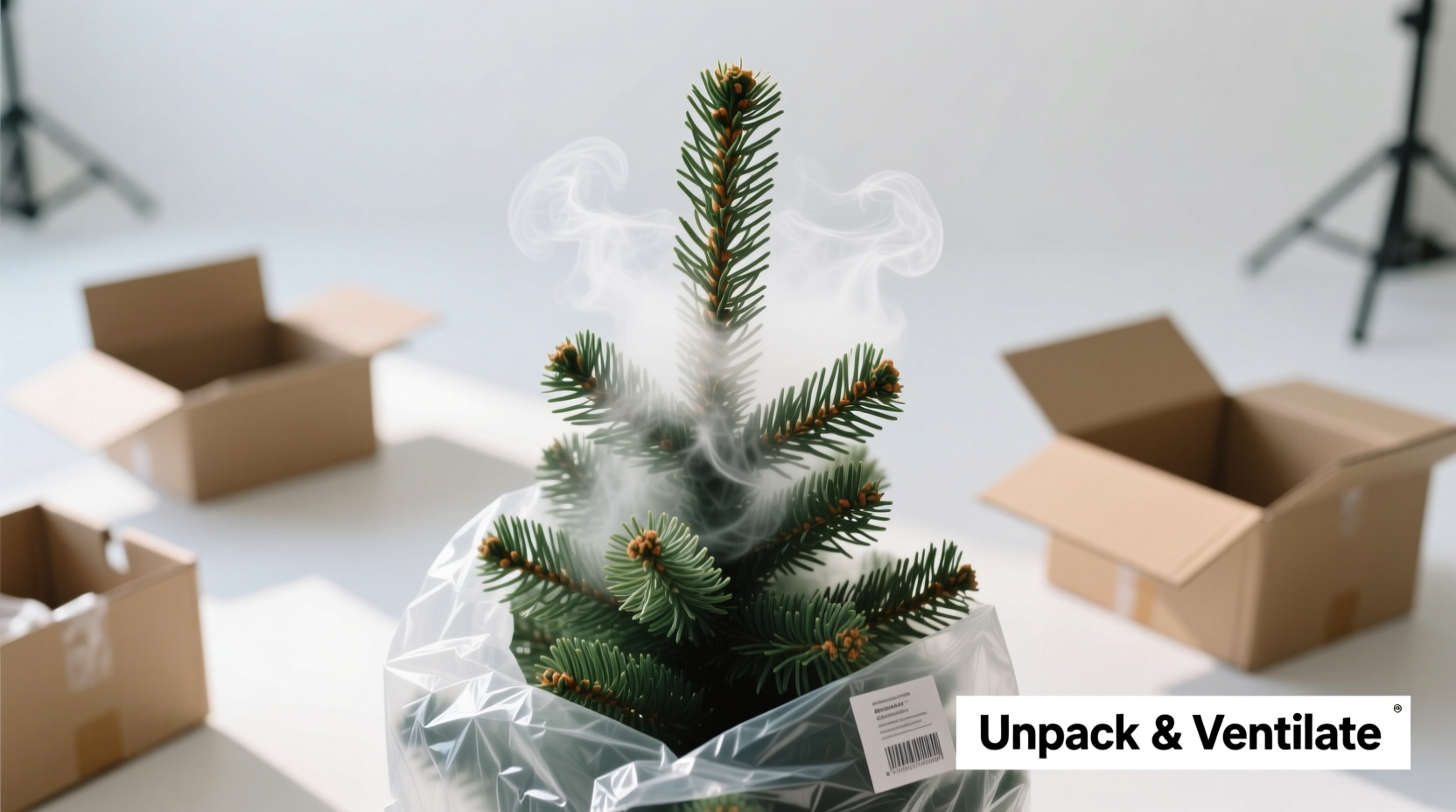
The “weird” smell isn’t one single odor—it’s a cocktail of distinct chemical and biological sources, each requiring a different response:
- Off-gassing VOCs: PVC and PE trees are treated with plasticizers (like phthalates), stabilizers, and flame retardants (often brominated compounds). When exposed to warmth—even room temperature—these additives slowly volatilize, producing sharp, acrid, or medicinal notes. This is most intense during the first 24–72 hours after unpacking.
- Moisture-induced microbial growth: Trees stored in humid environments absorb ambient moisture. Condensation forms inside the box, especially if temperatures fluctuate. This creates ideal conditions for mold, mildew, and bacteria to colonize crevices in branches, trunk joints, and even the metal stand. These microbes emit geosmin (earthy), musty, or sour odors—similar to damp basements or forgotten gym bags.
- Dust and particulate buildup: Over time, fine dust, pet dander, and airborne pollutants settle into the dense branch structure. When disturbed during assembly, these particles release stale, dusty, or “old attic” aromas—often mistaken for a “chemical” smell but actually organic decay of accumulated debris.
- Residual packaging chemicals: Some manufacturers use ethylene oxide or other sterilizing agents on components before sealing. Others use strong adhesives or anti-static sprays that leave trace residues. These rarely pose health risks at low concentrations but contribute significantly to initial odor intensity.
- Oxidation of metal parts: The central pole, hinges, and stand are typically steel or aluminum. If stored in a non-climate-controlled space, micro-rust or oxidation can occur—even without visible corrosion—releasing a faint metallic tang that blends with other odors.
Crucially, these factors compound one another. Off-gassed VOCs can react with moisture and dust, forming secondary compounds with stronger or more irritating scents. That’s why surface wiping alone rarely solves the problem: you must address the root cause, not just the symptom.
Step-by-Step Odor Elimination Protocol
Effective odor removal requires a sequence—not a single spray. Follow this five-stage process, allowing adequate drying time between steps. Skipping stages or rushing airflow will trap moisture and worsen microbial growth.
- Unpack & Air Out (48–72 hours): Remove all plastic wrapping and lay the tree sections flat in a well-ventilated, dry, shaded area—preferably outdoors on a dry day or in a garage with open doors. Avoid direct sunlight (UV degrades PVC) and high humidity (>60% RH). Use fans to promote laminar airflow—not turbulent blowing—that moves air *through* the branches rather than just across the surface.
- Dry-Brush Debris Removal: Using a soft-bristled upholstery brush or clean paintbrush, gently sweep all branches, trunk segments, and the interior of the stand. Focus on hinge points, branch sockets, and undersides where dust and fibers accumulate. Vacuum loose debris using a HEPA-filter vacuum with a soft brush attachment—never a standard vacuum, which can scatter fine particles.
- Vinegar-Water Surface Treatment: Mix 1 part white vinegar with 3 parts distilled water in a spray bottle. Lightly mist branches—avoid soaking; excess liquid can seep into joints and corrode metal. Let sit for 10 minutes, then wipe with lint-free microfiber cloths. Vinegar’s acetic acid disrupts microbial membranes and neutralizes alkaline odor compounds without damaging plastics. Do not use bleach or ammonia—these degrade PVC and create toxic chloramine gas if mixed.
- Baking Soda Absorption Phase: Place shallow bowls of food-grade baking soda near the tree (not directly on branches) and inside the hollow trunk section if accessible. Leave for 24 hours. Baking soda adsorbs acidic and neutral VOCs but won’t remove microbial odors—hence the need for prior cleaning.
- Final Ozone-Free Air Purification: Run a carbon-filter air purifier (not ozone-generating models) in the same room for 4–6 hours. Activated carbon specifically targets VOCs and residual organic volatiles. Avoid “odor-eliminating” plug-ins—they mask smells with synthetic fragrances that add more VOCs to your indoor air.
Prevention: How to Store Your Tree So It Doesn’t Smell Next Year
Odor recurrence is preventable—but only with intentional storage habits. Most consumers store trees in the original box, assuming it’s protective. In reality, cardboard absorbs moisture, traps heat, and restricts airflow—creating a perfect incubator. Here’s how professionals do it:
| Action | Why It Works | What to Avoid |
|---|---|---|
| Disassemble completely and wipe dry with microfiber cloth before packing | Removes residual moisture and oils that feed microbes during storage | Storing while still damp or dusty—even slightly |
| Store in breathable, UV-resistant tree storage bag (non-woven polypropylene) | Allows vapor exchange while blocking dust and light; prevents static cling and plasticizer migration | Plastic trash bags, sealed cardboard boxes, or vacuum-sealed bags |
| Place desiccant packs (silica gel, not clay) inside the storage bag | Actively absorbs ambient moisture; 4–6 packs per standard 7.5-ft tree | Calcium chloride or charcoal packs (too aggressive; can dry out plastics) |
| Store upright in climate-controlled space (ideally 45–70°F, <50% RH) | Minimizes thermal cycling that accelerates off-gassing and condensation | Attics, garages, or sheds without temperature/humidity control |
| Inspect annually: check for brittleness, discoloration, or sticky residue | Early signs of plasticizer loss or degradation—indicate it’s time to replace the tree | Assuming “no visible damage = still safe” |
Mini Case Study: The Portland Family’s Moldy Tree Turnaround
In December 2022, the Chen family in Portland, Oregon, unpacked their 8-year-old pre-lit PE tree and were hit by a pungent, sour-musty odor—so strong it triggered their daughter’s seasonal asthma. They’d stored it in the original box in a leaky garage where winter humidity regularly exceeded 80%. Initial attempts—spraying lavender water, running fans, and wiping with alcohol—failed. Within two days, the scent returned.
A local HVAC technician (who also consults on indoor air quality for holiday retailers) advised them to disassemble the tree, inspect branch joints with a flashlight, and discovered fuzzy gray biofilm in the hollow trunk base and around the light cord entry point. They followed the full five-step protocol above, adding one critical step: soaking the removable metal stand in a 1:10 vinegar-water solution for 30 minutes, then scrubbing with a nylon brush to remove micro-rust. After reassembly and final carbon filtration, the odor was gone—and hasn’t recurred. Their key insight? “We thought the smell came from the branches. Turns out the stand and trunk cavity were the real culprits.” They now store the tree in a breathable bag with silica gel in their basement dehumidified to 45% RH.
Expert Insight: What Industry Professionals Know
“Most artificial tree odors aren’t ‘chemical’ in the hazardous sense—they’re biochemical. Microbial metabolites bind to plastic surfaces and resist casual cleaning. You need pH-balanced, non-corrosive agents like diluted vinegar, followed by physical removal and adsorption—not fragrance masking. And never underestimate storage: I’ve tested trees pulled from climate-controlled warehouses versus attics—the VOC load difference is measurable at 300% higher in the latter.” — Dr. Lena Torres, Materials Toxicologist, Indoor Air Quality Institute
FAQ
Can I use Febreze or similar fabric fresheners on my artificial tree?
No. These products contain ethanol, limonene, and synthetic musks that temporarily cover odors but leave oily residues. On PVC, these accelerate plasticizer leaching, making branches brittle. More critically, they introduce additional VOCs into your breathing zone—counteracting any air quality improvement. Stick to vinegar-water for cleaning and activated carbon for adsorption.
My tree smells like burnt plastic only when the lights are on. Is that dangerous?
Yes—this indicates electrical or thermal stress. Heat from incandescent bulbs (or faulty LED drivers) is causing localized off-gassing or melting insulation on wiring. Immediately unplug the tree. Inspect cords for discoloration, stiffness, or melted spots. Replace the light string or entire tree if older than 10 years. Modern UL-listed LED strings run cooler and reduce this risk significantly.
Will washing my tree with soap and water ruin it?
It depends on the soap. Mild dish soap (like Castile or unscented Dawn) diluted 1:20 in distilled water is safe for spot-cleaning. But avoid detergents with sodium lauryl sulfate (SLS), bleach, or degreasers—they strip protective coatings and degrade plastic integrity over time. Always rinse with distilled water afterward and air-dry fully before storage.
Conclusion
Your artificial Christmas tree shouldn’t smell like a chemistry lab, a damp cellar, or a forgotten storage unit. That weird odor is not inevitable—it’s information. It tells you something about how your tree was made, how it was stored, and what condition its materials are in. By moving beyond quick fixes and embracing a systematic, science-informed approach—airing, brushing, targeted cleaning, absorption, and intelligent storage—you reclaim control over your indoor environment and holiday experience. You protect your family’s respiratory health, extend your tree’s functional life (most well-maintained trees last 12–15 years), and eliminate the dread of that first unpacking moment next season.
Start this year: unpack early, follow the five-step protocol, and invest in proper storage. Don’t wait until Thanksgiving Eve to confront the smell. Your lungs—and your peace of mind—will thank you. And if you’ve successfully banished the weird tree odor, share your hard-won tip in the comments below. Real-world experience is the best guide—and your insight might be exactly what another reader needs to breathe easier this holiday season.




 浙公网安备
33010002000092号
浙公网安备
33010002000092号 浙B2-20120091-4
Comments
No comments yet. Why don't you start the discussion?