
Maintaining healthy gums is a cornerstone of overall oral health. While brushing removes plaque from tooth surfaces, it often misses the tight spaces between teeth and below the gumline—areas where bacteria thrive and gum disease begins. For decades, dental professionals have recommended traditional string floss as the gold standard for interdental cleaning. In recent years, however, water flossers have gained popularity as a convenient, effective alternative. But are they truly better for gum health? The answer depends on individual needs, technique, and consistency. This article examines both methods in depth, comparing their effectiveness, ease of use, and long-term impact on gum health.
How Gum Disease Develops and Why Interdental Cleaning Matters
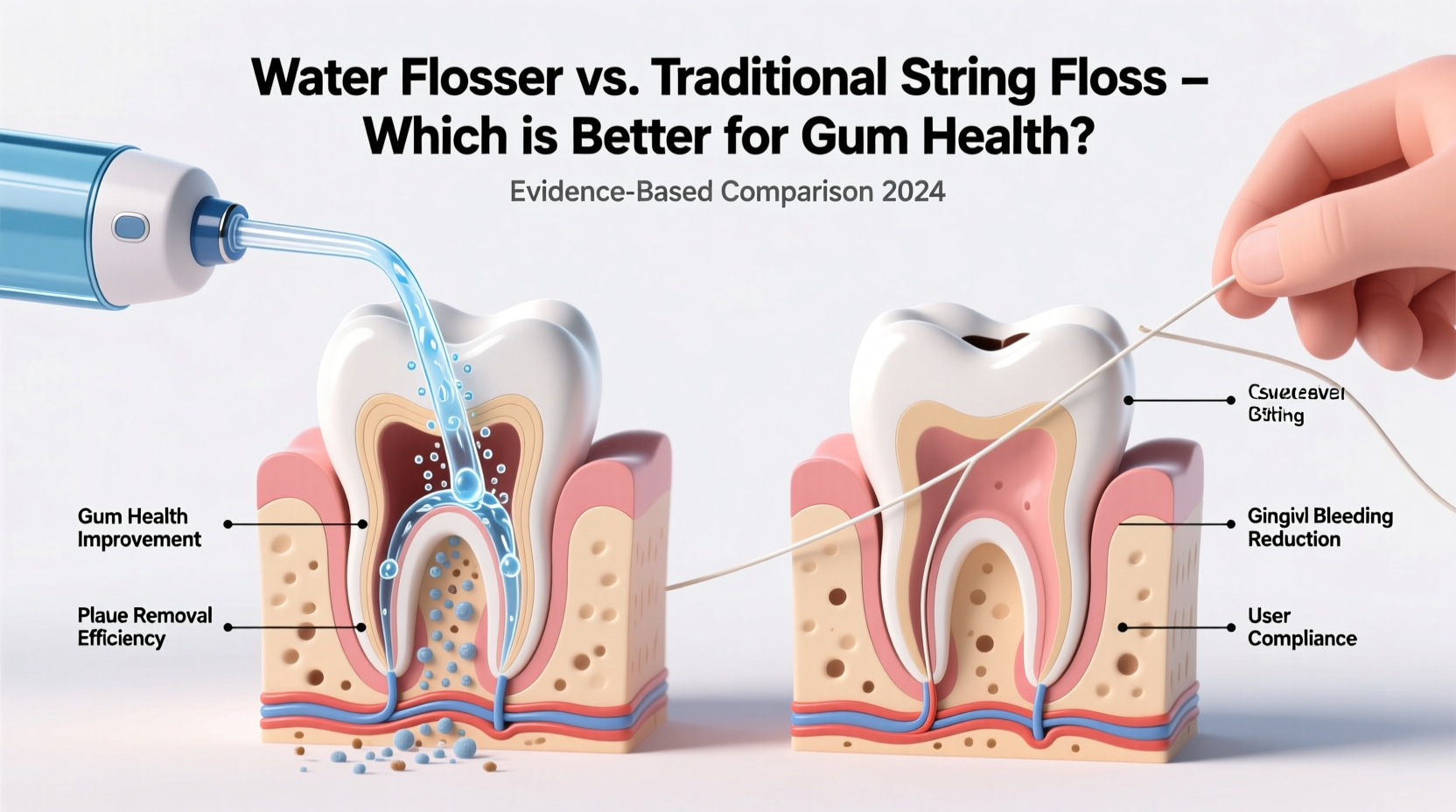
Gum disease, or periodontal disease, typically begins as gingivitis—an inflammation caused by plaque buildup along the gumline. If not removed, plaque hardens into tartar, leading to infection, bleeding, and eventually, bone loss and tooth loss in severe cases. While brushing twice daily helps, it cannot reach the narrow gaps between teeth or beneath inflamed gums. That’s where interdental cleaning becomes essential.
Interdental tools like floss and water flossers disrupt bacterial colonies in these vulnerable zones. According to the American Dental Association (ADA), daily cleaning between teeth reduces plaque accumulation and lowers the risk of gingivitis. Both string floss and water flossers serve this purpose, but they do so in fundamentally different ways—one mechanically, the other hydrodynamically.
Traditional String Floss: Mechanics, Benefits, and Limitations
String floss—typically made from nylon or PTFE (polytetrafluoroethylene)—works by physically scraping plaque off tooth surfaces and under the gumline. When used correctly, it can remove up to 80% of accessible plaque between teeth.
The key to its effectiveness lies in proper technique: gently curving the floss around each tooth in a C-shape and sliding it up and down several times, including below the gumline. However, many people struggle with this method due to dexterity issues, tight spacing, or discomfort.
- Pros: Low cost, portable, no electricity required, proven track record over decades.
- Cons: Requires manual dexterity, can cause gum irritation if used too aggressively, difficult for braces, bridges, or crowded teeth.
Water Flossers: How They Work and Who Benefits Most
A water flosser uses a stream of pulsating water to dislodge food particles and disrupt plaque biofilm between teeth and below the gumline. Devices range from countertop models to compact cordless versions, all designed to deliver targeted bursts of water at adjustable pressure levels.
Unlike string floss, which relies on friction, water flossers use fluid dynamics to clean hard-to-reach areas. The pulsation helps stimulate gum tissue, improving circulation and reducing inflammation over time. Studies show that water flossers can reduce gingival bleeding and plaque significantly—even more than string floss in some cases.
They are particularly beneficial for individuals with:
- Braces or orthodontic appliances
- Dental implants or bridges
- Receding gums or deep periodontal pockets
- Arthritis or limited hand mobility
- Sensitive gums prone to bleeding
“Water flossers offer a valuable adjunct to mechanical cleaning, especially for patients with orthodontic work or periodontal conditions.” — Dr. Sarah Lin, Periodontist and Clinical Educator
Comparing Effectiveness: What Does the Research Say?
Multiple clinical studies have evaluated the efficacy of water flossers versus string floss. A meta-analysis published in the Journal of Clinical Dentistry found that water flossers were 51% more effective at reducing gingival bleeding than string floss after four weeks of use. Another study showed a 74% greater reduction in plaque when using a water flosser in combination with brushing, compared to brushing and string floss alone.
However, effectiveness depends heavily on consistent use and correct application. While water flossers may outperform string floss in certain metrics, poor technique or infrequent use diminishes results regardless of the tool.
| Factor | String Floss | Water Flosser |
|---|---|---|
| Plaque Removal Between Teeth | High (with proper technique) | High to Very High |
| Gum Bleeding Reduction | Moderate | High |
| Access to Braces/Implants | Limited | Excellent |
| Ease of Use | Moderate to Difficult | Easy to Moderate |
| Cost Over Time | Low ($2–$5/month) | Higher initial cost ($50–$100+) |
| Evidence-Based Support | Extensive, long-term | Strong, growing body of research |
The data suggests that while both tools are effective, water flossers may offer superior outcomes for gum health—particularly in reducing inflammation and bleeding—especially among users who find traditional flossing challenging.
Real-World Example: Improving Gum Health with a Water Flosser
Consider Maria, a 38-year-old office worker with mild gingivitis and early signs of gum recession. She had tried string flossing for years but consistently skipped it due to discomfort and difficulty reaching her back teeth. Her dentist noted persistent bleeding during cleanings and recommended switching to a water flosser.
Maria began using a cordless water flosser daily, starting at low pressure and gradually increasing as her gums adapted. Within three weeks, she noticed less bleeding when brushing. After two months, her hygienist reported a 40% reduction in gum pocket depth and improved tissue firmness. Maria found the routine easier to maintain and now uses the device consistently—something she never achieved with string floss.
This case illustrates how user experience and adherence play a critical role in outcomes. Even the most effective tool fails if not used regularly.
Step-by-Step Guide to Maximizing Gum Health with Either Tool
Whether you choose string floss or a water flosser, consistency and technique are paramount. Follow this daily routine for optimal gum health:
- Brush thoroughly for two minutes using fluoride toothpaste, focusing on the gumline.
- Floss between every tooth:
- If using string floss: Use about 18 inches of floss, wrap it around middle fingers, and guide it gently between teeth using thumbs and index fingers.
- If using a water flosser: Fill the reservoir with warm water, select a comfortable pressure setting (start low), and aim the tip just above the gumline, moving systematically from back to front.
- Target below the gumline: For string floss, slide the floss beneath the gums about 1–2 mm. For water flossers, let the pulsating stream naturally penetrate pockets.
- Don’t skip molars: These areas trap the most food and plaque. Take extra time here.
- Rinse afterward: Swish with an alcohol-free mouthwash to further reduce bacteria.
- Replace tips or floss: Change water flosser tips every 3–6 months; use fresh floss for each area to avoid spreading bacteria.
Expert Recommendations and Common Misconceptions
Some dentists still advocate exclusively for string floss, citing tradition and tactile feedback. Others embrace water flossers as a modern solution that improves compliance. The ADA accepts both methods as effective when used properly, and has awarded Seal of Acceptance to several water flosser models.
One common misconception is that water flossers “push bacteria deeper” into gums. Research does not support this claim. In fact, studies show that the pulsating action helps flush out debris and pathogens without driving them further into tissues.
Another myth is that water flossers replace brushing. They do not. They complement it. Brushing removes surface plaque; interdental cleaning addresses what brushing misses.
“The best flossing method is the one you’ll actually use every day. For many patients, that’s now the water flosser.” — Dr. James Reed, ADA Spokesperson
Checklist: Choosing the Right Option for Your Oral Health
Use this checklist to determine which method suits your needs:
- ☐ Do you wear braces, implants, or bridges? → Water flosser preferred
- ☐ Do you experience frequent gum bleeding? → Water flosser may reduce inflammation faster
- ☐ Do you struggle with hand dexterity or arthritis? → Water flosser is easier to operate
- ☐ Are you on a tight budget? → String floss is more affordable
- ☐ Do you travel frequently? → Consider a compact, rechargeable water flosser
- ☐ Do you dislike the feel of floss in your gums? → Try a water flosser for gentler cleaning
- ☐ Can you commit to daily use regardless of method? → Consistency matters most
FAQ: Common Questions About Water Flossers vs. String Floss
Can I use both a water flosser and string floss?
Yes—and many dentists recommend combining both. Use string floss to physically remove stubborn plaque, then follow with a water flosser to flush out debris and soothe gums. This dual approach can maximize cleanliness and comfort.
Are water flossers safe for sensitive gums?
Absolutely. Start at the lowest pressure setting and gradually increase as your gums adapt. Many users with sensitivity report less irritation with water flossing compared to aggressive string flossing.
Do I still need to visit the dentist if I water floss daily?
Yes. No home care routine replaces professional cleanings. Dentists remove hardened tartar, assess gum health, and detect early signs of disease that aren’t visible at home. Aim for checkups every six months.
Conclusion: Prioritizing Gum Health Through Consistent Care
The question isn’t necessarily whether a water flosser is better than string floss—it’s whether the chosen method supports long-term, consistent gum care. For many, the convenience, comfort, and superior reduction in bleeding make water flossers a compelling upgrade. For others, the simplicity and low cost of string floss remain ideal.
What matters most is daily commitment. Healthy gums don’t result from a single perfect tool, but from routine, thorough cleaning that reaches beyond the brush. Whether you glide floss between teeth or pulse water along the gumline, the goal is the same: to keep harmful bacteria in check and preserve the foundation of your smile.




 浙公网安备
33010002000092号
浙公网安备
33010002000092号 浙B2-20120091-4
Comments
No comments yet. Why don't you start the discussion?