
If you're deep into the foldable phone conversation, you’ve likely heard the usual refrain: “Just get the Samsung Galaxy Z Flip series—it’s the gold standard.” But then, quietly, some people are choosing the Motorola Razr+ (formerly known as the Moto Razr / Echo). And not just as a backup or novelty. They’re using it daily—sometimes exclusively. So, is anyone really using a Motorola Echo (or its successors) instead of a Z Flip 3? And if so, what are they seeing that others aren’t?
The answer isn't simple. It’s not about specs on paper, but real-world usability, personal priorities, and subtle design philosophies. Let’s break down why some users genuinely prefer the Motorola approach—even years after the Z Flip 3’s release—and what you might be overlooking in the comparison.
The Foldable Divide: Style vs. Substance
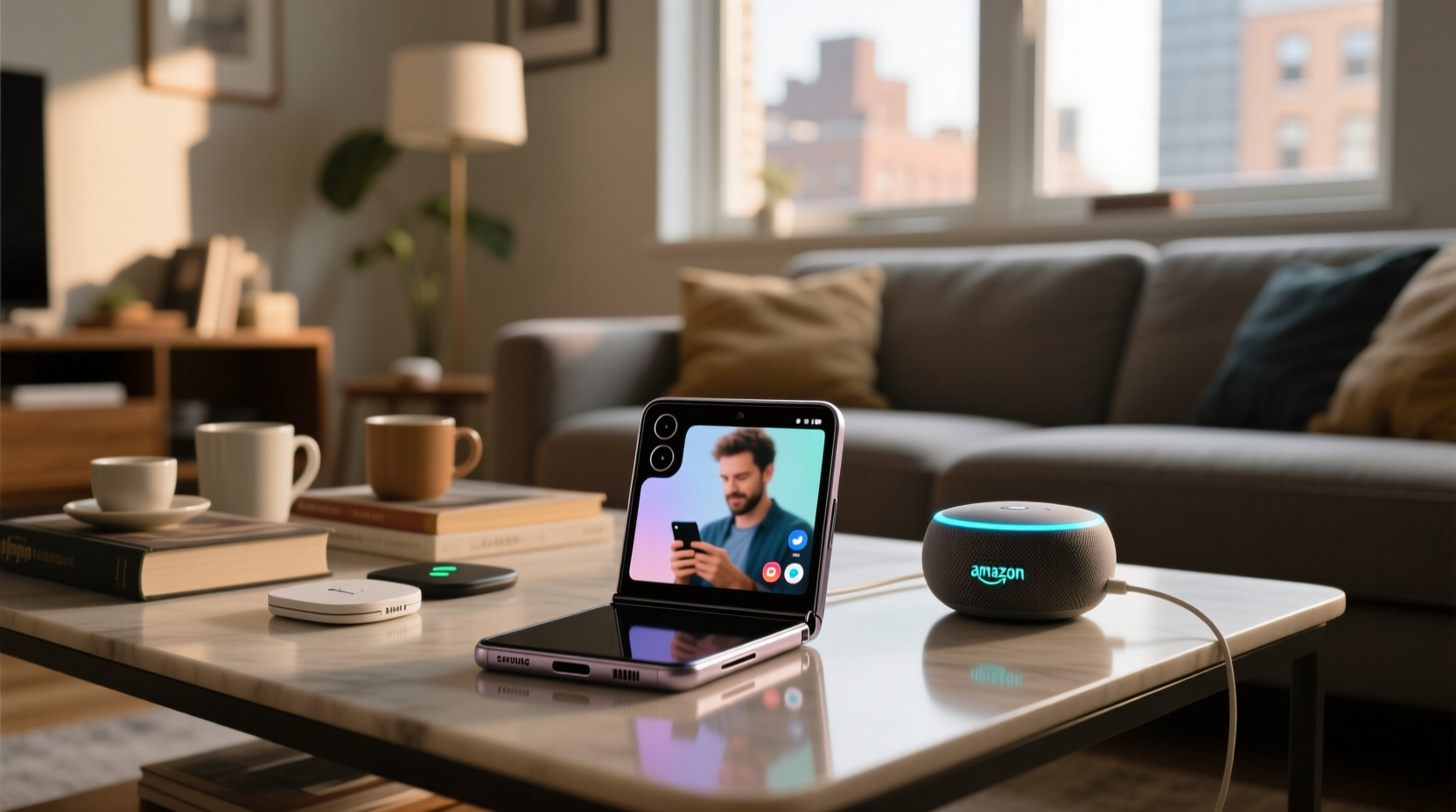
Foldable phones sit at an intersection of fashion and function. The Z Flip 3 was a cultural moment—compact, flashy, and embraced by influencers. It made folding phones mainstream. But Motorola took a different path with the Echo (and later the Razr+), focusing less on being trendy and more on replicating the nostalgic flip experience with modern tech.
While both devices fold vertically, their execution diverges significantly:
- Samsung prioritized durability, software polish, and external screen utility.
- Motorola emphasized ergonomics, hinge feel, and a near-bezel-less inner display.
For many, the Z Flip 3 felt like a premium gadget. For others, the Echo felt like a natural evolution of the original Razr—a device that fits in your palm and pocket without compromise.
Real-World Usage: Who Actually Prefers the Echo?
Yes—people are using the Echo (and newer Razr models) as primary phones. Not all of them, and not universally, but enough to form a dedicated niche. Consider this mini case study:
💬 Mini Case Study: Jamie, 34, Urban Commuter
Jamie lives in Chicago, takes public transit daily, and values minimalism. After two years with a Z Flip 3, she switched to the Motorola Razr+ (2023, successor to the Echo lineage). Her reasoning? “The Flip 3 felt bulky in my coat pocket. The hinge creaked after six months. And I never used the cover screen for more than checking time.”
With the Razr+, she found the closed device nearly half the width, making it easier to pull out with one hand. The under-display camera was less noticeable, and the book-style flip felt more intuitive when answering calls. “It closes with a satisfying snap,” she said. “I don’t worry about dust getting in.”
Jamie doesn’t care about having the latest Snapdragon chip. She texts, uses Maps, listens to podcasts, and occasionally snaps quick photos. For her, the Echo/Razr ecosystem delivers exactly what she needs—without the bloat.
“People overlook how much daily friction comes from device size and weight. A few millimeters and grams can change everything.” — David Lin, Mobile UX Designer at a Silicon Valley wearable tech firm
Key Differences: Echo vs. Z Flip 3 – A Practical Breakdown
Let’s compare the core aspects beyond marketing materials. This table reflects real user experiences, not just spec sheets.
| Feature | Motorola Echo / Razr Line | Samsung Z Flip 3 |
|---|---|---|
| Closed Size | Narrower, longer (fits easily in front pockets) | Wider, chunkier (can dig into thigh) |
| Hinge Mechanism | Peephole camera, tighter seal, less dust risk | U-shaped gap, known dust issues in early models |
| Inner Display | 6.7” pOLED, minimal chin, centered punch-hole | 6.7” Dynamic AMOLED, visible bezels, offset hole-punch |
| External Screen | Small, basic (Echo); improved on Razr+ (2023) | 1.9” useful panel (quick replies, widgets, camera) |
| Durability | Less proven long-term; weaker water resistance | IPX8 rated; generally more robust build |
| Software Experience | Near-stock Android, fewer bloatware apps | One UI offers multitasking, but heavier interface |
| Battery Life | Average (2800mAh), requires charging by evening | Slightly better optimization (3300mAh) |
The takeaway? Motorola wins on form factor and tactile satisfaction. Samsung wins on features, resilience, and software depth. Your preference depends on which side of that line you fall.
What You Might Be Missing: The Hidden Advantages of the Echo Path
Most reviews focus on shortcomings: weaker cameras, shorter battery, limited software updates. But there are underrated strengths:
- Better one-handed operation when closed—ideal for texting while walking or commuting.
- More secure closure reduces accidental openings in pockets.
- Stock Android experience means cleaner UI, faster updates (when available), and no Samsung-specific quirks.
- Nostalgic appeal with modern function—the flip action feels intentional, not gimmicky.
Additionally, Motorola’s “Ready For” feature (on newer models) allows desktop-like experiences via HDMI or wireless casting—an often-overlooked productivity tool absent from early Z Flip models.
Step-by-Step: How to Decide Which Foldable Fits Your Life
Choosing between these devices shouldn’t be about brand loyalty or hype. Follow this decision timeline:
- Week 1: Audit Your Phone Habits
Track how often you pull out your phone, where you carry it, and what you use it for most (calls, messages, social media, photos). - Week 2: Test Pocket Fit
Carry a small rectangle (like a credit card holder) in your preferred pocket. Notice discomfort or accessibility issues. - Week 3: Prioritize Features
List your top three must-haves: e.g., battery life, camera quality, compactness, software simplicity. - Week 4: Hands-On Tryout
Visit a store with both devices. Flip them open/closed 10 times each. Note wrist strain, screen visibility, and overall feel. - Final Decision
If you lean toward simplicity, nostalgia, and sleek form—consider the Echo/Razr path. If you want reliability, features, and resale value, stick with Samsung.
Frequently Asked Questions
Is the Motorola Echo still receiving updates?
The original Motorola Edge (2022), branded as “Moto Razr 2022” in some regions, received two major Android OS updates and three years of security patches. However, support has largely transitioned to the newer Razr+ (2023/2024). The Echo itself is no longer actively supported, so consider it a legacy device unless buying refurbished with remaining coverage.
Does the Z Flip 3 have better cameras than the Echo?
Yes. The Z Flip 3 features dual 12MP shooters (wide + ultrawide) with Samsung’s proven processing. The Echo has a 50MP main sensor but lacks tuning and low-light performance. For social media or casual shots, both suffice—but for detail and consistency, Samsung wins.
Can the Echo replace a traditional smartphone?
Absolutely—if your usage is light to moderate. Users who rely heavily on navigation, streaming, or multitasking may find the battery and app optimization limiting. But for calls, messaging, email, and browsing, the Echo performs reliably.
Checklist: Are You a Good Fit for the Echo Over the Z Flip 3?
- ✅ You prioritize pocket comfort over raw power
- ✅ You appreciate minimalist design and nostalgic elements
- ✅ You prefer stock Android over manufacturer skins
- ✅ You don’t take many photos or edit them afterward
- ✅ You value the physical act of flipping closed as part of your digital detox routine
- ❌ You need long battery life or IP68 water resistance
- ❌ You use multiple apps simultaneously or rely on Samsung DeX
Conclusion: It’s Not About Specs—It’s About Lifestyle
The real reason some people choose the Echo—or its spiritual successors—over the Z Flip 3 isn’t because it’s “better” in a benchmark sense. It’s because it aligns with a different philosophy: smaller, simpler, more intentional. While the Z Flip 3 excels as a compact flagship, the Echo appeals to those who see their phone as an extension of personal style and daily rhythm—not just a tool.
You’re not missing a secret feature or hidden performance boost. What you might be missing is the value of subtlety—the way a well-balanced hinge feels in your hand, how a narrow profile slips into a jacket pocket, or how closing a phone can feel like ending a conversation deliberately.




 浙公网安备
33010002000092号
浙公网安备
33010002000092号 浙B2-20120091-4
Comments
No comments yet. Why don't you start the discussion?