
In the modern workplace—whether at home or in an office—distractions are constant. Emails ping, notifications flash, and mental fatigue creeps in by mid-morning. Many professionals are turning to subtle, non-invasive tools to sharpen their attention, and one increasingly popular option is the aromatherapy diffuser. But is it just a wellness trend, or can a few drops of essential oil genuinely enhance cognitive performance? The answer lies in both science and practical application.
Aromatherapy has been used for centuries to influence mood, energy, and mental clarity. Today, with growing research into how scent affects brain function, using a diffuser during work hours isn’t just about creating a pleasant atmosphere—it may be a legitimate tool for boosting focus, reducing mental clutter, and sustaining productivity over long periods.
The Science Behind Scent and Cognitive Performance
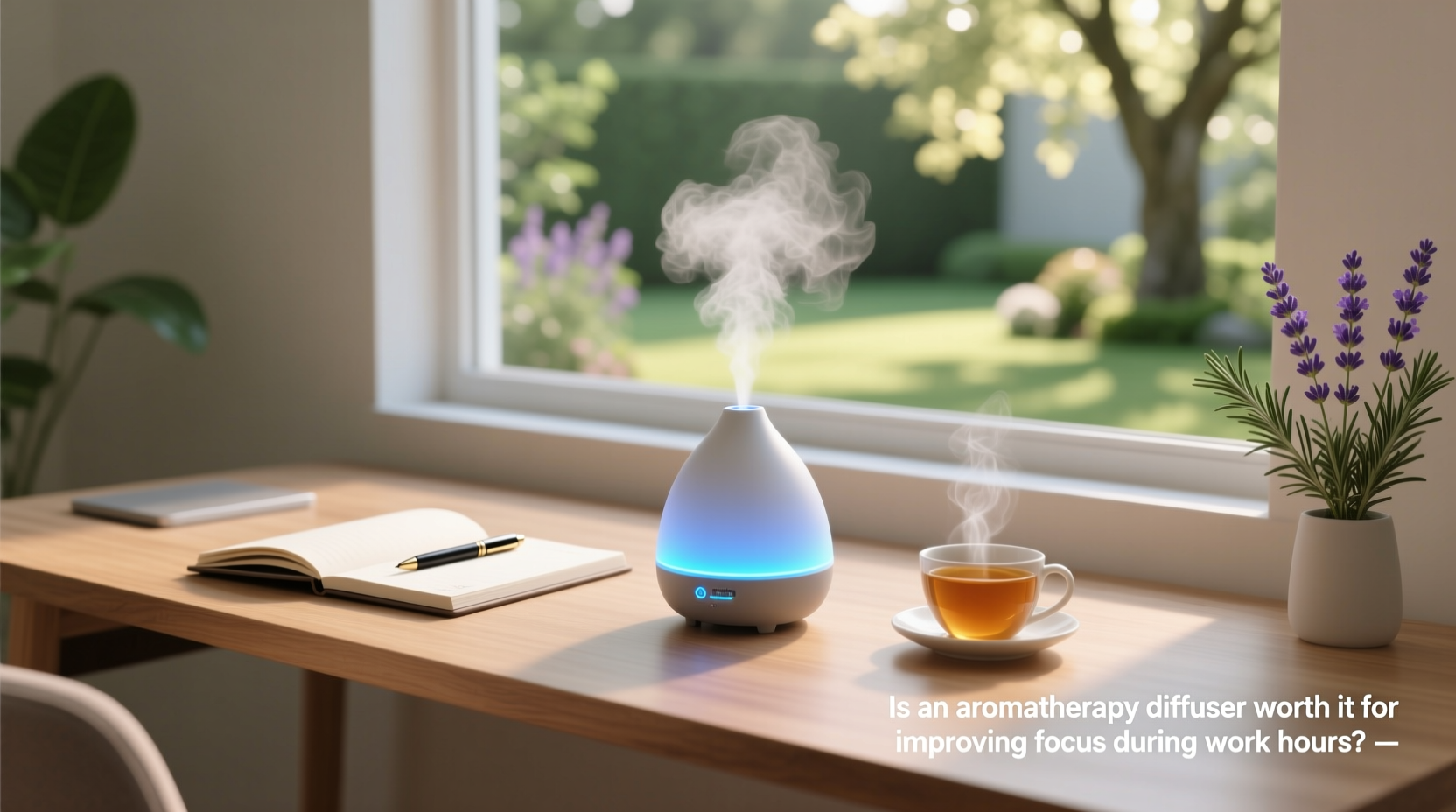
The olfactory system—the part of the brain responsible for processing smell—is directly linked to the limbic system, which governs emotions, memory, and arousal. Unlike other senses, smell bypasses the thalamus and sends signals straight to these deep brain regions. This unique neural pathway explains why certain scents can instantly evoke memories or shift your mood—and potentially sharpen your thinking.
Several studies have investigated the impact of essential oils on alertness and concentration. For example, a 2012 study published in the International Journal of Neuroscience found that participants exposed to rosemary essential oil demonstrated significantly improved cognitive performance, including enhanced speed and accuracy in mental tasks. Similarly, peppermint oil has been associated with increased alertness and reduced mental fatigue in multiple trials.
These effects are attributed to active compounds in essential oils. For instance:
- 1,8-cineole, found in rosemary and eucalyptus, has been shown to inhibit acetylcholinesterase, an enzyme that breaks down acetylcholine—a neurotransmitter vital for learning and memory.
- Menthol, the primary component of peppermint oil, stimulates cold receptors in the nasal passages, triggering a physiological response that increases oxygen intake and heart rate—both linked to heightened alertness.
- Limonene, abundant in citrus oils like lemon and orange, may elevate dopamine and serotonin levels, promoting a calm yet focused state.
“Scent can modulate brainwave activity and autonomic nervous system responses. When used strategically, essential oils can serve as cognitive enhancers.” — Dr. Rachel Herz, Cognitive Neuroscientist and Author of *The Scent of Desire*
Top Essential Oils for Focus and Mental Clarity
Not all essential oils are created equal when it comes to supporting concentration. Some promote relaxation (like lavender), which may not be ideal during high-focus work sessions. Others act as natural stimulants or mental clarifiers. Here are the most effective oils backed by both research and user experience:
| Essential Oil | Key Benefits | Best Time to Use | Blending Tip |
|---|---|---|---|
| Peppermint | Boosts alertness, reduces mental fatigue | Morning or post-lunch slump | Mix with lemon for a crisp, energizing blend |
| Rosemary | Enhances memory, increases concentration | Demanding cognitive tasks | Pair with frankincense for depth and clarity |
| Lemon | Uplifts mood, improves mental agility | Start of workday or before meetings | Combine with bergamot for a balanced effect |
| Frankincense | Promotes calm focus, reduces anxiety | Deep work or creative thinking | Blend with sandalwood for grounding |
| Vetiver | Improves attention span, stabilizes mind | When easily distracted | Add a drop to citrus oils to anchor the blend |
Real-World Application: A Case Study from a Remote Software Developer
James, a senior software developer based in Portland, struggled with afternoon focus lapses while working remotely. Despite trying caffeine, noise-canceling headphones, and Pomodoro timers, he often hit a wall around 3 PM. On a colleague’s recommendation, he introduced a small ultrasonic diffuser into his workspace, using a blend of two drops of rosemary and one drop of lemon essential oil each morning.
Within a week, James noticed a consistent improvement in his ability to stay engaged during coding sprints. “It’s not magic,” he said, “but there’s something about that crisp, herbal-citrus scent that keeps my mind from wandering. I reach for fewer snacks, check Slack less frequently, and finish tasks faster.”
He now uses a second, milder diffusion around 2 PM with vetiver and bergamot to combat the post-lunch dip. After three months, his self-reported productivity increased by nearly 25%, and he credits the diffuser as a key part of his daily routine.
Choosing the Right Diffuser for Workday Use
Not all diffusers are suited for office or home-office environments. The goal is consistent, subtle scent dispersion without noise, mess, or safety concerns. Consider these factors when selecting a model:
- Type: Ultrasonic diffusers are quiet, double as humidifiers, and disperse a fine mist. Nebulizing diffusers offer stronger aroma but can be louder and use more oil.
- Size: Compact models fit neatly on a desk without taking up valuable space.
- Timer Settings: Look for adjustable intervals (e.g., 30/60/120 minutes) to avoid overexposure.
- Noise Level: Below 30 dB is ideal for quiet concentration.
- Safety: Auto-shutoff when water runs low is essential, especially during long work sessions.
Popular models like the URPOWER 500ml or Asakuki Premium Mist offer reliability, quiet operation, and programmable settings, making them well-suited for professional environments.
Step-by-Step Guide to Using a Diffuser for Optimal Focus
To get the most out of your aromatherapy diffuser during work hours, follow this simple daily routine:
- Prepare your workspace: Clean your diffuser tank with water and mild soap. Residue from previous oils can alter scent profiles and reduce effectiveness.
- Add water: Fill the reservoir to the indicated line with room-temperature tap or distilled water. Distilled water prevents mineral buildup in hard-water areas.
- Add essential oils: Use 3–5 drops total. For focus, try 2 drops rosemary + 2 drops lemon + 1 drop peppermint. Adjust based on personal sensitivity.
- Set the timer: Program for 60 minutes in the morning and another 30–60 minutes before your typical energy dip (e.g., 2–3 PM).
- Position strategically: Place the diffuser slightly off-center from your direct breathing zone—about 3–5 feet away—to allow gentle dispersion without overwhelming your senses.
- Monitor your response: Keep a brief log for the first week. Note changes in alertness, distraction frequency, and overall mood.
- Clean regularly: Empty and wipe the tank daily. Perform a deep clean with vinegar and water weekly to prevent mold and oil buildup.
Do’s and Don’ts of Workplace Aromatherapy
| Do | Don't |
|---|---|
| Use light, invigorating scents during peak work hours | Use heavy floral or overly relaxing oils like ylang-ylang during tasks requiring attention |
| Diffuse intermittently (30–60 min on, 60–90 min off) | Run the diffuser continuously all day |
| Choose high-quality, pure essential oils (look for GC/MS test reports) | Use synthetic fragrance oils—they lack therapeutic properties and may cause headaches |
| Respect shared spaces—avoid strong diffusion in open offices | Assume everyone likes the same scents; some people are sensitive or allergic |
| Combine aromatherapy with other focus techniques (e.g., task batching, minimizing distractions) | Rely solely on scent to fix poor sleep or chronic stress |
Frequently Asked Questions
Can aromatherapy replace caffeine for focus?
While essential oils like peppermint and rosemary can increase alertness, they don’t provide the neurological stimulation of caffeine. However, they can complement coffee by smoothing out energy spikes and reducing jitteriness. Some users find they need less caffeine when using focus-enhancing scents consistently.
Are there any risks to using a diffuser at work?
For most people, diffusing essential oils is safe when done properly. However, individuals with asthma, allergies, or chemical sensitivities may react negatively. Always diffuse in a well-ventilated area and discontinue use if you experience headaches, dizziness, or irritation. In shared offices, consult colleagues before introducing a diffuser.
How quickly do essential oils affect focus?
Effects can be felt within 5–15 minutes of inhalation, as scent molecules travel rapidly to the brain. However, sustained benefits come from consistent use over days or weeks. Think of it as training your environment to support concentration, not an instant \"focus pill.\"
Final Verdict: Is It Worth the Investment?
An aromatherapy diffuser is not a miracle solution, but when used thoughtfully, it can be a worthwhile addition to your productivity toolkit. At prices ranging from $20 to $60, even high-end models are a fraction of the cost of ergonomic furniture or premium software subscriptions—yet they deliver measurable psychological benefits.
The value isn’t just in sharper focus, but in creating a sensory cue that signals to your brain: “It’s time to work.” Over time, this conditioned response can make transitioning into deep work easier and more consistent. Combined with good lighting, minimal clutter, and intentional breaks, a diffuser contributes to an environment engineered for performance.
Moreover, unlike stimulants or screen-based apps, aromatherapy is passive and non-disruptive. You don’t need to interact with it—just breathe. That simplicity makes it sustainable for long-term use.
“The best productivity tools don’t demand attention—they support it quietly.” — Cal Newport, Author of *Deep Work*
Take Action Today
If you’ve been struggling to maintain focus during work hours, consider experimenting with an aromatherapy diffuser. Start with a compact ultrasonic model and a proven focus blend—rosemary and lemon is an excellent starting point. Use it during your most cognitively demanding tasks and track how you feel over the next two weeks.
You might discover that a simple change in scent can lead to a significant shift in concentration. And if it helps you reclaim just 30 minutes of focused time per day, the investment has already paid for itself.




 浙公网安备
33010002000092号
浙公网安备
33010002000092号 浙B2-20120091-4
Comments
No comments yet. Why don't you start the discussion?