
Aromatherapy has become a staple in modern wellness culture. From sleek ultrasonic diffusers in living rooms to essential oil blends marketed for stress relief, sleep, and focus, the practice of dispersing aromatic plant extracts into the air is now widespread. But beneath the calming scents and elegant design lies a critical question: Is aromatherapy diffusing actually effective, or is its perceived benefit little more than a pleasant placebo?
The answer isn’t binary. While some effects are undoubtedly psychological, emerging research suggests that certain essential oils may have measurable physiological and neurological impacts. The truth lies at the intersection of neuroscience, psychology, and traditional herbal medicine—a space where scent meets science.
The Science of Scent and the Brain
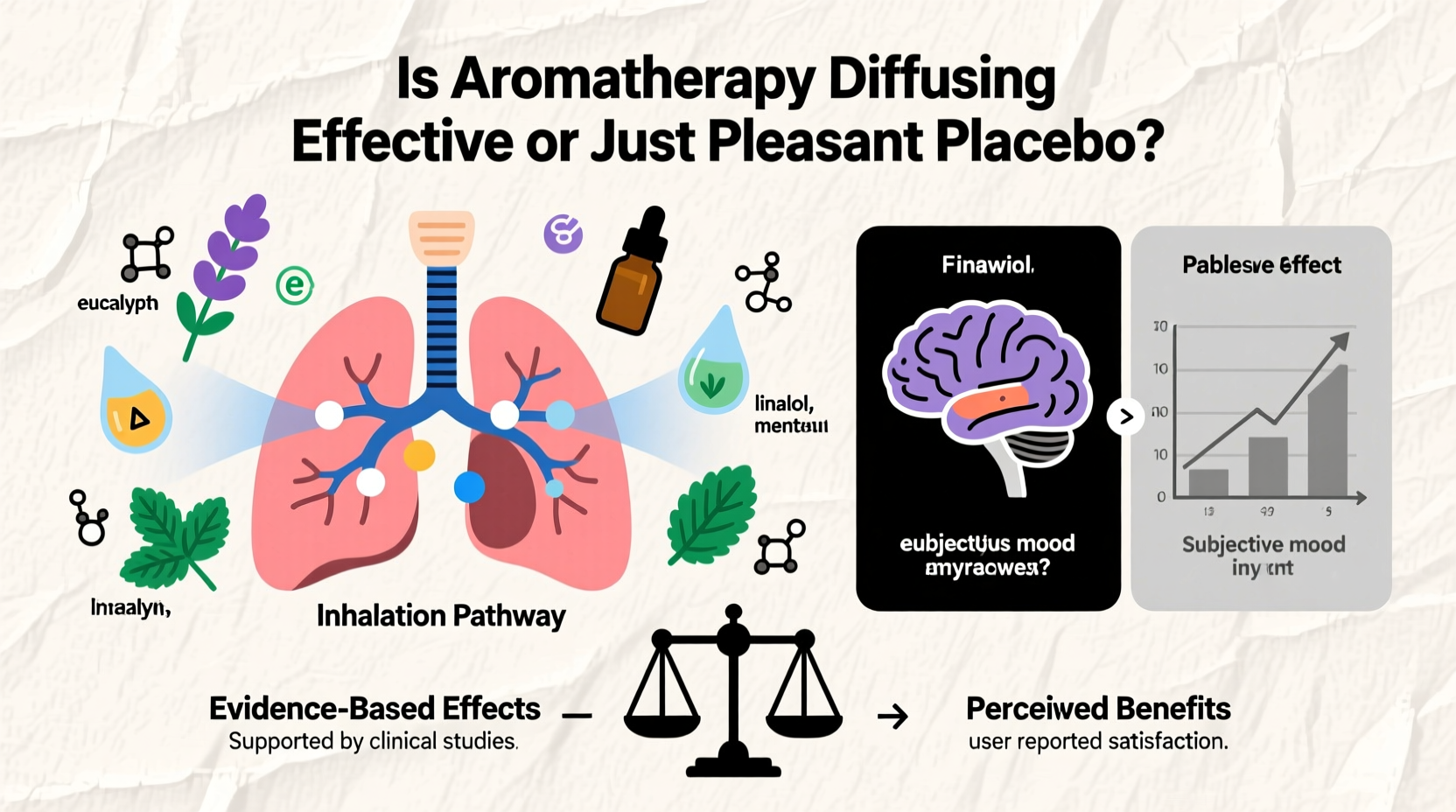
When you inhale essential oils through a diffuser, odor molecules travel through the nasal passages to the olfactory bulb, which connects directly to the limbic system—the brain’s emotional control center. This includes the amygdala and hippocampus, regions involved in emotion, memory, and stress response.
Unlike other sensory inputs, smell bypasses the thalamus and reaches the brain’s emotional centers almost instantly. This direct pathway helps explain why a whiff of lavender might calm you or why citrus can feel energizing—even before your conscious mind registers what you’re smelling.
“Olfaction is uniquely wired to influence emotion and behavior without cognitive mediation. That doesn’t mean it’s ‘just’ psychological—it means it’s biologically potent.” — Dr. Rachel Nguyen, Neuroscientist & Olfactory Researcher, Johns Hopkins University
This neurobiological mechanism provides a foundation for real physiological effects. For example, studies using functional MRI have shown that inhalation of lavender oil reduces activity in brain regions associated with anxiety. Similarly, rosemary oil has been linked to increased alertness and improved cognitive performance in controlled trials.
What the Research Says: Evidence vs. Anecdote
While personal testimonials abound, scientific evidence on aromatherapy diffusing varies by condition and oil type. Some findings are promising; others remain inconclusive due to small sample sizes or methodological limitations.
Consider these key areas where research has been conducted:
- Stress and Anxiety: A 2017 meta-analysis published in Complementary Therapies in Clinical Practice reviewed 16 randomized controlled trials and found that inhaled lavender significantly reduced anxiety levels compared to controls.
- Sleep Quality: A study in Phytotherapy Research showed that elderly patients exposed to lavender aroma via diffusion reported improved sleep scores over two weeks.
- Cognitive Function: Research from Northumbria University demonstrated that rosemary and peppermint oils enhanced memory and attention during cognitive tasks when diffused in test environments.
- Pain Management: Limited but suggestive evidence indicates that diffused essential oils like eucalyptus or chamomile may reduce subjective pain perception, likely through modulation of stress pathways.
However, many studies suffer from short durations, lack of blinding (since participants can smell the difference), and variability in oil quality. Furthermore, commercial essential oils are not regulated like pharmaceuticals, meaning purity and concentration can vary dramatically between brands.
Placebo or Real Effect? Understanding the Line
The placebo effect is often dismissed as “not real,” but it’s a powerful demonstration of the mind-body connection. If believing in lavender helps you relax, does it matter whether the chemical compounds or your expectations are driving the change?
In reality, both mechanisms likely coexist. A 2020 double-blind trial tested lavender oil against a placebo scent designed to mimic lavender’s floral profile without active compounds. Both groups reported reduced anxiety—but the lavender group showed measurably lower cortisol levels, suggesting a biological component beyond belief alone.
Still, context matters. Lighting a diffuser at bedtime becomes a ritual, signaling to the brain that it’s time to wind down. This behavioral cue amplifies any pharmacological effect. In this way, even if part of the benefit is psychological, it remains functionally valuable.
The danger arises when people rely solely on diffusing for serious medical conditions—such as clinical depression, chronic insomnia, or respiratory illness—without seeking evidence-based treatment.
Essential Oil Efficacy: A Comparison Table
| Essential Oil | Reported Benefits (via Diffusion) | Scientific Support Level | Cautions |
|---|---|---|---|
| Lavender (Lavandula angustifolia) | Anxiety reduction, improved sleep | High (multiple RCTs) | May cause drowsiness; avoid before operating machinery |
| Peppermint | Mental clarity, headache relief | Moderate (cognitive studies) | Can irritate airways; not recommended for young children |
| Eucalyptus | Respiratory support, decongestion | Moderate (inhalation studies) | Toxic if ingested; keep away from pets and infants |
| Tea Tree | Antimicrobial properties | Low (surface disinfection only) | Not proven effective for airborne pathogens via diffusion |
| Ylang-Ylang | Mood enhancement, blood pressure reduction | Low-Moderate (small trials) | May cause headaches in high concentrations |
Real-World Example: A Workplace Wellness Trial
A mid-sized tech company in Portland introduced a pilot aromatherapy program in 2022 to address employee burnout. Managers placed diffusers in common areas, rotating between lavender in the morning and rosemary during afternoon slumps. Over eight weeks, voluntary participation reached 73% of staff.
Employees completed weekly surveys measuring perceived stress, focus, and job satisfaction. By week six, 61% reported improved concentration, and self-reported stress dropped by an average of 28%. Notably, productivity metrics (measured by task completion rates) also rose slightly, though confounding factors like seasonal workload changes couldn't be ruled out.
While not a controlled lab experiment, the case illustrates how diffusing can integrate into broader wellness strategies. Employees described the scent as a “mental reset button” during hectic days. One developer noted, “I didn’t think it would do anything, but now I notice when it’s off. It’s like the office feels louder without it.”
The HR director emphasized balance: “We’re not claiming aromatherapy cures stress. But if something low-cost and non-invasive helps people feel more centered, it’s worth exploring.”
Best Practices for Effective and Safe Diffusing
To maximize potential benefits and minimize risks, follow a structured approach:
- Choose the right diffuser: Ultrasonic models disperse fine mist and double as humidifiers. Nebulizing diffusers release higher concentrations of oil without water but use more product. Avoid heat diffusers, which can degrade delicate compounds.
- Limit diffusion time: Use intermittent cycles—15 to 30 minutes on, 30 to 60 minutes off—to prevent olfactory fatigue and overexposure.
- Ensure proper ventilation: Keep doors or windows slightly open, especially in small rooms, to avoid buildup of volatile organic compounds (VOCs).
- Be mindful of sensitivities: Some individuals, including those with asthma or chemical sensitivities, may react negatively. Always disclose use in shared spaces.
- Rotate oils: Using the same scent daily leads to habituation. Rotate based on time of day or desired effect (e.g., citrus in the morning, woody scents at night).
Diffusing Checklist
- ✅ Use 100% pure essential oils (no synthetic fragrances)
- ✅ Clean diffuser weekly to prevent mold and residue buildup
- ✅ Diffuse in occupied rooms only (avoid unattended operation)
- ✅ Keep oils out of reach of children and pets
- ✅ Stop use if irritation occurs (coughing, headaches, dizziness)
Common Misconceptions About Aromatherapy
Much of the skepticism around diffusing stems from exaggerated claims. Marketers often promote essential oils as natural cures for everything from colds to cancer—an overreach unsupported by science.
It’s crucial to distinguish between:
- Supportive wellness tool: May help manage mild stress, improve mood, or enhance relaxation.
- Medical treatment: Not a substitute for prescribed therapies for diagnosed conditions.
Additionally, not all scents are universally beneficial. Cultural and personal associations shape how we respond to smells. For instance, while many find sandalwood soothing, someone who associates it with a funeral may feel sadness instead.
Frequently Asked Questions
Can diffusing essential oils purify the air?
Despite popular claims, there's no strong evidence that home diffusers significantly reduce airborne pathogens like bacteria or viruses. Some oils (e.g., tea tree, eucalyptus) have antimicrobial properties in lab settings, but effective concentrations require industrial-grade equipment. At best, diffusing may create a temporarily fresher-smelling environment—not a sterile one.
Are essential oils safe for pets?
No—many essential oils are toxic to cats and dogs when inhaled or absorbed. Oils like tea tree, citrus, and pine can cause respiratory distress, liver damage, or neurological symptoms in animals. The ASPCA advises against diffusing in homes with pets unless explicitly approved by a veterinarian.
How long does it take to feel effects from diffusing?
Responses vary. Some people report immediate shifts in mood or alertness within minutes, thanks to the fast-acting olfactory-limbic pathway. For longer-term benefits like improved sleep quality, consistent use over several days or weeks may be needed. Individual sensitivity, oil concentration, room size, and baseline stress levels all influence outcomes.
Conclusion: A Balanced Perspective
Aromatherapy diffusing sits at the crossroads of tradition, biology, and belief. While it’s not a miracle cure, dismissing it entirely as placebo overlooks real neurochemical interactions and documented psychological benefits. The most accurate view is nuanced: diffusing can be both psychologically comforting and physiologically active, depending on the oil, context, and individual.
Used wisely, it complements evidence-based wellness practices rather than replacing them. Whether it’s helping you unwind after work, sharpening focus during a project, or simply making your home feel more inviting, the value of scent should not be underestimated—even when part of its power comes from within.




 浙公网安备
33010002000092号
浙公网安备
33010002000092号 浙B2-20120091-4
Comments
No comments yet. Why don't you start the discussion?