
In recent years, bamboo toilet paper has surged in popularity as a \"green\" alternative to traditional tree-based rolls. Marketed with sleek packaging and bold environmental claims, it’s easy to see why eco-conscious consumers are switching. But beneath the marketing buzz, a critical question remains: is bamboo toilet paper actually better for the planet, or is it simply riding the wave of environmental trendiness without delivering meaningful change?
The answer isn’t black and white. While bamboo offers several ecological advantages over conventional wood pulp, its true environmental footprint depends on sourcing, manufacturing processes, transportation, and end-of-life disposal. This article dives deep into the science, sustainability claims, and real-world implications of choosing bamboo over traditional toilet paper.
The Environmental Cost of Traditional Toilet Paper
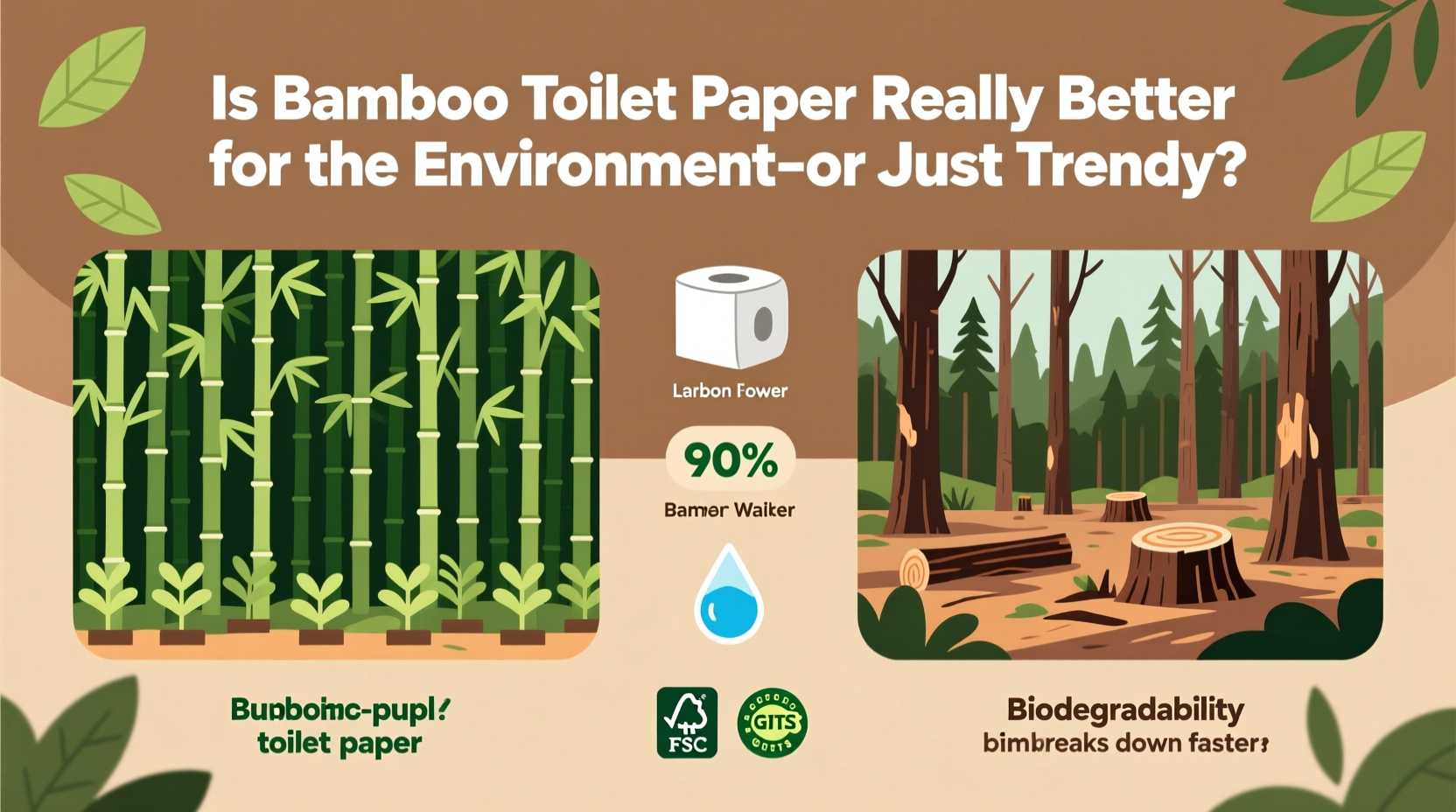
To understand whether bamboo is truly a better option, it's essential to first examine the environmental toll of standard toilet paper made from virgin wood pulp.
Every year, the global toilet paper industry consumes approximately 27,000 trees daily—equivalent to nearly 10 million trees annually. Most of this comes from boreal forests in Canada, including habitats critical to endangered species like the boreal caribou. These forests store vast amounts of carbon, and their destruction contributes significantly to climate change.
Traditional toilet paper production also involves energy-intensive pulping, bleaching (often using chlorine-based chemicals), and long-distance shipping. Even recycled toilet paper, while better than virgin pulp, can contain lower-quality fibers and may still require chemical processing.
“Deforestation for consumer products like toilet paper is one of the most under-discussed drivers of biodiversity loss and carbon emissions.” — Dr. Lena Torres, Forest Ecologist at the Global Sustainability Institute
Bamboo’s Natural Advantages
Bamboo is often hailed as a miracle plant due to its rapid growth and low resource requirements. Unlike trees that take decades to mature, most bamboo species grow up to 35 inches per day and reach harvestable size in just 3–5 years. It regenerates from its roots after cutting, eliminating the need for replanting.
Beyond speed, bamboo requires no irrigation, pesticides, or fertilizers in most climates. It thrives naturally, prevents soil erosion, and absorbs five times more carbon dioxide than equivalent stands of hardwood trees. These qualities make it inherently more sustainable than slow-growing timber sources.
From a land-use perspective, bamboo yields about 20 times more fiber per acre than trees used in paper production. This means less land is needed to produce the same volume of toilet paper, reducing pressure on forests and ecosystems.
Manufacturing Realities: Not All Bamboo TP Is Created Equal
While bamboo itself is sustainable, the process of turning it into soft, absorbent toilet paper can undermine its environmental benefits. Most bamboo toilet paper is made using the viscose or rayon process, which involves dissolving bamboo cellulose with harsh chemicals like sodium hydroxide and carbon disulfide.
This method, while effective, raises concerns about worker safety and water pollution if not properly managed. Facilities in countries with lax environmental regulations may discharge untreated wastewater, harming aquatic life and communities downstream.
However, some brands use closed-loop systems that recycle solvents and minimize waste. Others employ mechanical processing or lyocell methods, which are gentler on the environment. The key is transparency: consumers should look for certifications like OEKO-TEX®, FSC, or EU Ecolabel to ensure responsible production.
Additionally, many bamboo toilet papers are blended with other fibers or include plastic in packaging. A roll wrapped in non-recyclable plastic negates much of the upstream sustainability gains.
Comparative Environmental Impact: Bamboo vs. Recycled vs. Virgin Wood
| Factor | Bamboo TP | Recycled TP | Virgin Wood TP |
|---|---|---|---|
| Raw Material Renewability | High (fast-growing) | Medium (depends on recycling rates) | Low (slow tree growth) |
| Water Usage | Low (natural growth) | Medium (processing requires water) | High (irrigation & pulping) |
| Chemical Processing | High (if viscose method used) | Medium (de-inking & bleaching) | High (bleaching & pulping) |
| Carbon Footprint | Low (carbon-sequestering plant) | Low-Medium (transport & reprocessing) | High (logging, transport, processing) |
| Packaging Sustainability | Varies (plastic-free options exist) | Often plastic-wrapped | Typically plastic-wrapped |
| Biodegradability | High | High | High |
As shown, bamboo performs well in renewability and carbon capture but can lag behind recycled paper in processing safety—depending on manufacturing standards. Meanwhile, virgin wood consistently ranks lowest across sustainability metrics.
Real-World Example: A Family Switches to Bamboo
The Patel family of Portland, Oregon, decided to switch to bamboo toilet paper after watching a documentary on boreal deforestation. They chose a brand that uses bamboo from China, processed in a facility certified by the Sustainable Forestry Initiative, with compostable packaging.
At first, they were impressed: the rolls were soft, strong when wet, and arrived plastic-free. However, after six months, they calculated the carbon cost of shipping from Asia. Their annual delivery footprint equated to driving over 200 miles by car—more than they anticipated.
They then discovered a local brand using hemp and post-consumer recycled paper, produced regionally. Though slightly rougher, it had a far lower transportation footprint. The experience taught them that material origin matters as much as the material itself.
Their takeaway? “Being green isn’t just about what you buy—it’s about where it comes from and how it gets to you.”
How to Choose Truly Sustainable Toilet Paper: A Checklist
- ✅ Check the source: Is the bamboo organically grown and ethically harvested?
- ✅ Look for third-party certifications (FSC, OEKO-TEX, EU Ecolabel).
- ✅ Avoid brands using plastic wrapping; opt for recyclable or compostable packaging.
- ✅ Research the manufacturing process—prefer brands using closed-loop or lyocell methods.
- ✅ Consider proximity: A locally made recycled option may be greener than imported bamboo.
- ✅ Evaluate softness and durability—nobody wants to use something that doesn’t work.
- ✅ Support companies transparent about supply chains and carbon reporting.
The Trend Trap: When Eco-Friendly Becomes Greenwashing
As demand for sustainable products grows, so does greenwashing—the practice of exaggerating or fabricating environmental benefits. Some bamboo toilet paper brands emphasize the plant’s fast growth while downplaying chemical processing or long shipping distances.
Others use terms like “eco-friendly,” “natural,” or “green” without substantiating claims. In one investigation, a popular brand labeled its product “100% bamboo” but failed to disclose that the processing involved toxic solvents and non-recyclable packaging.
Consumers must read beyond the label. True sustainability includes full lifecycle analysis—from seed to shelf to sewer.
“It’s not enough to say ‘made from bamboo.’ We need full transparency on water use, chemical management, labor practices, and transportation. Otherwise, it’s just branding.” — Mark Chen, Executive Director, Clean Production Watch
Frequently Asked Questions
Is bamboo toilet paper biodegradable?
Yes, pure bamboo toilet paper is fully biodegradable and breaks down faster than conventional paper, especially in septic systems. However, if it contains synthetic binders or dyes, decomposition may be slower or release micro-pollutants.
Does bamboo toilet paper clog pipes?
No more than other types. High-quality bamboo TP is designed to dissolve quickly in water. In fact, because it’s often softer and more fibrous, it may break down more efficiently than thick, multi-ply virgin paper.
Is bamboo toilet paper worth the higher price?
For many, yes. While typically 20–40% more expensive than standard rolls, the environmental benefits can justify the cost. Over a year, the average household spends less than $50 extra—a small premium for reduced deforestation and carbon emissions. However, budget-conscious consumers may prefer high-quality recycled options, which offer similar sustainability at lower prices.
Step-by-Step Guide to Making a Sustainable Switch
- Assess your current usage: Track how many rolls your household uses monthly to estimate needs.
- Research brands: Use tools like the Good On You app or EWG’s database to compare environmental claims.
- Check ingredients and processing: Avoid vague terms. Look for specifics like “processed without chlorine” or “closed-loop solvent recovery.”
- Evaluate packaging: Choose brands with paper tape, cardboard cores, and plastic-free wraps.
- Order samples: Test 2–3 brands for softness, strength, and comfort before committing.
- Calculate delivery impact: Opt for bulk shipments or carbon-neutral delivery when possible.
- Monitor and adjust: After 3 months, reassess satisfaction and environmental alignment.
Conclusion: Beyond the Hype, Toward Informed Choice
Bamboo toilet paper is not a magic bullet, nor is it merely a trendy gimmick. It represents a legitimate step toward reducing reliance on forest resources and lowering the environmental cost of a daily necessity. Its rapid renewability, low water needs, and high yield give it a strong foundation as a sustainable alternative.
But its true value depends on how it’s made, packaged, and transported. A bamboo roll shipped across the globe in plastic, processed with toxic chemicals, offers little real benefit over conventional options. Conversely, a responsibly produced, locally distributed bamboo product can meaningfully reduce ecological harm.
The most sustainable choice isn't always bamboo—it’s the one made with awareness. Whether you choose bamboo, recycled paper, or innovative alternatives like hemp or sugarcane, what matters most is asking questions, demanding transparency, and supporting ethical innovation.




 浙公网安备
33010002000092号
浙公网安备
33010002000092号 浙B2-20120091-4
Comments
No comments yet. Why don't you start the discussion?