
The way we play video games is undergoing a quiet revolution. No longer bound by bulky hardware or region-specific disc releases, gamers today can launch high-fidelity titles with just a stable internet connection and a compatible screen. This shift is driven by the rapid evolution of cloud gaming—a technology that streams games directly from remote servers, much like Netflix streams movies. As platforms like Xbox Cloud Gaming, NVIDIA GeForce NOW, and PlayStation Plus Premium expand their reach, a pressing question emerges: Is cloud gaming poised to replace traditional gaming consoles? To answer this, we must examine current capabilities, infrastructure challenges, consumer behavior, and long-term industry trajectories.
The Rise of Cloud Gaming: How It Works
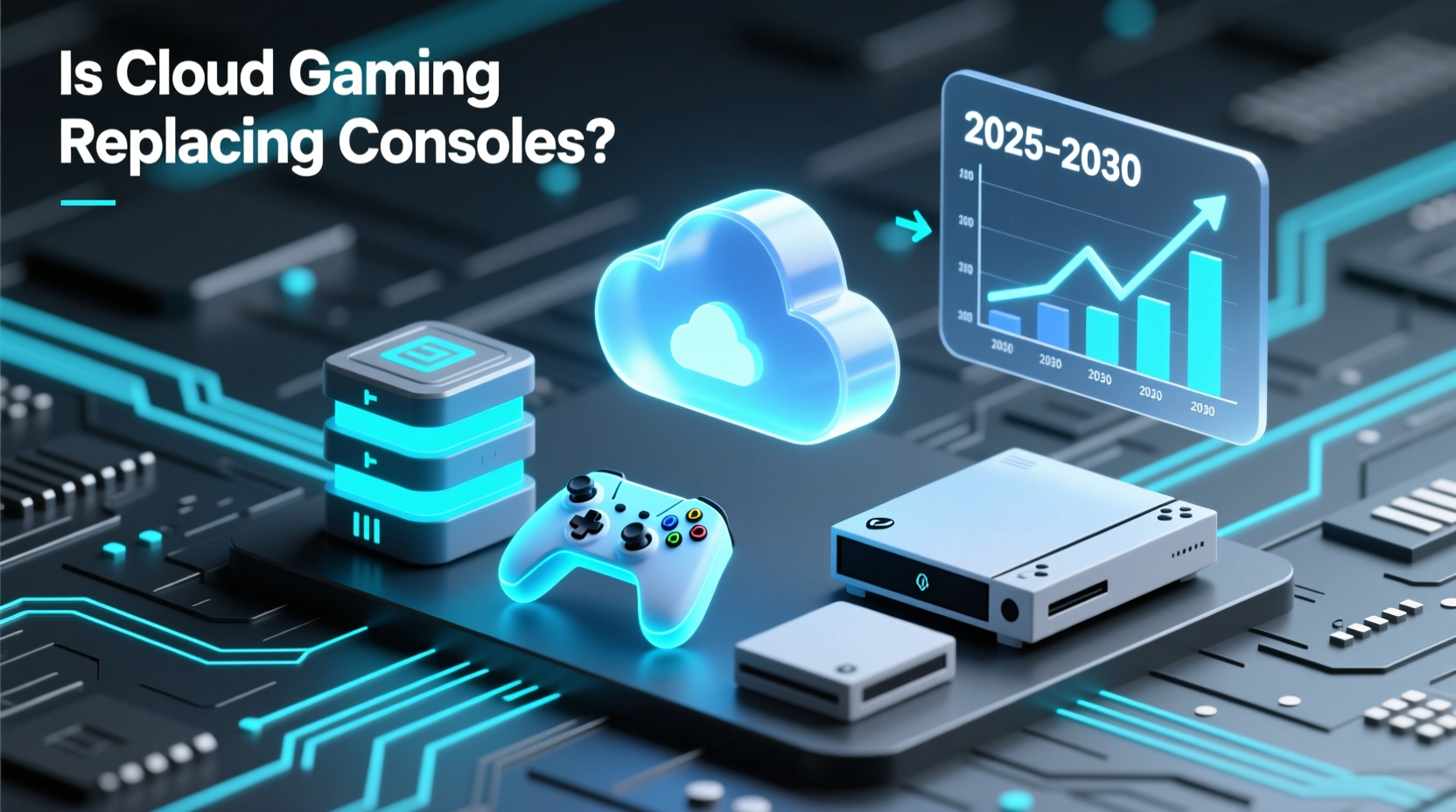
Cloud gaming operates on a simple premise: instead of processing game data on a local device like a PlayStation or Xbox, the heavy computational lifting happens on powerful servers in data centers. These servers render the game in real time and stream the video output to the user’s device—be it a smartphone, tablet, smart TV, or low-end PC. Input commands (like button presses) are sent back to the server with minimal latency, creating an interactive experience over the internet.
This model eliminates the need for expensive, rapidly obsolete hardware. Gamers no longer have to wait in line for the latest console launch or worry about storage upgrades. Instead, they subscribe to a service and gain instant access to a growing library of titles.
Major players have already invested heavily:
- Xbox Cloud Gaming (part of Game Pass Ultimate) allows users to stream hundreds of titles to phones, tablets, and browsers.
- NVIDIA GeForce NOW focuses on high-performance streaming, supporting up to 4K at 60fps with RTX ray tracing for subscribers.
- PlayStation Plus Premium offers a catalog of PS4 and PS5 games via streaming, bridging the gap for users without newer hardware.
- Amazon Luna and Boosteroid are expanding into regional markets with flexible subscription models.
Current Limitations: Why Consoles Still Dominate
Despite its promise, cloud gaming faces significant hurdles before it can fully displace consoles. The most critical barrier is latency. Even with fiber-optic connections, input lag remains perceptible—especially in fast-paced genres like first-person shooters or fighting games. A delay of more than 30 milliseconds can disrupt gameplay, making competitive gaming difficult.
Another challenge is internet infrastructure. High-quality streaming requires consistent download speeds of at least 15–25 Mbps for 1080p, and up to 50 Mbps for 4K. In rural areas or developing regions, such bandwidth is either unavailable or cost-prohibitive. Data caps imposed by ISPs also discourage prolonged streaming sessions.
Additionally, ownership psychology plays a role. Many gamers value physical or digital ownership of games. With cloud services, access depends on subscriptions. If a title is removed from a platform’s catalog—or if a user cancels their plan—they lose access entirely. This contrasts sharply with consoles, where purchased games remain playable indefinitely.
“Cloud gaming isn’t a replacement yet—it’s a complement. It expands access but doesn’t eliminate the demand for high-end local experiences.” — Dr. Lena Torres, Senior Analyst at TechVision Gaming Research
Comparative Analysis: Cloud vs. Console Gaming
| Factor | Cloud Gaming | Traditional Consoles |
|---|---|---|
| Upfront Cost | Low (subscription-based) | High ($400–$500 per console) |
| Hardware Requirements | Minimal (any screen + controller) | Dedicated console or PC |
| Latency | Moderate to high (depends on network) | Very low (local processing) |
| Game Ownership | Limited (access via subscription) | Full ownership (digital/physical) |
| Graphics Quality | Up to 4K (with ideal conditions) | Consistently high (native rendering) |
| Offline Play | No | Yes |
| Scalability | Instant (server-side upgrades) | Limited (requires new hardware generation) |
The table illustrates a fundamental trade-off: cloud gaming prioritizes accessibility and convenience, while consoles emphasize performance, control, and permanence. For now, neither fully supersedes the other.
Future Trends Shaping the Landscape
Several technological and market trends suggest that cloud gaming will grow in influence—even if it doesn’t immediately replace consoles.
1. 5G and Edge Computing
The rollout of 5G networks and edge computing infrastructure is reducing latency by bringing data processing closer to users. Mobile cloud gaming could become viable even on the go, enabling seamless play across commutes or travel.
2. AI-Powered Optimization
Machine learning is being used to predict player inputs and compress video streams more efficiently. Google’s research into “input prediction” aims to mask latency by anticipating actions before they occur—a technique that could make cloud gaming feel more responsive.
3. Hybrid Models
Rather than choosing between cloud and local, the future may lie in hybrid systems. For example, the Steam Deck can stream games from a home PC while also playing locally. Similarly, Xbox enables users to install games locally or stream them from the cloud based on preference.
4. Expansion into Emerging Markets
In countries where consoles are prohibitively expensive, cloud gaming offers an affordable entry point. Services like Blacknut and Utomik target families and educational institutions, bundling games with parental controls and curriculum-aligned content.
5. Exclusive Cloud-Native Titles
As developers adapt to the medium, we may see games designed specifically for cloud infrastructure—titles that leverage dynamic scalability, persistent worlds, or real-time collaboration across thousands of players. These would be impossible on fixed-hardware consoles.
Real-World Example: A Gamer’s Transition
Consider Mark, a 32-year-old software engineer living in Austin, Texas. He owns a PS5 but found himself using it less after moving into a smaller apartment. His setup was tucked away, and switching inputs was cumbersome. After trying Xbox Cloud Gaming during a vacation (playing Halo Infinite on his iPad), he began using it regularly at home.
He now streams games during lunch breaks, uses his phone as a portable console during flights, and shares access with his sister who doesn’t own a gaming system. However, for AAA titles like Elden Ring or competitive Call of Duty, he still prefers his PS5 due to smoother frame rates and lower input lag.
Mark’s story reflects a broader trend: adoption of cloud gaming as a secondary or complementary platform—not a full replacement.
Actionable Checklist: Evaluating Cloud Gaming for Your Lifestyle
Before deciding whether cloud gaming fits your needs, consider the following steps:
- Test your internet speed – Use tools like Speedtest.net to confirm you have at least 25 Mbps download and low ping (<40ms).
- Check service availability – Not all platforms operate in every country (e.g., GeForce NOW has limited regional support).
- Verify game library compatibility – Ensure your favorite titles are supported and not restricted by publisher agreements.
- Try a free trial – Most services offer 7–14 day trials; test during peak evening hours to gauge real-world performance.
- Invest in a compatible controller – Bluetooth controllers from Xbox, PlayStation, or third parties improve the experience significantly.
- Assess data usage – Streaming 10 hours weekly at 1080p can consume 150+ GB monthly—verify your ISP plan allows this.
- Compare total cost – Subscription fees over two years may approach the price of a mid-range console.
Expert Insight: Industry Leaders Speak
Phil Spencer, Head of Xbox, has repeatedly emphasized a \"device-agnostic\" vision for gaming. In a 2023 interview, he stated:
“Our goal is to meet players where they are. Whether it’s on an Xbox, a phone, or a browser—great games should be accessible. Cloud is part of that future, not the end of consoles.” — Phil Spencer, Head of Xbox
Meanwhile, Sony has taken a more cautious approach, integrating cloud features into PlayStation Plus but continuing to invest heavily in next-gen console development. Their stance suggests a belief in coexistence rather than displacement.
Frequently Asked Questions
Will cloud gaming eliminate the need to buy consoles?
Not in the near term. While cloud gaming reduces dependency on hardware, consoles still deliver superior performance, offline access, and ownership rights. They are likely to coexist for at least the next decade.
Can I play online multiplayer games effectively via cloud?
It depends on your connection. Competitive multiplayer titles require ultra-low latency. Casual or turn-based multiplayer works well, but fast-paced shooters may suffer from input delay, especially on Wi-Fi.
Are cloud gaming services cheaper than buying a console?
Initially, yes. Subscriptions range from $10–$20/month, avoiding the $500 upfront cost. However, long-term costs can surpass console ownership. Also, factor in internet upgrades or data overage fees.
Conclusion: Coexistence Over Replacement
Cloud gaming is not replacing consoles—at least not yet. Instead, it is redefining what gaming access means. It lowers barriers to entry, enables cross-device flexibility, and opens new possibilities for developers and publishers. But it does so within clear technical and economic constraints.
The future is not a winner-takes-all scenario. Rather, we’re moving toward a diversified ecosystem where consoles serve enthusiasts and hardcore players, while cloud platforms cater to casual gamers, mobile users, and underserved markets. Over time, the lines may blur further, especially as hybrid devices and smarter networks emerge.
For consumers, the message is clear: explore cloud gaming, but don’t retire your console just yet. The most empowered gamers will be those who know when to stream and when to play locally—leveraging both worlds for maximum enjoyment.




 浙公网安备
33010002000092号
浙公网安备
33010002000092号 浙B2-20120091-4
Comments
No comments yet. Why don't you start the discussion?