
When it comes to coffee, \"stronger\" can mean different things—bold flavor, intense aroma, or a powerful caffeine kick. Among the most debated comparisons in the coffee world is whether cold brew is stronger than espresso. At first glance, espresso seems like the obvious winner: it’s concentrated, served in small shots, and packs a punch with its rich crema. Cold brew, on the other hand, is smooth, mellow, and often sipped leisurely over ice. But when we look beyond taste and examine actual caffeine content, the answer isn’t as straightforward as it seems.
The confusion stems from misconceptions about brewing methods, serving sizes, and concentration versus total caffeine. To truly understand which drink delivers more stimulation, we need to break down the science of extraction, compare standard servings, and consider how personal preferences influence perceived strength.
Brewing Methods: How They Shape Strength
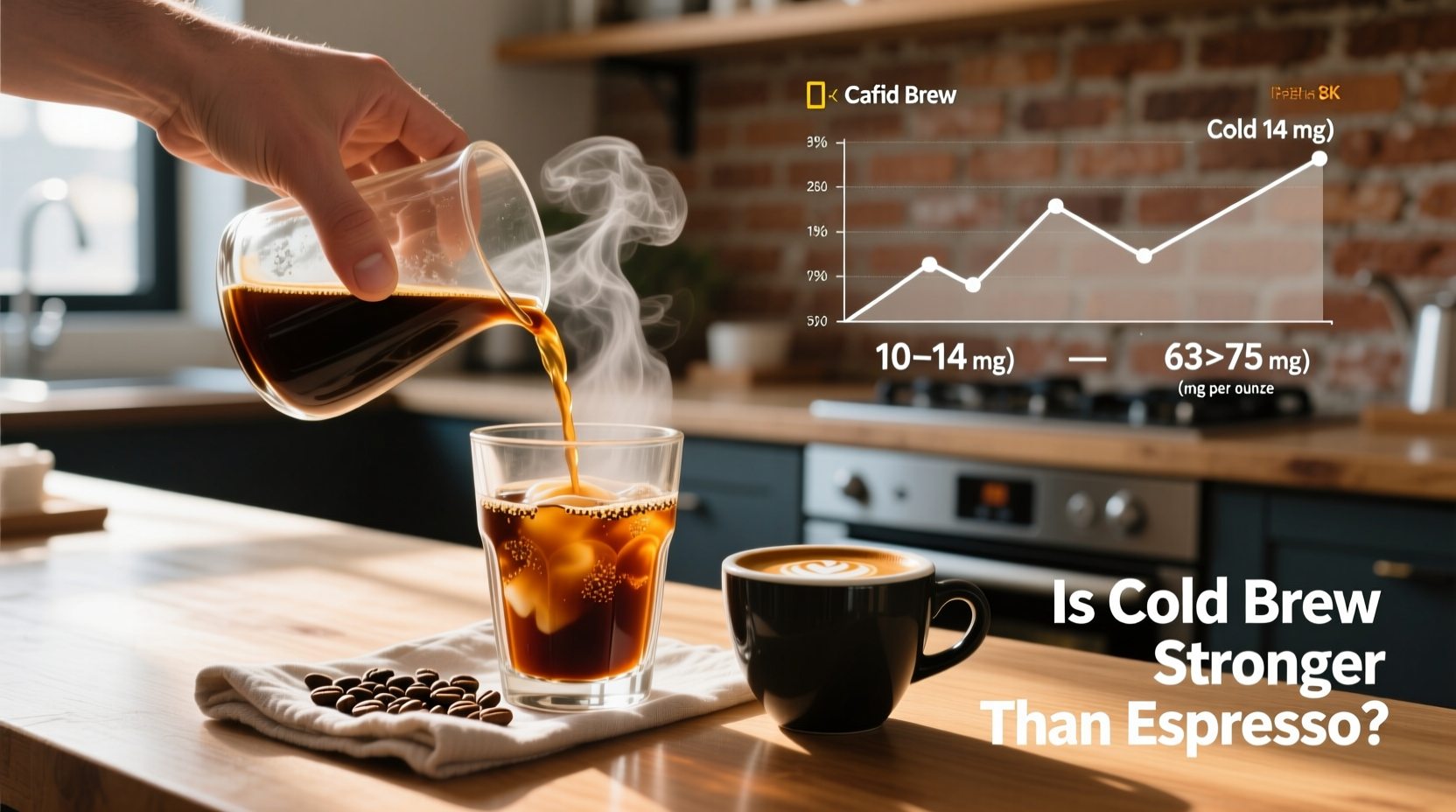
The foundation of any coffee’s strength lies in how it’s brewed. Espresso and cold brew use fundamentally different processes, each affecting caffeine extraction, flavor profile, and body.
Espresso is made by forcing hot water (around 90–96°C) through finely-ground coffee at high pressure—typically 9 bars. This rapid process takes just 20–30 seconds and produces a concentrated shot of about 1 ounce (30 ml). Because of the pressure and heat, espresso extracts a high amount of solubles quickly, including oils, sugars, and caffeine.
Cold brew, in contrast, steeps coarse-ground coffee in room-temperature or cold water for 12 to 24 hours. This slow, immersion-based method avoids heat entirely, resulting in lower acidity and a smoother, less bitter cup. While the final concentrate is often diluted before drinking, the long steeping time allows for substantial caffeine extraction over time.
Because these methods differ so drastically, comparing them requires looking beyond surface-level intensity. A single shot of espresso may taste stronger, but a large glass of cold brew could contain far more total caffeine.
Caffeine Content: Concentration vs. Total Dose
This is where the real misunderstanding occurs. Many assume that because espresso is more concentrated, it must have more caffeine. But concentration doesn’t always equal total caffeine.
Let’s compare average values based on widely accepted data from the USDA and peer-reviewed brewing studies:
| Beverage | Typical Serving Size | Average Caffeine Content | Caffeine per Ounce |
|---|---|---|---|
| Single Shot Espresso | 1 oz (30 ml) | 63 mg | 63 mg/oz |
| Double Shot Espresso | 2 oz (60 ml) | 125 mg | 62.5 mg/oz |
| Cold Brew Concentrate (undiluted) | 1 oz (30 ml) | 50–75 mg | 50–75 mg/oz |
| Diluted Cold Brew (ready-to-drink) | 16 oz (475 ml) | 150–200 mg | 9–12.5 mg/oz |
| Starbucks Nitro Cold Brew (tall) | 12 oz | 155 mg | 12.9 mg/oz |
| Home-Made Cold Brew (16 oz diluted 1:1) | 16 oz | ~180 mg | 11.25 mg/oz |
As the table shows, while espresso has a much higher caffeine concentration per ounce, typical serving sizes are tiny. Cold brew, though less concentrated, is usually consumed in larger volumes—often 12 to 16 ounces. When you drink a full glass of cold brew, you’re likely consuming significantly more total caffeine than from a single or even double shot of espresso.
In fact, a 16-ounce cold brew can deliver up to **three times** the caffeine of a single espresso shot. So if your goal is maximum alertness, cold brew might be the stealthier stimulant.
“People equate bitterness and intensity with caffeine, but that’s not always accurate. A smooth cold brew can quietly deliver more caffeine than a punchy espresso shot.” — Dr. Laura Simmons, Coffee Chemist & Sensory Analyst
Real-World Example: The Office Worker’s Morning Routine
Consider Sarah, a marketing manager who starts her day with a grande iced coffee. She opts for Starbucks’ cold brew, 16 ounces with a splash of milk. Her drink contains approximately 180 mg of caffeine. Across the hall, her colleague James orders a double espresso—two quick shots totaling about 125 mg of caffeine. He finishes in under a minute; she sips hers over 90 minutes.
On paper, Sarah consumes 55 mg more caffeine. But because she spreads her intake over time, she experiences a steadier energy curve without the jitters. James feels an immediate spike, followed by a crash by mid-morning. Both get a boost, but their experiences differ due to dosage, delivery speed, and metabolism.
This scenario illustrates that “strength” isn’t just about peak caffeine—it’s also about duration, absorption rate, and physiological response. Cold brew offers sustained release; espresso provides instant impact.
Factors That Influence Caffeine Levels
Caffeine content isn’t fixed—it varies based on several key variables:
- Coffee bean type: Robusta beans contain nearly twice the caffeine of Arabica. Most specialty espresso uses Arabica, while some commercial cold brews may blend in Robusta for extra kick.
- Grind size: Finer grinds increase surface area, boosting extraction. Espresso uses the finest grind; cold brew uses coarse to prevent over-extraction and sediment.
- Brew time: Longer contact between water and grounds pulls out more caffeine. Cold brew’s 12–24 hour steep maximizes this, even without heat.
- Water temperature: Heat accelerates extraction. Espresso leverages this; cold brew compensates with time.
- Ratio of coffee to water: A stronger cold brew concentrate (e.g., 1:4 ratio) will have more caffeine than a weaker one (1:8).
- Dilution: Many people dilute cold brew with water, milk, or ice. This reduces both flavor intensity and caffeine per sip—but not necessarily total intake.
For example, a home brewer using a 1:4 coffee-to-water ratio for cold brew concentrate and then mixing 8 oz of concentrate with 8 oz of water ends up with 16 oz of drink containing roughly 200 mg of caffeine—equivalent to two and a half espresso shots.
Step-by-Step: Brewing High-Caffeine Cold Brew at Home
If you want to maximize caffeine in your cold brew, follow this optimized process:
- Select the beans: Choose a blend with Robusta or a high-caffeine Arabica variety like Ethiopian Landrace or Pacamara.
- Grind coarsely: Use a burr grinder to achieve a consistent, coarse texture—similar to breadcrumbs.
- Use a strong ratio: Mix 1 part coffee to 4 parts cold, filtered water (e.g., 100g coffee to 400ml water).
- Steep for 16–18 hours: Leave at room temperature for faster extraction, or refrigerate for a cleaner, slightly lower-yield brew.
- Strain thoroughly: Use a fine mesh sieve lined with a coffee filter or a French press to remove all sediment.
- Serve concentrated or diluted: For maximum caffeine, pour 8 oz of concentrate over ice. Dilute with water or milk to taste.
- Store properly: Keep concentrate in a sealed container in the fridge for up to two weeks.
This method yields a cold brew with approximately 150–200 mg of caffeine per 8 oz serving—significantly more than a single espresso shot.
Common Misconceptions About Coffee Strength
Many people judge coffee strength solely by taste. Bitterness, roast level, and mouthfeel are often mistaken for high caffeine content. Here’s what actually matters—and what doesn’t:
| Perceived Indicator | Truth |
|---|---|
| Dark roast = more caffeine | False. Roasting slightly degrades caffeine. Light to medium roasts retain marginally more. |
| Bitter taste = high caffeine | Not reliable. Bitterness comes from over-extraction and certain compounds unrelated to caffeine. |
| Thick crema = stronger coffee | Crema indicates freshness and pressure, not caffeine level. |
| Larger cup = more caffeine | Only if more coffee grounds were used. A large drip coffee may have less caffeine than a small cold brew. |
The takeaway? Flavor intensity doesn’t correlate directly with caffeine. You can have a mild-tasting drink that keeps you awake for hours—or a bold espresso that barely moves the needle if it’s under-extracted.
Frequently Asked Questions
Does cold brew have more caffeine than espresso?
It depends on serving size. Per ounce, espresso has more caffeine. But because cold brew is typically consumed in larger quantities (12–16 oz), it often delivers more total caffeine than a single or double shot of espresso.
Can I get jittery from cold brew?
Yes. Even though cold brew tastes smoother, it can contain 150–200 mg of caffeine per serving—enough to cause anxiety, insomnia, or heart palpitations in sensitive individuals. Always check your total daily intake.
Is espresso the strongest coffee you can drink?
Not necessarily. While espresso is the most concentrated common beverage, drinks like ristretto (shorter pull) are denser in flavor but may have slightly less caffeine due to reduced extraction time. Conversely, a triple-shot latte or a large nitro cold brew can surpass espresso in total caffeine.
Final Verdict: What Does “Stronger” Really Mean?
Calling one coffee “stronger” than another only makes sense when you define the metric. If you mean concentration, **espresso wins**. It’s the most potent form of coffee by volume. But if you care about total caffeine delivered per serving, **cold brew often takes the lead**, especially in ready-to-drink formats.
Moreover, the experience differs. Espresso hits fast and fades quickly. Cold brew provides a slow, steady release of caffeine, leading to longer-lasting alertness without the sharp crash. For productivity, focus, or endurance, cold brew may be the superior choice. For a quick morning jolt or a post-meal pick-me-up, espresso remains unmatched.
Ultimately, the best choice depends on your needs, tolerance, and routine. Understanding the facts empowers you to make smarter decisions—not just about caffeine, but about how you fuel your day.




 浙公网安备
33010002000092号
浙公网安备
33010002000092号 浙B2-20120091-4
Comments
No comments yet. Why don't you start the discussion?