
For anime fans in 2024, the debate over where to stream their favorite series is more relevant than ever. With global platforms like Netflix expanding into Japanese animation and dedicated services like Crunchyroll continuing to grow, viewers face a real choice: should they stick with a niche provider or rely on a general entertainment giant? The answer depends heavily on what matters most—volume of titles, subtitle precision, licensing speed, or long-term access. This article breaks down the key differences between Crunchyroll and Netflix, focusing specifically on anime selection and subtitle quality.
Anime Library Size and Depth
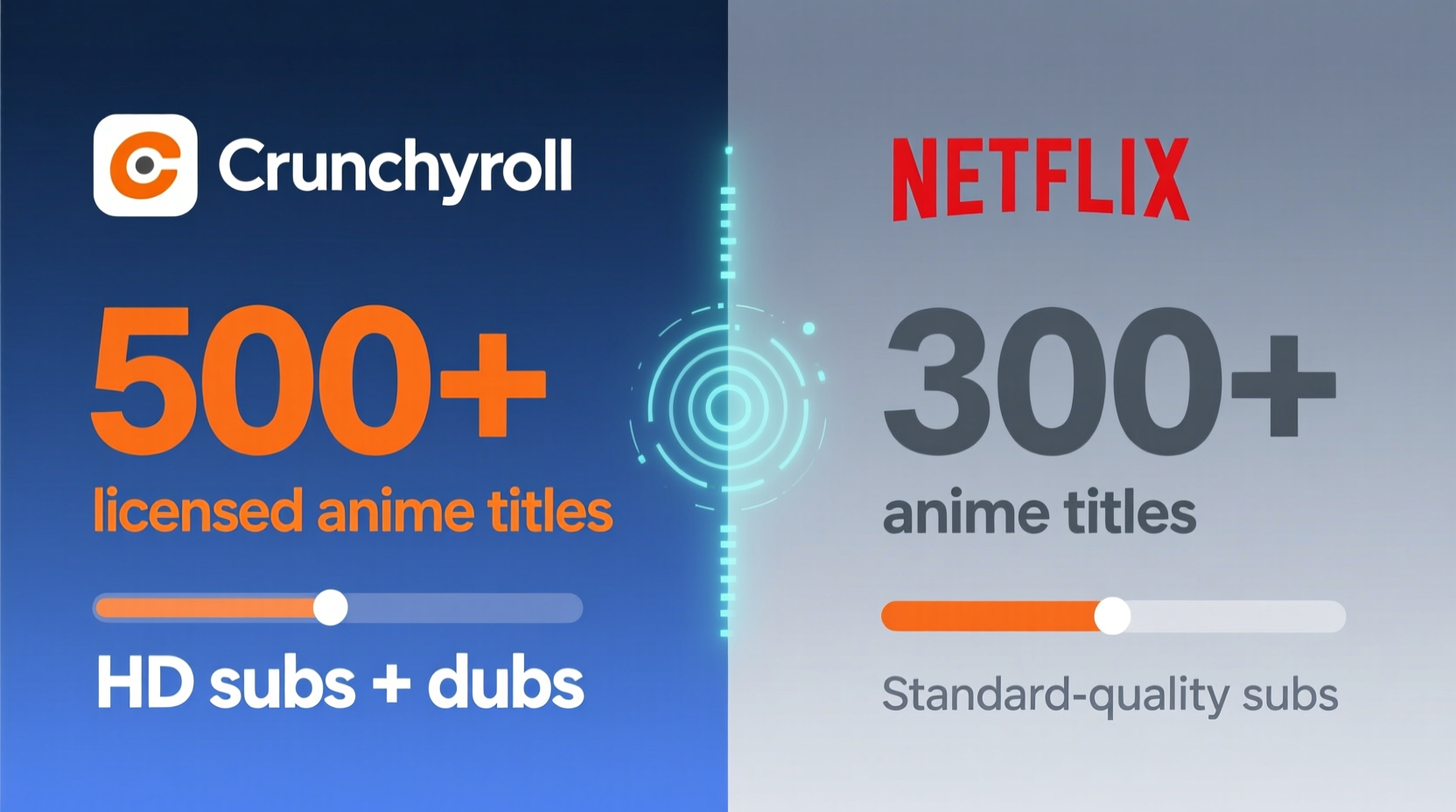
When it comes to sheer volume and variety of anime, Crunchyroll holds a decisive advantage. As a service built from the ground up for anime enthusiasts, it hosts over 1,500 anime titles, ranging from classic films like *Ghost in the Shell* (1995) to current seasonal simulcasts such as *Jujutsu Kaisen Season 3*. Its catalog includes deep cuts, niche genres, and long-running series that general platforms often overlook.
Netflix, while improving its anime offerings, maintains a curated rather than comprehensive collection. Its library typically features around 200–300 anime titles depending on region, but many are exclusive originals (*Castlevania*, *Pluto*) or licensed adaptations (*The Witcher: Blood Origin* anime tie-ins). While these productions are high-budget and professionally dubbed, they don’t replace the breadth of traditional shonen, shojo, mecha, or iyashikei anime found on Crunchyroll.
Crunchyroll also licenses directly from Japanese studios, allowing it to release episodes within hours of broadcast—often with subtitles ready by early Sunday morning (EST). Netflix rarely participates in simulcasting; instead, it acquires full seasons months or even years after initial release, limiting its appeal for fans who follow series in real time.
Subtitle Accuracy and Translation Quality
One of the most critical aspects of anime viewing is subtitle quality—how faithfully dialogue is translated, how cultural nuances are preserved, and whether jokes, honorifics, or wordplay are handled thoughtfully. Here again, Crunchyroll consistently outperforms Netflix.
Crunchyroll employs professional translators with experience in anime-specific terminology. Their subtitles are known for maintaining tone, context, and linguistic subtleties such as character speech patterns (e.g., masculine vs. feminine pronouns, dialect variations). They often include translator notes for idioms or references unfamiliar to Western audiences. For example, in *Mushishi*, subtle philosophical dialogue about nature spirits is rendered with poetic care, preserving the original’s meditative atmosphere.
In contrast, Netflix frequently uses automated translation pipelines supplemented by freelance editors. While this works well for mainstream content, it can lead to awkward phrasing or oversimplification in anime. A notable example occurred in early seasons of *Demon Slayer*, where certain emotional lines were flattened into generic English expressions, losing the dramatic weight of the original Japanese. Additionally, Netflix sometimes edits dialogue for perceived cultural sensitivity, which some fans view as censorship.
“Subtitles aren't just words—they're performance. A good translation captures voice, rhythm, and intent.” — Lena Takahashi, Localization Specialist at AnimEigo
Moreover, Crunchyroll allows users to toggle between multiple subtitle styles (e.g., formal vs. natural tone) on select shows, giving viewers control over how they consume dialogue. Netflix does not offer this level of customization.
Regional Availability and Licensing Restrictions
While Crunchyroll leads in content depth and translation quality, availability varies significantly by region. In countries like the United States, Canada, and much of Europe, Crunchyroll offers near-complete catalogs. However, in regions such as India, Southeast Asia, or parts of South America, licensing restrictions limit access to popular titles like *My Hero Academia* or *Chainsaw Man*, forcing users to rely on delayed local broadcasters or unofficial sources.
Netflix, due to its broader infrastructure and aggressive regional licensing deals, often provides more consistent global access. For instance, *Attack on Titan* is available in over 190 countries on Netflix, whereas Crunchyroll restricts it to North America and select European territories. This makes Netflix a more reliable option for international viewers without access to region-specific subscriptions.
| Feature | Crunchyroll | Netflix |
|---|---|---|
| Total Anime Titles | ~1,500+ | ~200–300 |
| Simulcast Access | Yes, weekly during season | No |
| Subtitle Customization | Multiple style options | None |
| Dub Availability | Extensive (growing fast) | Limited to originals/licensed |
| Global Accessibility | Spotty outside major markets | Widely available |
| Average Subtitle Accuracy | High (industry benchmark) | Moderate to good |
Exclusive Content and Original Productions
Netflix has invested heavily in anime-exclusive content, commissioning original series and films through partnerships with renowned studios like Production I.G, Studio Mir, and Science SARU. Notable examples include *Devilman Crybaby*, *Yasuke*, and *Trese*. These projects often feature bold artistic direction and mature themes, appealing to adult audiences seeking innovative storytelling.
However, quantity doesn’t equal consistency. Many Netflix originals receive mixed reviews due to pacing issues or narrative ambiguity. Furthermore, once released, these titles remain exclusive to Netflix—but only for a limited time. After several years, some leave the platform entirely due to expiring contracts, making them difficult to rewatch later.
Crunchyroll, meanwhile, focuses less on creating new anime and more on acquiring and preserving existing ones. That said, it co-produces select titles under the “Crunchyroll Originals” banner, such as *Tower of God*, *The God of High School*, and *Onyx Equinox*. These are typically faithful adaptations of popular webtoons or manga, aimed at younger demographics. While production values vary, they benefit from immediate integration into Crunchyroll’s ecosystem, ensuring long-term availability and multilingual support.
User Experience and Platform Features
Both platforms deliver smooth streaming experiences, but their interfaces cater to different user behaviors. Crunchyroll’s layout prioritizes discovery—highlighting new episodes, trending series, and seasonal charts. It includes filters for genre, year, studio, and even mood (e.g., “heartwarming,” “intense”). Fans appreciate the ability to track progress across multiple series using integrated watchlists.
Netflix emphasizes algorithmic recommendations and autoplay trailers. While effective for casual viewing, this approach can bury niche anime beneath mainstream suggestions. Browsing requires more manual effort, and there’s no way to sort anime by popularity, rating, or release date.
Additionally, Crunchyroll supports community engagement features like episode comments (viewable during playback), discussion boards, and news updates about upcoming releases. Netflix lacks any social component, offering a solitary viewing experience.
Mini Case Study: Following *Frieren: Beyond Journey's End*
Consider a viewer in October 2023 eager to watch *Frieren: Beyond Journey's End*, one of the year’s most acclaimed fantasy anime. On Crunchyroll, they could start watching new episodes every Monday morning with accurate English subtitles, join fan discussions predicting plot twists, and read official background notes on elven culture referenced in the script. By March 2024, they’d have seen all 28 episodes unfold in near-real time.
The same viewer relying solely on Netflix would wait until late 2024—or possibly 2025—for the complete season to arrive, assuming Netflix secures the license. Even then, subtitles might be streamlined for clarity at the expense of lyrical nuance, particularly in poetic monologues central to Frieren’s character. The sense of communal anticipation would be lost.
Step-by-Step Guide: Choosing the Right Service for You
- Assess your viewing habits: Do you prefer watching weekly as episodes air, or do you like to binge entire seasons?
- Check regional availability: Use a trusted geo-check tool to confirm whether your favorite titles are accessible in your country on each platform.
- Evaluate subtitle needs: If you’re learning Japanese or value precise translations, prioritize Crunchyroll.
- Consider budget: Crunchyroll Premium starts at $7.99/month; Netflix ranges from $6.99 (ads) to $22.99 (4K). Bundling via Hulu or Sony may reduce costs.
- Test both free trials: Crunchyroll offers 14 days free; Netflix recently reinstated limited trial periods in select regions. Use them to compare interface, subtitle quality, and load times.
- Decide on exclusives: Are you passionate about *Pluto* or *Cyberpunk: Edgerunners*? Those are Netflix-only. Is *Blue Lock* or *Sasaki and Miyano* on your must-watch list? They’re best experienced on Crunchyroll.
FAQ
Can I get both dubs and subs on Crunchyroll?
Yes. Crunchyroll offers dual audio tracks for most modern titles, with simultaneous release of dubbed versions usually within 1–2 months of the sub premiere. Classic shows may have dubs added gradually.
Does Netflix ever add older anime series?
Sporadically. Netflix tends to favor newer, visually striking anime or those tied to franchises with global recognition (e.g., *Pokémon*, *Dragon Ball*). Older or slower-paced series like *Clannad* or *Honey and Clover* are unlikely to appear unless part of a strategic acquisition.
Why are some anime removed from Crunchyroll?
Licensing agreements with Japanese studios typically last 3–5 years. When contracts expire, rights may shift to competitors (like HIDIVE or Netflix) or revert to physical-only distribution. Crunchyroll usually announces removals 30–60 days in advance.
Checklist: How to Maximize Your Anime Streaming Experience
- ✔️ Subscribe to Crunchyroll if you want timely access and superior subtitles
- ✔️ Keep a Netflix subscription if you enjoy high-end originals and cross-genre content
- ✔️ Enable subtitle settings to review translation style before committing to a show
- ✔️ Use ad-blockers cautiously—some violate terms of service and disrupt creator revenue
- ✔️ Support physical releases when possible to ensure long-term preservation of beloved series
Conclusion
So, is Crunchyroll better than Netflix for anime selection and subtitle quality? For most serious fans, the answer is yes. Its vast library, commitment to accurate localization, and real-time release schedule make it the gold standard for anime consumption. Netflix plays an important role in elevating the medium through ambitious productions, but it cannot match Crunchyroll’s depth, authenticity, or fan-centric design.
The ideal setup may involve both services: Crunchyroll as the primary hub for anime, and Netflix as a supplementary source for select originals. Whatever your preference, understanding the strengths and limitations of each platform empowers you to make informed choices—and ultimately, to enjoy anime the way it was meant to be seen and understood.




 浙公网安备
33010002000092号
浙公网安备
33010002000092号 浙B2-20120091-4
Comments
No comments yet. Why don't you start the discussion?